the bird on fire

The Palm Valley School Student Blog

Subscribe to Blog via Email

Enter your email address to subscribe to this blog and receive notifications of new posts by email.

Powered by Genesis

The Science of Super-Soldiers

May 21, 2021 by szachik@pvs.org 2 Comments

For this week, blogger Erik decided to write about superpowers and what it would look like if countries had the opportunity to genetically modify their military forces. Erik goes in depth about the pros, and mostly the cons, of global militaries being able to create “super soldiers.”– Editor-in-Chief Roman Rickwood

By Erik Bearman, Science Editor

Surprisingly, not every superpower is ludicrous. The idea of a Captain-America-type-serum-injected man turned into a weapon is actually one of the most accurate superhero-origin stories out there. The technology to achieve this exists today. In the near future, world superpowers such as China and the U.S. may have their own superpowered soldiers.
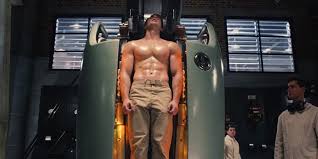
Steve Rogers Wasn't a Hero for Becoming Captain America – He Was Selfish |  HE'SHero.com
A scene from Captain America: The First Avenger

Belgian Blue bull

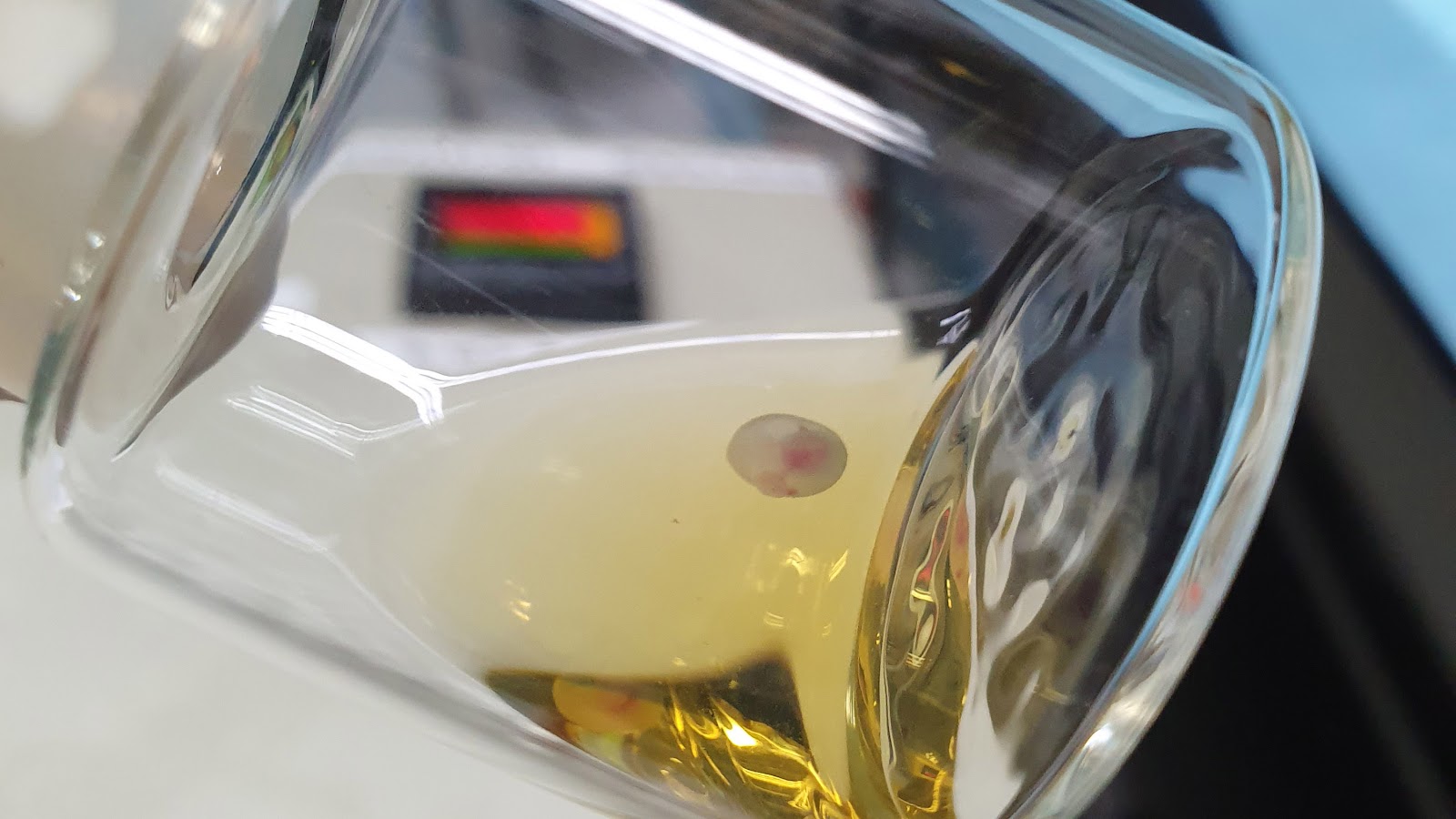
Myostatin is a biochemical in our DNA that inhibits muscle growth. So, it stands to reason that inhibiting this inhibitor would cause us to bulk up rapidly. We’ve already seen it with the Belgian Blue cattle. Belgian farmers have selectively bred a breed of cow with a depletion of myostatin, causing them to be born with muscles that are nearly twice as developed then normal. 

Occasionally, this also happens in children. Liam Hoekstra, a child from Grand Rapids, Michigan, was born with a mutation to the myostatin gene and “could do a pull-up… [by] 8 months old”(ABC News). I can’t even do eight pull-ups at 18 years of age. If scientists altered the human genome in order to cease myostatin production, we could have our very own army of Belgian Blue Hoekstras.

Speaking of armies, approximately five months ago, NBC News reported that China has used CRISPR to conduct biological experiments in order to engineer their own super soldiers (msnbc.com). If China makes a move towards dominating the world technologically, economically, and now, militarily, who is to say that other countries won’t fight back using their own enhanced armies?

What do you think? If you were offered a super serum, would you take it to impress your friends and partners, or to defend your country?

Third Editor-in-Chief: Roman Rickwood

Sources:

  • How to Make REAL Superhero Serum  
  • US Official Says China Attempted To Create ‘Super Soldiers’
  • Meet the Super Cow | National Geographic  

Super Strong Kids May Hold Genetic Secrets – ABC News

Filed Under: Science Tagged With: Erik Bearman, The Science of Super-Soldiers

The Roaring 2020s

May 19, 2021 by szachik@pvs.org 1 Comment

Coming out of quarantine, we see the streets filled with people and hints that life is returning back to normal. What does this mean for the economy? Let’s ask Business Editor Jake Sonderman! — Editor-in-Chief Sara Habibipour 

By Jake Sonderman, Business Editor

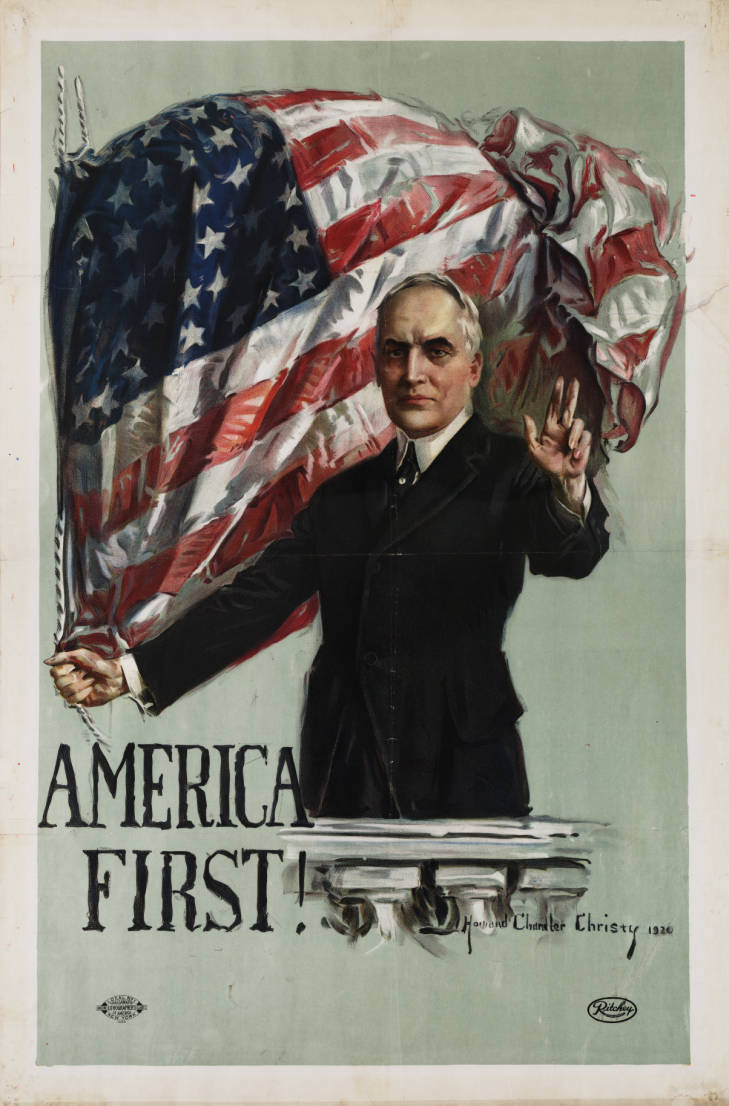
We are entering a new decade as the American people. We are just starting to come out of a deadly pandemic that has killed hundreds of thousands. We have been involved in military conflict around the globe in the previous decade but seem to be moving more towards isolationism with some calling for “America First.” But, on the bright side, consumer demand seems to be rising at a brisk pace and isn’t showing signs of slowing down. Only, the year isn’t 2021; it’s 1921!

Warren G. Harding campaign poster - Warren G. Harding Collection -
President Warren G. Harding, 1921-23

The 1920s are a well known period of economic growth and consumerism. They saw the introduction of technologies like the radio, combustion engine, and refrigerator. America had just come out of the Spanish flu, which killed 675,000 Americans (there were 100 million Americans at the time) (biospace.com). The decade was also a period of isolationism and tariffs. Presidents and Representatives campaigned on the idea of “America First.” Congress enacted the Fordney-McCumber Act, which raised tariffs to 40% pretty much across the board (britannica.com). The Hawley-Smoot tariff was enacted just as the Great Depression hit, raising tariffs by another 20%, making a bad problem worse (Britannica). By today’s standards, this would be considered a “trade war” with Europe. 

Some of this might sound familiar. We are again exiting out of a world-wide pandemic that has killed hundreds of thousands in America. Markets are reaching record highs monthly and consumer demand for things like cars and houses is through the roof. Under Trump, we entered a trade war with China, raising tariffs to nearly 20% for $350 billion in goods (cnn.com). That’s not quite the same as the 1920s tariffs, but we are certainly moving in that direction as Biden does not seem to oppose the tariffs (cnn.com). 

But, what about consumerism in the next decade? Will we truly, again, enter into a new Roaring 20s?? Well, short-term, it would seem like “Yes.” Median predicted GDP growth for the year is 4.7% (Bloomberg). We are seeing innovations in electric vehicles, renewable energy, machine learning, artificial intelligence, and more. But, long-term economic growth rivaling that of the 1920s is not likely. Breakthroughs in information technology and biotech simply do not rival the innovation of the combustion engine and widespread electricity (Bloomberg). Robert Gordon, economics professor at Northwestern University, is a proponent of the idea that “there is no chance of sustained decade-long growth that matches the achievement of the 1920s” (Bloomberg). Though we are still the world’s largest economy, we do not have near the production capacity of the 1920s and no tariff or government spending can bring us back. 

But, that’s okay! We are not the same economy. We probably won’t see the same decade-long boom the 1920s did, but steady, healthy growth is certainly achievable. So, in short, no, we are not entering the “Roaring 2020s.” But, personally, I think with the innovation happening because of COVID (check out Blogger Erik Bearman’s article for more about that) and confidence from investors in the American economy, we can see a decade of economic prosperity. 

Second Editor-in-Chief: Sara Habibipour

Sources:

https://www.biospace.com/article/compare-1918-spanish-influenza-pandemic-versus-covid-19/#:~:text=More%20than%2050%20million%20people,is%20calculated%20at%20about%202%25.

https://www.bloomberg.com/news/features/2021-01-26/roaring-twenties-2020s-will-try-to-roar-like-1920s-after-covid

https://www.britannica.com/topic/Smoot-Hawley-Tariff-Act

https://www.cnn.com/2021/03/24/politics/china-tariffs-biden-policy/index.html

Filed Under: Business Tagged With: The Roaring 2020s

Quintus’s Shanghai

May 17, 2021 by szachik@pvs.org 1 Comment

Perhaps you’ve missed out on your world travels due to COVID. But, don’t fret. Quintus is here to give you a tour of beautiful Shanghai.—Second Editor-in-Chief Sara Habibipour

By Quintus Ni, Shanghai Editor

Looking at Shanghai from a commanding height, the alleys in Shanghai are spectacular.

When it’s dark and the lights are on, these points and lines are bright. Behind the light, large areas of darkness are the alleys in Shanghai, the darkness seems to be almost rough, almost pushing the light away.

The brilliance of Oriental Paris is based on the darkness.

As the morning light comes on, the light goes out. First, there is a thin fog; light is a straight light, drawn out, like fine brushwork. The first to jump out is the skylight on the roof of the old alley. They have a delicate and clever appearance in the morning fog. The wooden frame of the window is carved carefully. The tiles on the house are of fine workmanship. The rose in the flowerpot on the windowsill is carefully cultivated. Then, the sun comes out, revealing the rusty red bricks, which seem to be in a painting. Every painting is clear. Then cracks appear on the gable, and there is a little green moss. The first ray of sunshine is on the gable. It’s a beautiful picture, almost gorgeous and desolate; it’s fresh and old.

The lanes in Shanghai are varied in shape and sound. Sometimes they are like that; sometimes they are like this; they can’t agree. In fact, they are constantly changing and changing. In the end, there are thousands of people, thousands of faces, and one mind.

The houses on the alleys look like row upon row, crowded and crowded. The lights are like peas. Though weak, they are dense and like a pot of porridge. They are also like a big river with numerous tributaries, and like a big tree with countless branches. They are crisscrossed and crisscrossed, which is a big net. On the surface, they are exposed, but, in fact, they are mysterious and have a tortuous heart.

At dusk, pigeons hover in the air of Shanghai, looking for their nests. The ridge of the roof is continuous and undulating, and it looks like a peak from the horizontal to the vertical. Standing on the commanding height, they are all connected, boundless, and some of the southeast and northwest are indistinguishable. The roof ridges flow like water.

There are whispers on the sun terrace, balcony and window side. It’s better to stand at a high point and find a good angle: the clothes on the bamboo poles in the lane are full of personal feelings. The Impatiens, gem flowers, and green garlic cascade from flowerpots. The gully-like bottoming is made of cement or stone.

The feeling of Shanghai Lane comes from the most daily of scenes, which is not stirred by clouds and water, but accumulated bit by bit. There are some unexpected and reasonable things flowing in the lanes. Things are not big things, but they are trivial. Sand gathering can also make a tower. It has nothing to do with such concepts as history. Even unofficial history is hard to be called. It can only be called rumor. Rumor is another view of Shanghai Lane. It is almost visible, and it is also revealed from the back window and back door. What the front door and front balcony reveal is a little more serious, but it is also a rumor. These rumors are close to the skin and flesh, not as cold and rigid as the old paper pile. Although there are many fallacies, they are also perceptible fallacies. When the street lights of this city are brilliant, there is usually only one light on the corner in the lane, with the most common iron cover. The cover is rusty and covered with dust. The light is dim and yellow, and there are some smoky things breeding and spreading below. The pigeons mumble in the cage, as if they are also whispering. The light on the street is right, but it is eaten by the dark just as it is about to flow into Nongkou.

In the end, the sun is spurting from the roof, which is a spectacular collection of the countless pieces of Shanghai.

Edited by Sara Habibipour

Filed Under: Uncategorized

DIY: How to Grow Your Own Human

May 17, 2021 by szachik@pvs.org 1 Comment

For this week’s dose of science news, Blogger Erik decided to discuss artificial wombs and what that may mean for the future. 

By Erik Bearman, Science Editor

In a galaxy far, far away, on the ocean world of Kamino, the Kaminoan scientists grew clones using artificial wombs in their laboratories. This may seem like a crazy sci-fi trope, but artificial wombs actually aren’t so crazy. In fact, scientists have already had success in the past.

In 1990, Japanese scientists removed a lamb fetus from its mother and grew it inside a container filled with amniotic fluid for 17 days until it was successfully delivered.

Later, in 2017, the Children’s Hospital of Philadelphia placed another lamb fetus inside an experimental artificial womb and allowed it to develop until it opened its eyes! Researchers now claim that “Human trials may be possible in a few years” (bbc.com).

Earlier this year, Israeli scientists successfully grew mouse embryos in a mechanical womb (www.technologyreview.com). One day, in the near future, humans could be grown in similar wombs.

mouse embryo ex utero

What Artificial Wombs May Look Like . . . 

Imagine a machine consisting of three parts:

  1. The growth chamber, which replicates the optimal conditions inside a mother’s womb.
  2. The blood container, which supplies the fetus with oxygen-rich blood.
  3. The sensors, which uses an A.I. to scan and monitor the fetus’s health.

This version of the artificial womb is one of the most practical designs as it is simple yet effective. It can also display updates on the fetus’s health in real-time.

Another version of the artificial womb is a giant, red ball that also simulates the natural environment of the organic womb. Tubes are connected to the ball that deliver blood, oxygen, and necessary medication. The womb is not see-through, as the lack of stimulation in darkness is more beneficial to the fetus.

The world's first artificial womb for humans - BBC News

Why Artificial Wombs Can Be Beneficial

According to bbc.com, “Premature birth, before 37 weeks, is globally the biggest cause of death among newborns.” Incubators can help some newborns develop, but they don’t work for all cases. An artificial womb, however, would work in most. Doctors could place the baby in an environment that allows it to continue developing until it is ready for a safe, healthy birth.

Another way artificial wombs can benefit us is by allowing humans to explore the cosmos more effectively. In Interstellar, the scientists in the movie were planning on sending fertilized eggs to a viable planet in order to grow and continue the human race. While it’s certainly a great back-up plan if humans and this planet go extinct, it is also a great way to spread to other planets and start colonizing early, setting up bases where the next generation could develop and build a society for themselves.

Who knows? Perhaps my children will be grown in one of these chambers? Perhaps yours will, too?

Second Editor-in-Chief: Sara Habibipour

Sources:

  • https://www.bbc.com/news/health-39693851 
  • https://www.bbc.com/news/av/health-50056405 
  • https://youtu.be/ai8X3Tc-jN8 
  • https://youtu.be/gwPvSNA_nIg 

Filed Under: Science Tagged With: DIY: How to Grow Your Own Human, Erik Bearman

What Would You Do…for Free Food?

May 17, 2021 by szachik@pvs.org 1 Comment

We all love free food. But, how far would you be willing to go for it? 

By Elizabeth Shay, Food & Drink Editor

Tattoos have been around for more than 5,000 years and have been rising in popularity in the past 25 years. According to pewsocialtrends.org, 15-38 percent of Americans have some type of long-term body art (HuffPost). People get tattoos for a variety of reasons, from the serious (self-expression and cultural tradition) to the not-so-serious (rebellion and…free food?) 

Farmer Boys is an Inland Empire-based fast food chain that celebrates its 40th anniversary this year. Since 1981, Farmer Boys have made a name for themselves through amazing burgers, all-day breakfasts, charity fundraising, and unique promotional stunts. The chain even changed its name to “Farmer Girls” during Women’s History month (Patch). Now, continuing the chain’s unconventional legacy, dedicated (and I mean really dedicated)  superfans have a chance to win free food for a year. The catch? All one has to do is get a permanent tattoo of one of three offered Farmer Boys-related designs.  The chain is partnering with The Honorable Society tattoo studio in west Hollywood and Rockin’ Ink Tattoo in Las Vegas to offer the 2”x 2” designs for free to those 18 and older (Press-Enterprise). 

I asked some of Palm Valley’s own students whether they would be willing to demonstrate their loyalty to a restaurant in exchange for free food for a year by committing to getting inked. Here’s what they said:

Marianne: “If it was for life, that would be a different story. But for a year? Not worth it.”

Roman: “Yes, because you could go multiple times a day…Breakfast, Lunch, and Dinner…I’d probably get one for Chick-fil-A.”

Caroline: “I would get one on my lip for Starbucks!”

Jesse: “Oh, totally. I’d get one of Del Taco ‘cause I go there all the time.”

I invite you all to answer. Would you go so far as to put a permanent piece of artwork on your body in the name of free food? Comment below!

Second Editor-in-Chief: Sara Habibipour

Sources:

https://www.huffpost.com/entry/psychology-of-tattoos_b_2017530#:~:text=People%20get%20tattoos%20for%20many,tattoo%20parlors%20are%20open%20late

https://en.wikipedia.org/wiki/Farmer_Boys

https://patch.com/california/los-angeles/get-inked-farmer-boys-tattoo-eat-free-year

https://www.pe.com/2021/04/21/dine-909-get-a-farmer-boys-tattoo-earn-free-burgers-for-a-year/

Filed Under: Food Tagged With: Elizabeth Shay, What Would You Do...for Free Food?

Profiting off a Military Junta

May 14, 2021 by szachik@pvs.org Leave a Comment

The events currently occurring in Myanmar are serious but not well understood by the average American. Read on to expand your knowledge of the wider political world beyond the borders of the United States.

By Evan Spry, Politics Editor

Myanmar has been under the global spotlight recently for a number of reasons, none of them good. The military takeover of the country was reminiscent of past events in Myanmar’s political history, with tensions and casualties being severe and catastrophic. 

It has been four months since the Tatmadaw (the Myanmar Army) seized control of Myanmar’s government after an election they lost and claimed was rigged. As of, May 4th, 769 people had been killed while 4,737 had been arrested, according to the nonprofit Assistance Association of Political Prisoners (aapp.org). These numbers are rising, and it doesn’t seem like anyone is doing anything to stop it. This begs the question What can we, the average American citizen, do to impact this situation? Well, besides donating to local activists and humanitarian organizations or calling your local representative, there may be an alternative that is much easier.

The New York Times reports, “[Chevron] has a longstanding relationship with Myanmar Oil and Gas Enterprise.” This gas company, also known as MOGE, is “state-owned” and “closely connected to the military generals who seized power from elected leaders on Feb. 1” (nytimes.com).

The plot thickens when we head over to the Yadana Gas Field, discovered as recently as 1980. It has produced on average since its start of operation “660 million cubic feet” of natural gas (offshoretechnology.com). This is with the help of Chevron. Because of Chevron’s involvement in the Yadana Gas Field, they have been “…netting annual profits of $100 million to $150 million from its stake in Yadana” (nytimes.com). This same field also bankrolled up to “70 percent of [Myanmar military] operations in past years” (nytimes.com). The New York Times reports Chevron has been sending highly professional lobbyists out to stop legislation that would be contrary to their profits, like sanctions on the military junta and its gas company (nytimes.com). 

As you can see, Chevron appears guilty of aiding and profiting off of a military junta’s violent regime. In my opinion, they should be held accountable. The easiest way to hurt Chevron is to just not buy their gas. The situation in Myanmar is a tragedy, and the biggest issues the country faces are within. The various ethnic groups need to band together in the name of democracy and defeat their oppressors. This is obviously easier said than done, but I am praying for everybody in the struggle.

First Editor-in-Chief: Elizabeth Shay

Sources:

Daily Briefing in Relation to the Military Coup

https://www.hrw.org/asia/myanmar-burma#

www.offshore-technology.com

Filed Under: Politics Tagged With: Evan Spry, Profiting off a Military Junta

Tax Cuts?

May 14, 2021 by szachik@pvs.org Leave a Comment

Politics is conflictual by nature, and just one of the many controversial issues that divide the parties is that of tax cuts. The blog’s resident Business Editor and economics buff, Jake Sonderman, offers an analysis of this issue.

By Jake Sonderman, Business Editor

“What we don’t need is more spending, and what we don’t need are taxes, and what we do need is a lot less of both.” 

— Ronald Reagan

It is the age old question. Tax more, or tax less? In 2017, under Donald Trump, the Tax Cuts and Jobs Act was passed, and after-tax revenue for the top marginal income tax bracket went up 3% (taxpolicycenter.org). So it would seem that the “tax less” side had won. But, with President Biden in office, it seems inevitable that taxes will go up for some to offset spending in many other areas. There is a lot of criticism on both sides of the aisle on tax policy, with Republicans ripping Biden for proposed tax hikes, and Democrats ripping Trump for tax cuts for the rich. I would like to put a pin in the politics of this issue for a second and discuss whether tax cuts are really productive for an economy and whether they do indeed “pay for” themselves. 

Are Tax Cuts Productive?

To start, any tax cut will result in more money in the hands of citizens. For a tax cut or any spending to be effective, it needs to “multiply” or circulate through the economy instead of simply going straight into the bank. So if any tax cut puts more money into the economy, who should get the tax cut to make it the most “productive”? Owen M. Zidar at The National Bureau for Economic Research looked back at history to see which tax cuts are the most effective in states in terms of employment growth. He found that tax cuts for low-income brackets produce substantially more growth than tax cuts for income brackets in the top 10%. Specifically, he found that a 1% tax cut for the bottom 90% of earners resulted in 3.4% employment growth over two years, and that a cut for the top 10% produced 0.2% employment growth over the same period. (nber.org)

Summed up, tax cuts are productive for the economy. But tax cuts for low income brackets produce much more growth than tax cuts for higher brackets. 

Do Tax Cuts “Pay For” themselves? 

The short answer to this question is “No.” For a tax cut to “pay for” itself, it would need to produce an absurd amount of economic growth. For example, if the government introduced a tax cut that costs $200 billion and brings the income tax rate to 20%, the tax cut would need to produce about $1 trillion in growth. 20% of $1 trillion is $200 billion. This is an oversimplified essence of the idea. The idea that tax cuts produce more revenue for the government is based on the Laffer curve, an idea adopted in the Reagan era. It is based on the idea that if an income tax rate is 100% or 0% the government will receive the same amount of revenue. In the Laffer curve, there is a “sweet spot” where the government produces the most amount of revenue (investopedia.com) (taxpolicycenter.org). 

The problem with referring to the Laffer curve in my opinion is that it is often used out of context and used incorrectly. The Laffer curve is often misconstrued to say that somehow lowering tax rates for high income earners and large corporations will result in booming growth that pays for itself entirely. The Laffer curve has to work both ways, meaning that cuts can substantially lower tax revenue if the tax rate goes too low. 

Too often politics gets in the way of the facts when it comes to taxes. Too often politicians say “tax cuts” when they mean tax cuts for only high income earners. Tax cuts are an economic tool that can be more effective even than government spending, but they are only sometimes used effectively. Tax cuts for low income earners undoubtedly spur substantial employment growth, and those are, in my opinion, the tax cuts we should be talking about. 

First Editor-in-Chief: Elizabeth Shay

Sources:

https://www.taxpolicycenter.org/briefing-book/do-tax-cuts-pay-themselves#:~:text=Cutting%20tax%20rates%20thus%20almost,percent%20of%20the%20tax%20cut.

Click to access w21035.pdf

https://taxfoundation.org/the-distributional-impact-of-the-tax-cuts-and-jobs-act-over-the-next-decade/

https://www.investopedia.com/terms/t/trickledowntheory.asp

Filed Under: Business Tagged With: Jake Sonderman, Tax Cuts?

New Technologies from the COVID Era

May 12, 2021 by szachik@pvs.org Leave a Comment

There is no denying that the COVID-19 pandemic has changed the world forever. Now that we are finally making progress in curbing the severity of the pandemic, let us take a look at possible technological advancements made while responding to COVID-19.

By Erik Bearman, Science Editor

COVID-A.I.

On New Years Eve, 2019, towards the start of the pandemic, BlueDot, a small company that analyzes and predicts outbreaks of disease, detected early signs of a potential pandemic “using data from ‘medical bulletins, even livestock reports, to predict where the virus would go next…And with that data it identified 12 of the 20 cities that would suffer first ‘” (cbsnews.com). Later on, California was able to predict which hospitals would be hit the hardest using BlueDot. 

Outbreak Science: Using artificial intelligence to track the coronavirus  pandemic - 60 Minutes - CBS News

Using A.I. to map where infectious diseases may spread has long been a part of outbreak science. As COVID-19 ebbs, artificial intelligences like the ones used at BlueDot will become more widely used and may even help prevent the next pandemic from ruining the senior years of future generations.

COVID-Filter

Coronavirus blood filtration system gets FDA nod for emergency use -  SlashGear

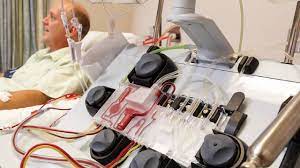
In April of 2020, ExThera Medical received Emergency Use Authorization for a Seraph 100 Blood filter. ExThera was given EUA (Emergency Use Authorization) because the filter “showed encouraging preliminary results in critically ill COVID-19 patients at a military hospital in the U.S. and 14 other hospitals in Europe” (mddionline.com). The filter works in a two-step process:

  1. Blood flows from the patient and circulates through the filter. As it does, the blood passes over receptors that imitate the receptors that pathogens target when they enter us.
  2. The infectious material is absorbed by the beads which the receptors are attached to, allowing the filter to remove them from the patient’s bloodstream without adding anything to their blood which is returned to the patient with blood cells and proteins intact. (mddionline.com)

One day, these filters may be an everyday part of hospital equipment and could provide doctors the necessary time to treat patients. With future funding and development, they may be able to filter out harmful materials other than COVID-19.

COVID-Bees

Dutch researchers train honeybees to detect COVID-19 | CBC.ca

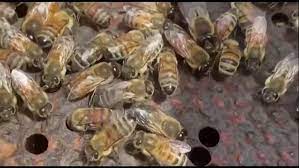
Researchers in the Netherlands have trained bees to detect cases of COVID-19. This might seem crazy, but bees actually “have an unusually keen sense of smell” (www.reuters.com). The process used to train the bees was relatively simple: the researchers gave the bees sugar water as a reward after the bees found a sample infected with COVID-19. But, if the bees could not detect a sample of COVID-19, the researchers did not give them a reward.

Now, the bees are used to detect COVID-19 in humans and can “cut waiting times for test results to just seconds” (www.reuters.com). An unBEElievable idea can make way for faster testing in the future for other diseases. Meaning less funding will have to be put into developing testing technologies and more communities will be able to get rapid, accurate results. From bees to filters to A.I., science never lets a catastrophe go to waste.

First Editor-in-Chief: Elizabeth Shay

Sources

  • https://www.cbsnews.com/news/coronavirus-outbreak-computer-algorithm-artificial-intelligence/ 
  • https://www.mddionline.com/covid-19/dod-funds-clinical-trial-seraph-blood-filter-treat-covid-19 
  • https://www.reuters.com/lifestyle/oddly-enough/bees-netherlands-trained-detect-covid-19-infections

Filed Under: Science Tagged With: Erik Bearman, New Technologies From the COVID Era

A life well lived

May 12, 2021 by szachik@pvs.org 1 Comment

The Royal Family of England fascinates many globally, and there is much to learn about their lives. Recently, Prince Philip passed away at 99 years of age, after living a long, rich life. Blogger Roman Rickwood outlines the history of this notable Royal.

By Roman Rickwood, The World Editor

Prince Philip: A life in pictures - BBC News

Prince Philip of Greece and Denmark was born June 10, 1921, in Corfu, Greece. Philip was born into royalty as his father was Prince Andrew, Duke of York, and his mother was Princess Alice of Battenberg. However, his childhood differed tremendously from that of typical childhood royals. When Philip was very young, his family was disgraced and exiled from the monarchy of Greece. Soon after, Phillip’s mother was institutionalized and his father fled with his mistress. Philip was sent to be raised by his grandparents in England. When in England, Philip attended Gordonstoun School and then proceeded to go to the Royal Naval College. From there, Philip became an officer in the Royal British Navy. Philip began his service in January of 1940 and served until the end of the second world war. Because of his service, he became a British subject. After his service in the Royal Navy, Prince Philip renounced his right to the Greek and Danish throne in order to become First Consort. On November 20th, 1947, Prince Philip wed his distant cousin Princess Elizabeth. Before his wedding, Philip was officially knighted and designated a royal highness. After marrying then Princess Elizabeth, Phillip continued serving in the Royal Navy until February 6, 1952. It was on this date, following the death of her father, that Princess Elizabeth became Queen Elizabeth. Because of the new responsibilities, Philip gave up his military duties and committed full time to royal duties. Over the years, Elizabeth and Philip had four children. It is calculated Prince Philip attended an average of 350 official Royal Events and appearances. He was always in the public eye. Prince Phillip often expressed his own views and did not always behave as a traditional royal. However, people loved Prince Philip, sometimes despite his many classic and quotable one liners. Along with his royal duties, Philip also managed to find time for philanthropy and passion projects; he served as the president of the World Wildlife Fund from 1981-1996. This program awarded grants and scholarships to over 6 million young adults. Prince Philip was and is regarded as one of the busiest royals. Over his time representing the royal family, it is estimated that Philip completed over 22,000 solo appearances. Prince Philip died April 9, 2021, at 99 years of age. He will be remembered as the face of the Royal Family and a dedicated father, husband, and civil servant. He will be remembered for his military services, sacrifices, and humor. 

Prince Philip, husband of Britain's Queen Elizabeth II, dies at 99

First Editor-in-Chief: Elizabeth Shay

Sources:

https://www.britannica.com/biography/Philip-duke-of-Edinburgh

https://www.biography.com/royalty/prince-philip

Prince Philip death: His life in pictures - The Washington Post

Filed Under: Uncategorized

The Life You Can Save, a Philosophical Thought Experiment

May 12, 2021 by szachik@pvs.org 2 Comments

The next post under our new sections format comes from the blog’s resident philosopher, Sara Habibipour. Philosophy is full of complex questions designed to make you think. Sara explores here a thought-provoking moral quandary.–First Editor-in-Chief Elizabeth Shay

By Philosopher Editor Sara Habibipour

Imagine one day you’re walking across a park on your way to work. As you walk past a pond, you see something splashing in the water, even though it’s quite shallow. When you look closer, you find that the thing flailing in the water is a small child who isn’t tall enough to stand up in the pond. You look around for a parent, but there’s no one to be found; it’s just you and the child. 

Of course, your first thought is to go save the child. After all, the pond is shallow, and it would pose no risk for you to just walk in and help them. But, you’re in your fancy work clothes that cost hundreds of dollars. And, if you stop to help the drowning child you’ll be late for work (and wet all day). Maybe you should just forget about helping the kid… 

Of course not! Almost everyone would agree that it would be immoral for you to just walk past a drowning child and not help, especially if your only reason is to preserve your fancy clothes. 

So, let’s apply this same logic to a starving child in Africa. You know that children are dying everyday from malnutrition, disease, and other preventable causes. So, if you’re not helping to save some of these children, by withholding your money from organizations trying to make a difference, then are you really all that different from the person who walks past the child drowning in the pond? 

Peter Singer, the creator of this thought experiment, would say, No, you’re not different. 

With everything that you buy that you don’t really need, you are making the choice between donating the sum you spend and buying whatever item you personally don’t need. That Starbucks coffee you had this morning? Based on the premise of this thought experiment, that could be seen as a selfish deed. Well, why not spend and donate? Sure, you can. Unfortunately, none of us have infinite bank accounts, so it might be easier said than done. 

But, when will we know when we’ve done enough? When will we get to stop living in guilt? 

In Singer’s book, The Life You Can Save, he suggests exact percentages based on income he thinks people should donate in order to have a balance between personal spending and helping someone in need. And, according to him, this can help you live a good life. 

But, allow me to insert my own opinion on what it means to live a good life.

Of course, we should all do our best to help those in need, whether it’s a human in front of us or a human across the world. As a person who hopes to become a physician and travel to underdeveloped countries to give medical services, I would agree with Singer that it’s important, even our moral duty, to help those in need. 

But, living a good life shouldn’t be confined to donating a certain percentage of your income. To know if you’ve lived a good life, ask yourself, “Did I try to make the world a better place? How did I do that? Did I try and reduce somebody’s suffering?” You don’t have to do something crazy to say you’ve lived a good life. Maybe you rescued a dog or you gave food to a homeless person–that would be considered reducing somebody’s suffering. 

But, it also shouldn’t just be a “one and done” sort of deal. If you gave someone a dollar once, I would consider that a good moment, not necessarily a good life. But, if you try to implement these good moments (and whatever that may mean to you) regularly throughout your life, then you can say you’ve lived a good one.

Have your morning Starbucks. Treat yourself once in a while; you shouldn’t have to feel guilty about that. Just do something to regularly help others, and that’s when you’ll know that you’ve lived a good life. 

First Editor-in-Chief: Elizabeth Shay

Filed Under: Philosophy Tagged With: a Philosophical Thought Experiment, Sara Habibipour

  • « Previous Page
  • 1
  • …
  • 45
  • 46
  • 47
  • 48
  • 49
  • …
  • 128
  • Next Page »

About

We are the Palm Valley Firebirds of Rancho Mirage, California. Join us in our endeavors. Venture through the school year with us, perusing the artwork of our students, community, and staff. Our goal is to share the poems, stories, drawings and photographs, essays and parodies that come out of our school. Welcome aboard!