the bird on fire

The Palm Valley School Student Blog

Subscribe to Blog via Email

Enter your email address to subscribe to this blog and receive notifications of new posts by email.

Powered by Genesis

Taboo Foods

October 30, 2020 by szachik@pvs.org 1 Comment

Elizabeth asked the Blog Staffers to talk about food and drink. Erik went in an unexpected direction–exploring foods perceived as “taboo.” He broke down his research into three categories: eating habits as dictated by religious, philosophical, and societal standards.

By Erik Bearman

Religious Taboo: “It’s not kosher.”

 seder-meal

“If you’ve ever asked your Jewish friend if they want to try something delicious, such as bacon, they may have responded with, “I can’t. It’s not kosher.” I’m sure most of you know that practicing Jews can’t eat non-kosher foods. But how many of you know what “kosher” actually means? 

Kosher, or kashrut (the Hebrew word for “proper”), is a series of dietary laws that serve as a guideline for the daily lives of many observant Jews. Note I said “observant Jews.” Many reformed Jews–including myself–do not observe Kosher laws except on Jewish holidays such as Passover. 

In order to be considered Kosher, meat must come from mammals that both chew their cud (“a piece of partly digested food that is regurgitated back into the mouth for further chewing”) and possess split hooves (Dictionary.com). If a mammal only falls under one category or doesn’t fall under either, it is not considered kosher. This is why pigs aren’t considered kosher: they possess split hooves but don’t chew their cud. Dairy products, such as milk, must originate from a kosher animal such as a goat or cow. Dairy products must also not touch any meat products on the plate.

Fish products must also adhere to certain requirements to be considered kosher. A fish is considered kosher if it has both scales and fins. Because of this, shellfish and sharks are not considered kosher.

Philosophical Taboo: “Tofu Never Screams”

Veganism and Vegetarianism are practices of refusing to consume animal products such as meat and dairy. The primary reasons people choose to be vegan or vegetarian are either personal preference or health.

“I avoid meat as much as I can. Meat has become the biggest drug in human history. It is horrible!! Bad for the environment, and it doesn’t even taste good. Plant replacements are better for you, and taste better!” said Palm Valley student Andrew Hall. Many vegans and vegetarians consume plant alternatives such as tofu. Marianne Captez says she’s vegetarian because “[it’s] a personal preference based on health. . . . I have a weaker digestive system and meat is very hard for my body to digest, so it will make me very sick.” Many vegetarians choose to eat non-meat products for health reasons; others abstain from eating meat because they believe slaughtering animals is cruel.

Societal Taboo: “I ate his liver with some fava beans and a nice Chianti.”–Hannibal Lecter

Now it’s time to talk about the ultimate taboo: cannibalism. Despite Hannibal Lecter’s predisposition, the act of cannibalism is universally considered taboo. Over the past century, the crimes of vicious serial killers such as Jefferey Dalmer and Ted Bundy have repelled and repulsed many. However, it may surprise you to know that not everyone agrees that cannibalism is taboo. In fact, there are entire cultures that incorporate cannibalism into their lifestyle, the two most well-known are the Foré and the Aghori.

The Foré people of Papua New Guinea have a ritual where they eat the flesh, particularly the brain and body, of their loved ones after said loved ones die (Science Insider). However, the Foré people had to cease consuming brains after a significant amount of their people contracted deadly Kuru: a rare neurological disorder caused by ingesting prions from infected brains (medlineplus.gov).

The Aghori, a very small sect of Hinduism, are known to engage in acts such as drinking their own urine, covering themselves in cremated ashes, and eating rotting corpses (CNN). A commonly observed aspect of Hinduism is maintaining spiritual purity. The Aghori culture challenges this idea by arguing that God lives inside all of us and, as a result, nothing we do can taint our spiritual purity.

Now, let’s ignore the social taboo for a moment and discuss why eating human meat is a bad idea. Human meat is actually a very low source of calories. If the meat is not cooked properly, you risk infecting yourself with any diseases that person had, including HIV and hepatitis. This is exactly what happened to the Foré.

Morality or squeamishness aside, the act of cannibalism itself is not illegal in the U.K. or the U.S. (apart from Idaho) (Science Insider, apnews.com). What is illegal is how the meat is acquired. Since people aren’t exactly lining up to donate their organs to Hannibal Lecter, many cannibals are forced to acquire human meat via malicious methods, like murder or grave robbing.

Fun(?) fact: According to interviews with actual cannibals, humans taste nearly the same as pork (Science Insider). 
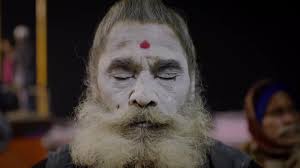

Who are the Aghori? - CNN Video

Sources:

  • https://www.biblicalarchaeology.org/daily/ancient-cultures/daily-life-and-practice/making-sense-of-kosher-laws/
  • https://www.familyfoodrelief.org/kosher.php#:~:text=There%20are%20many%20intricacies%20involved,slaughtered%20according%20to%20Jewish%20law.
  • https://www.vegansociety.com/go-vegan/definition-veganism
  • https://youtu.be/dAY7k0DPIuU
  • https://youtu.be/i_6ltfDWF0Q 
  • The Silence of the Lambs 
  • https://medlineplus.gov/ency/article/001379.htm#:~:text=Kuru%20is%20a%20very%20rare,part%20of%20a%20funeral%20ritual.
  • https://apnews.com/article/c6474f9d2d124a80b7dfd825172694de
    • Food & Drink Editor: Elizabeth Shay
Filed Under: Food Tagged With: Erik Bearman, Taboo Foods

Must-Eat Persian Food

October 27, 2020 by szachik@pvs.org 3 Comments

When asked to come up with a theme, Editor Elizabeth tasked the Blog Staff with writing food and drink-themed posts. She said of food, “Everybody needs it, so everybody eats it.” When pressed for her favorite food, she said, “Sushi.” Our bloggers share what brings them to the table.

By Sara Habibipour

If you’re a foodie and haven’t had a taste of Persian cuisine, you are missing out! To be fair, there aren’t really any authentic Persian restaurants here in the Coachella Valley, but if you’re ever in LA or Anaheim, be sure to “Yelp” the nearest Persian restaurant. Or, just come to my house! 

Here are my personal favorite Persian dishes: 


Salad Shirazi and Mast O Khiar: 

These two appetizers can be eaten separately or with the main meal, but I prefer to eat them together with lavash bread–a thin flat bread.

Salad Shirazi is a simple combination of chopped tomatoes, cucumbers, and onions–seasoned with dry mint and lemon juice. 

The Mast o Khiar is plain yogurt, chopped cucumbers, and dry mint mixed together. I suppose you could say it’s similar to Greek Tzatziki, but it’s also very distinct in consistency and flavor.

These dishes are extremely refreshing!

Tahdig: 

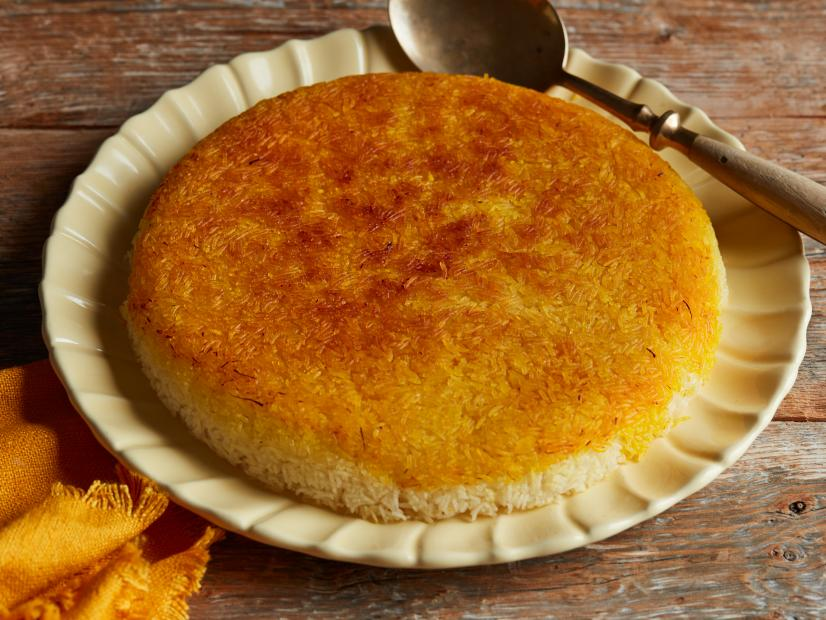
Tahdig is one of the most popular Persian foods. 

Persian rice is cooked with a lot of butter and oil so it isn’t sticky as other rices may be. This allows for the rice at the bottom of the pan to become golden and crunchy, as seen in the picture above. It’s the best. 

Ghormeh Sabzi: 

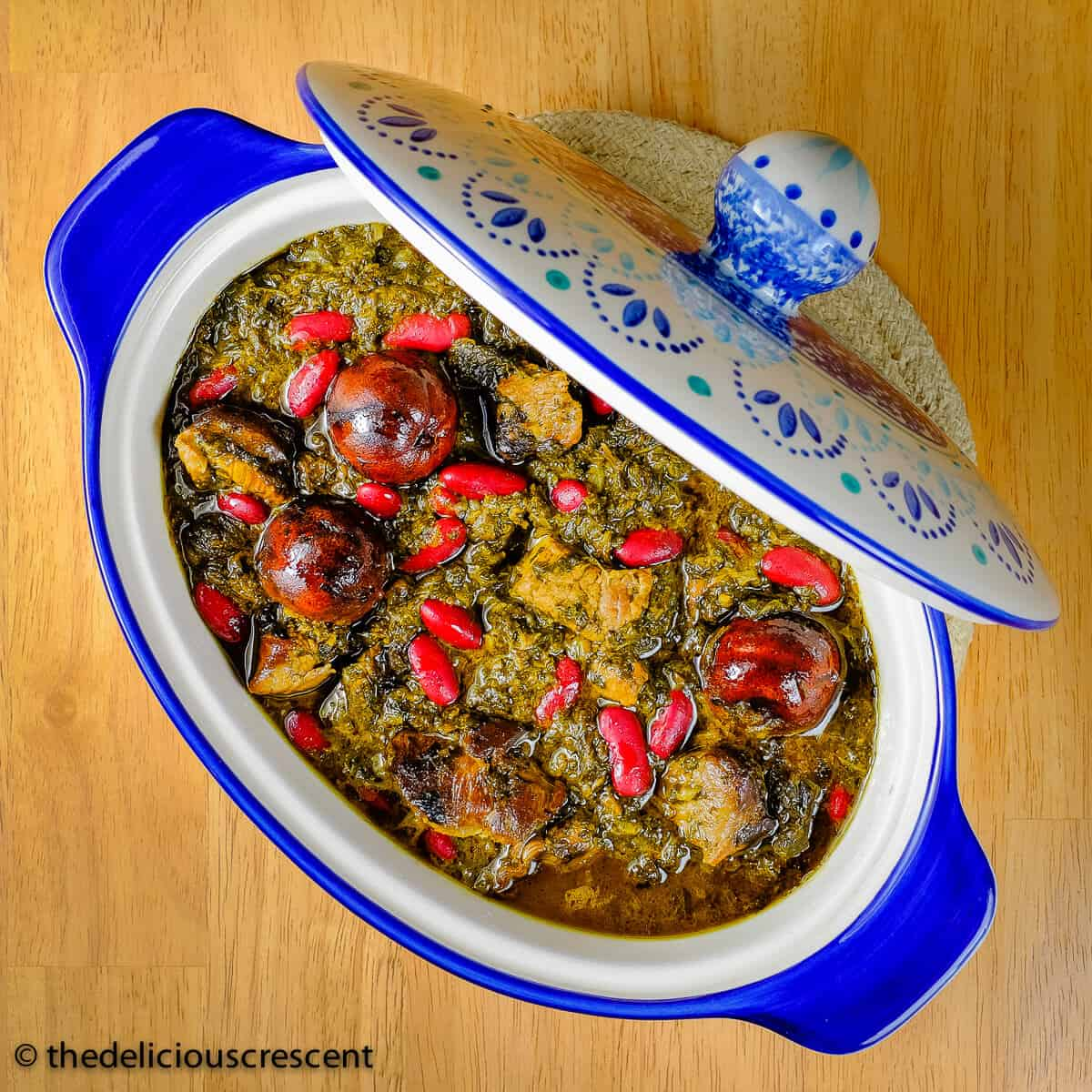
Aside from kabobs, stews are a staple of Persian cuisine. 

This stew in particular consists of various greens, kidney beans, and lamb (although, if you’re vegetarian, the meat is optional). The unique flavor of this stew comes from the limoo amani, or dried limes. You don’t eat them; you just put them in the pot with the stew while it cooks. It gives the stew a bit of a tang and a spike of flavor. 

Fesenjan: 

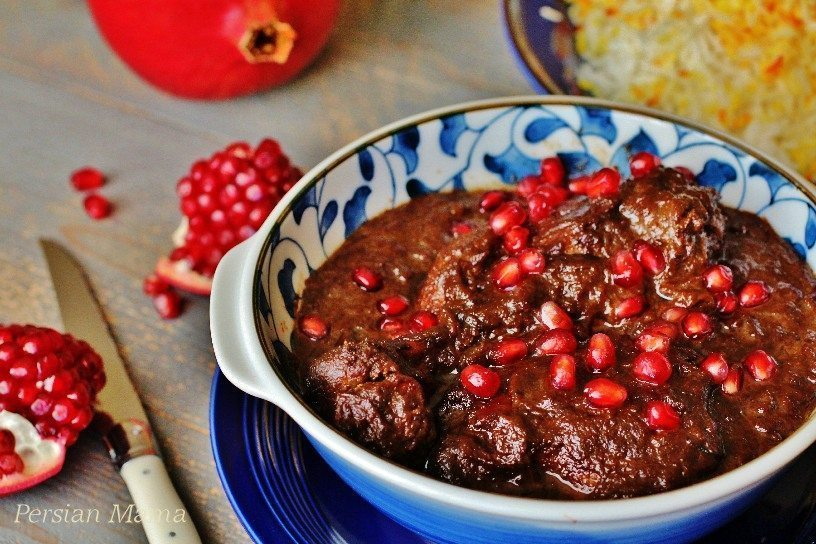
Fesenjan is a stew made of pomegranate paste and walnuts, seasoned with turmeric and cinnamon. This may not sound like the best-tasting dish, but it’s the perfect combination!

At a restaurant, one time, I tried the fesenjoon on top of tahdig, and it was glorious. 

Fesenjan is a very rich-tasting dish. So, if you aren’t afraid of flavor, I highly recommend that you try this. 

***

You can see, Persian cuisine is very colorful, fresh, and flavorful. There are, of course, many other dishes, but these are a few of my favorites! If you ever feel like trying to make these dishes for yourself, there’s several Youtube videos that can help you out!

Image Sources:

Mast-o Khiar – Persian Cucumber Yogurt Dip

https://www.thedeliciouscrescent.com/tomato-cucumber-salad-with-fresh-herbs/

Persian food: A foodie’s experience in Iran

https://www.foodnetwork.com/recipes/food-network-kitchen/saffron-rice-with-tahdig-5609026

https://www.thedeliciouscrescent.com/persian-fresh-herb-stew-with-meat-and-kidney-beans/

KHORESH FESENJAN خورش فسنجون|FESENJOON

Food & Drink Editor: Elizabeth Shay
Filed Under: Food Tagged With: Must-Eat Persian Food, Sara Habibipour

Documented Debacles of the Ancients

October 27, 2020 by szachik@pvs.org 1 Comment

By Hannah Hall

Tasked with finding “Funny stories from history,” Hannah encountered a cornucopia of outrageous events that make history a little more interesting.–Editor Evan

People have always been ridiculously stupid at times–whether that be through their actions, obsessions, or legends. I’ve scoped out some of the funniest historical moments and made a list–which is kind of my thing. Enjoy these stories, and let me know what you think!

1) Allegedly, when Voltaire was near his death, he was told to renounce the devil. He instead replied, “This is no time to be making new enemies.” I mean, I would want to at least try to be on the good side of the devil before my death, too. (Hilarious Historical, factinate.com).

2) Charles Darwin is widely known for his theory of evolution and his famous trip to the Galapagos Islands. When Darwin arrived on the islands, he discovered giant tortoises and thought that it would be a good idea to try and ride them. (Hilarious Historical, factinate.com).

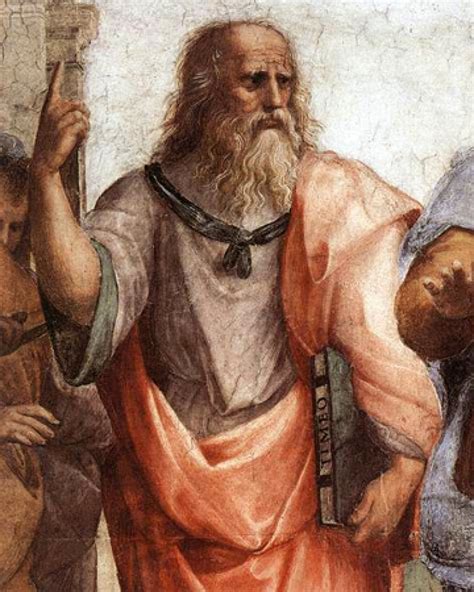
3) We all know Plato, right? Well, his name actually wasn’t even “Plato.” Historians believe that was just his nickname. Funny enough, his nickname means “broad” in Greek. So all these years, we are actually calling Plato a big hunky man, aaaoooooga! (Greek Philosophers, factinate.com).

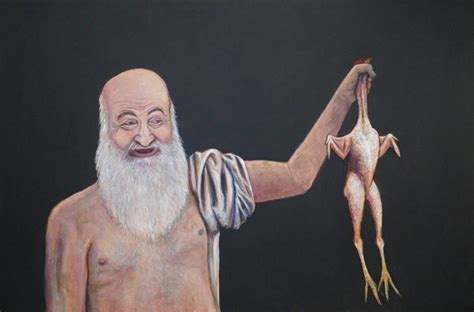
4) Speaking of Plato, Diogenes sent him a hand-plucked chicken and “called it a man.” This was a not-so-subtle nod to Plato’s famous quote of man being nothing but a “featherless biped.” His stunt urged Plato to change his interpretation of man to include “with broad flat nails.” (Greek Philosophers, factinate.com).

5) Fidel Castro loved loved loved ice cream. So much so, he actually bred his own kind of cow, called Uber Blanca, that “stands up to heat” and produces “lots of milk.” He loved ice cream so much that he founded an ice cream shop that is still running to this day! Also, Castro was so passionate about his dairy that he would even debate with other global figures about it. (liveabout.com)

6) In Ancient Rome and China, they needed a torture method that didn’t leave a trace. They came up with a method where they would rub salt on the soles of the victim’s feet, then goats would lick it off! (Hilarious Historical, factincate.com)

7) Andrew Jackson had a parrot. Unfortunately, at Jackson’s funeral, guests found out this bird had quite the foul mouth. This bird cursed up such a storm that it not only interrupted the service but had to be removed from the venue completely. Polly wanna shut up? I’m just kidding. (Hilarious Historical, factinate.com)

8) Tycho Brahe, a nobleman who is known for his astronomy and alchemy-related observations, was very proud of his mathematical formulas. He has actually been recorded to have challenged another scientist to a duel who believed his formula was better! In this duel, Brahe’s nose was sliced clean off, resulting in Brahe wearing a prosthetic nose until his death. (liveabout.com)


9) One day, Greek philosopher Chrysippus was feeding figs to his pet donkey. Naturally, he thought that the donkey should wash the figs down with an alcoholic beverage. The donkey of course got drunk, and the sight was so incredible that Chrysippus died of laughing–literally. (Hilarious Historical, factinate.com)

10) Willoughby Bertie had a thoroughbred–one of the most prestigious racehorses in the world. And, this thoroughbred had a unique name. When the horse was a colt, a stable boy was told the horse’s name was Potatoes and noted the name on paper. But he actually didn’t know how to spell “Potatoes.” So, the colt’s official name became “Potatoooooooos.” This name was shortened to “Pot8os” and surely left spectators amused. (liveabout.com)

Sources:

https://www.liveabout.com/hilarious-historical-facts-4154997

https://www.factinate.com/things/33-hilarious-historical-facts-brighten-next-history-lesson/
https://www.factinate.com/things/42-seriously-weird-facts-ancient-greek-philosophers/

Funny Stories from History Editor: Evan Spry

Filed Under: Historical Figures, History, Humor Tagged With: Documented Debacles of the Ancients, Hannah Hall

Chief Issues in America’s High Schools

October 23, 2020 by szachik@pvs.org 1 Comment

Academic Spotlight

As teachers, very often student essays, projects, creative pieces cross our desks and we think, “This should be shared with the masses.” Sara wrote a synthesis essay for AP English Language & Composition on educational issues facing high schools today. It felt relevant and certainly worth sharing.

By Sara Habibipour

With evolving standards of economic, cultural, and societal situations, it is no surprise that some aspects of the American high school system are problematic and outdated. However, they often go unaddressed among the adult administrators who continue to implement the norms of the traditional system. In order to address these issues, we must first recognize what they are. Chief issues in the American high school system include the lack of proper education due to socioeconomic disadvantages, the mandatory community service requirements, and the culture of high school that does not prepare students for the real world. 

Firstly, the current high school education system does not favor students of lower socioeconomic status. According to Horace Man, education is “the great equalizer of the conditions of men”; however, there is a “distance between the two extremes of society” due to the lack of equal and proper educational opportunities for students. He explains, “With every generation, fortunes increase on the one hand, and some new privation is added to poverty on the other.” Although there have been improvements since Mann’s time, such as the implementation of mandatory universal education, there are still major disparities among low-income schools. But, as seen in a school in Union City, New Jersey, these problems can be addressed. Union City’s students are mostly immigrants, undocumented, bilingual, and of low socioeconomic status, yet “they boast a graduation rate of 89.5 percent–roughly 10 percentage points higher than the national average” (Kirp). What differentiates Union City schools from others in America? School officials explain that they “[enroll] almost every 3- and 4-year-old. There’s abundant research showing the lifetime benefits of early education” (Kirp). These schools also exhibit what Harvard professors call the “institutional core” which teaches students to “become thinkers, not just test-takers” (Kirp). Teachers “raise their expectations” and prepare students from low socioeconomic communities for college by not “simply [giving them] more work, but higher-quality work” (Kirp). The chief issue among the majority of America’s high schools is that even though these issues can be addressed with a rearranged set of ideals and practices as seen in Union City, they are not being implemented. Instead of implementing “old-school” strategies such as giving excessive amounts of work and strictly teaching content, we should follow the paths of these few successful schools so that “education can be a ticket out of poverty” (Kirp). If American high schools in low-income neighborhoods can address this, we would be one step closer to improving America’s high schools. 

Secondly, although the community-service requirements may seem beneficial to the students’ morals and their communities on the surface, it can ultimately have negative effects on their willingness to continue these deeds into their futures. The Dalton School, a small private school in Manhattan, claims that they enforce mandatory community service because it heightens the student’s “moral center,” gives them “a sense of accomplishment,” and “[makes] the world a better place.” However, the negative effects seem to outweigh the benefits. According to Psychological Science, “[C]ommunity service requirements can have negative effects on students’ intentions to volunteer in their future.” This statement particularly applies to students who do not feel “ready” to volunteer. However, research shows that when these students were given free choice, they were more likely to want to volunteer than if they were forced to do so.  In order to address this flaw in the American high school system, “institutions should design these programs to contain an element of free choice and to offer programs that allow students to choose the type of volunteer activity they engage in or allow them to combine personal interests and skills with their service requirements” (Psychological Science). We should not get rid of community-service requirements completely; the Dalton School is correct that community service can have several benefits for students. But, making community service mandatory discourages students from participating in community service in the first place, leading them not to experience the benefits that it can have. If schools could make opportunities more accessible and interesting for students, then that would be one of America’s educational issues solved.

Lastly, high school culture doesn’t prepare students for the real world, and administrators don’t put enough effort into changing that. Leon Botstein, President of Bard College, proposed that high school as we know it should be abolished, particularly because of the toxic culture of high school that doesn’t work to prepare students for their adulthood. This culture can be defined as “…the artificial intensity of a world defined by insiders and outsiders, in which the insiders hold sway because of superficial definitions of good looks and attractiveness, popularity and sports prowess” (Botstein). Although high school may have certain norms and “rules,” those rules do not translate to those of life. Students spend their energy trying to fit into an “age-segregated environment, much like a gang…” rather than spending time pursuing their interests (Botstein). In Botstein’s words, “By the time those who graduate from high school go on to college and realize what really is at stake in becoming an adult, too many opportunities have been lost and too much time has been wasted.” Why is this a chief problem of the American high school system? Botstein would say it’s because “…the culture of the inside elite is not contested by the adults in the school.” Although this is a curable problem, it is too often ignored by adult administrators stuck in traditional ways, leading to the decline of generations of American high school students. According to Botstein, to fix this, “Young people should graduate at age 16 rather than 18. They could then enter the real world…in which they could take a place of responsibility alongside other adults mixed in the company.” From a young age, students would be prepared to pursue their interests and serve their communities rather than dwelling in petty high school culture. 

In conclusion, the chief issues in the American high school system include the lack of proper education due to socioeconomic disadvantages, the mandatory community service requirements, and the culture of high school that does not prepare students for the real world. In a rapidly evolving society culturally, economically, and even biologically, we need to recognize the flaws in our high schools. Rather than abiding by tradition, we should frequently address what needs to be changed, starting with easier tasks such as changing community-service requirements than graduate to addressing education inequalities rooted in systemic disadvantages in our country. 

Sources:

Botstein, Leon. “Let Teenagers Try Adulthood.” The New York Times, 1999. Reprinted in The Language of Composition.

“Community Service Mission Statement.” The Dalton School. Reprinted in The Language of Composition.

Kirp, David. “The Secret to Fixing Bad Schools.” Strategy for America’s Schools. The New York Times, February 2013. Reprinted in The Language of Composition.

Mann, Horace. “Report of the Massachusetts Board of Education.” (1796-1859). Reprinted in The Language of Composition.

Stukas, Arthur, Mark Snyder, and C. Gil Clary. “The Effects of ‘Mandatory Volunteerism’ on Intentions to Volunteer.” Psychology Science. 1999. Reprinted in The Language of Composition.

Filed Under: Academic Spotlight Tagged With: Sara Habibipour

The First American Olympics

October 22, 2020 by szachik@pvs.org 2 Comments

Editor Evan ordered the Blog Staff to find Funny Stories from History. Jake found the most intriguing series of events in Olympic history.

By Jake Sonderman

Since the dawn of the ancient Greek city-states, countries have gathered despite differences to compete in an event called the Olympics. The Olympic games discontinued for thousands of years after the fall of the Greek city-states, but they were revitalized in 1896 in Europe. After almost a decade of the Olympics, the United States sought to host these reputable games. So, in 1904, the third Olympic games came to St. Louis, Missouri. This was a landmark Olympics in many ways. It was the year the gold medal was introduced (the silver medal was the highest previously), and American gymnast George Eyser won six medals even though he had a wooden leg (The Atlantic). German-American Frank Kugler won four medals in three different sports, making him the only competitor to ever win medals in three different sports (bleacherreport). Boxing was also  introduced at this Olympics. But by far, the most peculiar part of these Olympics was the Olympic marathon. 

Source: abc.net

Today we look to keep our athletes in peak condition and performance. But, in 1904, not so much. The 24-mile course was an entirely dirt road with 100-300 foot hills, and on the day of the race, it was 92 degrees and humid (I put the numbers into a heat-index indicator: it felt like 135 degrees in St. Louis). On top of all of this, James Sullivan, the organizer of the race, decided to  put only one water station in the entire race to “purposefully dehydrate” the runners. This was because he had a hypothesis that dehydration would help the runners do better. Because of this, only 14 of the 32 runners finished the race, and the winning time is still the worst in Olympic history by 30 minutes! (AV Club)

The gun fired to begin the race, and Fred Lorz was in the lead. A short way into the race, William Garcia, from California, collapsed after inhaling so much dirt from the unpaved road and passing traffic it blocked his esophagus. He was rushed to the hospital, just in time. If he had continued for even a couple more minutes he would have likely died (Smithsonian). 

Two racers had come all the way from South Africa, and they ran barefoot. They were fast and  likely would have won if they hadn’t been chased a mile off course by dogs (Quartz).

The only Cuban in this Olympics, Andarin Clervajal, was in the marathon. Upon his arrival in the US, he gambled away all of his money. He hitchhiked and walked from New Orleans to St. Louis. He had not eaten in 40 hours and only had pants and a dress shirt on. He cut his pants and rolled up his sleeves and began the race anyway. On the track through the town, Clervajal saw a tasty lookin’ peach cart, and begged the owners for a couple. When the owners of the cart refused he grabbed one anyway and ran. Farther down the track, Clervajal saw an even TASTIER looking apple orchard. He took a quick stop and ate one of the apples, but the apples were rotten! Clervajal decided to nap it off and then woke up, and continued the race. He finished 4th. (AV Club) 

Even though Fred Lorz was leading at the start, Thomas Hicks passed him fairly quickly. Lorz tried to catch up and burned out around halfway through the course. Lucky for him, he hitched a ride on a passing car, and waved at the runners as he passed them. The car broke down a couple miles from the finish line, and from there Lorz continued the race. Lorz ended up crossing the finish line first. He was even awarded the gold medal by Alice Roosevelt! Then, the truth came out–in just minutes. Lorz said he was only joking. (AV Club)

Thomas Hicks, the real leader in the race, found he could not keep going seven miles before the race ended. But his trainers wouldn’t let him give up. They gave him some strychnine (rat poison) and brandy to keep him going. Safe to say this didn’t help, and Hick’s trainers carried him the rest of the way to win him the gold medal. Hicks needed immediate medical attention for his dehydration combined with the rat poison in his system. Though he finished first, he lost eight pounds in the couple hours of the race. (Medium)

*I almost don’t feel the need to include sources for this story because you really can’t make this kind of stuff up.

Sources:

https://bleacherreport.com/articles/1182023-30-greatest-athletes-in-summer-olympic-history

https://www.theatlantic.com/technology/archive/2012/08/how-a-guy-with-a-wooden-leg-won-6-olympic-medals/260988/

https://www.boredpanda.com/1904-olympic-marathon-st-louis/?utm_source=google&utm_medium=organic&utm_campaign=organic

https://www.smithsonianmag.com/history/the-1904-olympic-marathon-may-have-been-the-strangest-ever-14910747/

https://www.penn.museum/sites/olympics/olympicorigins.shtml#:~:text=Although%20the%20ancient%20Games%20were,presented%20the%20idea%20in%201894.

https://en.wikipedia.org/wiki/1904_Summer_Olympics

https://qz.com/758181/the-long-and-bizarre-history-of-the-olympic-marathon/

https://www.avclub.com/the-1904-olympic-marathon-was-the-worst-race-ever-run-1842740808

View at Medium.com
https://medium.com/history-of-yesterday/the-worst-marathon-in-human-history-66047f7e004c

Funny Stories in History Editor: Evan Spry

Filed Under: History, Humor Tagged With: Jake Sonderman, The First American Olympics

2020 Seniors Paint Parking Spaces

October 20, 2020 by szachik@pvs.org Leave a Comment

Celebrating School Events

Last Saturday the 10th, after Senior Sunrise, the 2020 PVS Seniors donned coveralls, grabbed their paint buckets and brushes, and set to painting their senior parking spaces. Drive by the southernmost lot to see their artwork, and DON’T park in their spaces.

Seniors Andrew Hall, Hannah Hall, and Caroline Scheil are well protected from paint blow-back in their matching coveralls. Photo Credit: Ms. Jen Clark
Senior Chelsea Xu–artist and anime fan–sketches anime character Pain in her spot. Photo Credit: Ms. Jen Clark
Seniors Evan Spry and Jake Sonderman with Junior Jessica Denyer cool down after the painting. The day’s temperatures reached into the 100s. Photo Credit: Ms. Jen Clark

Filed Under: Current News, Daily Life, Making Daily Life More Interesting, School Events Tagged With: 2020 Seniors Paint Parking Spaces

There Were Three Popes…And They All Excommunicated Each Other

October 20, 2020 by szachik@pvs.org 1 Comment

In looking for Funny Stories in History, as directed by Editor Evan, Sara looked to the Catholic Church and its intriguing papal history.

By Sara Habibipour

The history of the Catholic Church is a lengthy one (said every history student ever). But, hidden in this history is a pretty ironic story that’s worth sharing. It all takes place during the Western Schism.

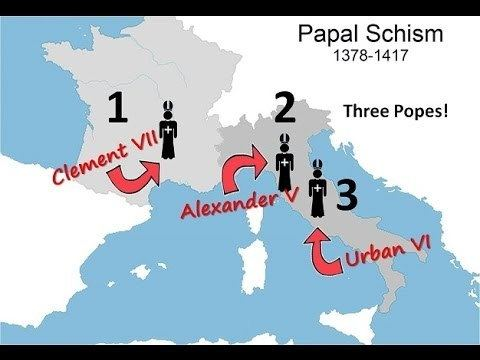
After the death of Pope Gregory XI in 1378, the open position in the papacy led to the Western Schism. Urban VI was elected as pope but soon became very unpopular among the Roman people because he was known for being “temperamental, suspicious, and reformist” (History 101).

Where did the second pope come from? “Many of the cardinals under Urban VI left Rome and appointed Robert of Geneva (who took the name Clement VII) as a rival pope in Avignon” (History 101).

The council of Pisa was held in 1409 to resolve the question of the true heir. But, wait! There’s more! Alexander V established a third papacy in Northern Italy, leading to more drastic tensions within the Catholic Church; the followers of the three popes were greatly divided along national lines and “political antagonisms arose” (Medium). All three popes claimed legitimacy to the throne of St. Peter. In an attempt to resolve this issue and claim power, they all excommunicated each other! In other words, they exiled each other from the Church; this is the worst punishment a member could possibly receive because it dooms a follower to Hell! Rather than leading to resolved conflict, this event only led to an ironic and funny story. Never before in history had three popes deemed each other as disgraces to the Church! 

After three excommunications and eight years of the Council of Constance to elect a recognized pope by all, Pope Martin was elected to the papacy, effectively ending the Western Schism; there were no more arguments over who the true pope was. 

Sources:

https://www.britannica.com/event/Western-Schism

View at Medium.com

https://www.history101.com/one-time-there-were-three-popes-and-they-all-excommunicated-each-other/

Image Source: 

https://alchetron.com/Western-Schism

Funny Stories in History Editor: Evan Spry

Filed Under: Historical Figures, History, Humor Tagged With: Sara Habibipour

Tomb or…Toilet?

October 20, 2020 by szachik@pvs.org 1 Comment

Elizabeth went searching for Funny but Historical Stories–as directed by Editor Evan. She found a most unsavory burial that nearly went to the grave with Patton.

By Elizabeth Shay

In 1917, esteemed World War II general George S. Patton visited the tiny French village of Bourg with the intention of establishing a tank training school. The local mayor approached General Patton in tears, claiming that the Americans had failed to inform him of the death of one of their soldiers. Patton was perplexed, as he was not aware of any death, but he allowed the mayor to lead him to the site of the soldier’s supposed grave: “Being unaware of this sad fact, and not liking to admit it to a stranger, I stalled until I found out that no one was dead. However, the Frenchman insisted that we visit the grave,”  as Patton recalled in his diary (later published by his widow Beatrice in 1947). 

Upon arriving at the site of the “grave,” Patton discovered that the mayor had led him to a recently filled latrine pit, with a makeshift cross that had the words “‘Abandoned Rear”’ stenciled into it. The French had mistaken the covered lavatory for a field grave! Not knowing how to respond, Patton simply offered his sympathies before leaving Bourg without telling anyone about the true nature of the grave.

Twenty-six years later, in 1943,  General Patton returned to his former Brigade Headquarters in Bourg and was shocked to learn that the “Abandoned Rear Grave” was still being maintained by the local population who viewed the unknown soldier as a national hero. Even after the second visit, Patton admits, “I never told them the truth!” and took the secret to his own grave.

Sources Referenced:

https://www.warhistoryonline.com/world-war-ii/abandoned-rear.html

10 Funny Stories from History that You Never Read in Your School Books

Funny Stories From History Editor: Evan Spry

Filed Under: Historical Figures, History, Humor Tagged With: Elizabeth Shay, Tomb or...Toilet?

The Secret Weapon?

October 19, 2020 by szachik@pvs.org 1 Comment

Editor Evan assigned the Blog Staff the subject of “Funny Stories in History.” Erik went searching, . . . and found a surprising twist to the military supply line during the Korean War.

By Erik Bearman

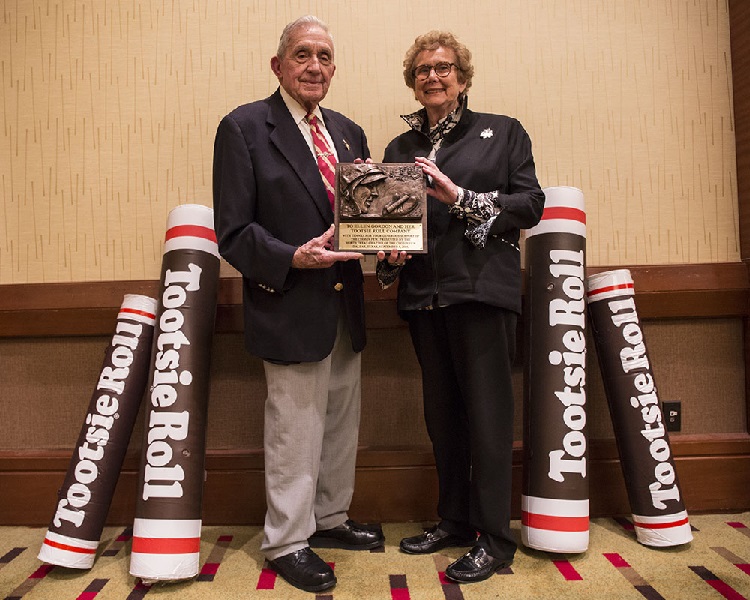
From 1950 to 1953, the Korean War raged across…well, Korea. In November of 1950, the First Division, led by American General Edward Almond, was pinned down near the Chosin River. Trapped in Korea’s unforgiving landscapes with temperatures reaching below -38℃, the Corps desperately needed additional fire-power. So, the men sent an encoded request for mortar rounds with the code phrase being “Tootsie Rolls.”

However…

The radio operator was a bit of a dingus. He did not have the code sheet that would tell him that “Tootsie Rolls” meant mortar rounds. As a result, instead of acquiring much-needed ammunition, the First Division received actual, chocolate, Tootsie Rolls.  

I know what you must be thinking, “Wow, these guys are screwed!” But, in fact, the Marines were saved! Besides also being a delicious snack, Tootsie Rolls can be used for plugging bullet wounds. And, after being warmed inside their mouths, the Tootsie Rolls could be made into a putty capable of sealing cracks in fuel pipes. Although the package was rather unusual, these Tootsie Rolls provided the soldiers with much needed food and makeshift medical supplies and allowed the First Division to escape the river and continue fighting in the war. After the Korean War ended, the surviving members of the First Division started calling themselves the “Chosin Few.”

Tootsie Rolls | HeadStuff.org

Sources:

https://usmc-mccs.org/articles/how-tootsie-rolls-accidentally-saved-marines-during-war/

headstuff.org

The Veterans Site Blog – GreaterGood

Funny Stories in History Editor: Evan Spry

Filed Under: History, Humor Tagged With: Erik Bearman, The Secret Weapon?

Senior Sunrise

October 15, 2020 by szachik@pvs.org 1 Comment

Celebrating School Events

We celebrated the start of our seniors’ last year at PVS last Saturday EARLY morning with a Senior Sunrise. ASB Advisor Ms. Clark had seniors write down their year’s intentions. Then, as the sun broke over the mountains, she captured seniors jumping in joyful silhouette.

Photo Credit: Ms. Jen Clark

Filed Under: Awakening, Current News, School Events Tagged With: Senior Sunrise

  • « Previous Page
  • 1
  • …
  • 57
  • 58
  • 59
  • 60
  • 61
  • …
  • 128
  • Next Page »

About

We are the Palm Valley Firebirds of Rancho Mirage, California. Join us in our endeavors. Venture through the school year with us, perusing the artwork of our students, community, and staff. Our goal is to share the poems, stories, drawings and photographs, essays and parodies that come out of our school. Welcome aboard!