the bird on fire

The Palm Valley School Student Blog

Subscribe to Blog via Email

Enter your email address to subscribe to this blog and receive notifications of new posts by email.

Powered by Genesis

Part 3 of The Story

November 15, 2019 by szachik@pvs.org 38 Comments

By Doreen Yuan

A Review of the Urban-Legend storytelling rules:

1. The comment section is part of the story. All comments are ordered by the number.

2. Comments that include a >> and a number (ex: >>1) are replies to the comment with that number.

3. Anonymous users in the comment section are part of the story. There are multiple anonymous accounts.

4. The main characters named No Longer Human and Curry are part of the story in the comments.

5. Readers can leave messages in the comment section but should not intentionally destroy or try to confuse the coherence of the story.

6. Readers can respond to any anonymous character interaction in the comment section–that response may change and contribute to the story.

7. Do not use inappropriate language.

8. The roles and anonymity in the comment section are created by the primary story author himself.

9. The time of all messages is based on the time of writing.

10. Have fun, and enjoy.

*This is a continuing story. The last installment was posted November 14, 2019. The story is told through the “Comments” section. Read them carefully.

Art Editor: Chelsea
Filed Under: Art, Fiction Tagged With: Doreen Yuan, Part 3 of The Story, The Story

James Takes on Architecture

October 28, 2019 by szachik@pvs.org Leave a Comment

By James Zheng

Back to our topic of ART, James asks, . . .

“What is art? I think that everything could be considered art as long as someone gives a reason and demonstrates how it is a type of art. Sometimes my classmates ask me, “You call this art?” while I’m gazing at various architectural styles. Well, I say, if you admire or enjoy seeing something, I would say that you could totally consider it Art.

Here is a list of architectural ART:

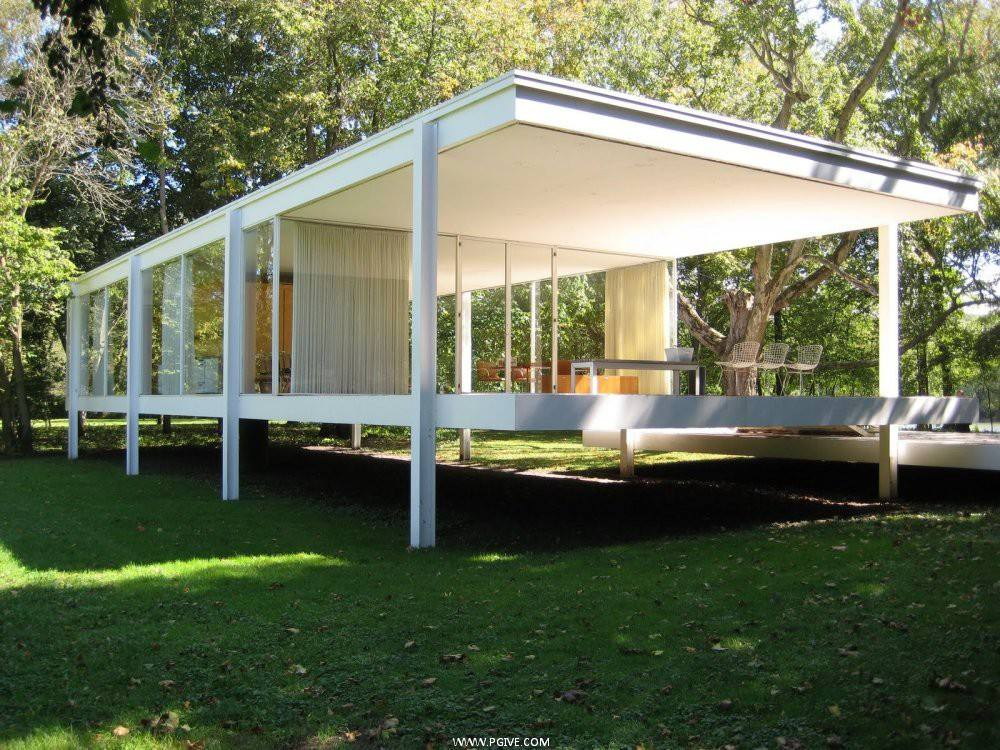
  • Farnsworth House.

The house depicted below was designed by Ludwig Mies Van der Rohe. The original is located in Plano, Illinois, USA. Farnsworth’s house is similar to overhead transparent glasses in a box shape with four sides. The model of the building is simple, clear, but it gives viewers an elegant view. Steel structures exposed to the outside are painted white and blend with the surrounding trees and lawns. Due to the full transparency of the glass wall, the view from the internal space is wide.

  • The Fallingwater Villa

The house designed by Frank Lloyd Wright, initially was located in Mill Run, Pennsylvania. Fallingwater Villa has achieved one of the most extraordinary successes in the historical development of architecture. On the aspect of space composition between the internal structure and external environment, I consider this as the most “natural” design I have reviewed due to its cohesive integrity with nature.

  • Guggenheim Museum

It is one of the most famous personal art museums designed by Solomon R. Guggenheim located in New York City. Unlike any other buildings, it can be described as a tea cup or a huge white spring, probably because of the spiral structure that makes some people say it looks like a conch as well. Solomon R. Guggenheim has a collection of modern art, many of which are hung by metal poles and appear to float in the air. Traditionally, museums display works of art on walls along the hall. But Guggenheim broke the tradition.

  • The Smith House

The Smith House is designed by Richard Meier and sits in Connecticut. The conceptual ideas for this house are similar to the Farnsworth House, on the way of exposing the internal space to outside. The frame that is displayed in rectangular shape creates a discordant sense, and its purpose may lead people to have the illusion of internal and external inseparability. But, when you actually see the building, it is easy to distinguish the outside and inside. You also would observe a difference between the protruding part and the surface of the building and realize the variability of space.

The magical presence of structural architecture may only seem physical–that it does not compare with the “art” of drawings and poems. But, despite architecture being recognized as a substantial practical existence, what architecture authentically expresses is the progress of the eras and the culmination of human aesthetics.

Art Editor: Chelsea

Filed Under: Art Tagged With: James Zheng, Jimmy Takes on Architecture

Musical Art

October 11, 2019 by szachik@pvs.org Leave a Comment

By Katelin Mei

There are many kinds of art. One kind of art is music. Since I have been playing the violin for a very long time, I have become very familiar with this art. I have been playing violin in the Buddy Rogers Youth Symphony for three years. Here are some of the benefits I have discovered of learning how to play an instrument, and joining an orchestra where many different instruments work together to create a beautiful piece of musical art.


Some ways it has positively affected my life are by encouraging me to try my best and giving me something to be proud of. I always try my best to be very dedicated to improving my skills on the violin. When I practice a violin piece or skill for a while and finally feel like I have learnt it, I feel very proud of myself for being able to achieve something I have worked for. 

Playing in an orchestra has helped me work with many different people who all have different parts to play and still create and work on the same music piece. It has helped me know how all our different parts work together to create a piece of music. We all have to work together and play our separate parts to create music that we can be proud of. I feel proud when we have worked on a piece for a while, and the end product is amazing. I feel proud because I know that I helped work on my part and we created something amazing with all of our parts working together.

Art Editor: Chelsea

Filed Under: Art Tagged With: Katelin Mei, Musical Art

Frankenstein in Pasadena: The Modern “Modern” Prometheus

October 10, 2019 by szachik@pvs.org 6 Comments

Leo Milmet, along with the PVS junior and senior classes, traveled to Pasadena’s A Noise Within Theatre last month to view the theatre group’s production of Frankenstein. Mary Shelley’s thriller is a staple of English literature. The AP Lit class had just finished reading the book over the summer. Leo, an avid fan of theatre and cinema, submitted this review of the production. His theatrical review is a timely fit, as this week blog celebrates art.

PRODUCTION GRADE: B-


By Guest Writer Leo Milmet

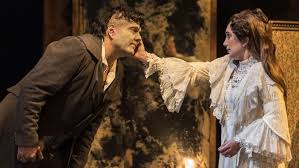
A Noise Within’s production of Frankenstein by Nick Dear was as interesting as it was imperfect. What do I mean by that? The first few moments with the Creature, crawling like a babe, not knowing who or what he is or why he’s been created, are perhaps the best moments in the show. Michael Manuel, the actor playing the Creature shrivels, shudders, shouts, grunts, and mesmerizes his way into the audience’s heads and hearts. He’s fascinating, and the show is worth the price of admission for him alone.  He makes us feel so much sympathy for a character who has been totally dehumanized by his portrayal in popular culture. 

Next to enter the stage, of course, is Victor Frankenstein himself. Now, the actor playing Victor is somewhat of an enigma to me. My main question is, “How could a director good enough to direct Manuel’s performance also be bad enough to direct this one?” Seriously. This actor gives a performance whose over-the-topness would be surprising in a high-school play, let alone a professional one. He plays Frankenstein like we are meant to laugh at his terrible portrayal. I haven’t seen him in anything else, but his portrayal of Victor Frankenstein may be the greatest work of comedy he’s ever done. He bands together with a few truly awful members of a mostly-decent ensemble to ALMOST offset all of the goodwill we’ve gotten from Manuel. What is this actor’s name? Kasey Mahaffy. I understand that it is very hard to recite the line “NOOOOOOOOOOO!!” like it’s well-written, but it can be done so much better. 

Mercifully, the first 30 minutes or so involve very few moments of Mahaffy’s ridiculous performance. Rather, we first see life through the eyes of the first and only member of a species, and it’s heartbreaking. He’s treated about as well as we would treat a rattlesnake on our kitchen table, and it’s sad. The mirror it holds up to society is interesting, and someone was onto something wonderful when he or she decided to populate the stage with mirrors.

As the show continues, it becomes more and more eventful, and the story is fascinating all along; its tone is always of dread; the intent is never to frighten but to create empathy for pretty much everyone, which is very smart because I, for one, find it easy to pity such a lost soul as the Creature. And, if it weren’t for Mahaffy, the play would have succeeded in creating empathy for the major characters, despite some shortcomings in the ensemble department. 

The ensemble is okay at best; the dialogue could use a brush-up; Kasey Mahaffy as Victor Frankenstein is utterly ridiculous. Still, the story’s technical design and especially the brilliantly-characterized performance of Michael Manuel caused me to have a great time watching the play–despite its shortcomings.

*The views of guest writer Milmet are uniquely his own and do not represent the opinions and views of thebirdonfire.org.

Art Editor: Chelsea 

Filed Under: Art, Review Tagged With: Frankenstein in Pasadena: The Modern "Modern" Prometheus, Leo Milmet

Lyrics? Where We’re Going, We Don’t Need Lyrics

October 8, 2019 by szachik@pvs.org 3 Comments

By Luke Langlois

Ah yes, classical music. Who doesn’t love a little elegance every once in a while?  No, not the 80s or the 90s, those classics. I’m talking about the music you are graced with when walking into the house of a cultured enthusiast or an eccentric billionaire. History has remembered the names of the larger-than-life composers like Beethoven, Mozart, Bach, Brahms, and more. But, unless you are well-versed in classical music or an orchestral instrument, do you know the names of these composers’ works? Before doing my research, I can say with absolute certainty that I had no idea which piece went “bumbumbumbumbumbumbum da da da da.” So, here are the uber-famous classics that you probably don’t know the name of. If you know all of these, go ahead and flex your genius in the comments. 

1 –  “Für Elise” by Ludwig Van Beethoven: “Für Elise,” also known as “Bagatelle No. 25 in A minor,” has the most iconic opening piano rift out of ALL of the piano riffs. Is piano rift too uncultured? Fine. The composition is an elegant piano solo. Anyway, saying that it is the most iconic of all time may be a broad and uncited generalization, but trust me; you will recognize it almost instantly.

2 – “Eine kleine Nachtmusik” by Wolfgang Amadeus Mozart: Officially known as “Serenade No. 13 for strings in G Major,” this composition begins with another immediately recognizable riff. This time, though, it’s violins!

3 – “Toccata and Fugue in D minor” by Bach: Although this is one of the most eye-catching titles in HISTORY (not),  “Toccata and Fugue in D minor” is liable to catch your ears with a sense of dread. This piece has been used in horror pop culture for decades. Listen in to enter a creaky old mansion full of monsters and ghoulies. 

4 – “Minuetto” by Luigi Boccherini: So, you’ve accidentally stumbled upon a row of mansions in the gold-laced streets of Italy. When you ring that diamond-encrusted doorbell, this composition is what you hear as the butler comes to answer.

5 – “The Four Seasons” by Vivaldi: This piece, actually a compilation of season-representing violin concertos by Vivaldi, is another composition that has consistently been associated with elegance and the finer things of life. The most famous portion of this composition comes from the opening of “Spring Allegro.” 

6 – “Peer Gynt – Morning Mood” by Edvard Grieg: This piece is likely in your mind as the “happy morning wake up” theme where the birds are chirping, the sun is shining conveniently through the window, and the recently awakened person is stretching photogenically. Bob Ross and Mr. Rogers probably woke up to this every morning.

7 – “Canon in D” by Pachelbel: This piece is so wedding that people probably do not enjoy playing it at weddings. I haven’t been at a wedding in over a decade, so I wouldn’t know. 

8 – The “Final” of the Overture to William Tell by Rossini: The “Final” from this Overture is the well-known “horse-race” song. The best way to describe this song with text is certainly “Dundundundundundundundun dun dun DUN dundudun.”

9 – “Also sprach Zarathrustra” by Richard Strauss: Imagine you’re Neil Armstrong and you are taking a cinematic walk on the moon to plant the flag of the United States. There is a 78.9% chance that Strauss’s opening melody is being played in your ears. This symphonic poem has more to it than its introduction, so continue listening (if you have the time).  

10 – “Gymnopédie no. 1” by Erik Satie: This soft composition may instill sadness, peace, relaxation, or a conglomeration of all three of these feelings. You may also be irresistibly pressed to pronounce the title of this work. It’s tough.

That’s all for now, folks. I hope you leave this post knowing at least one more classical title. I, personally, have learned to never judge a classical piece by its name. I’m starting to believe that the less you understand out of a title, the better. Obviously, this list is not all-encompassing. Dig deeper; you know more classical tunes than you think you know. Finally, listen to these works past just their minute-long introductions. Many of the universally recognizable portions are just brief moments of a tone poem that lasts for an hour. Become a classical music enthusiast and rid yourself of any lyrical corruption. This is where I would put an Italian farewell to up my culture levels, but I don’t know much Italian. 

 Art Editor: Chelsea Xu

Filed Under: Art Tagged With: Luke Langlois, Lyrics? Where We’re Going, We Don’t Need Lyrics

Art Theme Week!

October 8, 2019 by szachik@pvs.org Leave a Comment

By Art Editor Chelsea

Hello everybody!! I am the editor for this week, and the theme is going to be art!! Art is a commonly used word that describes many things including liberal arts, art history, fine arts, digital arts, drama, music, musicals, etc. So, please enjoy this week’s posts by our school’s amazing bloggers and have a wonderful day.–Chelsea

Image by Vexx on Youtube.

Filed Under: Art Tagged With: Chelsea Xu

  • « Previous Page
  • 1
  • 2
  • 3

About

We are the Palm Valley Firebirds of Rancho Mirage, California. Join us in our endeavors. Venture through the school year with us, perusing the artwork of our students, community, and staff. Our goal is to share the poems, stories, drawings and photographs, essays and parodies that come out of our school. Welcome aboard!