the bird on fire

The Palm Valley School Student Blog

Subscribe to Blog via Email

Enter your email address to subscribe to this blog and receive notifications of new posts by email.

Powered by Genesis

He Had a Dream

February 5, 2025 by szachik@pvs.org Leave a Comment

By Middle-School Blogger Sophia Bottine

Welcome to Black History Month. Last January 20th was more than the “3” in a 3-day weekend. It was Martin Luther King, Jr.’s, birthday we were commemorating. Sophia set to work back then to better understand the man, the leader, the Nobel Peace Prize winner. Here’s what she found.

Martin Luther King, Jr., son of Martin Luther King, Sr., a pastor at the Ebenezer Baptist Church, and Alberta King, a former schoolteacher, was born on January 15, 1929, in Atlanta. 

In his early years, he went to Yonge Street Elementary School and later went on to Booker T. Washington High School, where he joined the debate team. He quickly developed a reputation for his powerful public speaking skills and his voice, which was said to be very deep. 

Then, at just 15, he left his high school and went to Morehouse College, an all-male school. 

Martin Luther King, Jr., pictured on the steps of the Lincoln Memorial where he gave his “I Have A Dream” speech. (Photo Source: NPR where you can see and hear the full speech)

While he was at Morehouse, he took classes in medicine and law but changed to ministry in his senior year when his father told him to (Britannica.com). King graduated from Morehouse College in 1948. For the next three years, King attended Crozer Theological Seminary, located in Upland, Pennsylvania, and became acquainted with Mohandas Gandhi’s philosophy of nonviolence (Britannica.com). In 1951, he got a bachelor’s degree in divinity. After Crozer, he attended Boston University and studied man’s relationship to God, which got him a doctorate for a dissertation titled, “A Comparison of the Conceptions of God in the Thinking of Paul Tillich and Henry Nelson Wieman” (Britannica.com).

After King finished his studies, he returned to the South and became a pastor at Dexter Avenue Baptist Church in Montgomery, Alabama. Shortly after he returned, Rosa Parks made history when she refused to give up her bus seat to a white person. Inspired by this, King staged an extremely successful boycott of the Montgomery buses. Then, after a year, on November 13, the Supreme Court ruled that bus segregation was illegal making the bus boycott successful. 

King later formed the Southern Christian Leadership Conference or the SCLC in 1957 to fight segregation and gain civil rights (Britannica.com). He had decided that it was time to take a stand to make things right! In 1958, U.S. Congress passed the first Civil Rights Act since the reconstruction. In that same year, Martin Luther King, Jr., is almost assassinated when Izola Ware Curry, a 42-year-old woman, stabs him with a letter opener as he is signing copies of his book, Stride Toward Freedom, in Harlem, New York (kinginstitute.standord.edu).

Now skipping a bit ahead to 1961, in November, the Interstate Commerce Commission bans segregation in interstate travel. In the same year, the Congress on Racial Equality (CORE) began the first Freedom Ride through the South, in a Greyhound bus. Martin Luther King, Jr., then gets arrested two times, once in 1962 and the other in 1963 for protesting segregation in public parks and other facilities. He was cited for demonstrating without a permit (rownak.com).

During his subsequent time in the Birmingham Jail, he writes his famous letter called “The Negro is Your Brother.” This letter responding to the “A Call for Unity” clergymen who had published a letter criticizing King’s efforts (niotbn.squarespace.com). That same year, Martin Luther King, Jr., leads 125,000 people down a Freedom Walk in Detroit, President Kennedy gets assassinated, and King makes his “I Have a Dream” speech–which is his most famous speech.

In the next five years, MLK accomplishes many many things and gets arrested a few more times, until he gets shot as he is standing on his balcony at the Lorraine Motel in Memphis, Tennessee. A few days later on April 9 a funeral was held in his honor. And within a week of the assassination, the Open Housing Act is passed by Congress. Finally, in 1986 on November 2, the Martin Luther King Holiday was made honoring the youngest man to have received the Nobel Peace Prize (NobelPrize.org). 

Filed Under: 1960s, Black History Month, Historical Figures Tagged With: He Had a Dream, Sophia Bottine

Who are you, Maya Angelou?

February 26, 2021 by szachik@pvs.org Leave a Comment

As we near the end of Black History Month, Hannah directs our attention to one of the most famous and influential Black-American writer-performers–Maya Angelou.

By Hannah Hall

As February is Black History Month, we can take this time to reflect and honor the achievements of the African-American community in the past and present. Somebody I wanted to talk about and remember during this time is Maya Angelou. Angelou was an African-American “author, poet, historian, songwriter, playwright, dancer, stage and screen producer, director, performer, singer, and civil rights activist” (Poetry Foundation). She is known for writing a multitude of autobiographies—her first and most internationally recognized being I Know Why the Caged Bird Sings—and her many many poetry books. One poem that I wanted to introduce to the blog is her poem Caged Bird.

The poem acts as an extended metaphor to the past and present struggles of race-based oppression African-American communities face in this country. The cage symbolizes the physical, psychological, and emotional limitations that oppression creates for the caged bird inside, which can be interpreted as the African-American community. The “free bird” in this poem can be interpreted as the white community in America and how they live without something actively holding them back. Because of the color of their skin, they have nothing stopping them from pursuing their desires because there aren’t any societal limitations. I encourage you to read this poem and in your own time reflect on its depth and historical background.

Caged Bird by Maya Angelou

A free bird leaps

on the back of the wind   

and floats downstream   

till the current ends

and dips his wing

in the orange sun rays

and dares to claim the sky.

But a bird that stalks

down his narrow cage

can seldom see through

his bars of rage

his wings are clipped and   

his feet are tied

so he opens his throat to sing.

The caged bird sings   

with a fearful trill   

of things unknown   

but longed for still   

and his tune is heard   

on the distant hill   

for the caged bird   

sings of freedom.

The free bird thinks of another breeze

and the trade winds soft through the sighing trees

and the fat worms waiting on a dawn bright lawn

and he names the sky his own

But a caged bird stands on the grave of dreams   

his shadow shouts on a nightmare scream   

his wings are clipped and his feet are tied   

so he opens his throat to sing.

The caged bird sings   

with a fearful trill   

of things unknown   

but longed for still   

and his tune is heard   

on the distant hill   

for the caged bird   

sings of freedom.

Sources:

https://poets.org/poet/maya-angelou

https://www.poetryfoundation.org/poems/48989/caged-bird

Black History Month Editor: Evan Spry

Filed Under: Black History Month Tagged With: Hannah Hall, Maya Angelou?, Who are you

Tulsa Massacre or Tulsa Race Riot?

February 26, 2021 by szachik@pvs.org 1 Comment

By Jake Sonderman

In the wake of the George Floyd protests over the summer and extreme momentum in the Black Lives Matter movement, we’ve all been learning more about the history of the Civil Rights Movement and racial injustice in the US than we learned in our American history classes. I feel there definitely should have been proportionately more curriculum on the subject. A key event in the history of racial injustice in the US is the Tulsa Massacre. 

The History

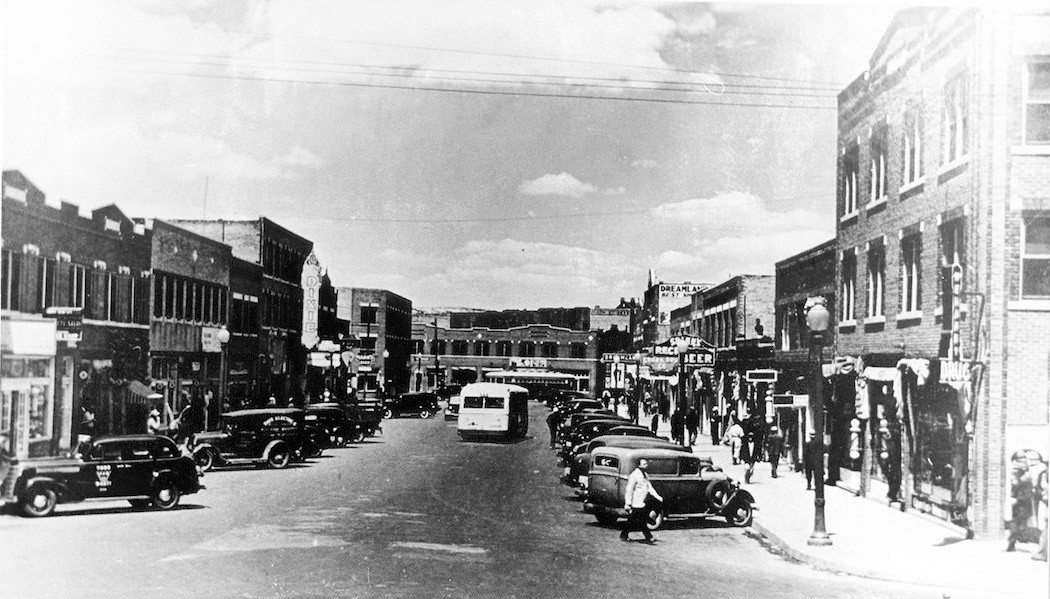
The Tulsa Massacre, also referred to as the Tulsa Race Riot, began on May 31, 1921, in the Greenwood neighborhood (aka “Black Wall Street”) in Tulsa, Oklahoma. This small neighborhood was coined “Black Wall Street” because of the many successful African-American owned businesses. The neighborhood had its own school, dental practice, and hospital (whose owner was one of the few black millionaires at the time). In May 1921, Dick Rowland, an African-American shoe shiner, was accused of raping a white woman in an elevator. He was being held at the courthouse. An article was published in the Tulsa Tribune with sources saying a lynching was planned that night for Rowland. Groups of armed whites and armed African-Americans rallied around the courthouse that night. The confrontation resulted in one white man being shot, and that was the spark. The white mob went on to kill as many as 300 African Americans (the actual number is not known, but it is between 75-300) (Britannica.com). The mob also burned down most of the businesses on Black Wall Street, and insurance companies would not give these businesses their pay out because their policy did not cover “rioting” (Tulsaworld.com).

Image result for black wall streetBlack Wall Street, Pre-May 31, 1921Image result for black wall streetBlack Wall Street, Post-May 31st, 1921

Riot or Massacre? 

Merriam-Webster defines a riot as, “a tumultuous disturbance of the public peace by three or more persons assembled together and acting with a common intent” (Merriam-Webster.com). Denotatively, this describes what happened on May 31-June 2, 1921. A group of whites disturbed the public peace in Greenwood by burning many businesses and were most definitely acting with a common intent. But, to ignore the connotations of the word “riot” is problematic. 

In Tulsa, the property damage and murders were directed at a specific group of people. While the arrest of Dick Rowland sparked the disaster, it was not the entire cause. The cause is likely rooted in resentment, as Greenwood was wealthier than some of the white communities surrounding it. That day was a sort of reckoning for the white mobs that desecrated Greenwood. 

Massacre.

The most common definition of massacre is, “the act or an instance of killing a number of usually helpless or unresisting human beings under circumstances of atrocity or cruelty” (Merriam-Webster). A less common definition also by Merriam-Webster is, “an act of complete destruction.” I believe this second definition perfectly characterizes what happened in Tulsa in 1921. This was an act of vast destruction on Greenwood’s lives and livelihoods. 

The first Merriam-Webster definition characterizes the violence well enough, considering how many African Americans were killed in those two days. Technically, however, they weren’t defenseless at the beginning, but after that first encounter, the “riot” turned into the killing of defenseless citizens in Greenwood. The incident devolved into white patrols roaming the streets of Greenwood shooting on sight (Britannica.com). The U.S. House of Representatives and the U.S. House of Representatives Judiciary Committee passed the Tulsa-Greenwood Race Riot Claims Accountability Act, where they heard testimonies from survivors. One survivor, Olivia J. Hooker, said she survived the “Tulsa Race Riot of 1921”; she self corrected and added, “but what really was a massacre” (TulsaWorld.com).

All of this is why I believe we should call what happened in Tulsa a massacre. It is important we take note of the connotations of words when dealing with important historical subjects such as these, so that we can make sure those who learn about this later get an accurate picture of our history. 

Sources:

https://tulsaworld.com/news/local/education/once-taboo-discussion-tulsa-race-riot-now-included-in-state-academic-standards/article_9f6dfdd5-1fd7-58b4-9c06-b047c7ebe31e.html

https://www.britannica.com/event/Tulsa-race-riot-of-1921

https://tulsaworld.com/news/local/racemassacre/tulsa-race-massacre-for-years-it-was-called-a-riot-not-anymore-heres-how-it/article_47d28f77-2a7e-5b79-bf5f-bdfc4d6f976f.html

https://www.merriam-webster.com/dictionary/riot

https://www.merriam-webster.com/dictionary/massacre

Black History Month Editor: Evan Spry

Filed Under: Black History Month Tagged With: Jake Sonderman, Tulsa Massacre or Tulsa Race Riot?

The Most Influential Black Scientists in History

February 12, 2021 by szachik@pvs.org Leave a Comment

February is Black History Month, and the Palm Valley Blog would like to highlight some of the most influential Black leaders of our time. We start with blogger Sara’s list of the most influential Black scientists in history.

By Sara Habibipour 

We all know of Einstein, Newton, and Hawking. But, during this Black History Month, let’s take a moment to appreciate some Black scientists who also left their mark on history. 

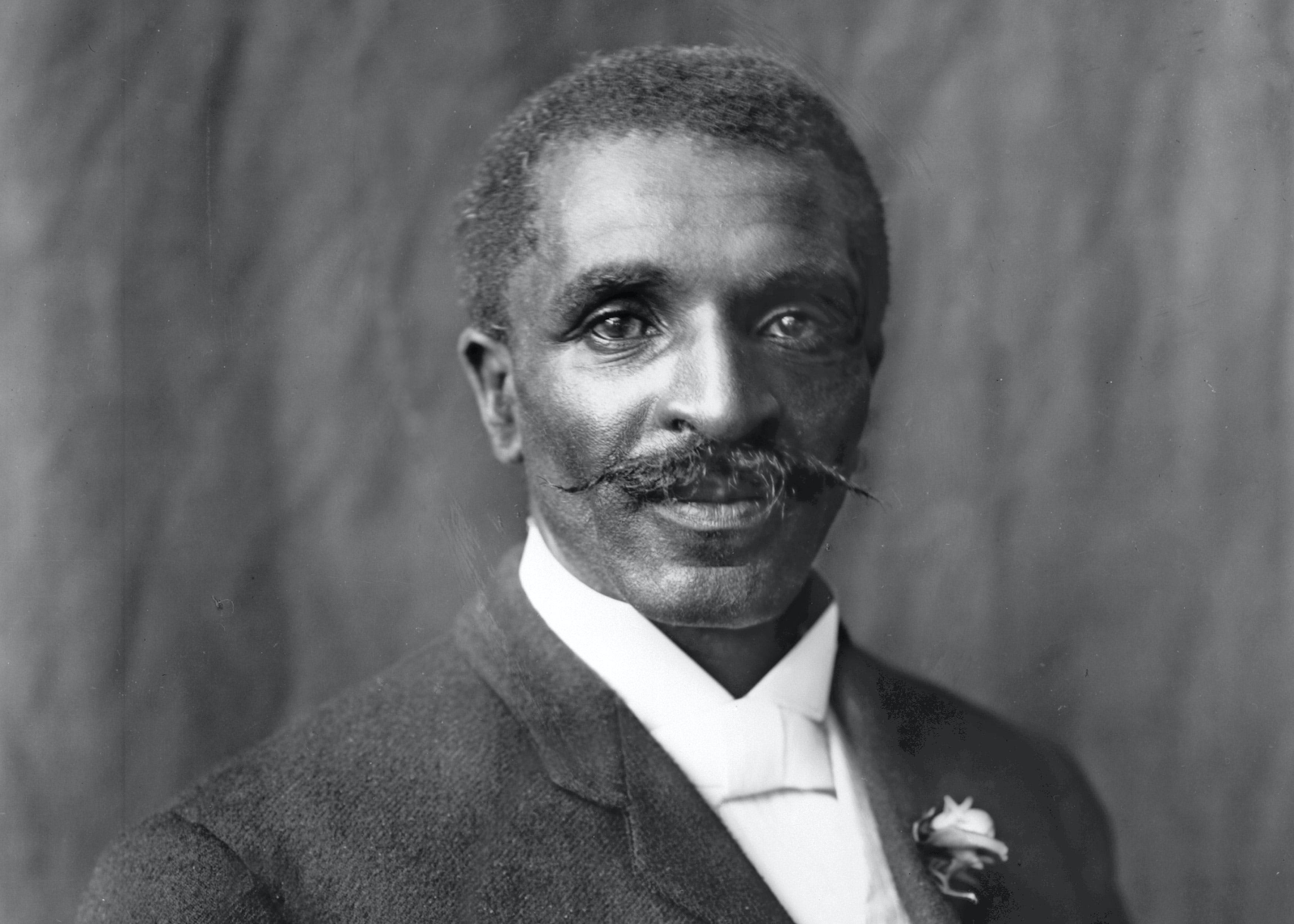
George Washington Carver

George Washington Carver was an agricultural scientist who made his scientific breakthrough with peanuts. Yes. Peanuts. 

Born a slave a year before slavery was outlawed, Carver left home young to pursue his education.

In 1894, Carver was the first African American to earn a Bachelor of Science degree. While studying at Iowa State University, he quickly impressed many of his professors with his research into fungi and soybeans. Eventually, they convinced him to stay for his masters studies. 

It was then that his idea of crop rotation created a scientific breakthrough. He learned that years of growing cotton had depleted the nutrients from the soil, resulting in fewer crops. But, by growing nitrogen-fixing plants like peanuts and soybeans, the soil could be restored. This scientific discovery soon greatly benefited farmers and the economy. 

Katherine Johnson

Not only was Katherine Johnson one of the first black students to integrate into West Virginia’s graduate schools, but she was a key player at NASA. 

In 1962, Johnson was called upon to help secure the orbital mission of John Glenn. The complexity of the orbital flight had required the construction of a worldwide communications network; these computers were responsible for keeping Glenn’s mission safe and successful. As a part of the preflight checklist, Glenn asked for Johnson, known then as one of the most talented mathematicians at NASA, to run the same numbers through the same equations that had been programmed into the computer, but by hand on her desktop mechanical calculating machine. “If she says they’re good, then I’m ready to go,” he said (NASA). 

Because of Johnson’s work, Glenn’s flight was a success. This moment was significant in changing the trajectory of the U.S. and Soviet Union’s efforts in space. 

To learn more about her, watch the movie Hidden Figures featuring Taraji B. Henson, Janelle Monae, and Octavia Spencer. 

Alice Ball

Alice Ball was an African-American chemist who developed the most effective treatment for leprosy in the 20th century. Chaulmoogra oil had been previously used for treating leprosy, but the treatment wasn’t widespread because it was too sticky and hard to manage in hospitals. Some hospitals used injections of the oil, but all it did was form bubbles under the patients’ skin, making their skin look and feel like bubble wrap with blisters. If the patients tried to swallow it, it tasted so bad that many threw up or choked while swallowing it. 

At just the young age of 23, Ball developed a technique that would allow the chaulmoogra oil to become injectable and absorbable by the body. This technique, now known as the “Ball Method,” was the only treatment for leprosy that didn’t leave blisters on the skin or a bad taste in the mouth.

Unfortunately, due to her early death, Alice was unable to publish her revolutionary findings. Arthur L. Dean, a fellow chemist, continued her work, published the findings, and began producing large quantities of the injectable chaulmoogra extract. 

Otis Boykin

Otis Boykin was a 20th-century African American inventor whose work improved electrical resistors, which made the development of electronic devices possible. 

Boykin pursued graduate studies at the Illinois Institute of Technology from 1946 to 1947, but, unfortunately, he had to drop out when his family could no longer afford to pay tuition. Although unfortunate, this event led Boykin to begin working on electrical inventions.

Boykin earned his first patent in 1959 for a wire precision resistor and a patent for an electrical resistor in 1961 that was both inexpensive and easy to produce. This resistor had the ability to “withstand extreme accelerations and shocks and great temperature changes without danger of breakage of the fine resistance wire or other detrimental effects” (MIT). 

Without Boykin, we wouldn’t have televisions, computers, radios, or pacemakers. We really owe him! 

In fact, we owe all these scientists. They’ve changed and impacted our lives.

Sources: 

https://www.history.com/topics/black-history/george-washington-carver

https://scientificwomen.net/women/ball-alice-121

https://www.nasa.gov/content/katherine-johnson-biography/

https://lemelson.mit.edu/resources/otis-boykin

Black History Month Editor: Evan Spry

Filed Under: Black History Month Tagged With: Sara Habibipour, The Most Influential Black Scientists in History

About

We are the Palm Valley Firebirds of Rancho Mirage, California. Join us in our endeavors. Venture through the school year with us, perusing the artwork of our students, community, and staff. Our goal is to share the poems, stories, drawings and photographs, essays and parodies that come out of our school. Welcome aboard!