the bird on fire

The Palm Valley School Student Blog

Subscribe to Blog via Email

Enter your email address to subscribe to this blog and receive notifications of new posts by email.

Powered by Genesis

I started a microgreenery in my friend’s backyard.

March 15, 2023 by szachik@pvs.org Leave a Comment

By Luke Sonderman, Backyard Farmer

Microgreens. No, I’m not talking about broccoli and baby carrots. I am talking about microgreens. What are microgreens? I asked myself that same question before I spent a thousand dollars building a farm. 

What are microgreens?

Microgreens are vegetables that are picked as young seedlings right as leaves begin to grow (integrisok.com). Microgreens are grown in many varieties and can be found at farmers markets and fancy boutique grocery stores. If the microgreens are grown hydroponically (grown in water with no soil), you can find them at stores and farmers markets still growing in the package!

How did I become a microgreen farmer?

I decided to go into business with my best friend Ethan after he pitched the idea of growing microgreens to me. I had no idea what microgreens were, but after researching microgreen business models, I discovered that it was a business venture with very little risk. Ethan found a business in Joshua Tree via Facebook Marketplace that was selling a 10ft x10ft microgreens grow tent, microgreen racks, microgreen grow trays, a grow tent ventilation fan, several LED grow lights, and booth decoration for farmers markets. After purchasing the equipment, we built the tent and set up the racks with lights. With our farm assembled, we began doing research into the most profitable microgreens to grow and the most popular microgreens at farmers markets. 

How microgreens are grown

After starting our farm, we had to make the big decision whether to grow our greens in soil or hydroponically. Hydroponically-grown microgreens are grown in water trays with no soil. This means that when you package them, if you put water into the container they will continue to live and grow as long as they stay in water. For simplicity, we grow our microgreens in soil. It is much easier. 

When can you buy our microgreens?

Since we are still in the testing and licensing phase of our farm, our microgreens are not yet for sale. In coordination with multiple local farmers markets, we plan to have multiple farmers market spots throughout the seasons where we will sell our microgreens, mixes, and microgreen beverages! So, in the next few months, when you are at your local Coachella Valley farmers market, look for the name Little Sprouts, and try some microgreens. Maybe you’ll get a little friends and family discount!

Filed Under: Food, Green, The Outdoors Tagged With: I started a microgreen farm., Luke Sonderman

Succ it up 

August 31, 2022 by szachik@pvs.org Leave a Comment

In our last post on hobbies to consider, we look at Penny’s newly adopted hobby of growing succulents. This is a perfect activity for our desert landscape. 

–Blog Advisor Zachik

By Penny Andreas, Middle-School Blog Correspondent

Apus echeveria

Through these months of a very hot summer, I’ve done pretty much nothing but stay inside all day. I eventually (it took me three hours of sitting on the couch on a long summer day) came up with an idea of a hobby to keep me busy. I did a little research, and I found an interesting little plant called a succulent. There are over 60 species of succulents and about 1,000 different colors, textures, and sizes (ftd.com). Many succulents grow happily in the desert such as Graptopetalum paraguayense, or the ghost plant, and the pencil plant, which mainly grows in high drought landscapes. One of my favorite succulents is the Apus echeveria. which is pictured here.  

Apus echeveria rely on a lot of sunshine, so they like to live near a window. If they are not getting sun, they will grow towards any light they see, and that will lead to a weak stem and poor growth. Make sure to give a succulent the right amount of water; if they are overwatered, their leaves will start to look like shriveled fingers that have been in a hot tub for too long. If they don’t get enough water, their bottom leaves will start to shrivel, so pay attention just in case your succulent starts to die. Apus echeveria can live anywhere as long as three years up to a couple decades! Hobbies are very important, so go find one yourself! 

Filed Under: Green, Plants & Opinions Tagged With: Penny Andreas, Succ it up

The Most Poisonous Garden on Earth

May 3, 2022 by szachik@pvs.org Leave a Comment

By Oliver Martinez, Middle-School Correspondent & Budding Botanist

A castor bean plant sounds harmless, even like it’s meant to be eaten. But, be careful; eating it could be catastrophic. There are lots of dangerous plants on earth. Here’s a garden full of them.

The Poison Garden in Alnwick Castle, located in the English county of Northumberland, was founded in 2006. Interesting point–this is also the place where Harry Potter and Downton Abbey were filmed. Originally, the garden was the Duchess Jane Percy’s idea, to make a garden filled with deadly plants. According to RENATURED: ANIMALS, PEOPLE AND THOSE IN BETWEEN, Duchess Percy said, “I wanted to create a garden that was beautiful yet pleasurable, educational yet not stuffy.”  She succeeded. The garden is definitely not stuffy, but it is scary. This garden has over one hundred poisonous plants: such as the Strychnine tree, deadly nightshade, Castor beans, etc. Entering and breathing this garden could actually kill you. Many people faint upon entering this garden. 

Here is what the interior of the garden looks like. 

Photo Credit: Garden Collage

Let’s look at something that sounds harmless: the castor beans. According to ScienceDirect, “Ricinus communis (castor beans) is classified as the most poisonous plant on earth for humans. The toxicity of raw castor beans is due to the presence of ricin.” Yes, ricinus communis is raw castor beans, and they are highly poisonous. According to MedicineNet, “Ricin is a toxic protein found naturally in castor beans from the castor bean plant. It can be deadly, but it depends on the dose and route of exposure.” So, it is safe to have and use castor oil, but it can cause some issues if taken internally. 

Picture of Castor Beans: source finegardening.com

Another dangerous plant is the Strychnine tree. According to Centers for Disease and Prevention, “Strychnine is a strong poison; only a small amount is needed to produce severe effects in people. Strychnine poisoning can cause extremely serious adverse health effects, including death.” So no, I would not recommend having strychnine at home. This plant is extremely dangerous.

Strychnine Tree: source inaturalist.org

Another poisonous plant found in the garden is deadly nightshade. According to all that’s interesting, “Ingesting just two to four berries can kill a human child. Ten to twenty berries can kill an adult. Even chewing on just one leaf can lead to a dirt nap. Milder symptoms of deadly nightshade poisoning include delirium and hallucinations, which appear quickly once ingested.” Owning this plant if you have kids would be ludicrous. I would say that even if you are an adult, don’t have this plant in your garden.

Deadly Nightshade: source woodlandtrust.org

I’ve asked my friends if they would go into this garden, and for how much cash: 

“I will go for 10 million dollars, and I’ll make sure I bring a good quality gas mask with me.”

Sherwin Hemmati, 8th Grade

“I won’t go at all no matter the money because that can cause me death and my life is worth more than money.”

Michael Pete, 8th Grade

“I’m going in for 10k and I’m bringing a gas mask and dodging all the plants.”

Zander Eaton, 7th Grade

Now, The Poison Garden may not seem like the best place to go for a vacation, but if I ever go to England, I want to visit the Alnwick Castle and its fascinating garden. The reason why is because I’d enjoy reading about the poisonous plants and their history, but I’d definitely bring a gas mask. 

Filed Under: Far Away, Green, Health and Disease, Plants & Opinions Tagged With: Oliver Martinez, The Most Poisonous Garden on Earth

Coachella Valley Music and Arts Festival, the Desert’s Killer

February 23, 2022 by szachik@pvs.org Leave a Comment

The Coachella Music and Arts Festival is one of the most popular events in the United States. What people don’t know is that the festival has its faults. Environmentalist Sienna Price shows us the dangers of Coachella. – Editor Alyna Rei

Upon request that The Bird On Fire blog move closer to home for the next few weeks, instead of going to any exotic country, I have decided to show you the negative side to Coachella–which is one of the most visited music festivals in America. 

Coachella attracts around 100,000 attendees every day! (washingtonpost.com)  Can you imagine the waste it produces?! On average, there aree 107 tons of waste produced in a 15-day festival, and only 20% of it gets recycled (washingtonpost.com). 

As you all know, music festivals are loud. They can reach up to 110 decibels, which is equal to a jet plane taking off (washingtonpost.com).Noise pollution from the festival can massively alter animal behaviors and disrupt ecosystems. Some situations in the Coachella Valley could be birds having to call longer or plant growth being disturbed (curesblog.lmu.edu). 

It’s not just what happens in the Coachella festival. If 100,000 people attend each day, most of the people would drive there. That’s polluting even more. Granted–some people drive electric cars and not every single person will drive an individual car to the festival. This is something to think about.

Photo credit: spectrumnews1.com

I’m not trying to tell you not to go to Coachella. I do know that it is a great music festival. I am simply just trying to make you aware of the effects and environmental impacts. Say, you have just booked your tickets, what can you do to help?:

  • Reuse. Do not throw away a plastic bottle. Refill it, or simply bring a reusable water bottle.
  • Rideshare. If you know someone who is going,  ask to share the car instead of taking two.
  • Wear biodegradable glitter. You don’t think about what a little bit of non-biodegradable glitter does to the environment, and a little bit might not do that much. But, if 100,000 people wear glitter, think of that environmental impact. 
  • Clean up. Clean up around your campsite if you are camping. If  you see a piece of trash, pick it up. This is not even restricted to Coachella. Pick up around your community.

If you are considering going to Coachella, or if you already booked your ticket, I hope that you keep in mind the things that you could do to help the environment: pick up your trash; share your rides; take public transports! There are many ways you can help the environment.

Thanks for reading!

Filed Under: Culture, Entertainment, Festivities, Green, The Outdoors Tagged With: Coachella Valley Music and Arts Festival, Sienna Price, the Desert’s Killer

Pick up your trash!

February 15, 2022 by szachik@pvs.org Leave a Comment

Environmentalist Alyna Rei brings to our attention the harsh truth about littering. In this informative blog Alyna gives us insight into the big world of trash and how it affects the environment around us.  –  Editor Sienna Price

By Alyna Rei, Environmentalist

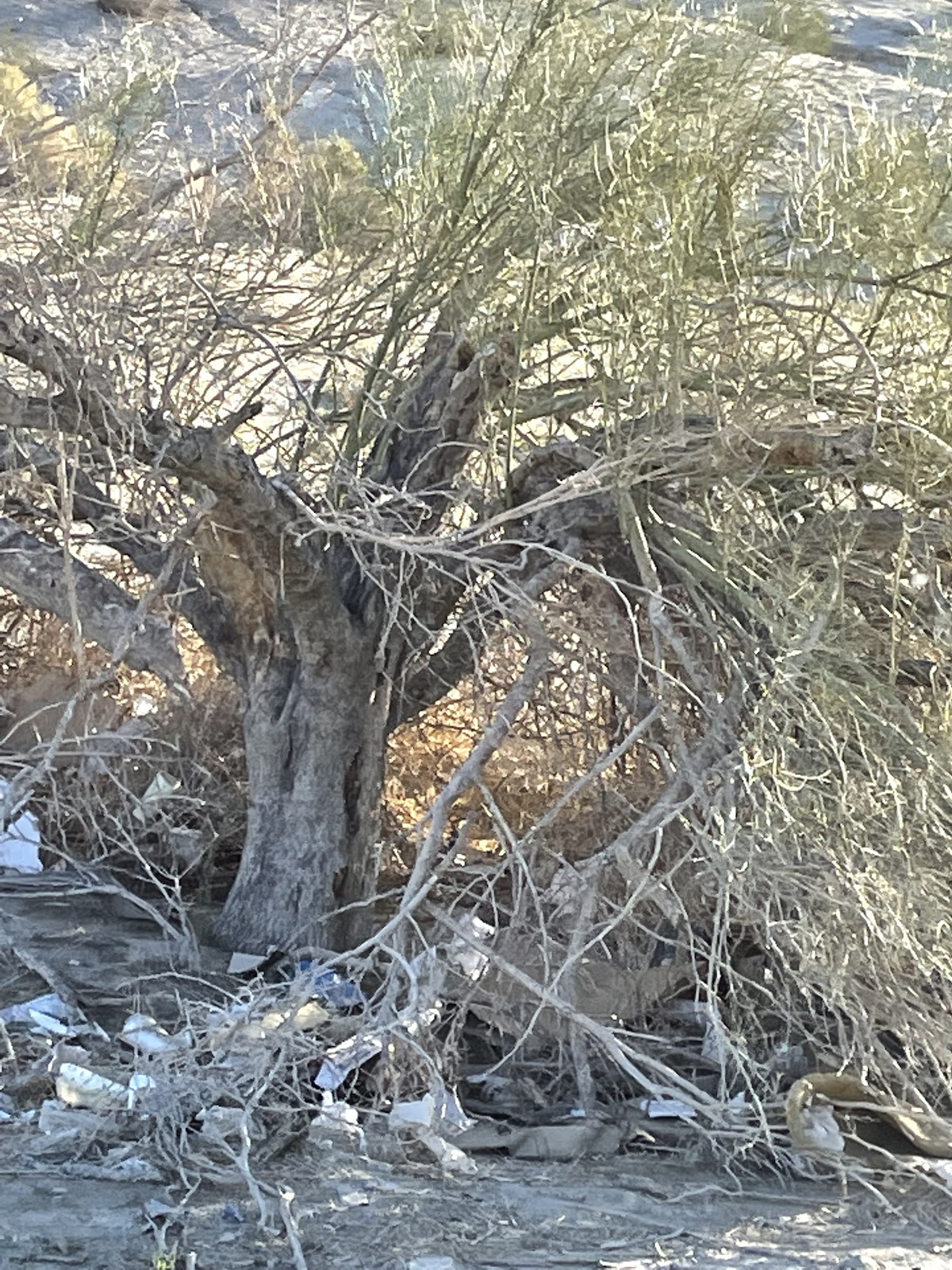
Littering is one of the many issues we have in the world that can easily be solved. The Coachella Valley is just one of the many cities in the world that is affected by littering. You don’t realize how much of an effect you have on the environment when you throw a cup out of the window, or if you drop food packaging on the ground. To decrease littering, we should educate the community as to how pervasive littering is and how it affects the planet. Here’s what I see when I drive to school in the morning.


What is littering? Why is it bad?

Littering is the improper disposing of products. Littering can happen intentionally or unintentionally, but both have environmental consequences (texasdisposal.com). 

The consequences can damage an animal’s life in their ecosystem. This can damage an animal’s ecosystems; when their shelter is full of trash it makes it harder for animals to settle in. On a more serious note, animals would mistake trash as food and digest the toxic material ending up killing some animals.  Littering can also cause water, soil, and air pollution. 

Often, litter is burned in open air and releases toxic gasses and matter into the atmosphere. Trash would usually be burned in a barrel. Some cities burn their trash since it’s the easiest way to get rid of trash. These toxins can enter people’s bodies and affect their health (health.ny.gov).

As littering increases, chemicals and other particles increase in the air. These chemicals aren’t healthy for the environment and can cause lots of problems. For example, one of the many particles of trash released into the ground would be cigarettes. Cigarettes have arsenic and formaldehyde that can make their way into the water and into soil. This would impact both humans and animals negatively (texasdisposal.com).

Why you should pick up your trash

The truth is, picking up trash is not everyone’s favorite thing to do. It’s not usually a favorite pastime for people. People are disgusted about picking up other people’s trash and have the thought that since it’s not their trash, it’s not their problem. That in itself is the problem; people believe that someone else will pick it up. Sure, you didn’t drop the litter, but it’s still your environment, shouldn’t you take care of it?

Here are some reasons why you should pick up your trash if you still need convincing:

  • It will protect wildlife. Most animals can mistake trash as food or as shelter materials. In fact, most animals are victims of littering everyday. Usually, trash can get into waterways and into the ocean. Animals can die from consuming trash that ends up in their ecosystem (https://www.rspca.org.uk/adviceandwelfare/litter).
  • It reduces the cost of cleanup. The United States spends a lot of money on just litter cleanup. We can reduce the costs by just picking up pieces of trash every day. Walk across the courtyard, and pick up trash.
  • Less spread of germs. Litter can contain many germs by just being on the street. With this, kids can pick these pieces up and then put their hands in their mouths. This would be a huge safety hazard for everyone. 
  • By picking up litter, you are showing pride in your community. You’re showing that you care about your environment and the Earth. 

Our school campus has been known to have pieces of trash lying around, and I always see teachers and staff picking up after students. This wouldn’t be a problem if students took the initiative to throw away their trash. Picking up litter can show that you care about the environment and the community. So, pick up your trash!!

Filed Under: Green, Health and Disease, The Outdoors Tagged With: Alyna Rei, Pick up your trash!

No more dead plants!

January 11, 2022 by szachik@pvs.org 3 Comments

By Alyna Rei, Plant Specialist

Ever wonder how to keep your plants in perfect shape? Well, you’re about to learn how! My plants used to be either underwatered or overwatered, but now after learning Alyna’s tips and tricks, they are perfect and fresh. Here’s how to keep your plants green and healthy. – Editor Ani Madanyan

Taking care of your plants can be very easy, but it depends on the type of plant. There are many different methods to watering your plants. Here are my three favorites suggestions. 

My favorite method of watering plants is to get a container the size of your plant and put said plant in the container. Next, fill the container (NOT THE PLANT!) with room temperature water. Depending on the plant, you should always check how thirsty your plant can be. Check by lightly touching the soil. The soil should be dry to the touch before watering. This method is good for smaller plants so they don’t get overwatered. 

Alyna recommends letting your plant drink up from the bottom.

The second method for plant hydration would be using a spray bottle. This method is great for plants that don’t need a lot of water. First, fill the spray bottle with cool water, then spray the soil a couple of times. You should repeat this method when the soil runs dry. Remember: you can easily tell by just feeling the soil. WARNING! Do NOT spray just the leaves. That will kill the plant.

The last watering method is for outdoor plants. These plants won’t do well if you keep them indoors. You should have a garden hose around. Make sure the hose setting isn’t so intense that it tears the plant. First, water the roots of the plant. That is where the water is most needed. Next, water the leaves of the plant to make sure that the leaves are staying hydrated. 

There are some rules to keeping a happy plant. 

  • Rule number 1, do not drown the plant with too much water. This will make the leaves turn yellow.
  • Rule number 2, make sure your plant has enough sunlight. With the indoor plants, you should put the plant somewhere that has a little indirect sun. With the outdoor plants, make sure there is access to full sunlight.
  • The 3rd and final rule is to treat your plant with care! It’s better to start with easier plants like pothos, succulents, and jades. These plants are great for beginners because they don’t require a lot of work. 

Have fun watering these green friends. Don’t stress it; just treat them like an alive being, and you’ll be good!

Filed Under: Green, Plants & Opinions Tagged With: Alyna Rei, No more dead plants!

James Dreams of the Green Building

November 21, 2019 by szachik@pvs.org Leave a Comment

By James Zheng

The purpose of the Green Building is to save resources, protect the environment, reduce pollution, promote health, while also being an efficient space that maximizes harmonious “coexistence” between human and nature. These are high-quality buildings.

The idea of the Green Building initially emerged in people’s minds around the 1960s-70s due to the oil crisis which made all kinds of renewable energies such as solar, geothermal, and wind energy attractive. Energy-saving buildings became the forerunner of modern building development. Within this period, Ian Lennox McHarg, who is an American architect, released a book called Design with Nature in 1969, symbolizing the official birth for Eco-building. After decades, more and more countries joined in on the advocation for “sustainable development” and established their standards for a green building.

Through a long process, the three major requirements that connote a green building were established.

  • Thermal requirement

First of all, thermal comfort obviously affects work efficiency. The traditional air-conditioning system can maintain the indoor temperature, but in recent years, the research shows that if you want to ensure that the indoors are absolutely comfortable, it is at the cost of an insane consumption of energy and increase in the destruction of the ozone layer by Freon (the cooling agent used for air conditioning). It is necessary to analyze the impact of local climate on a building. A warm climate would increase the internal load and need for air conditioning for indoor environment comfort. It is better to change the load of the air conditioners every hour. For example, when the season or day cools, turn off the air conditioning.

  • Daylighting and noise requirements

Similarly, the indoor light condition directly affects the work efficiency and indoor atmosphere. The bright and plentiful sunlight is an essential part of a green building. However, the comfortable and healthy light condition should also include the precondition that it is easy for people inside to see and look around. A proper brightness distribution for the internal space, glare control, and uniform illumination control is also required. Therefore, strong light should be adjusted according to the different time zones and places so as not to affect the original high quality of sunlight. In addition, a healthy and comfortable acoustic environment is beneficial to the physical and mental health of people. This specific condition results in no damage to hearing and minimizes noise sources. In this way, any noise-generating equipment is usually arranged separately away from the frequently used rooms such as offices and meeting rooms. In the design, the outdoor noise level should also be controlled. 

  • Air quality requirement

The quality of air directly affects the satisfaction people feel with the surrounding environment. Generally, the factors that affect air quality include air movement, air cleanliness, and so on. If the airflow is not “open” enough, people will feel uncomfortable. If the airflow is too fast, it will negatively affect the internal temperature and air cleanliness. Therefore, it is necessary to adjust the amount of fresh air according to different environments in addition to controlling the cleanliness and airflow rates to reach maximum air quality. At the same time, the effective control of indoor air pollutants is also one of the main ways to improve the indoor environment.

By viewing the complex history and strict requirements for what makes a green building, I became impressed with the way people scrupulously analyzed the issue of energy and conceptualized the image of what we know as a green building. It is also crucial for humans to realize they need to value their partnership with nature. Build green buildings.

Green Editor: Luke Langlois     

Filed Under: Green Tagged With: Green Building, James Zheng

Green Is My Hope

November 15, 2019 by szachik@pvs.org 1 Comment

“You are the April of this world”

——Lin Huiyin(Phyllis)

Lin Huiyin

By Quintus Ni

This winter is a bit long, and the depressed mood is always with me. I still hope that spring will come soon; green is my hope.

Spring is neither the flower or the plant nor the willow bank or butterfly. It is spring if you have a green heart.

In late autumn, when I see a new bud in the heap of dead leaves, I feel that it is also spring. In the early winter, the white snow cannot block a clump of the green; that is the heart of spring. Spring is not just the season. It grows in everyone’s heart.

Even if the grass is growing, the butterflies flying, or the flowers blooming, even if the rain drips on the rose, or if the pears cover the hills, a gloomy mood can always suppress the warm spring sunshine.

Open the curtain that you have covered for a long time, and see the flying bird. That is spring. Outside, the unkept child is sitting on the car with their eldest brother; his smile is also spring. In the street, you see the little girl in the arms of a boy dressed in soft clothes; her shyness is spring. When the white-haired couple helps each other across the road, it is spring.

Finding that mood is a window towards spring. Let the warm sunshine drive you away from the winter haze. Your smile is the scene of spring. You are the spring of the world. “You’re the blooming flowers over the trees; You’re a swallow twittering between the beams. Full of love, full of warm hope. You are the April of this world…”— Lin Huiying (Phyllis)

Green Editor: Luke Langlois

Filed Under: Green Tagged With: Green Is My Hope, Quintus Ni

Cyan and Magenta? Why?

November 8, 2019 by szachik@pvs.org Leave a Comment

By Katelin Mei

We are all familiar with these colours.

Image result for primary colour"

Red, blue, and yellow are the 3 primary colours, right? Well, it is not really wrong, but it isn’t 100% right either, and here is why.

The 3 primary colours that you will normally see on a paint wheel, or the ones you were first taught in elementary school, are probably red, blue, and yellow. However, the primary colours have been redefined.

A primary colour is defined as a colour from which all other colours can be obtained through mixing and cannot be created by mixing other colours. This means that red and blue are not primary colours, right?

Well, the primary colours of ink are considered to be magenta, yellow, and cyan which is why, if you buy ink for a printer, the colours provided will usually be magenta, yellow, and cyan. The colour red can be made by mixing yellow and magenta together, and the colour cyan is lighter and produces clearer colours than traditional blue, which is a very dark shade of blue.

But what happens when you mix blue and yellow together? Well, you might say, “green” because that is what happens when you mix blue and yellow paint together, but if we were talking about light, you would get a different answer.

The primary colours of light, however, are red, blue, and green. If we mixed them all together, we would get the primary colours of pigment. If we mixed them using light, red and blue would make magenta, red and green would make yellow, and blue and green would make cyan.

Image result for blue and yellow light

If you blended all the colours together using paint, you would probably get the colour black. However, if you blended all the colours together using light, you would probably get the colour white.

Image result for primary color of light

As you can see, the blue and yellow are on opposite sides of the colour wheel for light. If we mixed them we would get a light grey, and not green.

And this is exactly why yellow and blue do not always make green.

Here are the sources . . .

http://www.webexhibits.org/causesofcolor/1BA.html

Green Editor: Luke Langlois

Filed Under: Green Tagged With: Cyan and Magenta? Why?, Katelin Mei

Loki The Green

November 7, 2019 by szachik@pvs.org 2 Comments

By Chelsea Xu

Hello everyone!! This week is all about green!! That’s right, the color green! I ́ve decided to draw Loki to match the theme. But, this is not a typical art post of mine. Instead of a drawing tutorial, this is going to be an appreciation post for Loki. Because. . . MY BOI DIDN’T DESERVE TO DIE! BRING. HIM. BACK. MARVEL!!!!!!!!!!!!!

So please, enjoy the fanart and have a good day.

Green Editor: Luke Langlois

Filed Under: Green Tagged With: Chelsea Xu, Loki The Green

About

We are the Palm Valley Firebirds of Rancho Mirage, California. Join us in our endeavors. Venture through the school year with us, perusing the artwork of our students, community, and staff. Our goal is to share the poems, stories, drawings and photographs, essays and parodies that come out of our school. Welcome aboard!