the bird on fire

The Palm Valley School Student Blog

Subscribe to Blog via Email

Enter your email address to subscribe to this blog and receive notifications of new posts by email.

Powered by Genesis

The Art in Writing 

December 16, 2025 by szachik@pvs.org 1 Comment

Feature Post under The Bird on Fire’s Art Live! theme

By 8th-Grade Blogger Soleil Antle

Art comes in many different forms: painting, sculpture, drawing, etc. The Oxford English Dictionary states it’s the “expression . . . of human creative skill and imagination, typically in a visual form such as painting or sculpture, producing works to be appreciated primarily for their beauty or emotional power” (arthistoryproject.com). There are so many artistic outlets, but there is something special about the art of writing. Through writing you can express yourself, explain logical facts, connect with your readers. I interviewed family friend Nancy Pedri, the Head of the Memorial University English Department. She recently published her comic book Town: St. John’s in Comics. She has published past works such as A Concise Dictionary of Comics. I asked her about writing and art. These were her responses. 

Soleil: What does writing mean to you?

Nancy: I try to write about three hours every day because writing is an activity that helps me relax. Writing is a way to discover what excites me, allowing me to create as I learn about and explore my thinking. I am mostly an academic writer, but although most people think of academic writing as not being creative, I feel it is very much a creative writing practice. All manipulation of language is creative. Getting information of any kind across to a reader and holding their attention is a creative act. Writing is a joy for me. I have edited some creative projects, like Town: St. John’s in Comics. These projects bring people together to explore a shared interest. In these instances, writing builds community. Writing opens your mind, and if you find the courage to explore what is in your mind and put it on paper, you will come out of the experience a changed person. 

Soleil: How do you feel you connect your emotions to your writing? 

Nancy: I choose to write on topics that interest me and that I feel make a difference in people’s lives, such as displaced people, violence, mental and physical illness, and media. When I write about these and other topics, I tend to examine questions of truth and authenticity (which is all about belief and honesty and not facts), how emotions and mental states are expressed in writing (in the study of narrative this is called focalization), and how readers are made to experience empathy for the characters they are reading about. Emotional engagement is at the core of all of these questions. It is not that I am emotional – although sometimes I do get emotional about my writing. Rather, I explore the emotions in writing. 

Soleil: What inspired you to write your recently published book? What is the background behind it? 

Nancy: I have a few recently published books. My two academic books, Experiencing Visual Storyworlds: Focalization in Comics and A Concise Dictionary of Comics (both published in 2022), were inspired by different needs. The first is co-authored and responds to a claim that our shared postdoctoral supervisor made about visual narratology (visual storytelling). The other was inspired by a colleague and now friend who, with me, agreed that the language we use to write about comics required more standardization so that readers and writers could gain knowledge from the academic work they were reading. 

My most recent book, Town: St. John’s in Comics, grew out of my absolute love for my city, St. John’s. It is a collection of eight short comic stories, each one about a particular St. John’s neighbourhood. These stories draw readers into the vibe of our city, its old streets and crooked homes. It is a book that speaks of home and of place. A book that helps you gain access to the oldest settled city of North America. And, it’s a book that speaks to the people of this city and to those who come through it on cruise ships or on vacations. 

There are few books on St. John’s in particular, and making one in the comics medium made sense to me. . . . Those who read it won’t forget those beautiful images and those engaging stories. 

Soleil: What do you think the “art of writing” means?

Nancy: The art of writing is a misnomer for me. I approach writing as a skill that can be learned and that requires much practice to perfect. . . .

Soleil: How do you think emotions are best expressed in writing?

Nancy: I feel emotions are best expressed through characters. If you can get the character’s thinking and feelings onto the page, readers will experience emotions. It isn’t an easy thing to do. Some may think plot is key to writing, but I feel character is, precisely because they grant you access to mental states: feelings, emotions, desires. Characters are the heart and soul of every good story for me. 

After talking with Nancy, I can see that she is very passionate about writing, and it is a joy for her at the end of a long day. She expresses writing as more of a “skill” than an “art” which is a very unique perspective that I wouldn’t have thought of myself. It’s one of the wonderful things about the brain. People look at the same thing and see something different which is fascinating. Writing is something Nancy connects with, something she feels and I think that people should embrace their emotions through writing. 

Soleil and sister Cleo celebrate Christmas with Antle family friends Nancy and Marko in 2017.

Filed Under: Aesthetic, Art, Letters, Philosophy Tagged With: Soleil Antle, The Art in Writing

Is Power a Good Thing?

September 5, 2025 by szachik@pvs.org 1 Comment

This week, our bloggers consider the in’s and out’s of power and leadership. Soleil begins with a balanced approach. Wait until you get to Sami’s, Mason’s, and Morgan’s pieces on power run amuck.

By 8th-grade writer Soleil Antle 

Power is defined as “the capacity or ability to direct or influence the behavior of others or the course of events,” so says Leadership Magazine.  

Thus, power is an extremely influential force. But, remember: not only can it inspire greatness; it has the ability to destroy. When power lies in the hands of someone who has the will to improve and create opportunities while opening doors of new wisdom and ideas, it is capable of shaping history, impacting nations, and changing lives. Think of the accomplishments of Martin Luther King, Jr., George Washington, and Oprah Winfrey. However, power comes with responsibility. When that ability is abused and turned into manipulation and lack of empathy, it turns power dark and dangerous. 

Martin Luther King, Jr., delivered his famous Civil Rights “I have a dream” speech before an estimated crowd of 250,000 (constitutioncenter.org).

When you have power, you control, and when seeking a positive outcome, it takes influence, perseverance, responsibility, and compassion. Abraham Lincoln, though a powerful president, faced many setbacks, personally and politically. He endured business failures, losses in elections, family tragedies, etc. (abrahamlincolnonline.org) But that didn’t defeat him; he continued excelling by persevering and using his determination, and that elected him President. He ended up making a powerful impact leading the county through the Civil War, uniting the Union and even ending slavery. He was one of the most influential people to use their power for good.   

Abuse of power often leads to an exploitation of the human condition. To have an impact on the people around you, your approach must be appropriate. I know that personally if a decision were to be made that affected me, I would like to contribute input rather than being told what to do. Regarding my education or career choice, I want to choose, do my research, and find a school or profession perfect for me that reflects my interests, because this is my future. I wouldn’t like it if that was chosen for me. 

If you use your influence to explore the thoughts and opinions of others, you show your respect. If you gather other people’s opinion on big tasks, that could change the way they are living in a good way, and you are more likely to follow through on the commitments you promised them. People want to have a say in what is happening around them; otherwise, they see you as someone who is thoughtless and only in it for the title.  

Power is not defined by its title: President, Queen, Governor, etc. When used selfishly for personal gain, it creates a divide, and you model ill action. As a kindergartner you have an older buddy who is typically a role model, someone you look up to. Whatever they do you learn from–right and wrong–and might try doing it yourself. Innovations, ideas, connections come from political and social experiences that help guide you to make stronger decisions, pushing boundaries you once thought were unbreakable. I’ve learned as a gymnast that it’s not all about how you perform but who you are as a teammate. I tend to do better when I’m in a healthy mindset and making rational decisions that better benefit me and my gymnastics. Your motive determines your outcome. 

“I’ve learned, power doesn’t control you, but what you choose to do with it defines your destiny.”

— Soleil Antle

Filed Under: Controversy, Humanity, Introspection, Morality, Op-Ed, Philosophy, Politics, Psychology, Unpopular Beliefs Tagged With: Is Power a Good Thing?, Soleil Antle

Why Knowing Things is Overrated

April 26, 2024 by szachik@pvs.org 4 Comments

By Gil Maruvada, Senior

Yeah, I’m sure you didn’t expect this from me, but I think knowing things is overrated. Look, I know a number of things, but I think it’s far more helpful not to know things; honestly, most of the time you can scrape by just guessing. 

I’m not going to advocate pretending you know more than you do through blind guesswork, but what I am saying is that knowledge in an absolute sense is entirely overrated. Let me give an example: say you’re trapped in a maze–what’ll help you more, knowing exactly how to get out, or how to solve mazes in general? Of course, the exact instructions will get you out faster, but let’s say you’re in a different maze now; well, you’re going to wish you had chosen the more general knowledge. See, that’s what I mean when I say that knowing things is overrated; knowing a lot about a little is sometimes worse than knowing a little about a lot. Everything is connected. If you understand those connections well enough you can understand them on the fly in your head, even if you don’t “know” exactly what they are.

Knowing things has absolutely nothing to do with being able to figure things out. And, does knowing things have any real value anyway? Well, here’s what Socrates had to say, “All I know is that I know nothing.” If Socrates didn’t know anything, what hope do we have? You never really know anything about anything. Maybe you just made it all up? Here’s an article from Nature, “Subjective signal strength distinguishes reality from imagination“; essentially what it says is that there is a “reality threshold” at which your brain perceives something to be real, and real or imagined stimulus can sometimes cross that threshold. You know that time you could have sworn you heard a noise, or when you saw something unusual out of the corner of your eye, but when you looked, it was gone? Some might call this one of the perils of humans having an overactive imagination, but I would hazard to guess that it’s simply due to a reality that lacks sufficient stimulus. 

One of the oldest thought experiments in philosophy is the idea of a philosophical zombie; essentially what it says is that if there was a thing that wasn’t conscious in any meaningful way but reacted in the same way a conscious being did, how would you be able to tell the difference? Your friends, your family, everyone you know, and everyone you ever met, if they were all philosophical zombies, how could you tell? There isn’t even a foolproof way of knowing anyone outside of yourself is conscious. You trust what a neuroscientist says about the brain, but have you ever seen a brain? Do you know how the machinery works? the physical laws it’s based on? Of course, you don’t. You can’t be expected to know everything either. The only thing you can do is say with some confidence that something is true or false, it exists or it doesn’t. But, let’s be honest; you’ll never really know what is real and what isn’t; you’ll never really know anything. It’s all just your best guess, and that might be enough.

Now, it’s time for me to come clean. Everything in this article is a foregone conclusion I wanted to reach simply by writing the title. I just wrote the title, “Why Knowing Things is Overrated,” and then decided how the article would go. Sure, I cited sources, but only to fit conclusions I’d already drawn by the time of writing. It’s all a narrative that had been formed in my mind from figments and illusions far before any of it was written or researched. I don’t know anything. Now, you might feel betrayed by this revelation, or maybe you saw it coming, but, hey, it’s all just a guess anyway. Remember, you don’t know what you know, and doubly so for what you don’t know. And, I’ll see you later. Bye.

Filed Under: Op-Ed, Philosophy, Satire Tagged With: Gil Maruvada, Why Knowing Things is Overrated

How Do We Know We Exist?

May 24, 2021 by szachik@pvs.org Leave a Comment

For this week, Blogger Sara wrote about and questioned our existence. She examines “How we know we are who we say we are.” She reminds us all to question everything and to always be skeptical. — Editor-in-Chief Roman Rickwood

By Sara Habibipour, Philosophy Editor

This may seem like a pretty obvious question. “Of course I exist,” you may think; “I breathe. I eat. I sleep. I laugh. I love.” Your senses are what help you perceive the world. After all, you’re using your sight to read this article right now. Your senses don’t deceive you…except for when they do. You’re walking downtown, and you think you see a friend, but, in fact, you don’t know the person. Or, you shoot a basketball, thinking that you have the perfect angle to make that 3-pointer, and you shoot the ball so far from the net that it’s embarrassing. 

In this moment, you know you’re reading. You know the electronic device you’re holding is real. You know the place where you’re reading is real. When you’re awake and active, you know you’re existing. But, when you aren’t, say, when you’re dreaming, you don’t know whether or not you’re existing. How can you prove you’re not dreaming? 

Can you even prove that you exist? Where would you begin? If reality doesn’t exist, then you can’t possibly exist. And, can you prove reality? Maybe all of reality, time, color, numbers, and shapes are false. Renée Descartes would go as far to ask you if you can even disprove the idea that an evil genius has tricked you into believing reality is real. This makes me ask… “Could this ‘evil genius’ be God?” 

But, you can’t be nothing if you think you’re something. Hmmm… maybe. Thinking you’re something has to count, right? Ever heard, “I think therefore I am?” Descartes would say that simply believing you exist counts. 

So, let’s say we do exist. That begs the question, “Are we minds with bodies, or bodies with minds?”

There’s a thing called the “Rubber Hand Illusion.” There was an experiment done where a dummy hand was placed in front of participants, and their real hand was hidden behind a screen. Both are simultaneously stroked with a paintbrush. Yet, when asked what hand they felt the paintbrush stroking, the participants pointed in the direction of the dummy hand. What this experiment proved was that our minds have a lot more control over our bodies than we think. 

So what does it even mean to be a body with a mind and vice versa? A body with a mind would be a physical body that only experiences thoughts and emotions as a result of biochemical interactions in the brain. A mind without a body would have some non-physical presence, a soul maybe, that could live outside of your physical body, directing your actions. 

Well, that in itself brings up the question of whether the body and the mind are separate entities. Looking back to what Descartes said, even if all of our physical sensations were just a Matrix-like hallucinatory dream, our mind and thoughts would still be there. This, for Descartes, was enough to prove our existence; the conscious mind is something separate from the material body, and the mind is what forms our identity. Initially thinking about this, that would make sense. If I was simply a physical body with no thoughts, feelings, or emotion, would I even be Sara? I don’t think so. I have a personality which makes me distinctly me. But, then that makes me ask why that even is. How am I able to have a personality? 

Well, science can help with answering that. Decades of neuroscience research suggests that our bodies and our physical senses are deeply integrated within the activity in our brains. All of the biochemical processes and reactions that occur in our brains form our consciousness. 

With all that said, I think I’m with science on this one. The Rubber Hand Illusion experiment just shows us how easily our senses can deceive us. But, just because we can’t always rely on our senses, I don’t think that means our mind is a separate entity from our body. If our mind was in total control over our body, then couldn’t that just mean that we could imagine our existence away? Perhaps our bodies and minds aren’t separate. Perhaps they together form our existence. 

Third Editor-in-Chief: Roman Rickwood

Filed Under: Philosophy Tagged With: How Do We Know We Exist?, Sara Habibipour

The Life You Can Save, a Philosophical Thought Experiment

May 12, 2021 by szachik@pvs.org 2 Comments

The next post under our new sections format comes from the blog’s resident philosopher, Sara Habibipour. Philosophy is full of complex questions designed to make you think. Sara explores here a thought-provoking moral quandary.–First Editor-in-Chief Elizabeth Shay

By Philosopher Editor Sara Habibipour

Imagine one day you’re walking across a park on your way to work. As you walk past a pond, you see something splashing in the water, even though it’s quite shallow. When you look closer, you find that the thing flailing in the water is a small child who isn’t tall enough to stand up in the pond. You look around for a parent, but there’s no one to be found; it’s just you and the child. 

Of course, your first thought is to go save the child. After all, the pond is shallow, and it would pose no risk for you to just walk in and help them. But, you’re in your fancy work clothes that cost hundreds of dollars. And, if you stop to help the drowning child you’ll be late for work (and wet all day). Maybe you should just forget about helping the kid… 

Of course not! Almost everyone would agree that it would be immoral for you to just walk past a drowning child and not help, especially if your only reason is to preserve your fancy clothes. 

So, let’s apply this same logic to a starving child in Africa. You know that children are dying everyday from malnutrition, disease, and other preventable causes. So, if you’re not helping to save some of these children, by withholding your money from organizations trying to make a difference, then are you really all that different from the person who walks past the child drowning in the pond? 

Peter Singer, the creator of this thought experiment, would say, No, you’re not different. 

With everything that you buy that you don’t really need, you are making the choice between donating the sum you spend and buying whatever item you personally don’t need. That Starbucks coffee you had this morning? Based on the premise of this thought experiment, that could be seen as a selfish deed. Well, why not spend and donate? Sure, you can. Unfortunately, none of us have infinite bank accounts, so it might be easier said than done. 

But, when will we know when we’ve done enough? When will we get to stop living in guilt? 

In Singer’s book, The Life You Can Save, he suggests exact percentages based on income he thinks people should donate in order to have a balance between personal spending and helping someone in need. And, according to him, this can help you live a good life. 

But, allow me to insert my own opinion on what it means to live a good life.

Of course, we should all do our best to help those in need, whether it’s a human in front of us or a human across the world. As a person who hopes to become a physician and travel to underdeveloped countries to give medical services, I would agree with Singer that it’s important, even our moral duty, to help those in need. 

But, living a good life shouldn’t be confined to donating a certain percentage of your income. To know if you’ve lived a good life, ask yourself, “Did I try to make the world a better place? How did I do that? Did I try and reduce somebody’s suffering?” You don’t have to do something crazy to say you’ve lived a good life. Maybe you rescued a dog or you gave food to a homeless person–that would be considered reducing somebody’s suffering. 

But, it also shouldn’t just be a “one and done” sort of deal. If you gave someone a dollar once, I would consider that a good moment, not necessarily a good life. But, if you try to implement these good moments (and whatever that may mean to you) regularly throughout your life, then you can say you’ve lived a good one.

Have your morning Starbucks. Treat yourself once in a while; you shouldn’t have to feel guilty about that. Just do something to regularly help others, and that’s when you’ll know that you’ve lived a good life. 

First Editor-in-Chief: Elizabeth Shay

Filed Under: Philosophy Tagged With: a Philosophical Thought Experiment, Sara Habibipour

Philosophically Speaking . . .

May 13, 2019 by szachik@pvs.org Leave a Comment

By Makena “I-Like-Philosophy” Behnke

as everyone knows, philosophy is super cool, but super broad, at least when you’re offered that topic to speak about [as Philosophy Editor James did to Makena]. where do you start? well, here’s some quick philosophical quotes and their philosophers–some little things to give us pause.

Plato- “Wise men talk because they have something to say; fools, because they have to say something.”

Hippocrates- “Life is short, the art long.”

Isocrates- “It is more important to know where you are going than to get there quickly. Do not mistake activity for achievement.”

Lucretius- “So potent was religion in persuading to evil deeds.”

Origen of Alexandria- “You yourself are even another little world and have within you the sun and the moon and also the stars.”

Socrates- “I cannot teach anybody anything, I can only make them think.”

Ogyū Sorai- “Mathematicians boast of their achievements, but in reality they are absorbed in mental acrobatics and contribute nothing to society.”

Ptolemy- “As material fortune is associated with the properties of the body, so honor belongs to those of the soul.”

Homer- “Everything is more beautiful because we’re doomed. You will never be lovelier than you are today. We will never be here again.”

Yang Chu- “Dead people are not concerned whether their bodies are buried in coffins, cremated, dumped in water or in a ditch; nor whether the body is dressed in fine clothes. What matters most is that before death strikes one lives life to the fullest.”


Philosophy Editor: James Zheng

Filed Under: Philosophy Tagged With: Makena Behnke, Philosophically Speaking . . .

Homer vs. the Greek One

May 10, 2019 by szachik@pvs.org 2 Comments


When Philosophy Editor James assigned his bloggers to write on the subject of Philosophy, Hannah immediately went to Homer, but which one?

By Hannah Hall

Two great men of not so equal intellect are Homer Simpson and Homer the Greek writer. Despite their differences, they each spit up quotes worth pondering. It can be hard to differentiate the two’s words; they are each philosophical in their own way. Now, I present to you a little game called Who said what?!! Ah, yes, you may think this is easy, but no no my friend; it is not as it seems. You may do this on your own and just read the quotes below, but if you would like to be interactive (recommended for fun), I have created a lil’ quiz!

Here is the link: https://forms.gle/w3bX72mC5TPtkbm78

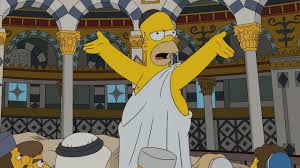
Image result for greek homer simpson

If you don’t take the link, try the Who said what?!!” Quiz below:

Homer Simpson OR Homer the Greek

“I believe that children are our future, unless we stop them now.”

“The stars never lie, but the astrologers lie about the stars.”

“It takes two to lie. One to lie and one to listen.”

“Okay, whatever to take my mind off my life.”

“The tongue of man is a twisty thing.”

“There is a time for many words, and there is also a time for sleep.”

“I’ll tell people what to think. Now you tell me what to think.”  

“My name is Nobody.”

“Do I know what rhetorical means?”

“I didn’t lie! I just created fiction with my mouth!”

“Just because I don’t care doesn’t mean I don’t understand.”

“Even a fool learns something once it hits him.”

“Because they’re stupid, that’s why. That’s why everybody does everything.”

Sources:

https://www.greatspeech.co/homer-simpson-quotes/
https://quotes.thefamouspeople.com/homer-230.php
https://www.azquotes.com/author/6856-Homer

Philosophy Editor: James Zheng

Filed Under: Philosophy Tagged With: Homer vs. the Greek one

A philosophical paradox–Are there truths?

May 9, 2019 by szachik@pvs.org 1 Comment

James, when he took his turn as the weekly editor, assigned everyone the task of writing to the theme Philosophy. Now, it’s his turn to weigh in.

By James Zheng

Generally, during our everyday life, the following questions of “really?” or “is that true?” appear in a usual conversation in response to crazy facts. People always  respond to those questions with something like, “I just know…,” or “Yeah, because I heard it from….” When you ask these questions, you normally accept the ideas given by others or online sources. But, should you believe these ideas? Are they true?

Regarding philosophy, some people say that the nature of philosophy is making a simple fact sound ridiculously complex. I would not disagree with that because philosophical questions make things sound entirely different and new. In my mind, philosophy is a way of comprehending our lives better and extracting the essence of everything.

But, as the study and discussion around philosophy develops, more questions arrive that are nearly impossible to answer. “Are there truths?” is one of these questions. Well, what is a truth? Going by the explanation from Google, truth is “the quality or state of being true.” Before going into this too deeply, there is one important factor I must mention called common knowledge. This type of knowledge is that of the majority and can be anything. Common knowledge can be things like humans need oxygen to be alive or Washington D.C. is the capital of the United States. Most of what we call common knowledge has also been verified as much as possible, like the idea that there are seven days in a week. We often define that kind of stuff as the truth. But, in philosophy, truth is not just simply a fact authorized by the public or a widespread claim. On the contrary, truth is more of a correct understanding of objective things and their laws. Currently, I think science is probably one of the most essential displays of truth.

In my mind, there must be more truths. Our thought and cognition is constituted by truths. The way that we can think is based on vast amounts of truth. If there is no truth, our ideas and thoughts would collapse because truth is the basis of our thinking. In other words, our thoughts are based on cardinal truths. Here is one example: when you are saying, “I want to eat something,” you are realizing the truth that you are hungry and you have the aspiration to eat, which sounds more like logic, but they are quite similar. Critically speaking, even in the circumstance that I say there is no truth, I have already accepted the truth that “there is no truth.” And, what are some examples of a truth? I would say that nature itself is a representation of truth. Nature represents two of the most reasonable phenomena, time and life. I cannot question the authenticity of these two things. It is not because I do not want to. I simply could not.

Still, in the philosophical region, I ask myself why philosophers bring up incomprehensible questions. It may due to the conflicts they had with their religious beliefs or they feel questionable about the world. Perhaps they were suddenly inspired by something. To not make this post too tedious, I found some interesting responses from a forum in regards to the question “Is there truth?”

  • “Absolute truth is incognizable in terms of a human being’s low compelling perspective. At most, human beings can only exclude a handful of things that are absolutely not truths.” – Blogger Liu Yang
  • “The truth is that I know that I know nothing at all.” – Blogger Passenger
  • “The truth that is said by my girlfriend is the only truth I know.” – Blogger YIIYG
  • “Dongfeng Ballistic Missile, Julang Submarine-Launched Missile, Tsar Bomba” – Blogger Xiang Long Deng Dai ing
  • “Love” – Blogger I Think You Lost Your Mind
  • “Truth is a described fact that is not contrary to objective facts such as the following things:

People will die if they don’t eat.

Nothing lasts forever.

Even the universe will perish. All things existing in the universe will naturally disappear.” – Blogger Ye Ban You Ren

  • “The world is always changing, changing is always definite, eternity is relative.” – Blogger Guang Ming Lei Luo

I still insist on my opinion of saying there must be truth. But, this post is not telling you to follow my idea or make some simple things sound really complicated. I personally just think that this question is interesting to explore. Is there such a thing as truth? If you are interested, please show me what you think about this question/paradox in the comments!

Editor: Luke Langlois

Filed Under: Op-Ed, Philosophy Tagged With: A philosophical paradox-Are there truths?, James Zheng

If Every Neuron in a Human was Coded in a Computer, Would it Result in Consciousness?

May 6, 2019 by szachik@pvs.org Leave a Comment

By Amateur Philosopher Holden Hartle

When Editor James asked, “What do you think of when I say ‘Philosophy’?” Holden answered, “If every neuron in a human was coded in a computer, would it result in consciousness?”

So there is a lot to unpack here. First, we need to define consciousness. Typically, this is just the ability to be aware of your surroundings: synonymous with awareness. So if a computer had all the neurons of a human, could it be aware of its surroundings? This sounds like something out of a sci-fi film, but other than being a concept for a script, the question forces you to answer questions about human consciousness and what constitutes it.

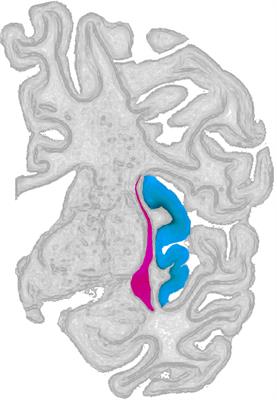
Image result for claustrum

Many believe that consciousness is something that transcends the brain and its contents. In a poll I conducted where I asked the titular question, many responded with the idea that consciousness comes from the soul–something that can’t be pinpointed to a region of the brain.

Neuroscientist Christof Koch would disagree. He has done research on mice and concluded that your awareness of your surroundings stems from the claustrum, depicted to the right. Koch explains that it has neurons that are constantly firing as you experience your surroundings through the senses. Koch is currently experimenting with the outcome of “turning off” the claustrum. With the claustrum, would the animal be unconscious? Would they be something else, awake but not perceiving?

But, if we were to accurately map every human neuron onto a computer, in order for it to be conscious, it would have to have the neurons of the claustrum coded in.

Of the poll I conducted, 66% believe that such a computer wouldn’t have consciousness. As some have previously stated, consciousness may come from your soul. It is your inner being that creates your consciousness, and that is something that goes beyond neurons. But I ask these people to consider, what is a soul? What constructs a soul? If a soul is simply your thoughts and emotions created through neurotransmitters, then a soul could be coded onto a computer.

Others were more accepting of a conscious computer. They believe that the awareness of your surroundings simply comes from your brain spaces, and these people are content with the fact that this could be put into a computer. Some even believe that this will happen in the next few years.

Editor: James Zheng

Filed Under: Philosophy Tagged With: Holden Hartle, Would it Result in Consciousness?

Pushing Our Brains to the LIMITS

May 2, 2019 by szachik@pvs.org 2 Comments

By Luke Langlois

Editor James landed on “Philosophy” as his weekly Theme. James says philosophy makes him see the world “more clearly.” Luke asks, “Does it make it more clear? or more cloudy?” This is Luke’s response to the subject of Philosophy.

Over the years, humanity has risen to the occasion time and time again to push limits. Whether it be physical limits, technological limits, scientific limits, or academic limits, we always find a way to take it further. But, before we make many of these leaps, we have to push the boundaries of our thoughts. And, then, we have to push the boundaries of the definition of boundaries. How would I know that “I am” if Descartes never said “I think, therefore I am.” I would not! That is why philosophy, the study of knowledge, thinking, morals, values, etc, is critical to our humanity. Where would we be without forward thinking? With that being said, the following is a list of questions that probably will not push our society forward, but they should provoke some thinking.

  1. Is free will a reality or a mere illusion?
  2. If freedom is just being able to “do whatever you want,” are animals more “free” than humans?
  3. Referring to the quote of Descartes (“I think, therefore I am”), if an AI were able to “think,” would it be considered sentient?  
  4. Are there extraterrestrials out there? Are they simply avoiding us?
  5. If extraterrestrials were to visit our planet, what should our response be? What would we actually end up doing?
  6. Are we living in a simulation? Are the “others” in our lives engineered to answer this question to keep us naive?
  7. Do other people see color in the same way that we see color?  Is our blue someone else’s red?
  8. On the same note, how would you describe a color?
  9. Is time real? Is there truly a past, present, and future?
  10. We often deal with deadlines. Our life revolves around beginnings and ends. But, does time have a beginning and end?  
  11. Perhaps there is no physical embodiment of Santa Claus, but the tales of his existence provide children with a lifelong holiday spirit. Does this make him “real” in a sense?
  12. Would you end the life of ten people, unknown to you, for ten million dollars?
  13. Similarly, would you end the life of ten to save your best friend?
  14. You are the leader of your nation and your largest city has just been struck with a nuclear weapon. How do you respond?
  15. Is anything truly experienced objectively?
  16. You have two options: you can go back in history and prevent every major war that has occurred. Or, you can stay in your current life and let history play itself out. What do you do?
  17. With the snap of your fingers, you can eliminate half the life in the universe. After this, resources are plentiful. Do you do it?

So, there are some questions. Some of them are obviously a bit more serious than others, but none of them have an easy answer. Or do they? Human brains have achieved incredible feats over the years, but there are some questions that simply elude the capability of our thoughts. Perhaps YOU can provide us with answers and be the next great philosopher.  

Editor: James Zheng

Filed Under: Luke Langlois, Philosophy, Pushing Our Brains to the LIMITS

About

We are the Palm Valley Firebirds of Rancho Mirage, California. Join us in our endeavors. Venture through the school year with us, perusing the artwork of our students, community, and staff. Our goal is to share the poems, stories, drawings and photographs, essays and parodies that come out of our school. Welcome aboard!