the bird on fire

The Palm Valley School Student Blog

Subscribe to Blog via Email

Enter your email address to subscribe to this blog and receive notifications of new posts by email.

Powered by Genesis

How to Get Lucky

March 15, 2021 by szachik@pvs.org 3 Comments

By Hannah Hall

Closing out the theme of Mythology, writer Hannah takes us to the East. She writes about Chinese Mythology, and the story behind jade’s protective qualities. Read along to learn about the mythological history of the stone, and how you can bring jade’s power into your life.

Hannah’s jade bangle gift from her mother

For my birthday, my mom bought me a jade bangle. She told me that jade is for “good luck” and is intended to “ward off evil.” I first thought, “Uh, how does my mom know that?” which led to my second thought being “I should research this….” In my research, I found a general consensus that jade brings luck, like she said, and that it does indeed shield against bad fortune, also what she said. It is also the bringer of many other positive virtues such as happiness, courage, and wisdom. What my mom did not inform me of was the rich history and mythology of where the protective qualities of jade originate. 

History and Legends

From records dating back to 5000 BC, jade is shown to be deeply rooted in Chinese culture and history. The Chinese people called jade the “royal gem,” “yu,” and it was actually used to furnish the imperial family’s tombs. Archeologists have found hand-assembled jade suits in burial tombs too! Jade also was the upholder of Confucian values, which can be explained in this quote by Confucius:

“Its color represents loyalty; its interior flaws, always showing themselves through transparency, call to mind sincerity; its iridescent brightness represents Heaven; its admirable substance, born of mountains and of water, represents the Earth. Used alone without ornamentation it represents the truth.”

(wagmag.com)
Pictured–Jade burial suit

I was able to find three legends that explain how jade got to Earth. One states that when the Mongols invaded China, dragons wept with deep sadness. As the tears fell down to Earth, they petrified into jade. The next legend, which is also tear related, says that Buddha’s tears are made of pure jade. And, finally, a legend says that the Storm God lent mankind jade to fend against wild animals on Earth. He is said to have forged axes from jade that he grasped from a rainbow and that he dropped the jade weapons down to earth (wagmag.com).

Varieties and Colors

There are two kinds of jade: nephrite and jadeite. Nephrite is a more ample form of jade and is found in China, while jadeite is rarer and is found in Burma. They each carry both green and white hues, but jadeite has a wider range which includes burnt tones such as red/orange/yellow and lighter tones such as pink/purple. All of these colors are said to have unique energies and feelings associated with them. 

  • Red–high vibrational, encourages facing fears while reducing them
  • Orange–joyous, connecting with the world and being in it
  • Yellow–cheerfulness, heightens comprehensions 
  • Green–wealth, prosperity
  • Blue–calming, flourishing dreams and visions
  • Purple–ethereal energy, supportive spiritually and emotionally 
  • Pink–purifies and heals toxins, enhances loving energies
  • Black–protection, wards off negative energies
  • Brown–grounding, brings out reliability
  • White–focus, brings clarity to the mind
  • Tri-colored–growth in life, longevity 
    • (jadeite-atelier.com) and (leaf.tv)

Uses

Pictured–Jade bangle from Ultimate Jadeite on Etsy (where my bangle is from) 

The most common way people bring jade into their life is through wearing it. This way you and the jade are directly connected skin to stone and your energies are working together. Jade is known for opening the heart chakra, so common places to wear jade are on your left wrist as a bangle, or as a necklace over your heart. Another common way to sport jade is by wearing earrings.

Instead of wearing the crystal as jewelry, people often take the option of carrying it with them. People often set an intention with the piece of jade and have it in their pockets or purse. This keeps your intention close to you, and ensures the stone is absorbing your energy and actions throughout the day. This aids in manifesting your set desires. Lastly, people often put jade in places of significance. When you seek a successful financial outcome, Energymuse.com recommends setting the stone in your workspace. They give the example of setting the stone on top of business cards.

If you are interested in living a prosperous and positive life, I encourage you to get some jade, set your intentions straight, and allow the jade to work its magic.

Sources:

https://www.visualcapitalist.com/the-history-of-jade-the-emperors-stone
Soul of stone – The divine jade

https://jadeite-atelier.com/blogs/jade-articles/the-colors-of-jade-and-the-meaning

https://www.leaf.tv/articles/the-significance-of-pink-jade/

https://www.energymuse.com/jade-meaning/

https://www.etsy.com/shop/UltimateJadeite

Mythology Editor: Elizabeth Shay

Filed Under: Mythology Tagged With: Hannah Hall, How to Get Lucky

Do You Know the Difference Between the Greek and Roman Gods?

March 15, 2021 by szachik@pvs.org Leave a Comment

The mythologies of Greece and Rome are often confused. Blogger Roman compares the two, diving into the differences in the names of Roman and Greek gods and goddesses as well as what they represent.

By Roman Rickwood

Names and Appearance

Greek gods

The largest difference between Roman and Greek mythology lies in the gods. Greek gods and goddesses are named after people and are assigned genders; whereas in Roman mythology gods and goddesses were named after objects and characteristics and do not technically possess a gender (theoi.com). For example, Zeus, Hera, Athena, and Hermes all are common names in ancient Greek culture. Since Greek mythology predates Roman, the Romans borrowed liberally from the Greek gods. The gods of the Greeks and the Romans are presented and drawn differently. Greek gods were portrayed with heavy emphasis placed on their physical traits and attributes. Meanwhile Roman gods had a strong emphasis on characteristics such as morals and villainy and were not so clearly portrayed physically. 

Worship and Beliefs

Roman gods

Another way that Greek and Roman gods differ lies in who they chose to worship. The Roman gods chose to hail Jupiter meanwhile the Greek gods chose to hail Zeus. In Greek mythology, morals played a vital and important role in the lives of the Greek gods. Greek mythology emphasizes the importance of good deeds and morals and learning important lessons through living life. The gods also teach mortals the lessons that they have learned. Every Greek myth included a teaching. Roman mythology was not so instructive. The Romans did not place as much stock in mythological teaching because of their strong belief in an afterlife. They believed they had time for redemption.

While researching this topic, I was astonished to read just how different the two mythological structures are, from how their respective gods look to how they are revered. 

Source:

https://www.theoi.com/articles/roman-gods-vs-greek-gods-know-the-difference/

Mythology Editor: Elizabeth Shay

Filed Under: Mythology Tagged With: Do You Know the Difference Between Greek and Roman Gods?, Roman Rickwood

Demeter and the Eleusinian Mysteries

March 12, 2021 by szachik@pvs.org Leave a Comment

Mythology is a vast and fascinating topic, with major influence on both ancient and modern cultures. One of the most famous mythologies is that of the Greeks, made well-known by popular culture. Blogger Jake Sonderman explores the mythology of the Greeks with the story of Demeter, Persephone, and the Eleusinian mysteries. 

By Jake Sonderman

Throughout high school, we learn about Greek mythology. This mythology has roots in literary classics that continue to have relevance today. But, what influence did this mythology and religion have on the everyday lives of Greek citizens? 

Demeter

Demeter

Demeter was a very important goddess in the eyes of the Greek people. Demeter is the goddess of agriculture and fertility. Both agriculture and fertility played large roles in the lives of most Greek citizens. They were mostly farmers. Demeter was the middle daughter of Cronus and Rhea, and the sister to Zeus, Hades, Poseidon, Hestia, and Hera (greekmythology.com). 

The Story of Persephone

An important part of Demeter’s story is the story of her daughter, Persephone. First her name was Kore actually, and Hades took a liking to her. Hades, with the help of Zeus (who is also Persephone’s father), abducted Kore and took her to the underworld. Demeter searched the Earth for her daughter until Hecate and Helios told her Kore was taken to the underworld. Demeter, heartbroken, disguised herself and went to the city of Eleusis to grieve. The king of Eleusis, Celeus, hired the disguised Demeter to care for his infant son. Demeter felt grateful to the family for taking her in and decided to make their son immortal as a gift. To do so, she bathed him in fire every night (greekmythology.com) (ancient.eu). 

Myth of Hades and Persephone

While she was bathing the child in fire, she was interrupted by the son’s mother, Metanira. Metanira was understandably horrified and outraged to see her son in a fire bath. This reaction greatly upset Demeter. She revealed her true identity and demanded a temple be built for her in Eleusis. The King, Celeus, agreed and built the temple. Here, Demeter grieved over her daughter and refused to leave the temple. During this time, no crops grew (remember she is the goddess of agriculture). This also meant that no gods were given any sacrifices. This drove Zeus to convince Hades to give Kore, now known as Persephone (or “she who brings doom”), back to her mother (ancient.eu). 

However, Hades (still besotted with Persephone) tricked Demeter by giving Persephone a pomegranate seed while in the underworld. The rule was that one was bound to the underworld if one ate anything in it. Because of this, a compromise was struck. Persephone would spend half her time above ground, half below, and, thus, the seasons are explained. Demeter mourns when her daughter goes underground, and this is winter. When Persephone comes back, Demeter rejoices, and it is summer. 

The Eleusinian Mysteries 

This story is considered to be one of the most important in Greek Mythology because of the festival and following that grew from it. Every year, a group of Athenian citizens, many of them prominent scholars such as Plato, Socrates, and Aristotle (britannica.com) (ancient.eu), would journey to the city of Eleusis to participate in the Rites of Eleusis. The most interesting part of this very well known Greek tradition was that all “initiates” would go into a temple to participate in a ritual but were bound by secrecy and could not divulge what happened in the temple to anyone. 

The rites were likely a re-enactment of Persephone’s journey from life to the afterlife and back again. Persephone’s journey was more than simply the seasons for these people; it was about life being circular and not linear. Many participants came away with a new sense of purpose and new understanding of life. Plutarch, another famous Greek philosopher, wrote about the mysteries to his wife upon the death of their daughter; “because of those sacred and faithful promises given in the mysteries…we hold it firmly for an undoubted truth that our soul is incorruptible and immortal. Let us behave ourselves accordingly” (ancient.eu). 

Unfortunately, much of Eleusis and the religious sites in it were destroyed when Constantine converted to Christianity, and all pagan traditions and structures became abominations in the eyes of the public and government. Still, I am grateful for what we do know. For as much as we think of Greek Mythology as fun little stories, I believe there is true wisdom–if you are willing to look for it. 

Mythology Editor: Elizabeth Shay

Sources:

https://www.ancient.eu/Eleusis/

https://www.ancient.eu/article/32/the-eleusinian-mysteries-the-rites-of-demeter/

https://www.ancient.eu/article/32/the-eleusinian-mysteries-the-rites-of-demeter/

https://www.greekmythology.com/Other_Gods/Demeter/demeter.html

https://www.britannica.com/topic/Eleusinian-Mysteries 
https://oxfordre.com/classics/view/10.1093/acrefore/9780199381135.001.0001/acrefore-9780199381135-e-8127

Filed Under: Mythology Tagged With: Demeter and the Eleusinian Mysteries, Jake Sonderman

Mythological Creatures of Ancient Persia

March 10, 2021 by szachik@pvs.org Leave a Comment

In further exploration of “Mythology,” blogger Sara Habibipour dives into the mythology of ancient Persia–centuries old, but too often not known well enough in Rancho Mirage, California.

By Sara Habibipour 

We’re all acquainted with Greek mythology. But, do you know Persian mythology?

The stories which form the basis of Persian mythology come from the early Persian religious belief Zoroastrianism, which actually is thought to be the basis of Judaism, Christianity, and Islam. The stories were passed down orally over the centuries until they were written down as part of the religious tradition of Zoroastrianism. 

The central theme of Zoroastrianism is a universal struggle between the forces of good and evil, so most of the mythological creatures fall within one of two categories. Although there are many, here are a few of the ancient Persian mythological creatures. 

Gavaevodata

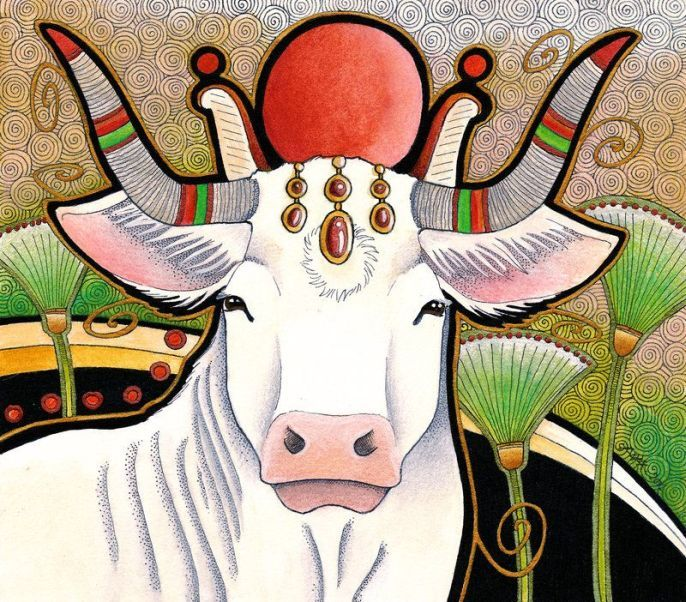
Gavaevodata is the “Uniquely Created Bull,” who is thought to be one of the earliest creations of Ahura Mazda, the “good” deity of Zoroastrianism. Gavaevodata was so beautiful, it attracted the attention of Angra Mainyu, the “bad” deity, who killed it. The bull’s body was then transported to the moon and purified into seeds; these seeds became what all animals would feed on and fertilized the earth’s vegetation. Once animals were created, Ahura Mazda then created human beings and fire, but Gavaevodata was the first unique entity on earth, which established the high value the Persians placed on animals.

Peri

Peris are similar to fairies; they enjoy playing pranks on people, but they can also be helpful. They were thought to be spirits imprisoned in the fairy-form to make up for past sins. A Peri might bring a message from the gods or, alternatively, trick someone into believing some untruth. They were later thought by Muslim Arabs to serve the same purpose as angels.

Azhi Dahaka

Azhi Dahaka was the great three-headed dragon created out of the lies of the “bad” deity, Angra Mainyu, to scare away any positivity in the world. Dragon-serpents (azhi) are often symbols of evil and chaos in Persian mythology. This creature is said to have a thousand senses so it can defend itself and hunt for prey at the same time. 

Suroosh and Daena

Suroosh and Daena are angels that assist the newly dead in their crossing from life to death. After the soul has left the body, it was thought to linger on earth for three days while the gods came to a decision regarding one’s life and final fate. The soul then approached the Bridge where Daena would appear and, for the good soul, would be a beautiful young woman, while, to the condemned, would appear as an ugly hag. Suroosh would guard the soul against demonic attack as it crossed the bridge to meet the angel Rashnu, judge of the dead, who would decide whether the soul went to the paradise of the House of Song or the hell of the House of Lies. 

I hope you were all able to learn something new from this article. I’m half Persian, and I didn’t even know some of this! Learning about ancient beliefs from different cultures is important in ensuring that 1) we stay open-minded and that 2) we learn something new everyday. Keep a lookout for more mythology posts from different cultures on our page within the next few days!

Sources: 

Twelve Ancient Persian Mythological Creatures

https://www.ancient.eu/article/1488/ancient-persian-gods-heroes-and-creatures—the-co/

Mythology Editor: Elizabeth Shay

Filed Under: Mythology Tagged With: Mythological Creatures of Ancient Persia, Sara Habibipour

Siren Misconceptions

March 10, 2021 by szachik@pvs.org Leave a Comment

Every culture has its mythology. Many share cultural icons. Editor Elizabeth Shay grew up reading the Percy Jackson books, and ever since she’s been intrigued with mythology in our lives. For this week’s theme, blogger Evan Spry looked to Greek mythology. Read on to learn about a common misconception he uncovered about a famous creature.

By Evan Spry

Looking back at the most memorable stories derived from Greek mythology, I am immediately reminded of the biologically intriguing and physiologically concerning creatures that were Sirens. Sirens have always interested me because of their powers and how much of a danger they were to Greek sailors, even though there were only a few Sirens in total recorded mythology. However, something that interests me even more are the constant misconceptions of the Sirens. I know personally that when I was reading the Greek myths for the first time I imagined the Sirens as beautiful mermaids, whose beauty and sexuality lured men to their death. However, upon further inspection, Sirens are actually said to be half-bird, half-human creatures that lure men with their beautiful voices and songs. As the “real” story goes, sirens are just big birds with women’s faces and heads on them. 

Homer

The sirens of O Brother, Where Art Thou

According to Emily Wilson, a University of Pennsylvania classicist, “Homer doesn’t describe the Sirens’ physical appearance in his epic poem” (audubon.org). The fact that Homer never even mentioned the physical appearances of the Sirens proves how far popular culture has morphed the look of these creatures. For example, the first things that pop up from a Google search of the word “siren” are pictures and links to a television show with the same name. That siren is a slightly sexy, slightly creepy fish woman. Hulu describes the show Siren as literally about a “mermaid.” This confusion of the two creatures–bird? fish?–adds to the continuity of misconceptions about sirens.  I fell victim to this misconception, as did the movie O Brother, Where Art Thou and Wikipedia.

Bird-Women

Also, according to Wilson, “…in ceramic paintings and tomb sculptures from the time of writing, and centuries after, sirens were usually depicted with taloned feet, feathered wings, and a beautiful human face.” This is far from the visualizations that appeared in my mind when imagining sirens, which is very unfortunate because this is what they are meant to be. Wilson explains the significance of their appearance as birds because in the eyes of these old, traditional European people, “…birds were often graced with an otherworldliness associated with gods, spirits, and omens.” This highlights the importance of sirens. They weren’t just an abundant group of hot mermaids that took pleasure in killing random sailors. In ancient Mediterranean and Middle-Eastern cultures, birds played a significant role in the transport of souls to the afterlife.  This shows the influence that birds had on these local cultures and communities. Sirens represented more important things than maritime seductresses.

Mythology Editor: Elizabeth Shay

Filed Under: Mythology Tagged With: Siren Misconceptions

The Creation of the Beautiful Mexica World and its People

March 3, 2021 by szachik@pvs.org Leave a Comment

When Elizabeth asked the Blog Class to write about “Mythology,” Blogger Erik chose to explore his Mexica ancestry and write about the creation myth of the Mexica people.

By Erik Bearman

Context 

The Mexica people are known as “the Aztecs” by the general public and were given that name by the Spanish. However, this is not what the Nahuatl-speaking peoples of that region called themselves at the time; nor is it what they call themselves today. Because of this, I will be referring to the Mexica by our indigenious name.

Pre-Creation

Ōmeteōtl - Wikipedia

Ometeotl, the Dual God, is the bigender creator god of the Mexica and Lord of Duality. They created the world with the four cardinal directions: north, south, east, and west. Ometeotl’s first four sons each ruled a direction. 

Tezcatlipoca: a tricky and complicated Aztec god!

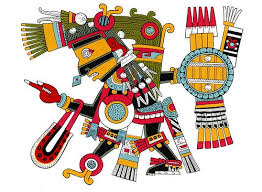
Tezcatlipoca, the Smoking Mirror, rules the North and is the embodiment of the night sky and winds, hurricanes, discord, earth, sorcery, temptation, obsidian, rulership, and jaguars.

Quetzalcoatl - Wikipedia

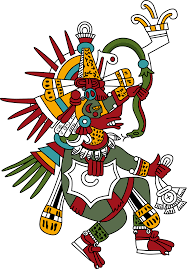
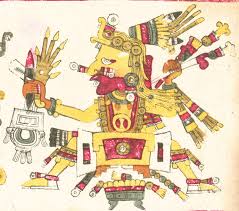
Quetzalcoatl, the Feathered Serpent, rules the West and is the embodiment of wind, wisdom, art, the day, rain, and the cycle of death and resurrection. He is also mankind’s creator. You may be familiar with the Feathered Serpent because he appears across Mesoamerican artwork and in pop culture.

Xipe Totec: This Gory God Shows the Unique Way Aztecs Viewed Fertility and  Renewal | Ancient Origins

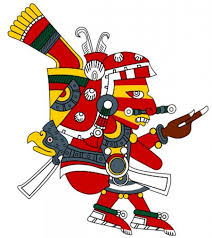
Our Lord the Flayed One, Xipe Totec, rules the East and is the embodiment of agriculture, sacrifice, vegetation, the seasons, maize, and rebirth. 

Huitzilopochtli - Ancient History Encyclopedia

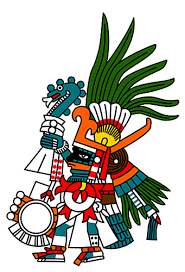
Huitzilopochtli, the Blue Hummingbird of the South, rules the South. Huitzilopochtli is patron of the Mexica people and is the embodiment of war, fire, and the current sun.

Cipactli - Wikipedia

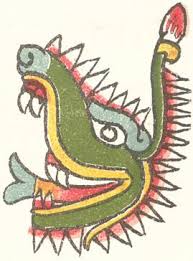
The gods set out to create more gods and the rest of the world, but first they had to defeat the earth monster, Cipactli. Cipactli was a giant crocodilian/fish/turtle who lived in the primordial sea of creation. Anything the gods tried to create Cipactli ate. The gods battled with Cipactli. Tezcatlipoca lost his left leg in the process. After the battle, the gods repurposed Cipactli’s body and scattered it into the sky, land, caves, valleys, and grass. The Mexica use Cipactli as an explanation for sinkholes. A commonly held belief is that Cipactli will drag people underground unless she is fed the blood of regular sacrificial victims. 

The gods were nearly finished with creating the world, but they still needed a sun. The gods gathered their power into a ball of light, which existed among them. Tezcatlipoca, who was proud but petty, stole the ball, tied it to his back, and rose into the sky with the sun. 

The First Sun and the First People

The First Sun was ruled by Tezcatlipoca and lasted 676 years. The first people Quetzalcoatl created were a race of nut-eating giants. For the most part, the world was in order. But, there was a problem with the Sun. Because he had lost his leg, Tezcatlipoca could only manage half a sun. Yet, he refused to step down. So Quetzalcoatl, the wisest of the gods, came up with the best solution. He took a macuahuitl (a wooden club used by Mexica warriors) and whacked Tezcatlipoca out of the sky! In a vengeful response, Tezcatlipoca created jaguars to devour the people Quetzalcoatl had created. And, the people disappeared.

The Second Sun and the Second People

Quetzalcoatl took over as the Second Sun and ruled for another 676 years. Quetzalcoatl created a new race of people who were much smaller than the giants. However, Tezcatlipoca was still angry at his brother for hitting him out of the sky centuries earlier. So, Tezcatlipoca used his dark magic to transform into a giant jaguar, leaped into the sky, and struck down his brother. Quetzalcoatl retaliated with a massive windstorm that ended up blowing humanity away. The survivors turned into monkeys. Quetzalcoatl was quite bummed about his precious creations being turned into monkeys. So he left and ended the age of the Second Sun. To recap, Quetzalcoatl has gone; there are no humans–only monkeys.

The Third Sun and the Third People

Tlāloc - Wikipedia
Image result for xochiquetzal

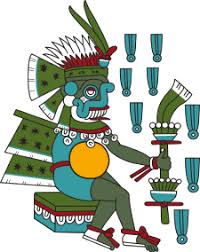
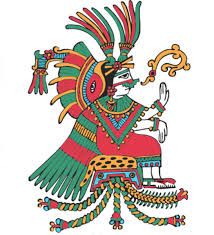
The Third Sun was not ruled by one of the cardinal gods but by a rain god named Tlaloc. Tlaloc embodies rain, storms, thunder, lightning, moisture, and plant growth after rainstorms. His name means “he who makes things sprout.” Tlaloc ruled for 676 more years until Tezcatlipoca interfered. Tlaloc’s wife at the time was Xochiquetzal, the Precious Feathered Flower, who embodies female sexual power, prostitution, erotic love, beauty, and pregnancy. Xochiquetzal was seduced by Tezcatlipoca and left her husband. Tlaloc entered a state of depression and neglected his duties as a rain god. The people kept praying and attempting to appease him. Tlaloc eventually caved and gave the humans rain. Only he made it rain fire instead of water. The surviving humans transformed into birds.

Note: In some stories, Xochiquetzal was abducted by Tezcatlipoca and forced to marry him. After leaving Tezcatlipoca, Xochiquetzal was transformed into a patron and guardian of female homosexuality.

The Fourth Sun and the Fourth People

chalchiuhtlicue, aztec river goddess | Aztec artwork, Aztec art, Aztec  symbols

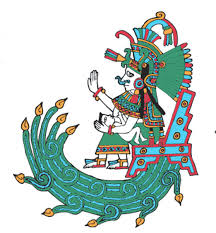
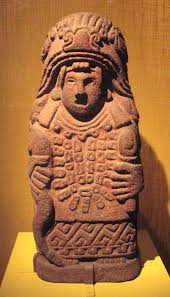
Tlaloc eventually remarried. This time to the goddess Chalchiuhtlicue. Chalchiuhtlicue embodies rivers, streams, storms, seas, and all things water related. Her name means “She of the Jade Skirt.” Chalchiuhtlicue became the Fourth Sun and was broadly loved by the new people Quetzalcoatl created. But, 624 years later, Tezcatlipoca accused Chalchiutlicue of faking her kindness and of only acting the way she did because she wanted mankind’s praise. Chalchiutlicue became so sad that she started crying blood. She cried for 52 two years and drowned the people in her misery. The survivors transformed into fish.

The Fifth Sun and the Fifth People

Note: The Mexica believe that we currently live in the Fifth Sun and that a special sacrificial ceremony called the New Fire Ceremony must be performed every 52 years in order to prevent the next cataclysm. 

Mictlantecuhtli | Aztec deity | Britannica
Mictecacihuatl

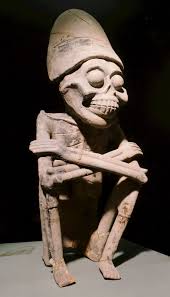
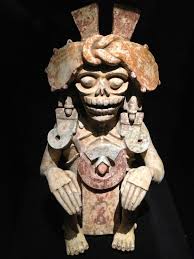
The warrior god, Huitzilopochtli, became the Fifth Sun. At this point, Quetzalcoatl was sick and tired of having to recreate humanity. So, he journeyed to the Mictlan, the lowest point in the Mexica underworld, and met with Mictlantecuhtli, the Lord of the Land of the Dead, and Mictlantecuhtli’s wife, Mictecacihuatl, the Lady of the Land of the Dead and the Keeper of Bones. Quetzalcoatl asked the two if he could have the bones of previous humans in order to create more humans. Mictlantecuhtli said that he would allow Quetzalcoatl to take the bones if Quetzalcoatl traveled around Mictlan blowing into a shell. But Mictlantecuhtli attempted to trick Quetzalcoatl by handing him a shell with no holes to blow. Quetzalcoatl was smart and summoned worms to drill holes into the shell and summoned bees to buzz inside the holes. The horn worked. Mictlantecuhtli was furious but let Quetzalcoatl take the bones.

Cihuacōātl - Wikipedia

Quetzalcoatl was heading towards the mortal realm when he fell into a pit. Mictlantecuhtli had played another trick! He had commanded his underworld servants to dig the pit. When Quetzalcoatl awoke, he realized he had broken the bones! Thankfully, the Snake Woman, Cihuacoatl, saved the day. She ground the bones into a bowl and used Quetzalcoatl’s blood to bring the humans to life. They were healthy, but because the bones had been broken, they now had different heights.

There are different predictions for how the Fifth Sun will end, but a common version is that it will once again be the fault of Tezcatlipoca, who will destroy humanity with earthquakes.

****************

This creation myth is important to me because I can imagine the stories of my ancestors. It provides context and connection. There are many creation myths. This one doesn’t get told enough. It reveals much about my Mexica people, why, and how they lived.

Sources:

  • Harper, Jo, and Sizer Irma Martínez. Birth of the Fifth Sun and Other Mesoamerican Tales. Texas Tech Univ. Press, 2008. 
  • Miscellaneous Myths: The Five Suns 
  • The Fifth Sun – Aztec Myths – Extra Mythology
  • https://www.britannica.com/topic/Quetzalcoatl 
  • Clayton, Matt. Aztec Mythology: Captivating Aztec Myths of Gods, Goddesses, and Legendary Creatures. Independently Published, 2018.

Mythology Editor: Elizabeth Shay
Filed Under: Mythology Tagged With: Erik Bearman, The Creation of the Beautiful Mexica World and its People

Black Athletes who Changed the Face of Baseball

March 1, 2021 by szachik@pvs.org Leave a Comment

Debut Post by Blogger Roman Rickwood

African-American athletes have been some of the most influential leaders in their communities. Roman wanted to highlight the importance of two outstanding baseball players, Hank Aaron and Jackie Robinson.

Hank Aaron

Image result for hank aaron
Hank Aaron played 21 seasons with the Braves.

Hank Aaron was one of the greatest baseball players the game has ever seen. He has the record for most home runs with an astounding 755! Not only was Hank Aaron one of the world’s best baseball players, but he did it under extreme conditions. Hank Aaron faced extreme racism and discrimination as he was one of the few African-American players in Major League baseball. He played major-league ball from 1954 to 1976 (MLB.com). From the crowds, he experienced heckling and thrown objects. From fellow players, he was targeted for dirty plays. Calls from the umpires often did not go his way. He overcame, triumphed, and passed Babe Ruth’s home-run record AND The Babe’s RBI record–which still stands today at 2,297 runs batted in (MLB.com). Hank Aaron was born in Mobile, Alabama, in 1934. He played in the MLB for the Braves of Milwaukee (before Milwaukee was the Brewers) and ended his career in Atlanta with the Braves. He then retired as a Brave and settled just outside of Atlanta. He quickly became not only a baseball legend but a local legend. In 2010, he was named Georgia trustee by the Georgia historical society. He served front office roles with the Braves and had many awards named after him. Hank Aaron died this past January 22, 2021, at his home in Atlanta.

Jackie Robinson

April 15, 1997: Jackie Robinson's Number Retired | Baseball Hall of Fame
Jackie Robinson wearing a BROOKLYN Dodger hat

Jackie Robinson was a baseball legend who holds many titles and is revered in the baseball community. Jackie Robinson was the first African American ever to play in the major leagues. Like Hank Aaron, he destroyed records as well as racial barriers. Robinson was born January 31, 1919, in Cairo, Georgia. Robinson was a born and bred multi-sport-athlete who excelled in everything he did: baseball, football, track, and academics. Jackie Robinson attended University of California, Los Angeles, aka, UCLA. Jackie played and excelled at UCLA. He ran track and played baseball for the Bruins. After graduating from UCLA, Jackie Robinson went on to make history and start at 1st base for the then Brooklyn Dodgers. Robinson endured racism, prejudice, and threats of violence. He prevailed and went on to break records, most notably the record for most stolen bases in the history of the MLB. Jackie Robinson stole 197 bases over ten seasons (baseballhalloffame.org). On April 15, 1997, his number, 42, was retired by every team in the MLB. When a number is retired, it is always out of respect. It is a symbol of a great career. However, very rarely is a jersey retired by every single team. 

As Black History month wraps up, it is important to remember Aaron’s and Robinson’s groundbreaking accomplishments and their destruction of racial barriers in both baseball and everyday life. 

https://www.mlb.com/news/featured/hank-aaron-career-timeline\

Black History Month Editor: Evan Spry

Filed Under: Uncategorized

Got a Dirty Car?

February 26, 2021 by szachik@pvs.org Leave a Comment

Filed Under: Current News, Daily Life, Uncategorized

Who are you, Maya Angelou?

February 26, 2021 by szachik@pvs.org Leave a Comment

As we near the end of Black History Month, Hannah directs our attention to one of the most famous and influential Black-American writer-performers–Maya Angelou.

By Hannah Hall

As February is Black History Month, we can take this time to reflect and honor the achievements of the African-American community in the past and present. Somebody I wanted to talk about and remember during this time is Maya Angelou. Angelou was an African-American “author, poet, historian, songwriter, playwright, dancer, stage and screen producer, director, performer, singer, and civil rights activist” (Poetry Foundation). She is known for writing a multitude of autobiographies—her first and most internationally recognized being I Know Why the Caged Bird Sings—and her many many poetry books. One poem that I wanted to introduce to the blog is her poem Caged Bird.

The poem acts as an extended metaphor to the past and present struggles of race-based oppression African-American communities face in this country. The cage symbolizes the physical, psychological, and emotional limitations that oppression creates for the caged bird inside, which can be interpreted as the African-American community. The “free bird” in this poem can be interpreted as the white community in America and how they live without something actively holding them back. Because of the color of their skin, they have nothing stopping them from pursuing their desires because there aren’t any societal limitations. I encourage you to read this poem and in your own time reflect on its depth and historical background.

Caged Bird by Maya Angelou

A free bird leaps

on the back of the wind   

and floats downstream   

till the current ends

and dips his wing

in the orange sun rays

and dares to claim the sky.

But a bird that stalks

down his narrow cage

can seldom see through

his bars of rage

his wings are clipped and   

his feet are tied

so he opens his throat to sing.

The caged bird sings   

with a fearful trill   

of things unknown   

but longed for still   

and his tune is heard   

on the distant hill   

for the caged bird   

sings of freedom.

The free bird thinks of another breeze

and the trade winds soft through the sighing trees

and the fat worms waiting on a dawn bright lawn

and he names the sky his own

But a caged bird stands on the grave of dreams   

his shadow shouts on a nightmare scream   

his wings are clipped and his feet are tied   

so he opens his throat to sing.

The caged bird sings   

with a fearful trill   

of things unknown   

but longed for still   

and his tune is heard   

on the distant hill   

for the caged bird   

sings of freedom.

Sources:

https://poets.org/poet/maya-angelou

https://www.poetryfoundation.org/poems/48989/caged-bird

Black History Month Editor: Evan Spry

Filed Under: Black History Month Tagged With: Hannah Hall, Maya Angelou?, Who are you

Tulsa Massacre or Tulsa Race Riot?

February 26, 2021 by szachik@pvs.org 1 Comment

By Jake Sonderman

In the wake of the George Floyd protests over the summer and extreme momentum in the Black Lives Matter movement, we’ve all been learning more about the history of the Civil Rights Movement and racial injustice in the US than we learned in our American history classes. I feel there definitely should have been proportionately more curriculum on the subject. A key event in the history of racial injustice in the US is the Tulsa Massacre. 

The History

The Tulsa Massacre, also referred to as the Tulsa Race Riot, began on May 31, 1921, in the Greenwood neighborhood (aka “Black Wall Street”) in Tulsa, Oklahoma. This small neighborhood was coined “Black Wall Street” because of the many successful African-American owned businesses. The neighborhood had its own school, dental practice, and hospital (whose owner was one of the few black millionaires at the time). In May 1921, Dick Rowland, an African-American shoe shiner, was accused of raping a white woman in an elevator. He was being held at the courthouse. An article was published in the Tulsa Tribune with sources saying a lynching was planned that night for Rowland. Groups of armed whites and armed African-Americans rallied around the courthouse that night. The confrontation resulted in one white man being shot, and that was the spark. The white mob went on to kill as many as 300 African Americans (the actual number is not known, but it is between 75-300) (Britannica.com). The mob also burned down most of the businesses on Black Wall Street, and insurance companies would not give these businesses their pay out because their policy did not cover “rioting” (Tulsaworld.com).

Image result for black wall streetBlack Wall Street, Pre-May 31, 1921Image result for black wall streetBlack Wall Street, Post-May 31st, 1921

Riot or Massacre? 

Merriam-Webster defines a riot as, “a tumultuous disturbance of the public peace by three or more persons assembled together and acting with a common intent” (Merriam-Webster.com). Denotatively, this describes what happened on May 31-June 2, 1921. A group of whites disturbed the public peace in Greenwood by burning many businesses and were most definitely acting with a common intent. But, to ignore the connotations of the word “riot” is problematic. 

In Tulsa, the property damage and murders were directed at a specific group of people. While the arrest of Dick Rowland sparked the disaster, it was not the entire cause. The cause is likely rooted in resentment, as Greenwood was wealthier than some of the white communities surrounding it. That day was a sort of reckoning for the white mobs that desecrated Greenwood. 

Massacre.

The most common definition of massacre is, “the act or an instance of killing a number of usually helpless or unresisting human beings under circumstances of atrocity or cruelty” (Merriam-Webster). A less common definition also by Merriam-Webster is, “an act of complete destruction.” I believe this second definition perfectly characterizes what happened in Tulsa in 1921. This was an act of vast destruction on Greenwood’s lives and livelihoods. 

The first Merriam-Webster definition characterizes the violence well enough, considering how many African Americans were killed in those two days. Technically, however, they weren’t defenseless at the beginning, but after that first encounter, the “riot” turned into the killing of defenseless citizens in Greenwood. The incident devolved into white patrols roaming the streets of Greenwood shooting on sight (Britannica.com). The U.S. House of Representatives and the U.S. House of Representatives Judiciary Committee passed the Tulsa-Greenwood Race Riot Claims Accountability Act, where they heard testimonies from survivors. One survivor, Olivia J. Hooker, said she survived the “Tulsa Race Riot of 1921”; she self corrected and added, “but what really was a massacre” (TulsaWorld.com).

All of this is why I believe we should call what happened in Tulsa a massacre. It is important we take note of the connotations of words when dealing with important historical subjects such as these, so that we can make sure those who learn about this later get an accurate picture of our history. 

Sources:

https://tulsaworld.com/news/local/education/once-taboo-discussion-tulsa-race-riot-now-included-in-state-academic-standards/article_9f6dfdd5-1fd7-58b4-9c06-b047c7ebe31e.html

https://www.britannica.com/event/Tulsa-race-riot-of-1921

https://tulsaworld.com/news/local/racemassacre/tulsa-race-massacre-for-years-it-was-called-a-riot-not-anymore-heres-how-it/article_47d28f77-2a7e-5b79-bf5f-bdfc4d6f976f.html

https://www.merriam-webster.com/dictionary/riot

https://www.merriam-webster.com/dictionary/massacre

Black History Month Editor: Evan Spry

Filed Under: Black History Month Tagged With: Jake Sonderman, Tulsa Massacre or Tulsa Race Riot?

  • « Previous Page
  • 1
  • …
  • 50
  • 51
  • 52
  • 53
  • 54
  • …
  • 128
  • Next Page »

About

We are the Palm Valley Firebirds of Rancho Mirage, California. Join us in our endeavors. Venture through the school year with us, perusing the artwork of our students, community, and staff. Our goal is to share the poems, stories, drawings and photographs, essays and parodies that come out of our school. Welcome aboard!