the bird on fire

The Palm Valley School Student Blog

Subscribe to Blog via Email

Enter your email address to subscribe to this blog and receive notifications of new posts by email.

Powered by Genesis

Future Festivities: Summer in Japan

January 15, 2021 by szachik@pvs.org 1 Comment

Elizabeth had planned a trip to Japan last summer. Covid cancelled her trip. So, here, virtually, she lives out her dream journey. Here’s Elizabeth’s “What I Would Do If I Could Get to Japan.”

By Elizabeth Shay

One of the top destinations on my travel bucket list is the beautiful East Asian country of Japan. My dad moved to Japan from Taiwan at the age of five and lived there for eleven years. I have always had an interest in Japanese culture, especially the food, and my family had planned a trip for this past summer. Needless to say, the trip never happened, but my research is proving useful for this article! Here are some of the things to look forward to when visiting Japan in the summer.

Matsuri

Traditionally, matsuri are ceremonies in which the Japanese people pray to deities and honor their ancestors. Today, the word matsuri refers to the popular festivals held all over the country. Natsu matsuri is the name for the social events that take place during the summer (Japan Experience).  Most natsu matsuri include three main elements: processions, fireworks, and street food. People can be seen wearing yukata (traditional kimonos made of lightweight cotton), perfect for the summer heat and humidity. 

Here are some of the most popular masturi:

  • Mitama Matsuri– This festival is four days long, from July 12 to 15. Held at Tokyo’s Yasukuni Shrine, this event is marked by the lighting of twenty thousand lanterns (Japan Rail Pass).

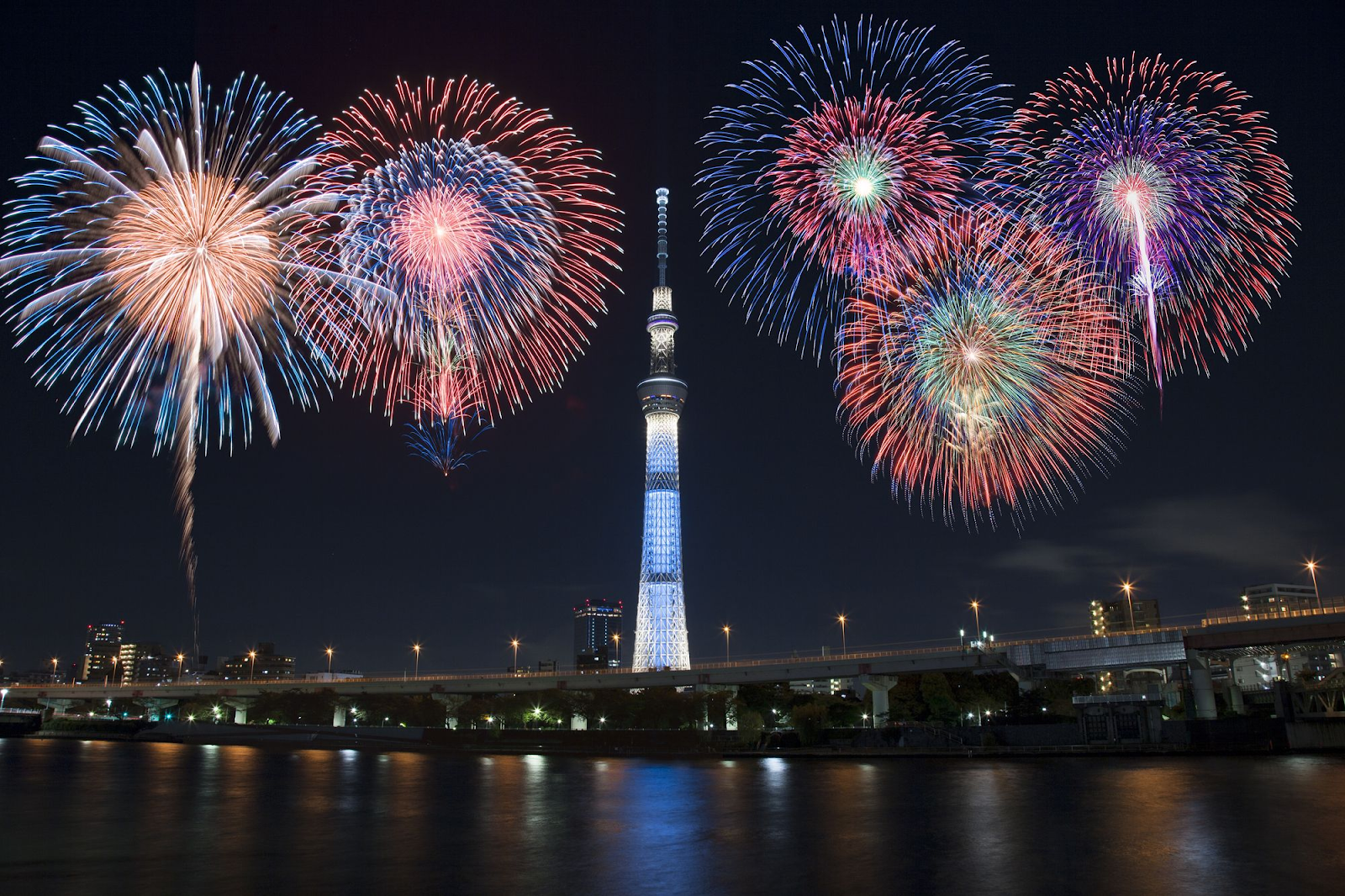
  • Sumidagawa Fireworks Festival– The Sumidagawa is the oldest fireworks festival in the world, beginning in 1732. Attracting one million attendees annually, it celebrates hanabi (which means Japanese fireworks). The festival is based in Tokyo on the banks of the Sumida River and takes place on the last Saturday in July (Japan Rail Pass).
  • Sendai Tanabata Matsuri-– Tanabata, the “feast of the stars,” follows the Chinese lunar calendar and is held on August 7. The highlight of this festival is the giant sasatake decorations. The thousands of colorful streamers, each around four meters long, decorate the town center. Resembling bright forests, they are crafted by local shops, children, and members of the community (Japan Experience).

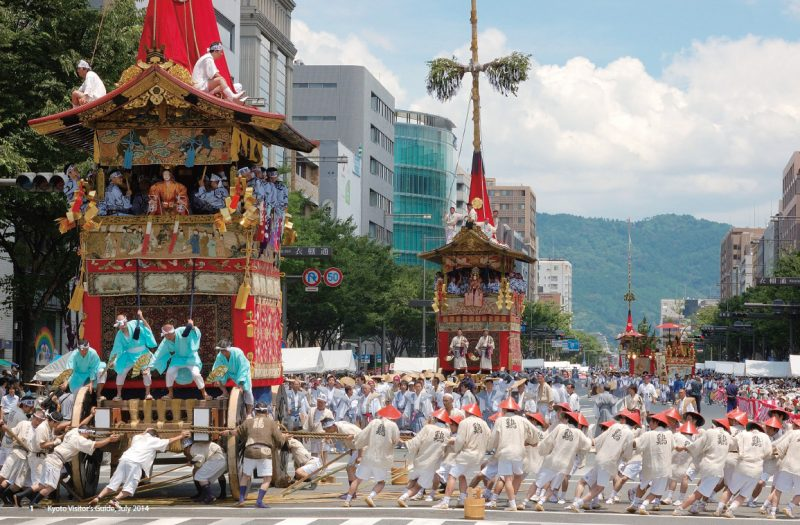
  • Gion Matsuri– Dating back to the ninth century, Gion Matsuri encompasses the entire month of July, with the most popular events occurring from the 14th to the 17th. It is famous for its floats, each representing a distinct neighborhood or corporation of Kyoto. The wheels that mobilize the floats are often as tall as a person, and traditional neighborhoods are decorated with flowers, banners, flags, and lanterns (Japan Rail Pass).
Food

Street food is not as typical in Japan as in many other countries in Asia. However, during matsuri, food stalls called yatai line the streets (Japan Rail Pass). Fried foods and foods on sticks are widely sold. The most common dishes include:

  • Tako-yaki (octopus dumplings)
  • Kara-age (fried chicken)
  • Yaki-soba (fried noodles)
  • Yaki-tori (grilled chicken skewers)
  • Okonomiyaki (fried savory “pancakes”)
  • Ika-yaki (grilled squid on skewers)

Popular desserts are kakigori (ice crushed with syrup), taiyaki (fish-shaped pancakes often filled with cream or red bean) and ringoame (Japanese version of a candy apple).


Other Activities

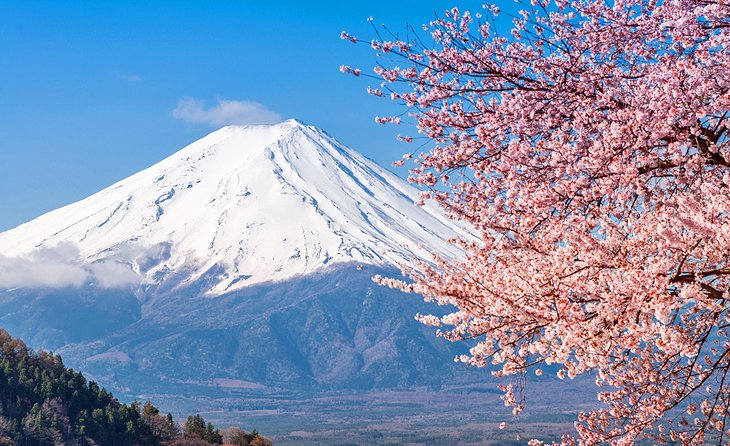
In addition to the traditional matsuri, Japan has several summer music festivals. The Fuji Rock Festival and Summer Sonic both occur in August. If festivals are not your cup of tea, you can head north to escape the heat and humidity. You can hike the milder climate of the Hokkaido region of Japan, visit the national parks, or even climb Mt. Fuji! (Lonely Planet)

Sources Referenced:

https://www.japan-experience.com/to-know/understanding-japan/the-matsuri-japanese-festivals

https://www.japan-experience.com/to-know/understanding-japan/summer-festivals-in-japan

https://www.jrailpass.com/blog/summer-festivals-japan

https://www.lonelyplanet.com/articles/best-things-to-do-in-summer-in-japan

Festivities (in a post-Coronavirus time) Editor: Hannah Hall

Filed Under: Festivities Tagged With: Elizabeth Shay, Future Festivities: Summer in Japan

2021 Prophéties

January 12, 2021 by szachik@pvs.org 1 Comment

2021. It’s finally here. Although off to an unusual start, Editor Sara wanted to ask the Bloggers what they predict for the rest of the year (for better or for worse). Blogger Elizabeth decided to look toward the Great Nostradamus for 2021 predictions.

By Elizabeth Shay

Nostradamus was a French physician and astrologer who is best known for his prophecies. These prophecies are expressed in verses called quatrains, and are outlined in his book, Les Prophéties, published in 1555. Nostradamus has written 6,338 prophecies, over 70% of which have supposedly been fulfilled (yearly-horoscope.org); some of his accurate predictions seem to include the French Revolution, Adolf Hitler’s rise to power, and even the 9/11 attacks–yikes! His prophecies cover the years until 3797, when he believes that the world is slated to end (history.com). 

Here are three of Nostradamus’s dreadful and saddeningly dark predictions for 2021, which hopefully do not come true:

  1. A Famine of Biblical Proportions (yearly-horoscope.org) 

According to Nostradamus, we can expect a massive famine in 2021, which is one of the signs of the end of the world in addition to earthquakes and plagues. The prophecy reads:

“After great trouble for humanity, a greater one is prepared,

The Great Mover renews the ages:

Rain, blood, milk, famine, steel and plague,

Is the heavens fire seen, a long spark running”

Nostradamus

To be fair, a great catastrophe is prophesied by Nostradamus to occur pretty much every single year, so it doesn’t hold much weight.

  1. A Devastating Earthquake Will Destroy California (yearly-horoscope.org)

In yet another tragedy that Nostradamus has visualized for the upcoming year, a great earthquake is set to hit “the Lands of the West,” which people assume to mean California. The actual prediction reads as follows:

“The sloping park, great calamity,

Through the Lands of the West and Lombardy [Italy]

The fire in the ship, plague, and captivity;

Mercury in Sagittarius, Saturn fading”

Nostradamus

According to astrologers, the dates when the planets mentioned will be in the described position in the sky is November 25, 2021.

Once again, this shouldn’t cause alarm because Nostradamus has made this prediction in 1988. And in 2015. And in 2020.

  1. A War Between Two Allied Countries (wisehoroscope.org)

Finally, Nostradamus describes a war between two allied countries in the near future, which will lead to the third world war. The quatrain states:

“In the city of God there will be a great thunder

Two brothers torn apart by Chaos while the fortress endures

The great leader will succumb

The third big war will begin when the big city is burning”

Nostradamus

This is definitely not encouraging to see, but based on this prophet’s track record, I don’t think that there is grounds for panic.

2020 has been a rough year to say the least, and these predictions definitely do not inspire much confidence for the new year. Fortunately, there is little proof for the validity of these predictions. Any seemingly accurate prophecies are likely a result of coincidences. 

What are some of your predictions for 2021? Hopefully they are more positive than these!

Sources:

https://www.yearly-horoscope.org/nostradamus-2021-predictions/

https://www.history.com/topics/paranormal/nostradamus

https://wisehoroscope.org/nostradamus-2021/

2021 Predictions Editor: Sara Habibipour

Filed Under: Predictions Tagged With: 2021 Prophéties, Elizabeth Shay

Doomsday Tunes

December 9, 2020 by szachik@pvs.org Leave a Comment

I chose the theme “Apocalypse” because the word has been tossed around a lot this year. After hearing that word so much, I became interested in what the apocalypse actually meant. So I asked the Palm Valley Blog Staff to write about the apocalypse and its association. Elizabeth Shay responded with a playlist to accompany any grand exit.–Apocalypse Editor, Erik Bearman

By Elizabeth Shay

Here are some songs that remind me of the apocalypse and the end of the world because of their dark lyrics, bleak imagery, and intense sound. These are not to cheer you up; they’re meant to match the moment. Check them out on Spotify. Maybe make your own apocalypse playlist. You never know when you’ll need it.

Apocalypse Please by Muse– “And this is the end, the end/This is the end /Of the world”

Panic Room by Au/Ra– “My phone has no signal/It’s making my skin crawl/The silence is so loud”

Our Destiny by Black Veil Brides– “Fire spreads like kerosene/We’re going down/We’re going down in tragedy”

Carry On by Falling in Reverse– “All we are is cosmic dust that scatters free/With no sense of direction we’re just wandering”

At the End of the Earth by The Dear Hunter–  “At the end of the earth/Till we meet again at the end of the earth”

Losing My Mind by Missio– “I’m losing, I’m losing, I’m losing my mind/I’m fighting, I’m fighting, I’m fighting for more time”

(The) Yawning Grave by Lord Huron– “(You can run but you can’t escape)/Darkness brings evil things, oh, the reckoning begins”

Paralyzed by In Flames– “Paralyzed, rewind, there’s no time/And the wasteland, it’s an indication”

Save Me by Avenged Sevenfold– “(Save me)/I’m trapped in a vile world”

Endgame by Rise Against– “The city lines are down, the kerosene’s run out/The fracturing of all we relied upon”

Sources:

https://genius.com/

Apocalypse Editor: Erik Bearman

Filed Under: Doomsday Tagged With: Doomsday Tunes, Elizabeth Shay

The Future of the Republican Party

November 18, 2020 by szachik@pvs.org 3 Comments

When asked about the future of politics, blogger Elizabeth Shay chose to write about the future of the Grand Old Party.

By Elizabeth Shay

There’s no doubt about it, the question on every Republican’s mind is: What does the future hold for the GOP? In the wake of the Trump presidency, one thing’s for sure; we definitely have not heard the last of him. The general consensus is that “Trumpism is here to stay,” says Washington lobbyist and longtime GOP campaigner Ed Stewart (Cityam.com). Trump’s highly passionate group of supporters won’t just disappear into thin air. Commentators are convinced that Trump will continue to be extremely influential within the party in the coming years, whether it’s through a new position as a kingmaker, or a re-run in 2024, “reinvigorated after four years of tweet-sniping from the sidelines” (Commondreams.org). This would not be the first time a president ran non-consecutively; Grover Cleveland was successfully reelected in 1893, four years after his initial term. It is not in Trump’s nature to roll over and die, and he will likely emerge in four years to launch another campaign, which poses the question of whether he will be the Republican nominee. But is there any Republican who could pose a viable challenge to Donald Trump, who has “so dominated the thinking of the Republican Party for the past four years that there hasn’t been any more room for new leaders to emerge, for new ideas to emerge to counter Trumpism or offer an alternative view point [sic] or way forward” (Stewart).

Anyone who attempted to emulate Trump would probably not be successful and may not garner the needed support from his base. His unique rhetorical style and image as a businessman and not a traditional politician are part of his appeal. In a panel sponsored by USC regarding the future of the Republican party, conservative journalist Bret Stephens mentioned Senator Tom Cotton of Arkansas as a possible contender for the 2024 election, referring to him as: “Trump with a higher IQ.” Stephens calls Cotton the “most intelligent expositor of Trumpist ideals,” and “other than Trump’s family, the most perfect heir” to the presidency. If this is the case, Tom Cotton may be the necessary person to retain the ardent Trump supporters while regaining some of the more moderate Republican votes that went to Joe Biden in the 2020 election. Author and historian Douglas Brinkley, also on the panel, made an interesting statement, referencing a possible ticket with Nikki Haley at the top. In order to placate Trump not to run, the ticket could also include Donald Trump Jr. or Ivanka Trump as VP.  This retains Trump’s base while moving in a more moderate direction. Several other panelists expressed support for former UN ambassador and Governor of South Carolina, Nikki Haley, including Karl Rove and Bret Stephens. Another popular name was Dan Crenshaw, a representative from Texas and former Navy SEAL. 

In order for the mainstream Republican party to become more moderate, they’d likely have to experience multiple electoral losses over the course of several years. However, as the country’s demographics rapidly shift, the party may not be able to afford losses in multiple election cycles. States that have been traditionally red, including Texas, Arizona, and Georgia became critical swing states and are projected to remain that way in the future. In order for the GOP to remain alive, they need to move closer to the center quickly, as time is not on their side. Karl Rove stresses the need for the party to build on diversity, regain the suburban vote, and take a strong stand against QAnon. Trump surprisingly expanded the Republican voter base, and saw increased turnout amongst Latinos (especially Cuban Americans), African Americans, and the white working class. In order to win future elections, the party needs to retain and expand upon these votes. 

When you think of the GOP, the word “young” does not exactly come to mind. Bret Stephens says that Trump may have turned away young voters from the party for the rest of their lives. Members of Gen Z tend to lean left much like millennials (NPR). Nevertheless, conservative youth groups such as the Young America’s Foundation and Turning Point USA have significant membership, demonstrating a presence of young Republicans in the country. The Republican party needs to expand their young voter base in order to even be remotely successful in the coming years. According to The Atlantic, “. . . in 2024, the two younger generations are expected to equal the older ones as a share of actual voters on Election Day.” The Democrats have attracted the attention of younger generations in part because of their election of diverse leaders, in terms of gender and race. Interestingly, the average age of the Democratic leadership in the House is 72 years old, compared to 48 years for Republicans (Quorum).  And just this year, 25-year-old Madison Cawthorn won North Carolina’s 11th Congressional District, becoming the youngest Republican elected to the House (New York Times).

How the Republicans will proceed remains to be seen. The ideological future is uncertain for both parties, and only time will reveal the answers to the questions that remain unanswered. One thing is certain, these years will definitely be studied closely by future historians. 

Sources:

‘Trumpism is here to stay’: The future of the Republican Party

https://www.commondreams.org/views/2020/11/13/biden-will-fail-bring-back-normal-politics-whats-needed-now-populism-left

https://www.npr.org/2020/09/02/908350700/generation-z-in-the-gop-young-republicans-reflect-on-the-future-of-their-party

https://www.quorum.us/data-driven-insights/the-115th-congress-is-among-the-oldest-in-history/

https://www.theatlantic.com/politics/archive/2020/10/millennials-and-gen-z-will-soon-dominate-us-elections/616818/

Future of Politics Editor: Jake Sonderman

Filed Under: Politics Tagged With: Elizabeth Shay, The Future of the Republican Party

Wilderness Words

November 16, 2020 by szachik@pvs.org 2 Comments

Editor Hannah told blog writers to think about, write about, and embrace the “Wilderness.” Elizabeth searched the globe and found some of the most beautiful and unique nature/wilderness words from various languages.

By Elizabeth Shay

  • Feuillemort– (n.) the color of a dying leaf

Deriving from the French term, feuille morte (dead leaf), this word refers to the brownish-oranges and reddish-yellows seen as trees shed their leaves in the fall.

  • Petrichor- (n.) the smell of earth after rain

The word is Greek in origin. We don’t get much rain here in the desert, but, still, you can save this word for a rainy day. When it does rain here, the air is pungent with creosote and damp desert.

  • Frondescence- (n.) the condition or period of unfolding of leaves; foliage

From the Latin frondescere (to become leafy), this word describes a phenomenon that is reminiscent of springtime plant growth.

  • Weald- (n.) a wooded, uncultivated area; forest

This word was first used before the 12th century, in the days of Old English, as a general term for “forest.”

  • Nemophilist- (n.) a person who loves the woods or forests; a haunter of the woods

This word is obscure and hasn’t really been used for over 100 years. Not to be confused with: Dendrophilous- (adj.) loving trees; living in or on trees.

  • Psithurism- (n.) the sound of the wind through the trees and rustling leaves

This word is imitative, and ultimately comes from the Greek word psithuros which means “whispering.” Unfortunately this word is obsolete, but maybe we can help it make a comeback.

  • Gökotta- (n.) the act of rising early in the morning to hear the birds sing at sunrise and appreciate nature (rendezvousmag.com)

This is a Swedish word that is unlike any word we have in English and describes a specific concept so perfectly.

  • Komorebi- (n.) sunshine filtering through the leaves of trees (theculturetrip.com)

Social values, aesthetics, and culture are largely intertwined with the Japanese language. There is no English equivalent for this word which holds so much meaning in eight letters.

  • Shinrin-yoku- (n.) a visit to the forest for relaxation and to improve one’s health

This is another word from the Japanese language and translates to “forest bath.” The Japanese people often practice forest bathing, opening their senses and connecting with the natural world.

  • Waldeinsamkeit- (n.) the feeling of solitude in the woods

From Wald (woods/forest) and Einsamkeit (loneliness), this German word, much like the Japanese word above,  is about creating a one-on-one relationship with nature and refers to a very specific feeling. 

Hopefully you learned something new, and these words made you think about nature. Comment on this post, and then go outside!

Sources:

https://www.merriam-webster.com/

https://en.wiktionary.org/wiki/nemophilist

https://theweek.com/articles/442920/10-unusual-nature-words-should-use-more-often#:~:text=Psithurism%2C%20the%20sound%20of%20rustling,whispering%20or%20rustling%20in%20general.

Gokotta- Foreign words with Beautiful Meanings
https://theculturetrip.com/asia/japan/articles/20-japanese-words-that-will-make-you-think/

https://time.com/5259602/japanese-forest-bathing/

Words Beyond Translation: Waldeinsamkeit

Wilderness Editor: Hannah Hall

Filed Under: The Outdoors Tagged With: Elizabeth Shay, Wilderness Words

Tour de Starbucks

November 4, 2020 by szachik@pvs.org 1 Comment

A bucket list can say a lot about a person’s goals and motivations. In order to learn more about her peers, Editor Sara prompted the question, “What’s on your bucket list?” Elizabeth went with a mix of travel and drink: a tour of the world’s Starbucks!

By Elizabeth Shay

In 2019, world-famous coffeehouse chain, Starbucks, accounted for 31,256 stores worldwide (statista.com). Of those stores, a majority are located internationally rather than in the company’s home country, the United States. In addition to having unique drinks on their respective menus, Starbucks stores represent their location through architecture and decoration. Here are some of the most beautiful and unique Starbucks stores around the world–ones that I would like to visit:

  • Chicago, IL, United States: Beginning with a location close to home, the Starbucks Reserve Roastery in Chicago is a 35,000-square-foot showcase, featuring five distinct floors that offer a three-dimensional window into the crafting process of coffee. This is the largest of six global roasteries and features artwork from Chicago based-artists (Starbucks News Stories). The Roastery allows customers to witness the coffee roasting in front of them on the ground floor. Customers choose from one of seven brewing methods in the coffee bar on the third floor while watching coffee being transported through the building in a 56-foot cask (The Chicago Roastery).  

*Other Roastery locations include Seattle, New York, Milan, Tokyo, and Shanghai.

  • Buenos Aires, Argentina: Moving on to a South American location, this Starbucks is located in Galerías Pacifico, one of the most famous malls in Argentina. The store has stunning vaulted ceilings and walls decorated with murals of sea creatures and ocean cartography (Delish). 

  • Prague, Czech Republic: Across the Atlantic Ocean, this next Starbucks sits atop Prague Castle, one of the largest and oldest castles in the world. Store designers wanted to respect the castle’s history, keeping signage small and painting it directly onto the old building’s walls (Delish). Customers can enjoy their coffee while admiring the stunning view of the city. 

  • Seoul, South Korea: This Asian country is known for its Instagram-worthy cafés, and this Starbucks is known as the most beautiful in Korea. Located in Famille Park, the store boasts a geometric glass dome exterior that encloses a wood-paneled interior (Klook). Described as an “urban coffee forest,” the store’s centerpiece decoration is an installation of flying birds that adds a beautiful touch of movement that highlights the atrium-like design (Klook).

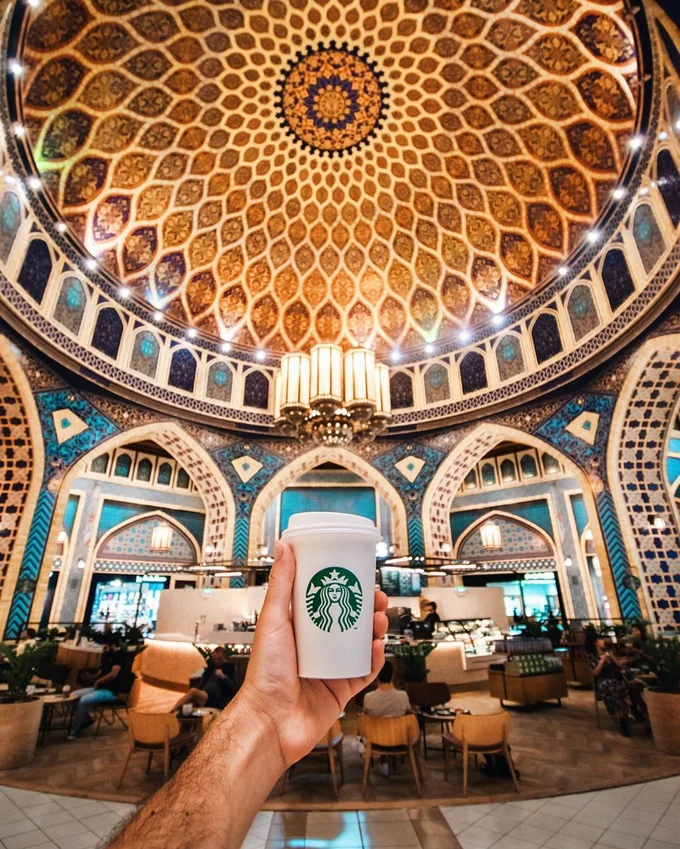
  • Dubai, United Arab Emirates: Finally, this Starbucks is located in Dubai’s Ibn Battuta Mall, which has over 270 stores and 50 restaurants! (Delish).  The colorful tiled dome and monumental arches are just some of the features of the extravagantly decorated mall that showcases the rich culture of the region (Klook).

These are just five examples of the many unique and gorgeous Starbucks stores around the world I look forward to exploring. Next time you travel, search up the nearest Starbucks. You might find an architectural masterpiece that happens to serve coffee! 

Bucket List Editor: Sara Habibipour

Sources:

https://www.statista.com/statistics/218366/number-of-international-and-us-starbucks-stores/#:~:text=World%2Dfamous%20coffeehouse%20chain%2C%20Starbucks,to%2015%2C041%20and%2016%2C202%2C%20respectively.

https://stories.starbucks.com/stories/2019/20-starbucks-stores-to-visit-in-2020/

https://www.starbucksreserve.com/en-us/locations/chicago

https://stories.starbucks.com/press/2019/starbucks-reserve-roasteries-around-the-world/

https://www.delish.com/food-news/g3365/coolest-starbucks-locations-around-the-world/

https://www.klook.com/en-PH/blog/beautiful-starbucks-around-the-world/

Filed Under: Bucket List Tagged With: Elizabeth Shay, Tour de Starbucks

Tomb or…Toilet?

October 20, 2020 by szachik@pvs.org 1 Comment

Elizabeth went searching for Funny but Historical Stories–as directed by Editor Evan. She found a most unsavory burial that nearly went to the grave with Patton.

By Elizabeth Shay

In 1917, esteemed World War II general George S. Patton visited the tiny French village of Bourg with the intention of establishing a tank training school. The local mayor approached General Patton in tears, claiming that the Americans had failed to inform him of the death of one of their soldiers. Patton was perplexed, as he was not aware of any death, but he allowed the mayor to lead him to the site of the soldier’s supposed grave: “Being unaware of this sad fact, and not liking to admit it to a stranger, I stalled until I found out that no one was dead. However, the Frenchman insisted that we visit the grave,”  as Patton recalled in his diary (later published by his widow Beatrice in 1947). 

Upon arriving at the site of the “grave,” Patton discovered that the mayor had led him to a recently filled latrine pit, with a makeshift cross that had the words “‘Abandoned Rear”’ stenciled into it. The French had mistaken the covered lavatory for a field grave! Not knowing how to respond, Patton simply offered his sympathies before leaving Bourg without telling anyone about the true nature of the grave.

Twenty-six years later, in 1943,  General Patton returned to his former Brigade Headquarters in Bourg and was shocked to learn that the “Abandoned Rear Grave” was still being maintained by the local population who viewed the unknown soldier as a national hero. Even after the second visit, Patton admits, “I never told them the truth!” and took the secret to his own grave.

Sources Referenced:

https://www.warhistoryonline.com/world-war-ii/abandoned-rear.html

10 Funny Stories from History that You Never Read in Your School Books

Funny Stories From History Editor: Evan Spry

Filed Under: Historical Figures, History, Humor Tagged With: Elizabeth Shay, Tomb or...Toilet?

10 Days in a Madhouse

October 6, 2020 by szachik@pvs.org 2 Comments

When Editor Erik Bearman assigned the Blog Staff the subject “Scary Stories,” Elizabeth went looking for a real-life horror story.

By Elizabeth Shay

Nellie Bly

The “haunted asylum” trope has been widely used in horror movies for many years. Such films are often more frightening because of their basis in reality. No one in their right mind would willingly commit themselves into a psychiatric hospital,…right? Well, long before the days of recent horror movies, a female journalist did just that. 

In 1887, Elizabeth Cochrane Seaman–better known by her pen name, Nellie Bly–launched an undercover investigation of the Women’s Lunatic Asylum on Blackwell’s Island in New York. The word “lunatic” comes from luna, meaning moon, and the popular misconception at the time was that the changing moon could cause people to have fevers or to act irrationally. The word “lunatic” was used broadly to describe any person with a mental illness or behavioral disorder. Many conditions were not well known, and people with a wide variety of symptoms were labelled insane and sent to asylums. Suspicious, Bly purposely had herself committed to the asylum on Blackwell’s Island for 10 days in order to expose the real conditions. Working under an assumed name, she took a room in a boarding house and began wandering around, refusing to sleep, and ranting incoherently. The owners of the house soon called the police, and Bly, claiming to be a Cuban immigrant with amnesia, was sent to Bellevue Hospital by a judge. There, she experienced a first look at the poor treatment of the mentally ill, as she and other hospital inmates were forced to eat spoiled food and live in squalid conditions. After being diagnosed with dementia and other psychological illnesses, Bly was sent to the Women’s Lunatic Asylum. 

Conditions in the asylum were worse than Bly had expected. More than 1,600 patients were being held in the hospital intended to house 1,000. Due to extensive budget cuts, patient care had sharply declined in recent years. Only 16 doctors remained on staff, and those that remained had very little training or compassion. Patients were forced to take freezing baths and remain in their wet clothes for hours. They were forced to sit on benches silently and unmoving for 12 hours, and some were tied with ropes and made to pull carts like mules. Food and sanitary conditions were terrible, as the inmates were given rotten meat, moldy, stale bread and contaminated water. Those who resisted or complained received beatings and were threatened by staffers. Many of the patients were not insane at all. A large number of the women were recent immigrants, caught in a law-enforcement system in which they were unable to communicate. Others were committed simply because they were poor and had no family to support them. If they were not suffering from mental illnesses before they arrived at the asylum, the asylum’s treatments inflicted grave psychological damage.

Upon her release, Bly wrote a book detailing her experiences at Blackwell’s Island: 10 Days in a Madhouse. The exposé had immediate results. New York state officials increased the budget by one million just for the Women’s Lunatics Asylum. And, the book helped spark hospital and asylum reforms across the country.

Sources Referenced:

https://www.nps.gov/people/nellie-bly.htm
https://www.biography.com/news/inside-nelly-bly-10-days-madhouse

Scary Stories Editor: Erik Bearman

Filed Under: Horror Tagged With: 10 Days in a Madhouse, Elizabeth Shay

Conspiracism

September 24, 2020 by szachik@pvs.org 2 Comments

When Editor Jake Sonderman instructed Bloggers to explore “Conspiracy Theories,” Elizabeth decided to explore WHY we are drawn to conspiracy.

By Elizabeth Shay

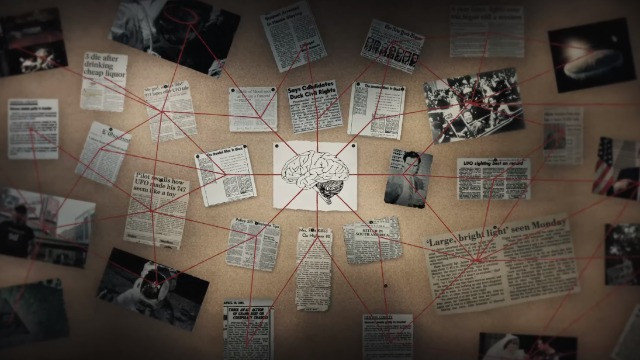
The government is hiding aliens at Area 51. The moon landings were fake. The “Illuminati” are trying to take over the world….These are just some well known examples of the numerous conspiracy theories that exist. Such wild conspiracy theories come about as people try to explain the seemingly unexplainable, often increasing in prevalence during periods of widespread anxiety or uncertainty. Humans have believed in conspiracy theories for millennia; one of the earliest theories was  that Emperor Nero was responsible for the burning of Rome in 64 A.D. Joseph Uscinski, PhD, an associate professor of political science at the University of Miami, says, “To one degree or another, we all have a disposition within us to view events and circumstances as the product of conspiracies.” But what exactly are conspiracy theories, and why do our brains love them so much?

Definitions vary, but, ultimately, conspiracy theories are attempts to explain events or phenomena as the result of the covert actions and influence of a powerful organization or group. Not to be confused with myths (stories not always purporting to be literal, often related to the supernatural, and which endure across millennia) or hoaxes (a deception that’s often preposterous, sometimes funny), conspiracy theories are often supported by exaggerations or false “facts” to make them appear more credible. 

The likelihood of a person believing conspiracy theories exists on a spectrum that Professor Uscinski calls the “conspiracy dimension,” which ranges from those who never believe in them to those who suspect that there is a conspiracy behind everything. Most people fall somewhere in the middle of these two extremes. In Uscinski’s book, American Conspiracy Theories, he finds that there is little difference between the genders, races, and religious versus nonreligious people with regards to who is more prone to conspiracism. Another surprising finding is that there is little difference in conspiratorial tendencies based on political leanings. However, people with no high school education and lower incomes tend to be more likely to believe in conspiracy theories. There are certain characteristics associated with people who tend to accept such theories as fact, including high levels of anxiety, paranoia, feelings of isolation, and low agreeability. 

But why do people believe in conspiracy theories? Research has shown that we’re not fully in control of whether or how our brains take in new information and what we do with it.  In his book, Suspicious Minds: Why We Believe Conspiracy Theories, Rob Brotherton, PhD, a psychologist at Barnard College, writes, “Conspiracy theories resonate with some of our brain’s built-in biases and shortcuts, and tap into some of our deepest desires, fears, and assumptions about the world and the people in it.” Conspiracy theories appeal to unconscious functions and instincts within our brain and seem like a source of order within the chaos. The prefrontal cortex of the brain has evolved to detect patterns and can make connections where they don’t exist. Once a supposed pattern is detected, confirmation bias causes people to seek out and believe information that supports their theory.

Conspiracy theories thrive in stressful times such as these. We all want to understand what is happening in a chaotic world and why. With the prevalence of the Internet and social media, theories are easily spread. It is important to be on the lookout for suspicious sources and use critical thinking to analyze the stories we come across. After all, like it or not, “We are all natural-born conspiracy theorists” (Brotherton).

Conspiracy Theories Editor: Jake Sonderman

Sources Referenced:

https://elemental.medium.com/why-your-brain-loves-conspiracy-theories-69ca2abd893a
https://www.scientificamerican.com/article/people-drawn-to-conspiracy-theories-share-a-cluster-of-psychological-features/
https://www.businessinsider.com/psychologist-explains-why-people-believe-conspiracy-theories-during-uncertain-times-2020-4

Filed Under: Conspiracy Tagged With: Conspiracism, Elizabeth Shay

Over Quarantine, I Cleaned My Closet–You Can, Too

September 17, 2020 by szachik@pvs.org 5 Comments

By Elizabeth Shay

Did you know that the average person only wears 20% of the clothes in their closet on a regular basis? I don’t know about you guys, but I have been wearing the same few t-shirts and pairs of sweatpants through these past months. So I decided to take action and sort through the mini department store in my house (aka my closet). Let me tell you, I found some things that haven’t seen the light of day since the dark ages of middle school and freshman year. My style has definitely changed since then, and, with college just around the corner, I was excited to take the opportunity to begin building an updated wardrobe that is both stylish and practical.

Here are the steps I took and some tips to help you get started: 

  1. Start with two piles (keep, donate/sell) and do a quick sort-through of all your clothes. If there are any items that you are unsure of, put it in the keep pile for now.
  2. Look through the “donate/sell” pile and further split it up based on what you want to donate and what you want to sell. With the money made from selling items, think about donating to a charity of your choice!

Places to sell: Depop and Poshmark

Places to Donate: Goodwill, Angel View, local shelters

  1. Look through the “keep” pile; don’t worry if it’s really large. Look through it again, and you’ll likely be able to identify more items to donate or sell.  
  2. Next steps to take include reorganizing your wardrobe and buying new pieces or revamping old ones. For example, consider using acrylic paints to transform your old jeans and shorts! Or, get out your scissors and sewing machines and get creative. And if you’re buying new items, make sure to shop smart and purchase pieces that you know you will wear and can be utilized in many different outfits so that all your hard work does not go to waste.

Learned-Something-New Editor: Hannah Hall

Source: https://www.wsj.com/articles/SB10001424127887324240804578415002232186418%C2%A0

Filed Under: Learned Something New Tagged With: Elizabeth Shay, I Cleaned My Closet--You Can, Over Quarantine, too

  • « Previous Page
  • 1
  • 2

About

We are the Palm Valley Firebirds of Rancho Mirage, California. Join us in our endeavors. Venture through the school year with us, perusing the artwork of our students, community, and staff. Our goal is to share the poems, stories, drawings and photographs, essays and parodies that come out of our school. Welcome aboard!