the bird on fire

The Palm Valley School Student Blog

Subscribe to Blog via Email

Enter your email address to subscribe to this blog and receive notifications of new posts by email.

Powered by Genesis

Cave Dweller

November 30, 2022 by szachik@pvs.org Leave a Comment

By Junior Levi Kassinove

Weekly, I assign the Blog Staff a Creative Writing Prompt–separate from their weekly posting prompt. The prompt is intended to be fun–sometimes the results are publishable, sometimes . . . not. Two weeks ago, I asked the staff to write about “darkness.” Levi went . . . dark . . . and to a completely unexpected place. We blame his new alpaca hoodie. Still, if you’re a fan of the workings of Levi’s mind, you may enjoy the following fiction . . . into the dark.

Blog Advisor Zachik

Day 1:

I’m currently hiking in the Andes Mountains. There is a clear sky and a bright sun. I can see a rainbow over the distant mountains. 45 minutes ago, I was separated from my group of friends that I met last night during a shamanic ritual. I am currently following a herd of alpacas. I think that they can at least guide me somewhere safe. 

Update 1:

The alpacas led me to a hermit who seemed to be taking care of them. He lived near the entrance of a cave that stretched deep into the mountain. Upon my arrival, the hermit sheared some of the alpacas and gave the fur to his wife, who then proceeded to start weaving the fur into a sweater, presumably as a welcome gift for me. The hermit led me into his minimalistic wooden shed, which had an air of detachment and mystery that made me uneasy. He offered me dinner, which consisted of sautéed, unfamiliar-looking mushrooms and a glass of…some sort of liquor. It tastes pretty good, actually. 

Update 2:

I woke up in a cave, presumably the same one that the hermit was near. There is nobody around, and I have an alpaca fur sweater on. I do not remember the weaver finishing the sweater I’m wearing, nor do I remember her giving it to me. The cave is dark, cold, and scary. Right now, I don’t know what to do, and the walls are moving. Though I can’t see the movement, I can feel it.

Day 2:

Nobody has come to save me. I have been eating whatever I could find in the crevices of this cave. All I have is the warmth and comfort of my alpaca sweater. I can only hope that soon someone will save me. Who was that hermit? Why did the alpacas follow him?

Day 35:

I have been using a rock to etch lines into the cave walls to denote the passing days. I am beginning to feel my mind slip, in the sense that I cannot trust my humanity, but I am resisting the slipping. My sweater has, remarkably, remained dry and cozy. I also didn’t know that grass grows in caves. Here there is grass. Why did I even decide to follow the alpacas? What was I thinking?

Day 203:

I found the hermit’s corpse last week. He had chunks bitten out of him, as if he was eaten by a pack of hyenas. But I have an eerie suspicion that it was the alpacas. I wonder if I’m their next target. I should have never followed them to the hermit’s cave. They are a murderous bunch. A gang of land dolphins. I wonder if no…that can’t be right. They must’ve tricked me…somehow…into following them to the hermit so that they could murder both of us and dispose of the evidence. Yes, I am beginning to piece it together now. 

Day 116:

They were always out to get me. Alpacas are sentient beings. I don’t even think that they are from earth. That innocent hermit…he was just happy to be in the presence of nature. He treated the alpacas well. Those animals are a bunch of psychopaths. I don’t know why I am still wearing this sweater. I don’t want to wear the fur of murderers. It’s just…so…warm. I wonder what happened to the weaver. She must be worried sick.

Day that I will escape:

Last night, sure enough, I found the weaver’s corpse. I am definitely next. This is all just a sick game to the alpacas. Torturing me just for entertainment. Is it because I took their fur? Is it because I’m human? A contributor to the demise of the planet? Whatever it is, I am going to escape. I just need to figure out how. How am I going to escape when the walls are constantly moving?!!! 

Day ___:

there is no escape there is no escape there is no escape there is no escape there is no escape there is no escape there is no escape there is no escape there is no escape there is no escape there is no escape there is no escape there is no escape there is no escape there is no escape there is no escape there is no escape there is no escape there is no escape there is no escape there is no escape there is no escape there is no escape there is no escape there is no escape there is no escape there is no escape there is no escape there is no escape there is no escape there is no escape there is no escape there is no escape there is no escape there is no escape there is no escape there is no escape they tasted so good there is no escape there is no escape there is no escape there is no escape there is no escape there is no escape there is no escape there is no escape there is no escape there is no escape there is no escape there is no escape there is no escape there is no escape there is no escape there is no escape there is no escape there is no escape there is no escape there is no escape there is no escape there is no escape there is no escape there is no escape there is no escape there is no escape there is no escape there is no escape there is no escape there is no escape there is no escape there is no escape there is 


It was all a red herring. 

The hermit. The weaver. The cave. The alpacas. They are just animals. Just grazing…they happened to bump into the hermit and the weaver. 

I’ve just got it…I’ve repressed the idea for so long. The sweater proves it all. I couldn’t take it off no matter how much I wanted to. Nature is me, and I am nature. We were always one. This is the end of my journal. I can’t bear to write anymore, and there’s some hay over there that looks pretty good. My hands…have they always looked like . . . hooves??

Photo Source: vanderbilt.edu

Filed Under: Animals, Awakening, Fiction Tagged With: Cave Dweller, Levi Kassinove

Steak of the Gods–Wagyu

November 15, 2022 by szachik@pvs.org Leave a Comment

By Junior Culinary Aficionado Levi Kassinove

Who wants turkey when you could have wagyu?

What is Wagyu?

A grade A5 Wagyu steak is Levi’s picture of beauty. (Photo source: robbreport.com)

You know steak. You might have heard of wagyu. Wagyu literally means Japanese cow, which has evolved to connote the highly marbled and expensive ($200 per pound) steak that we know today. Generally, people agree that the more marbling (intramuscular fat) a steak has the better. The marbling is the white stuff you see in the steak. The steak pictured is grade A5, which is the highest grade of wagyu. Wagyu is graded by the Japanese Meat Grading Association (mychicagosteak.com). I wonder if there is a Japanese Meat Tasting Association. If so, sign me up. Anyway, for comparison, here is a picture of normal angus steaks that you’d buy at the grocery store:

Typical angus steaks found in the typical grocery store. You don’t see as much marbling, although an angus is still good if cooked right. (Photo source: dartagnan.com) 

As you can see, the wagyu steak has much greater marbling. But what does this mean for the flavor? How do you cook it? And, most importantly, is the price worth it? I’ll give you a hint: The answer to all three questions is “Yes.”

The Flavor

Assuming that the steak is cooked correctly (which I will get to later), wagyu will genuinely be one of the best, if not the best, food you will ever eat. Your favorite food is pasta? Pizza? Tacos? Not anymore. It’s wagyu now. You know what umami is? It’s the flavor that makes things taste good. You best believe that wagyu is full of it. When you take a bite, it’s like a hedonist party in your mouth. The amount of rendered fat in there will make you redefine the word “juicy.” 

Honestly, I don’t know how else to describe it. The flavor of wagyu isn’t actually so complex. It has a sort of…fiery simplicity. There is an explosion of comfort. It is heavenly. I will say, though, that the more marbling a piece of wagyu has, the less it tastes like steak and more like a kind of refined grease. It certainly won’t make you feel good after eating it. That is why I recommend staying away from notoriously marbled cuts like ribeye. In my opinion, it will just be too fatty. 

How to Cook Wagyu

I would say that 70% of what makes a steak good depends on how you cook it. For most steaks, the optimal way to cook a steak is by reverse searing, which is basically just cooking the steak in an oven before searing it on a piping hot cast iron skillet. Medium rare to rare is objectively the best level of doneness for steaks, as evidenced by the late chef Anthony Bourdain in his book Kitchen Confidential. Bourdain stated that people ordering well done steaks at a restaurant “pay for the privilege of eating our garbage,” and that anyone who does it is a “philistine” who “cannot tell the difference between food and flotsam” (mashed.com). Now, I’m about to say something that might make you hate me. I prefer wagyu that’s cooked medium. I know that some idiots inexperienced steak lovers will say that medium rare is still optimal for wagyu. And, if you want to try that, then have fun. Tell me how it goes. I’m sure it will still be good, but I encourage you to do a side by side comparison of my method vs. the regular medium rare reverse sear. The fact of the matter is that wagyu is just too fatty to be cooked like a regular steak. Cooking a wagyu steak medium rare or rarer will just not render (melt) all of the intramuscular fat (in my experience), leaving you with a steak that hasn’t reached its full potential. Now, I’m going to teach you how I cook wagyu. It’s based on the way Japanese chefs do it.  

Materials:

  • A wagyu steak
  • A cast iron skillet or stainless steel pan
  • High quality salt (why use the cheap stuff on a $150 steak?)
  • Meat thermometer for losers (optional; you can touch the steak to gauge internal temp)

That’s seriously all I would use. Now, let’s get into the preparation. I’m assuming you know how to defrost a steak. If you’re thinking about defrosting it in the microwave or something, you might as well stop reading this article. Moving on, the next step is to trim the fat. Save whatever you’ve trimmed off because it will be important later. After that, salt the steak. Be generous. Cover all sides including the edges. If you think you’ve salted it enough, put a little more. Then, you’re going to want to put it in the fridge for at least an hour. What’s going to happen is the salt will draw moisture from the steak, then let it distribute back in. This is why you need so much salt. You are salting the whole steak. This tenderizes the steak and gives it more of an evenly distributed flavor. The longer you leave it in, the better. People do it for 24-48 hours even. But I don’t know if I could leave wagyu in the fridge for two days without eating it. 

Cooked wagyu (Photo source: kitchencookbook.net)

Now that the preparation is over, the next step is to get the skillet ready. You’re going to want to get it as hot as possible. I would say like 700 degrees Fahrenheit is a good place to start. If you don’t have an infrared thermometer, you can just splash some water on the skillet and see if it evaporates instantly. At this point you should also take your trimmed fat out of the refrigerator for it to melt at room temperature. Once melted, brush the steak with the fat and coat the skillet. Now, cut the steak into strips or cubes, whatever you want. This will efficiently cook the steak. Now toss them onto the skillet and sear the strips for about a minute on each side. The time will vary depending on the thickness of the steak. Just take it out when you feel like it’s right. Also, be sure to have a fan running and a window open because it’s gonna get smoky. 

That’s it, and that’s all. Have it with a glass of wine–or water for the kids. But, I know you’re not sharing your wagyu with your kids. If you’re having it with wine, just make sure it’s red, unless you want to expose yourself as someone who doesn’t understand how the universe works.

Is the price worth it?

Honestly, yes. Absolutely. If I were a billionaire I’d have it for breakfast, lunch, and dinner. I’d live fast and die young for wagyu. In all seriousness, if you can afford it, I’d highly recommend you try it at least once before you die. It is truly an unforgettable experience. Even if you can’t afford it, I suggest you still save for it. Who needs water and electricity? Who needs to respond to the IRS? Spend that otherwise wasted money on wagyu instead. You won’t regret it.  

Filed Under: Advice, Aesthetic, Food, Op-Ed Tagged With: Levi Kassinove, Steak of the Gods–Wagyu

The Only Real Artist in the Family–My Grandmother

November 9, 2022 by szachik@pvs.org 1 Comment

By Junior Levi Kassinove

Our PVS bloggers explored art and artists. Levi went close to home with his favorite artist, . . . his grandmother.

I know my writings are usually pretty…avant garde–and not exactly in ways that have clear merit, either. (See “A Clam Thanksgiving.”) My grandma, on the other hand, possesses an artist gene that she clearly refused to pass on. Nobody else in my family is even good at drawing. Working as an art therapist for 23 years in a community mental health clinic gave my grandmother a unique, empathetic perspective on people with mental illnesses. I interviewed her recently about how her experiences in the clinic shaped the way she painted, and this is what she had to say.

(https://www.tinakassinove.com/) 

Me: Let’s start from the beginning. Who are you besides my grandma?

Tina: My name is Tina Kassinove, and I have been painting for over 50 years. I lived in New York for most of my life and moved out here to the desert around five years ago. 

Me: Why did you become an artist?

Tina: I’ve always loved art, even as a young child and more so around the age of seven. As I went into elementary school and to higher grades, I was always asked to go down to the lower grades to teach kids art. It was always something I loved. Maybe I’ve always felt the need to express myself through art because expressing myself verbally was not my skill. 

Me: What kinds of paintings were you originally making?

Tina: Early on in my career, I did hardline acrylics. There is no blurring of one area into another. Every aspect of the painting is clearly defined. Mentally, I was very rigid in my application of the art, and I was not allowing myself to freely paint what I wanted. I was not comfortable with who I was as an artist. Later on, working as an art therapist for the mentally ill just…freed me up. It really did. It gave so much more dimension to my life and to who I was. When I moved here, to [the Coachella Valley], I immediately embraced the beauty of the mountains and the colors of the foliage, which freed me up even further. I’ve allowed myself to not let the concepts that I come up with control my art, but let the canvases control my concepts. 

Me: You’ve done a lot of paintings about mental health; can you talk about those?

Tina: Working as an art therapist gave me such insight into the pain and suffering of those that grow up with mental illness. Everytime I completed a work, I would see something that reflects one of those patients and their struggles in that artwork. I also think that during my time working at the community mental health center, I gained insight into the workings of the mind and how nothing is black and white. There are so many grays and colors in between that really transformed who I am as an artist today. 

“Schizophrenia” by Tina Kassinove

Me: Did you have any famous artists that you looked up to?

Tina: I absolutely did. I loved Mondrian, for instance. Some of my paintings earlier on, even now, reflect Mondrian. When I graduated from college and was developing my skills, I also liked Picasso and Lichtenstein. 

Me: If you had to pick a favorite painting, what would you choose? 

Tina: If I had to pick? Honestly, I think that one over there, “Coexistence.” I think the reason why is because of how the painting developed, and how I saw difficulties with it and just went with them. And, it turned out to be successful. I allowed the shapes to guide me.

(Side note, this is what she meant by the canvases controlling her concepts.)

“Coexistence” by Tina Kassinove

Me: Lastly, if you had advice for young aspiring artists, what would it be?

Tina: Have faith in yourself, and never give up, and…let the experiences in your life guide you. Just allow yourself to be free and express yourself.

I don’t know, that doesn’t sound so good. Help me out here. You can tweak it, you know? Make me sound real good, kiddo. 


Truly, it is difficult for artists to define why they do what they do. It is also difficult for them to give advice. Anyone who plays with emotion, color, and philosophy is bound to be somewhat mystifying. It seems that artists have a unique approach to life, in that they let it wash over them without thinking too much about the logistics. With Covid, most people would complain and lie in their beds all day. At the end of the ordeal they’d complain more about it to their friends and family. My grandma would choose to make a painting to express how she felt. How exactly a painting captures her experience is up to your interpretation. Also, you can find more of her art at https://www.tinakassinove.com/. 

“Weathering my storm” by Tina Kassinove, the Covid painting

Filed Under: Art Tagged With: Levi Kassinove

Chapter 5, page 246-247 of my life: The Levi Manifesto

November 1, 2022 by szachik@pvs.org Leave a Comment

By Junior Novelist Levi Kassinove

Years ago, universities asked applicants to role play they’d written a novel of their life and to open up that hypothetical novel to p. 246 and to share it with the admissions committee. I asked the same of the Blog Staff. This is Levi’s p. 246.

Blog Advisor Zachik

This is a chapter from my teenage years.

…with a look of horror painted across their faces. I had realized at that point that anything was possible. Upon asking this utterly ridiculous request, there was a hint in the eyes of my peers that said yes. Yet another obsession had successfully scratched the itch in my brain that would otherwise leave me endlessly bored. Passion only ultimately leaves me hungry for more. 

That is why I am against the advancement of knowledge. 

A million billion years from now, when the last optimization for society has been implemented, when we have understood the last concept, and when we have found a cure for the last disease, only then will we realize that our quality of life hasn’t improved. Are things really any different now? Will they be different then? People want to live longer just so they can live longer. What then when we die? Is there really so much of a difference between living 50, 100, or 1000 years? No matter how much we “improve,” the hedonic treadmill will pull our happiness back to its baseline. 2000 years ago, if someone broke their leg, they would probably die or live pretty uncomfortably for a while, but they would adapt before they die. Nowadays, we get a cast and heal, and, still, we adapt all the same. Humans adapt to their situations as a coping mechanism. There is no such thing as improvement. Only the desire for advancement, which boils down to greed. Understanding the universe is for the sole purpose of understanding the universe. Science is an addiction, perhaps one that has short term and foreseeable benefits, but ultimately it becomes an addiction given enough time. I’d say enough time has passed for us to see that science will eventually lead to our doom.

Note: I didn’t start this in medias res because I’m pretentious; I did it to protect myself–from Indy. Here, I don’t have to reveal everything. At some point, depending on the life you choose, you get so paranoid that you end up destroying all of your work out of fear of not being accepted. And the constant jokes get annoying as well.

Levi Kassinove

People want knowledge because they want power, and people want power because they like having dominion. It is in our blood to strive for control. But, it is unfair. Inherently there are always people being controlled. The people in power believe that they can mold us to do anything. They think they can make us think any way. They think they can make us behave any way. But, we are not characterized by tabula rasa. Freedom is the essence of life. Animals, with their animalistic behavior, have total freedom over what they do. The people who want power think of humanity as beyond animals, and therefore beyond freedom. They think we are too civilized for freedom. We are not above animals. To be humble is to live in harmony. It is to be free. This was my request to my family. 

I wanted to contribute to the global effort to free ourselves from tyranny. I wanted to be Neo from The Matrix. And, that’s exactly what I did. During the birth of my obsession, people obviously got tired of it. They got tired of my inability to talk about something other than this. But, when they started to see results, they started to get interested. They started supporting me. They did not regret their decision to let me essentially…be free. My goal is not to grow so big in my personal effort that I single-handedly change the world. My goal is to plant the seeds, so that others may water them. 

Filed Under: Uncategorized Tagged With: Levi Kassinove

Picnic at the edge of time

October 25, 2022 by szachik@pvs.org Leave a Comment

By Junior Levi Kassinove

Something is in the air, and it’s not autumn. The annual Palm Valley School Poetry Recitation quickly approaches. I asked our bloggers to speak to, for, against, about poetry–or compose their own original verse. Levi and his soul ask “Why?”

Blog Advisor Zachik

On a large beach towel

Draped across humble grass

Ideas ferment 

What is ascent?

Surrounded by reality and griffins 

A lost soul gazes in an esoteric direction

It sees smoke arising from fiery grass

Missiles of infinite malice flying through space

Screams of regret

Of lost hope

The soul turns to a brilliant light sitting beside it

“Why?”

Experience is the essence of life 

The light homogenizes back into the universe 

Time is an arbitrary concept

It’s not too late to start over

Because the god of wisdom 

Is you

Filed Under: Poetry Tagged With: Levi Kassinove, Picnic at the edge of time

A Clam Thanksgiving 

October 20, 2022 by szachik@pvs.org Leave a Comment

A Traditional Re-Telling, by Renowned Clamologist Levi Kassinove

Platitudinous as it was, the clams rested year-round on the sandy ocean floor. After all, do clams migrate? Do they flap their little halves and swim around twice a year? It doesn’t matter. A clam is what a clam is. A lowly, pathetic filter-feeder. Humans have them for dinner all the time with pasta. They are NOTHING to the animal kingdom. They are but a meager source of protein and tedious work for us. It is truly a pain for animals to bust open their shells, only to find a lackluster gob of flesh on the inside. Despite this rather insensitive banter about clams, which is obviously discussed among all other animals on a constant basis, clams are thankful.

A clam has its own little clam family, just like you and me. It is thankful for the bacteria that wafts in its direction, possibly providing sustenance. I don’t know what a filter feeder eats. Maybe it’s algae…. Nevermind, it’s plankton (bioexplorer.net). The fact of the matter is, even if one suffers from clampression, or is currently going through a clamcession, or is even in the midst of a global clamdemic, clams will stand (rest?) strong because of their hard outer shell. 

A NON-THANKFUL CLAM (wordpress.com)

Clams have a marvelous ability to stand vis-à-vis with an octopus and not move a muscle. One clam is cornered. Our cornered clam senses he isn’t skilled or strong enough to avoid octopus calamity. It’s inevitable that this clam is gonna die. He’s gonna get crushed. All the other clams escaped from the octopus confrontation. They called upon their octopus-evasion skills; he wanted to be like them. But deep down, the clam knew he wasn’t as talented as the other clams. All he’s left to ask is…why isn’t he enough? To him, it seemed that everyone else was naturally better at life than him. Sure, he held his own in most aspects of life, but escaping an octopus? Clearly he did not have the talent. He was effectively worthless–not because of the octopus, but because of the other clams. See, if they had all died, he would feel totally content with his failure. He would happily accept death by octopus. But the fact of the matter was that he was the runt of the litter. He had to accept that. His misery sunk him so low that he actually started physically sinking into the sand. He disappeared under a blanket of wallow and self-loathing and small oceanic granules. The octopus scoffed and swam away. 

Levi says, “The inner mind of animals are all alike in their inherent struggles”
(Photo Source: ktla.com).

Then, suddenly, a giant evolved-monkey appeared in the water. At least, that was what it looked like to the clam. It grabbed the clam along with his family, which was like 15 other clams. The diver put the clams in a bag and threw them onto a boat. And, it was then, riding in a boat to their inevitable deaths by some chef at an Italian restaurant, that the clams celebrated Thanksgiving. Every clam knows that they are about to die. And yet, they celebrate the lives that they have lived. Our protagonist clam must forgive himself. Was it his life that he should be thankful for? Or rather, should he be thankful that HE has to carry the burden of being a worthless piece of shellfish? At least, the clam proposes to himself, he is punished with this terrible burden, rather than another clam. The clam would rather he suffer than another. He may not have forgiven himself, but he has forgiven The Almighty Clam. And that is why he is thankful. For he is…a clam. 

Filed Under: Fairy Tales, Fiction, Gratitude Tagged With: A Clam Thanksgiving, Levi Kassinove

Why you need more sleep than you think

October 18, 2022 by szachik@pvs.org Leave a Comment

By Junior Levi Kassinove

In our focus on health and healthy living this month, we’ve blogged about good eye health and good diet. Levi reminds us you need a good night’s sleep as well.

Most people in school take sleep for granted. People think that they can just blow off sleep and not face any consequences, justifying it with their school workload. They say it is “because of school” that they stay up so late, to quote Alyna Llapitan, who says she gets “around five hours of sleep” per night. Time management is clearly the real problem. Do we not have time to eat? Do we not have time to drink? The reason why we do it is because we make time for it. We cut time out of our days for food, water, video games, AND SCHOOL. People play on their phones like a bunch of mindless robots rather than going to sleep. You cannot tell me that you stay up every single night doing homework. I’m taking four AP classes, and I still (have the ability to) go to bed by 10 p.m. I’ll admit that I’m also a mindless robot sometimes who stays up until 11 p.m. or even 12 a.m., but that’s still within the range of the recommended daily amount of sleep for teenagers, which is 8-10 hours (cdc.gov). If you go to sleep at 10 p.m., you will get 10 hours of sleep if you wake up for school at 8 a.m. 

Want more on sleep? See Levi’s previous post on astral projection. See it in “Has Levi Been to Area 51?” Photo source: livescience.com

The fact of the matter is people should be making more time for sleep. When we disregard our sleep, we get sleep deprived. Sleep deprivation is AWFUL. The world record for longest time spent awake is 11 days and 25 minutes! The man’s name is Randy Gardner, and he “reported experiencing severe insomnia decades after his sleep experiment” (whatasleep.com). I’m sure many of you pull all nighters for no particular reason. (Scarefest, anyone?) I do it, too, but it can lead to severe health problems. The MINIMUM daily hours sleep to live on is four hours (ojp.gov). Lower quality of sleep is also linked to depression, as people with insomnia have been shown to have a “tenfold higher risk of developing depression than people who get a good night’s sleep” (hopkinsmedicine.com). This might be the cause of your low grades, as depression has a strong causal link to poor academic performance (sprc.org). 

The moral of the story is this: sleep is not optional, nor is it quirky no-consequence fun to pull all-nighters. Get sleep. Do your homework when you get home or during Firebird Time. Nobody has THAT much homework. 

Filed Under: Health and Disease Tagged With: Levi Kassinove, Why you need more sleep than you think

The Art of Fencing

October 12, 2022 by szachik@pvs.org Leave a Comment

By Junior Levi Kassinove

Levi wins with his épée at Desert Fencing Academy.

In our pursuit of unearthing the hidden skills of our PVS students, we find Levi is a fencer. In fact, he is so enthusiastic about fencing, he’s spear-heading bringing a Fencing Club to campus. See if he entices you with his parrys, attacks, and counterattacks.

A little over a year ago, I didn’t even know that a fencing place existed in the desert. Now, I fence twice a week. Fencing is actually divided into three different weapons, each requiring a different style of sparring. There is the épée, the sabre, and the foil. I fence épée. I will break down each of them, along with the style associated with them and my own personal style. 

Foil

While it is the most commonly used weapon in competitions, it is the least popular weapon at the fencing studio I go to. I should stress that both fencers in sparring must use the same weapon. To score a point in foil fencing (and épée), one must stab their opponent’s torso such that the pressure plate at the tip of the blade is fully depressed. Fencers wear gear complete with a wire that connects to the blade in hand. The wire is retractable in order to allow the fencers free movement. With foil, the torso is the only legal target. Also, to score a point, the fencer must have priority, or right of way, which basically means that they’ve attacked first. If one counterattacks (meaning both fencers attack at the same time), the fencer who first started to attack wins the point. So, the only way for the defender to win a point is to parry and then riposte, or attack. 

Sabre

This is the weapon that my brother, Caleb, and my classmate Gil use. Instead of thrusting and stabbing your opponent, sabre fencers must hit their opponent to score a point. They slash instead of poke. They sword fight instead of joust. In sabre fencing, the entire upper body is the target, including the head. What aren’t parts of the target are the hands, legs, and feet. Instead of a pressure plate attached to the tip of the blade that signifies a scored point, sabre fencers use the entire weapon. They cut across (not literally) their opponents with the long side of the blade, which means that sabre fencers must wear an additional piece of gear called the lamé which goes off if someone gets hit (the lamé is electrified, and when the sabre hits the lamé, the circuit is complete–signifying a point earned). The right of way rule also applies to sabre, so it is the referee’s call as to who gets the point if they have a double touch. 

A close encounter in an Olympic sabre bout (nytimes.com)

Épée

This is my personal favorite weapon, and the one I use. Contrary to all the restrictions of foil and sabre, there are barely any rules in épée. The whole body is the target with NO EXCEPTIONS, and there is no right of way. An opponent can counterattack, thus allowing both fencers to score a point if they hit at the same time. As a result, épée fencers are much more cautious in terms of attacking. In a given épée bout, fencers spend most of the time facing each other off and frantically analyzing their opponent. For the other weapons, fencers usually charge at each other as fast as possible because of right of way, but that’s a lot more dangerous in épée because the defender can counter attack and win the point. Parrys, because of the loose rules, are very important in épée fencing to guarantee that you don’t get touched. Disengages are almost as important, which are basically just maneuvers that free your épée from an incoming parry. Usually, a disengage maneuver is in the shape of a circle or semicircle.  

Épée fencer scores a point against their opponent (yahoo.com)

Fencing is a great way to relieve stress, at least for me. It forces you to focus solely on the battle, not leaving any room for thinking about an upcoming test or project. It grounds me in the moment, and it can get pretty hectic. Sometimes someone runs at their opponent with their sword extended, called the flèche attack, which usually results in someone getting hit. Sometimes people cross paths, getting behind each other’s back, which results in people flinging their swords behind their backs to try and win the point. Sometimes swords just snap as well. Overall, fencing is a great sport for people of all ages. My fencing coach’s oldest student is in his 90s! And, we are looking into starting a fencing club at the school. Show your support in the comments!

Filed Under: Learned Something New, Sports Tagged With: Levi Kassinove, The Art of Fencing

My Favorite Foods Around the World, Ranked

September 28, 2022 by szachik@pvs.org Leave a Comment

By Junior Levi Kassinove

What is culture without food? Personally, when I visit a different country, I am only focused on the food. I couldn’t care less about the landmarks and tourist attractions. Sometimes the differing behavior is interesting though, like how in India people eat with their hands (theculturetrip.com). Other than slightly different mannerisms, the food is the only part of the culture that is worth experiencing in my opinion. It’s the only thing that differs so drastically from place to place, even within countries. I should mention that these rankings aren’t necessarily the best tasting foods I’ve ever had, but the ones that are most interesting from least to greatest. Without further ado, here are my most interesting foods from around the world. 

Red Snapper Nigiri at Musashi, Palm Desert

m.yelp.com

Since we are going around the world (not including places I haven’t been to, such as Africa and Asia), I think it is appropriate to start locally. This dish is obviously Japanese, and Musashi is not located in Japan, but I want to start this list by highlighting the variety of cultures in the United States. Because of the mixed nature of the U.S., it is possible to get pretty much any type of food. Perhaps in most cases the foreign dishes will not be the same quality as served in their homeland, but I believe Musashi serves fantastic sushi. The red snapper nigiri, in particular, is blowtorched and finished with a yuzu-based garnish. Its instant burst of citrus is accented by the complex flavor of the torched red snapper, leaving a pleasant and exquisite aftertaste. While the food at Musashi is excellent, for the vast majority of sushi restaurants in the United States, I order without wasabi because it is extremely unlikely that they will serve actual ground wasabi root. Rather, most restaurants will serve a horseradish based substitute due to the difficulty of growing wasabi (businessinsider.com). That is an example of the quality difference between the U.S. and other countries. 

My Experience at Pujol and Quintonil, Mexico City

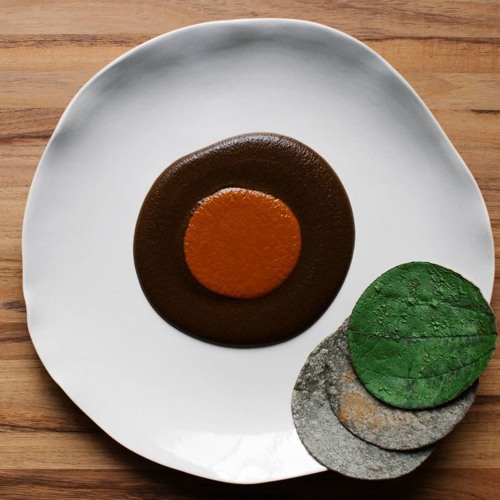
This is mole: Pujol, mole madre, mole nuevo. The dark ring on the outside is aged mole. The inner red is fresh mole (i1.sndcdn.com).
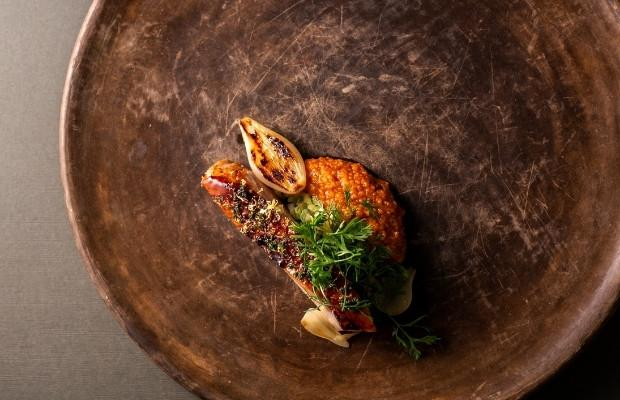
Pictured: Quintonil, charcoal roasted chicken (theworlds50best.com)

One of the things that I did not expect to try in Mexico City was ant larvae. At both of these restaurants I was served some variation of it; Quintonil served it mixed with avocado, and Pujol served it on a puffed tortilla. Pujol is hands down the best restaurant I’ve ever been to, and currently it’s rated as the 5th best restaurant in the world (worlds50best.com). When I went there, I believe it was ranked 12th. Quintonil is currently 9th, and when I went there it was ranked around 20th. So, if you can get into these places, I highly recommend them. I remember at Quintonil I had for dessert a cake made of huitlacoche, which is a fungus that grows on corn (en.wikipedia.org). It is considered a delicacy in Mexico, and it was definitely interesting to eat, so it goes on my list. At Pujol I distinctly remember their dish, mole madre, mole nuevo, which is mole aged for 1000 days paired with freshly made mole. Mole is a dish traditionally made with peppers and chocolate; the exact ingredients of which vary between Mexican grandmas (en.wikipedia.org). 

France and Spain

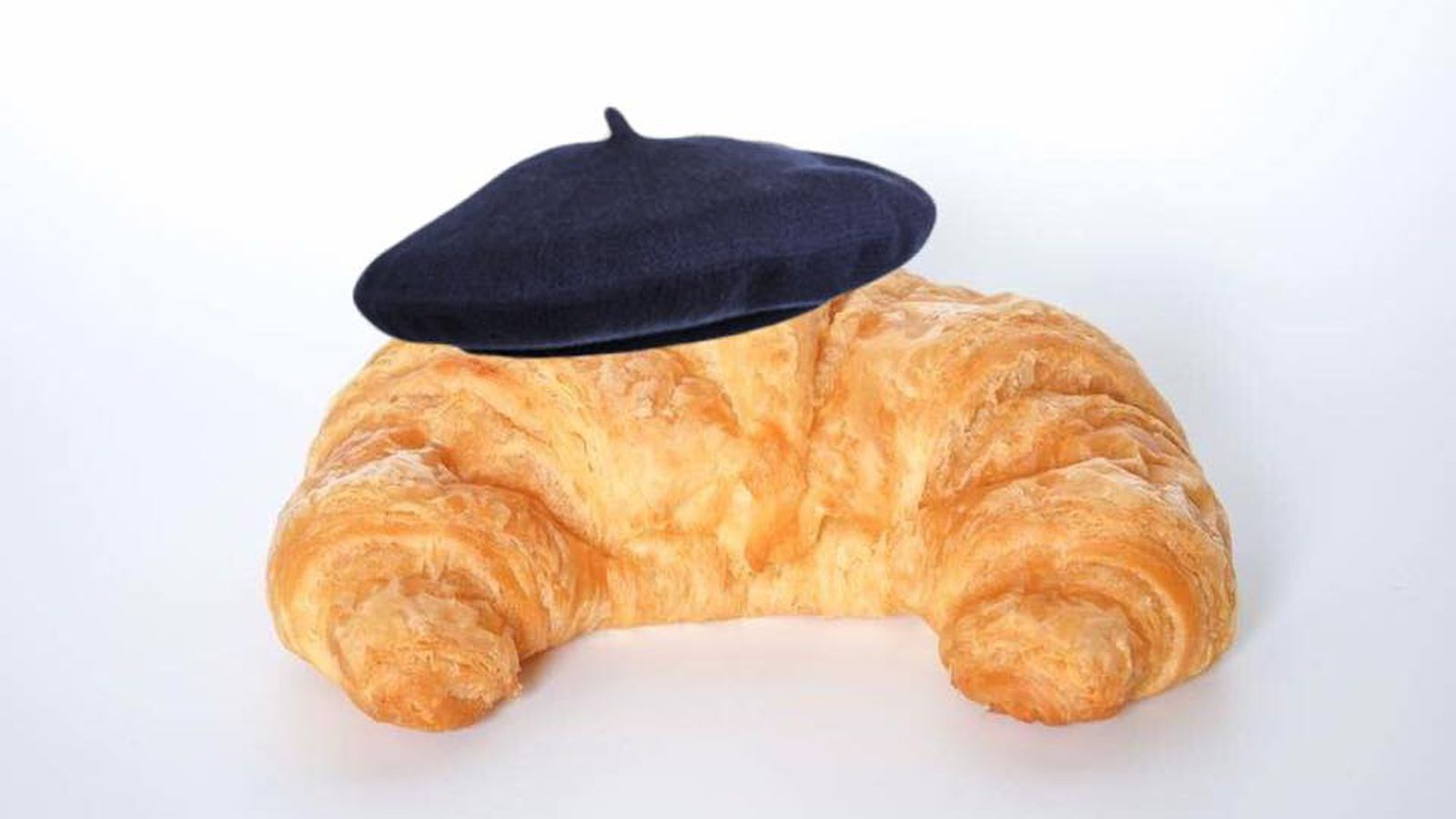
(cdn.vox)
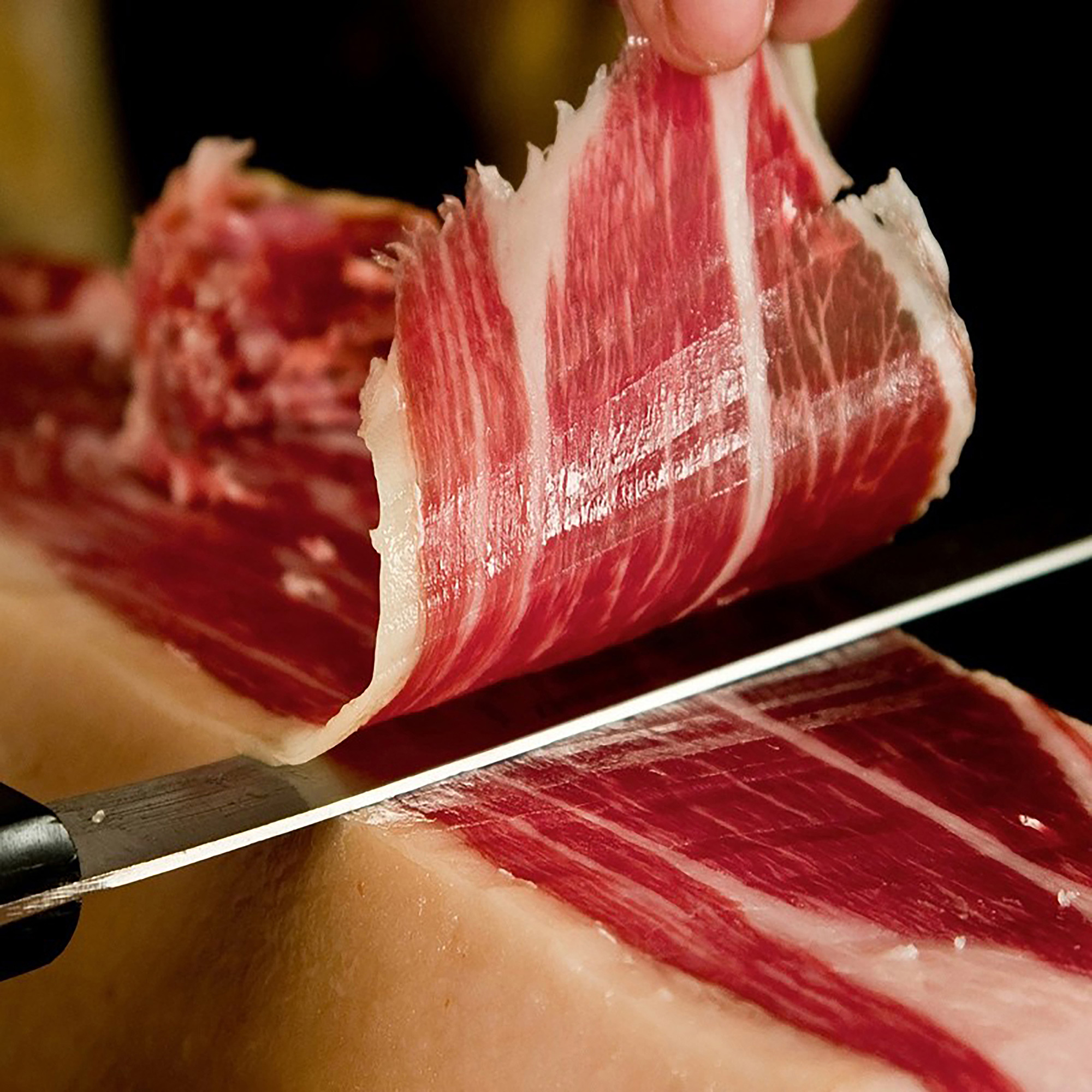
(approachguides.com)

There isn’t much to be said about these countries that hasn’t already been said. The bread in France being good is an understatement. A croissant from any cafe in France makes a croissant from a local coffee shop in the U.S. taste like Wonder Bread. Seafood from Spain is absolutely delicious, especially Spanish octopus. My favorite food in Spain, however, is undoubtedly Jamón ibérico de Bellota. It is widely regarded as the best ham in the world, as the pigs are pampered and run wild in oak forests, eating mostly acorns, chestnuts, and grass (Jamon iberico-Wikipedia). The highest grade of Jamón ibérico de Bellota is pata negra, which is reserved for only the pure-bred Iberian pigs. Pata negra literally translates to black foot, a trait only pure breds have, so a good way to tell if a leg of jamón is genuinely pata negra is to look at the foot. The term is even used as slang to mean “the best” in Spain. It is absolutely delicious and widely available in Spain, like truffles in Italy. On the topic of meat, steak is excellent in France if you accept the way they prepare it. The French cook their steaks the only real way, which is bloody rare. I ordered a medium rare steak once in France, and they served me one of the rarest steaks I’ve ever eaten besides tartar. It was incredible. Unbelievably tender. I highly recommend it for the students going on the upcoming trip to France. 

Conclusion

Food is one of the defining features of each culture. Recently, I’ve been interested in exotic fruits. Many of the fruits that I have learned about this year have never been heard of by my peers. Have you ever heard of a mangosteen? The LA Times called it “arguably the world’s most delicious tropical fruit” (latimes.com). Perhaps I’ll rank the world’s greatest fruits next. Mangosteen would be pata negra. If you have a food that you think deserves to be on this list, please tell me in the comments below. 

Filed Under: Aesthetic, Culture, Food Tagged With: Levi Kassinove, My Favorite Foods Around the World, Ranked

Politeness is a Waste of Time

September 6, 2022 by szachik@pvs.org Leave a Comment

The Bird on Fire staff bloggers are tasked with writing about a cause. Here, Levi opts to go after the glue that holds together our society–politeness and small talk. It nearly goes without saying, the opinions of Levi do not necessarily represent the views of The Bird on Fire.

Blog Advisor Zachik

By Levi Kassinove, Junior

Dear Readers, given the comprehensive, semi-scientific post of last week, I feel you deserve a break. It’s time for a lighthearted post about why polite people are living a lie.

— Levi

Recently, on vacation, my friends and I were walking outside at night in the desert. Without giving too many details so as to not embarrass anyone, there were scorpions roaming around, and we needed a UV light to see them. We did not have a UV light. We walked around nonchalantly, accepting our situation, until a lady walked up to us and offered to let us borrow her UV flashlight. One of my friends fought absolute TOOTH AND NAIL for her to not give it to us. My friend repeatedly told her, “Oh you don’t have to, you really don’t have to,” to which the lady responded, “I insist. You guys are children and you should have fun.” This exchange kept going until I interrupted and said that I would like to use the light to see the scorpions. My friend grimaced and told me that I didn’t know how to handle social interaction. We had a great time looking at the formerly invisible scorpions in the night. We took pictures and gazed in awe at their beauty. Personally, I, along with some other people with us, had never seen scorpions in the wild before. It was a cool opportunity. Anyway, the point is that this would have never happened if my people-pleaser friend had successfully shooed the light-lending lady away. The lady had offered us a UV light that she already owned. She insisted that we try it out. So why fight out of politeness? It harms both parties in this case, since the lady seemed to genuinely want us to have fun. This exchange is an example of one of the many reasons why it is a bad habit to be unnecessarily polite, which is that it can prevent people from taking advantage of opportunities. 

Small talk, on the other hand, is something that we’ve all had to endure throughout our lives. Some live for it. I’d say that they aren’t really living. You can forget having a real human connection with the person if you insist on rhetorically asking how the other person is doing. If one person simply gives the other a real answer, the conversation will switch and both parties will let their guard down. So, I say just skip the small talk. Everyone would find it refreshing, unless they don’t have anything to talk about beyond the weather. The people that prefer to stay engaged in small talk are not interesting, and not worth getting to know any further. That is, if there is anything further to know. 

Perhaps small talk ties into politeness, if enough people feel that it is common courtesy. Ultimately, however, it is an unnecessary and exhausting exchange between people. And, it won’t provide any information of substance to the other person. To be blunt is to be genuine. I would go insane if people were to only engage in small talk. 

Consider this guy Bill who’s asking about the weather, when they are both literally standing outside. Bill has no idea how to respond, as this is a nonsensical question. Be more like Bill. 

englishclassviaskype.com

Filed Under: Advice, Culture, Daily Life, Introspection, Op-Ed, Unpopular Beliefs Tagged With: Levi Kassinove, Politeness is a Waste of Time

  • « Previous Page
  • 1
  • 2
  • 3
  • Next Page »

About

We are the Palm Valley Firebirds of Rancho Mirage, California. Join us in our endeavors. Venture through the school year with us, perusing the artwork of our students, community, and staff. Our goal is to share the poems, stories, drawings and photographs, essays and parodies that come out of our school. Welcome aboard!