the bird on fire

The Palm Valley School Student Blog

Subscribe to Blog via Email

Enter your email address to subscribe to this blog and receive notifications of new posts by email.

Powered by Genesis

He Had a Dream

February 5, 2025 by szachik@pvs.org Leave a Comment

By Middle-School Blogger Sophia Bottine

Welcome to Black History Month. Last January 20th was more than the “3” in a 3-day weekend. It was Martin Luther King, Jr.’s, birthday we were commemorating. Sophia set to work back then to better understand the man, the leader, the Nobel Peace Prize winner. Here’s what she found.

Martin Luther King, Jr., son of Martin Luther King, Sr., a pastor at the Ebenezer Baptist Church, and Alberta King, a former schoolteacher, was born on January 15, 1929, in Atlanta. 

In his early years, he went to Yonge Street Elementary School and later went on to Booker T. Washington High School, where he joined the debate team. He quickly developed a reputation for his powerful public speaking skills and his voice, which was said to be very deep. 

Then, at just 15, he left his high school and went to Morehouse College, an all-male school. 

Martin Luther King, Jr., pictured on the steps of the Lincoln Memorial where he gave his “I Have A Dream” speech. (Photo Source: NPR where you can see and hear the full speech)

While he was at Morehouse, he took classes in medicine and law but changed to ministry in his senior year when his father told him to (Britannica.com). King graduated from Morehouse College in 1948. For the next three years, King attended Crozer Theological Seminary, located in Upland, Pennsylvania, and became acquainted with Mohandas Gandhi’s philosophy of nonviolence (Britannica.com). In 1951, he got a bachelor’s degree in divinity. After Crozer, he attended Boston University and studied man’s relationship to God, which got him a doctorate for a dissertation titled, “A Comparison of the Conceptions of God in the Thinking of Paul Tillich and Henry Nelson Wieman” (Britannica.com).

After King finished his studies, he returned to the South and became a pastor at Dexter Avenue Baptist Church in Montgomery, Alabama. Shortly after he returned, Rosa Parks made history when she refused to give up her bus seat to a white person. Inspired by this, King staged an extremely successful boycott of the Montgomery buses. Then, after a year, on November 13, the Supreme Court ruled that bus segregation was illegal making the bus boycott successful. 

King later formed the Southern Christian Leadership Conference or the SCLC in 1957 to fight segregation and gain civil rights (Britannica.com). He had decided that it was time to take a stand to make things right! In 1958, U.S. Congress passed the first Civil Rights Act since the reconstruction. In that same year, Martin Luther King, Jr., is almost assassinated when Izola Ware Curry, a 42-year-old woman, stabs him with a letter opener as he is signing copies of his book, Stride Toward Freedom, in Harlem, New York (kinginstitute.standord.edu).

Now skipping a bit ahead to 1961, in November, the Interstate Commerce Commission bans segregation in interstate travel. In the same year, the Congress on Racial Equality (CORE) began the first Freedom Ride through the South, in a Greyhound bus. Martin Luther King, Jr., then gets arrested two times, once in 1962 and the other in 1963 for protesting segregation in public parks and other facilities. He was cited for demonstrating without a permit (rownak.com).

During his subsequent time in the Birmingham Jail, he writes his famous letter called “The Negro is Your Brother.” This letter responding to the “A Call for Unity” clergymen who had published a letter criticizing King’s efforts (niotbn.squarespace.com). That same year, Martin Luther King, Jr., leads 125,000 people down a Freedom Walk in Detroit, President Kennedy gets assassinated, and King makes his “I Have a Dream” speech–which is his most famous speech.

In the next five years, MLK accomplishes many many things and gets arrested a few more times, until he gets shot as he is standing on his balcony at the Lorraine Motel in Memphis, Tennessee. A few days later on April 9 a funeral was held in his honor. And within a week of the assassination, the Open Housing Act is passed by Congress. Finally, in 1986 on November 2, the Martin Luther King Holiday was made honoring the youngest man to have received the Nobel Peace Prize (NobelPrize.org). 

Filed Under: 1960s, Black History Month, Historical Figures Tagged With: He Had a Dream, Sophia Bottine

The Best Cars of the Past

March 22, 2024 by szachik@pvs.org Leave a Comment

By Jack Edelstein

A common thing that people do to bond is think about the past. Whether it’s about sports or places, it is still comforting to think about a time we remember as nice. When I talk about nostalgic times, even though I was not born, I like to talk about cars. Here are the cars I like to bring up when the topic of nostalgia is brought up.

1965 Shelby AC Cobra 427 S/C

Photo Credit: shelby.com

Powered by a 427 V8 iron block pushing 485 horsepower and 480 ft-lb of torque with a 4-speed manual (caranddriver.com), Shelby really put it all into this car. The car’s iconic blue body and white lines, exposed roll cage, open grill, and shiny loud side exhausts really sets it apart from other cars from its era, and, trust me, Shelby did not have easy competition. Cars that were also made in this era were the Chevrolet Camaro and the Ford Mustang. This is definitely a nostalgic and memory bringing vehicle.

1974-1990 Lamborghini Countach 

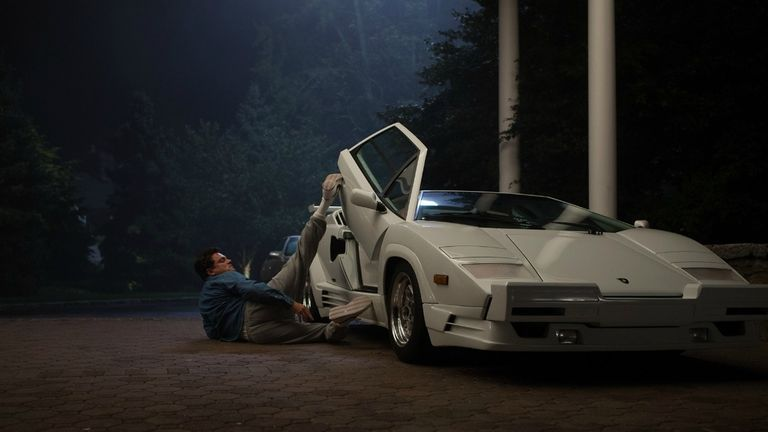
Lead character Jordan Belfort (played by Leonardo DiCaprio) crawls to his Countach in The Wolf of Wall Street. Photo Credit: esquire.com

The Countach is a sought-after car by all car collectors. It is a staple of Italian car-making. Its distinct air vents poking out the top sides of the car, sharp retro edges, big wing, and pop-up headlights make it easily recognizable to any car person. You may also recognize the Countach from the movie The Wolf of Wall Street. Although there are multiple models, the most common Countach model, the 25th Anniversary, is pushed by a 5-liter Naturally Aspirated V12 revving to a stellar 7,000 rpm and making 455 horsepower and 370 ft-lbs of torque (supercars.net). The Countach is considered by many a sort of poster car of the 80s, and I can definitely see why.

1987-1992 Ferrari F40

Photo Credit: thedrive.com

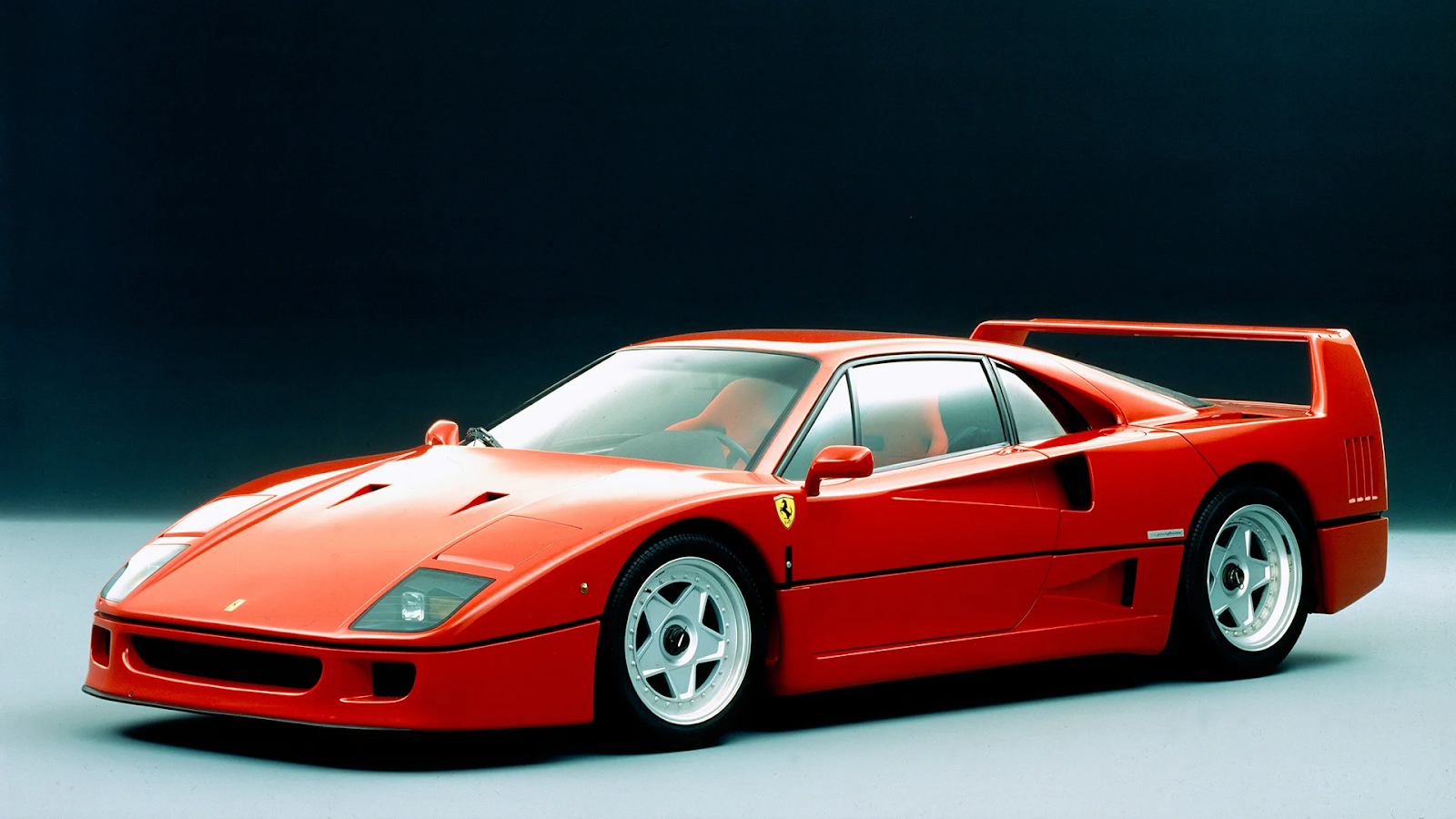
The Ferrari F40 was made to celebrate the 40 years of Ferrari, hence the name, and was Enzo Ferrari’s last car before he died a year later, in 1988. The Ferrari F40 was made mostly of composite materials (carbon, Kevlar, and steel), meaning it was made of two or more materials with different properties intended to do a specific job–in this case making the car lighter (ferrari.com). This car was made to be a track car because of its very minimal interior appliances (there wasn’t even an A/C unit in the car until it came to the US), uncomfortable lightweight racing seats, and it doesn’t have door handles, just pull cords (exoticcartrader.com). Now, you’re thinking, “Well, Jack, what’s so special about this car? It doesn’t even have door handles!” What’s special about this car is that this car was not made for the ordinary. It was made for the bold and spectacular. It was made for those who wanted to experience the thrill of a Ferrari. Those who wanted to feel the raw 478 horsepower and 424 ft-lb torque twin-turbocharged V8 yelling at 7,000 rpm, and feel the smooth shifts of the 5-speed manual transmission. The F40 is the pinnacle of Ferrari engineering and holds its place at the top of Italian car-making, rightfully so. 

Conclusion

Those are the three cars that I bring up when I talk about the past and cars. I will definitely write one of these blogs again. I really enjoyed learning new things about these cars, especially the F40. If there are any other cars that you like, let us know in the comments!

Filed Under: 1960s, Aesthetic, Culture Tagged With: Jack Edelstein, The Best Cars of the Past

Удалять*

September 1, 2022 by szachik@pvs.org Leave a Comment

Junior Remy Haring continues with his second installment of his serial fiction inspired by The New Order–a mod for Hearts of Iron IV. If you recall, Remy visits an alternate dark history here, where, in WWII,  the Axis powers have won.

Zeya, Amur, the Russian Far East, January 23, 1962

Rodzaevsky was sitting at his mahogany desk in his office. Behind him two flags flanked him — horizontal, yellow, black and white tricolor with a double-eagle grasping a bundle of sticks on each. To his left was an ashtray; to his right was a pile of photos of dissidents. Some had a red X drawn over their faces; others didn’t. Their occupations ranged drastically from those of lowly citizens to bureaucrats to the most trusted officials of his own cabinet. One photo in particular stood out to him.

It was an old black and white group photo from the beginning days of the Russian Fascist Party (RFP). Rodzaevsky was in the center with Grigory Semyonov on his left and Mikhail Matkovsky on his right. In each of their hands was a raised shot glass of vodka. None of them had a red cross marked over their faces. The photo was marked, “Harbin, Manchuria, September 13, 1932.” As Rodzaevsky was looking down at this photo, he heard a knock at his door.

“Enter,” Rodzaevsky ordered.

A Blackshirt entered the room. His uniform was pristine, all black snow gear with the only splash of color being his medal of the double-eagle grasping a bundle of sticks.

“The dissident Vlodimir Kozlov has been eliminated,” reported the Blackshirt. “He was hiding out in a forested neighborhood a few kilometers away from Zeya. He was… difficult but has been pacified. Given the remote area and that I was under the cover of night, I doubt anyone saw.”

Without another word, Rodzaevsky dismissed him with a wave of his hand. After the door shut, Rodzaevsky took a red marker from his drawer and crossed out the face of the most recent victim. Kozlov had been a middle–aged woodsman and a father of two. It was his youngest child who had reported him for the crime of freemasonry.

Rodzaevsky leaned back into his chair and turned on the radio:

“This morning, at 4:00 a.m. CET, the Swiss Seismological Service detected a seismic event from southern Burgundy that reached a 4.6 on the Richter scale before suddenly ending with no aftershock. The Swiss government has come to one terrifying conclusion: the SS State of Burgundy has successfully tested its first nuclear device.”

Radio Free Alps

*Purge

Filed Under: 1960s, Alternate Realities, Apocalypse, Fiction, Politics, The World, Video Games Tagged With: Remy Haring

Once Upon a War: A Tribute to my Grandfather

November 21, 2019 by szachik@pvs.org 4 Comments

By Renée Vazquez Anderson

It started on November 1, 1955, and lasted all through the 60s. Most would agree that it was a miserable and massive failure. I am, of course, talking about the Vietnam War. 58,000 were killed, 2,000 were captured, and around 350,000 were wounded, according to the U.S. National Archives. The veterans who did survive weren’t welcomed back with much fanfare at all because of the war’s unpopularity. Vietnam following the war was a place of poverty.

The Vietnam War ended on April 30, 1975. My grandpa died in Vietnam on July 3, 1971, just shy of his retirement from the  Air Force. He was a very intelligent, funny, and handsome man, and, according to my grandmother, very suave. He also loved Broadway musicals; he loved them so much that he named my mother after “Maria” from West Side Story. He loved classical music, and he was part of the choir wherever he was stationed. My grandmother said that he had a wonderful voice.

My grandpa, Douglas Ray Anderson, joined the U.S. Air Force around 1953 as a Technical Sergeant and later served with the 12th United States Air Force Hospital, 12th Tactical Fighter Wing, 13th Air Force. My mother was just a few months old when he was deployed, and never saw him again. The impact he left on my mother’s life, and by extension mine, is staggering. 

My grandmother spent around a year or two in a deep depression with friends of hers taking care of my baby mother. My grandmother moved to Mexico to help make my grandfather’s pension stretch as far as possible, and to be closer to family. She couldn’t take most jobs because the U.S. government would stop giving her aid. My mom grew up without her father, something that fundamentally changed every aspect of her life. His family stopped talking to him after he married a Mexican woman and never made any effort even to see my mother. During the war, he wrote a letter to my grandmother in which he asked her if he ever died never to glorify war to my mother, or let her join the army in any way. This has led to my family having strong anti-war sentiments. The Vietnam War wasn’t a noble fight. It was a mess that caused suffering and unnecessary loss of life. My mom grew up with a mother who was always working but who still made time to tell her stories about how smart and handsome her father was. The war gave us perspective.  Even now, my grandmother, although being 87 and dealing with Dementia, remembers going to identify his body on a long beach full of bodies covered by sheets and crying people. My mom grew up in Mexico, which gave her a completely different cultural experience. And, I have a personal connection to associate with war, based on both their stories. 

Douglas Ray Anderson (at age 20), January 16, 1927 — July 03, 1971

1960s Editor: Quintus Ni

Sources:

*https://www.archives.gov/research/vietnam-war

*My mother and grandmother

Filed Under: 1960s Tagged With: Once Upon a War: A Tribute to my Grandfather, Renée Vazquez Anderson

Fashion in the 1960s

November 1, 2019 by szachik@pvs.org Leave a Comment

By Katelin Mei

The fashion in the 1960s changed drastically throughout the decade. In the early 60s, the fashion looked more like the fashion from the 50s, which was very conservative. Before 1964, the fashion styles were a continuation of the 1950s fashion, but with the Beatles came a new fashion influence from London.

In the 1950s, fashion was very conservative and tried to make young people look more mature. In the 1960s, the fashion changed from trying to make people look like “young adults” to revisiting the bright colors and child-like styles of their youth. The whole idea of revisiting youth drove most of the 1960s fashion.

In the early 60s, the skirts and dresses were just updated versions of the 50s’ ankle-length skirts and dresses. As the decade progressed, new fashions emerged. The full-skirt look didn’t leave in the 1960s but instead survived to the 1970s in a simpler form.

By 1966, dresses were significantly shorter and more snug. 

Many women preferred skirts over dresses because they could mix and match their outfits a lot easier.

There were many different styles of fashion going around during the 60s. You would be able to see a woman wearing an ankle-length skirt, and another woman next to her, wearing a mini skirt. From the mid to late 60s, skirts could be easily bought at any length. 1960s dresses kept going shorter and shorter throughout the decade.

Many young women liked the mini skirt, which dominated the fashion world in 1967. The shorter the skirt’s length was, the more confidence the woman wearing the skirt had.

The 1960s were not as revolutionary for men’s fashion as it was for women’s. However, it did change a lot. Men got more options for business and casual attire

Some fashion trends of the 1960s

  • Shift dresses – The full skirt and tight bodice from the 50s carried over to the early 60s. It didn’t take much longer for the pencil skirt to loosen up to create the shift dress. Shift dresses were for a casual outfit to wear at home or the beach; they were too short for office-wear.
  • The jumper dress – This was a Mary Quant invention that fully captured the youthful and playful side of 1960s fashion. The style immediately made adults look like children again, which was a welcome change away from the mature fashion of the 1950s. Bright colours, polka-dots, and big bows and buttons were dress details that added on to the youthful look.
  • Colors – The colors of the late 60s were first inspired by pop art and modern art movements. Checkerboard, polka-dots, and stripes were all commonly used as patterns. Swirls and prints introduced an edge to clothing that was picked up by the hippies around 1967. Eventually the pop colours settled down into pastel colours which led to a more “girly” appeal. As the decade moved towards the hippie movement, there was a trend of earth-tone colours.

Source:

1960s Fashion: What Did Women Wear?

Far-Out 1960s Editor: Quintus Ni

Filed Under: 1960s Tagged With: Fashion in the 1960s, Katelin Mei

Ten Surprising Facts about the Cold War

October 25, 2019 by szachik@pvs.org Leave a Comment

Hello guys!! I am going to do something different this week! Editor Quintus assigned Blog Staffers to write on the 1960s. So, instead of doing my usual art tutorials, I will do a post about another interest of mine: History. The history of the 1960s that most interests me is the Cold War. Without further adieu, let the journey begin.–Chelsea Xu

  • Russian officials thought the building in the center of the Pentagon was a secret meeting room. In reality, it was a hot dog stand!
  • At one point, the US considered dropping over-sized condoms on the USSR that were labeled “medium.” The apparent intention was to demoralize the enemy. (Ohhhhhh.)
  •  The CIA developed a complex code involving different ways for their spies and informants to send messages based on how their shoes were tied.
  • In keeping with their positioning as the antidote to atheist communism, the US dropped tens of thousands of Bibles into Romania in the 1970s. It was later alleged in Congress that the Bibles had been collected and repurposed into toilet paper.
  • Deer in the Czech Republic refuse to cross the imaginary line where an electric fence had once separated the Soviet Union from the rest of Europe. The fence was taken down in 1991, long before any current deers were born, but they remain cautious of the border. 
  •  The security regarding nuclear weapons sounds positively lax. The launch code for US nuclear weapons was 00000000.
  • The Soviet Union finally collapsed in 1991, as a coup chased Soviet chairman Mikhail Gorbachev from office, and the former Soviet republics broke off to form independent nations. The Soviet flag was lowered from the Kremlin, and the Russian tricolor rose in its place on December 25, 1991. The Cold War was officially over.
  • During the Cold War, the CIA was very interested in LSD as both a social disruptor and a potential truth serum. As part of some largely clandestine and non-consensual experiments, the CIA drugged a bakery in a small French village. As a result, many people had to be institutionalized after having vivid hallucinations.
  • The US and Russia met to discuss the threat of alien invasion. They eventually agreed that, should aliens invade Earth, they would cease hostilities and cooperate for the good of mankind. It makes you wonder what they knew…
  •  During 1963, at the height of the Cold War, the US military launched a ring of 480 million needles into orbit around the earth. It was hoped they would more reliably bounce radio signals back to earth in case the Soviets cut through undersea cables. Multiple clumps of these needles are still up there.

Source Link: https://list25.com/25-facts-about-the-cold-war-you-probably-didnt-know/

1960s Editor: Quintus Ni

Filed Under: 1960s Tagged With: Chelsea Xu, Ten Surprising Facts about the Cold War

“We have Technology” – Guy From the 1960s

October 24, 2019 by szachik@pvs.org 1 Comment

By Luke Langlois

The tumultuous decade of the 1960s came with turning points in our history, including the Civil Rights movement, Second-wave feminism, the Anti-war movement, and more. No outdated cultural norm was safe in this era. Do you know what else wasn’t safe? Antiquated technology. Here are some of the technological and scientific developments of the 1960s that have stood the test of time.

  1. 1960: Theodore Maiman invented the first rendition of the LASER. The use of the “LASER” has varied over the years. It is currently used to read blue-ray disks, among other things. It has also manifested itself as its own, unique word for science fiction’s brightly colored (usually lethal) beams. LASER is an acronym for Light Amplification by Stimulated Emission of Radiation. Neat!
  2. 1960: The first minicomputer was put on the market. The Programmable Data Processor, also known as the PDP, contained hardware for one of the first-ever digital games: “Spacewar!” It was known as a minicomputer because the usual “computers” of this time were bulky and aesthetically unappealing. The new appeal that came with the minicomputers made it an excellent product for the market.
  3. 1961: Mission Vostok 1 commenced and sent the first man into space, cosmonaut Yuri Gagarin. I know us Americans of the 60s are not supposed to like the Russians, but we have to appreciate the first man in space. SPACE!!!!
  4. 1961: The IBM Typewriter said, “Hello!” to the planet. In comparison to the older typewriters on the market, IBM’s (International Business Machine’s) new typewriter made typing a LOT quicker. This machine was the benevolent forefather of the device I am using to create this post right now!
  5. 1962: Whether you prefer Coke, Pepsi, or even RC Cola, you know the *pshKSSS CLICK* sound of a soda can’s pop tab. Beverage companies around the world thank Ermal Fraze for inventing the satisfying sound that has become instrumental to marketing efforts. 
  6. 1962: Public radio is absolutely abysmal sometimes, that’s why we have satellite radio (even though that may be falling out style, too. We can thank the first Telstar satellite for letting us communicate through space relays. This Telstar satellite, however, was limited to relaying television pictures, telegraph images, and telephone calls.
  7. 1963: You may be sick right now, but I bet it isn’t measles! On this day in 1963, the measles vaccine was approved by the World Health Organization (the WHO) and released to the public. 
  8. 1964: Imagine you’re someone from the 60s who enjoys horses, muscle cars, and the Ford Motor Company, but cannot find a way to mix these lovely interests. You’re in luck! In 1964, the public was graced with the first model of the Ford Mustang. 
  9. 1964/1965: Although the precise date is unknown, these two years marked the emergence of AstroTurf! If you have ever dealt with trying to maintain grass in the desert, I would be willing to bet that you have considered artificial turf. Thank the 60s!
  10. 1965: How am I supposed to stop a bullet with just my measly human body? In 1965, Stephanie Kwolek synthesized a lightweight steel-like fiber that has been used in bulletproof vests and body armor all over the world: kevlar. 
  11. 1967: Your heart works incredibly hard every single day, and it NEVER stops. Incredible! On this date, South African surgeon Christiaan Barnard figured out what to do when the heart no longer works as it should. Naturally, he performed the world’s first heart transplant. 
  12. 1967: Calculus is tough, and it would be even tougher without my trusty Texas Instrument. Although calculators existed before 1967, Texas Instruments released the first calculator that was truly compact and handheld. The “Cal Tech” printed your calculations (limited to the four basic operations) onto a small piece of paper tape. 
  13. 1968: Emergencies are almost always time-sensitive events, and quick responses are crucial to the resolution of said emergencies. In 1967, the FCC met with the American Telephone and Telegraph Company (AT&T) to work on a unified emergency line.  In 1968, AT&T made way for the iconic 911 emergency code. 
  14. 1969: Our parents are right; what would we do without the internet? In 1969, the first steps were taken towards the internet we have today: ARPANET. ARPANET became a tangible reality when UCLA, UCSB, University of Utah, and Stanford University gave birth to a grand network. Look out for James’s post that elaborates on the origins of the world’s greatest communication tool. 

You have just witnessed an all-encompassing list of developments from the 1960s. Congratulations! I think some guy landed on the moon, too. Hopefully, you’ll have some new facts to bring up at the dinner table, especially when Uncle Bob opens up his soda. When I come back to thebirdonfire.org in sixty years, I’ll do an anniversary post. What developments of this decade will integrate themselves as a permanent part of our livelihoods? 

1960s Editor: Quintus Ni

Filed Under: 1960s Tagged With: “We have Technology” - Guy From the 1960s, Luke Langlois

Breakfast at Tiffany’s–A Look at Love in the 1960s

October 24, 2019 by szachik@pvs.org 1 Comment

Quintus takes his turn as Editor in Chief. He assigns us the theme: “Once Upon A Time in the 1960s.” For Quintus, Breakfast at Tiffany’s represents the spirit of the 1960s–the decade of his father’s birth. It was released almost 58 years ago to the day. The movie also is a favorite of Quintus’s because, he says, it aspires to the kind of love his parents live.

~I am lost in a Tiffany Breakfast, forever with Hepburn, lost in dreams and Love~Quintus Ni

Pure beauty can withstand the tempering of the years. The eyes always have brilliance; the posture still has a charm. This kind of beauty, like a bird with brilliant feathers, will not quickly dim.

What is love? Breakfast at Tiffany’s shows us.

The secret of a happy marriage is to give each other the most healthy relationship. There will not be too much restraint. I feel that if Paul and Holly (the chief characters of Breakfast at Tiffany’s) break up one day, it will be no big deal. To be genuinely mature, Holly has to face life alone and live on her own. She has been fostering herself around different men, and she has become a pathological parasite.

Sometimes, we only can find ourselves with the courage and strength of the rebirth in a completely unpredictable situation. It seems that people regain themselves in the state of no love, where they no longer change their mood for the mood of others, are no longer cautious, no longer suffer from the loss. So, I suggest everyone begin to learn to be self-sufficient.

The balance of the mind is to let it go. When Love comes, I love it. If you lose it, you will be brave enough to accept the results and regain your self. 

Everyone does not need the Love of others to prove themselves because Love is not the whole of your life. Living alone also can be perfect!   

Tiffany, Love, and Dreams

A black dress, elegant and dignified hair, an eye-catching pearl necklace, all while eating breakfast and hanging outside the window of TIFFANY’s on Fifth Avenue, sunglasses that cannot block that pair of amazing eyes–Hepburn’s classic style has been imitated and never been surpassed.

This black and white film, Breakfast at Tiffany’s, born in 1961, is undoubtedly the most successful advertisement for TIFFANY’s, the world-famous jewelry store established in 1837 in the United States. The producer has put on the charming cloak of love for TIFFANY’s. The TIFFANY’s counter clerk in the movie knows the beautiful couple does not have enough money to buy what they like yet is still polite. He lets them shop, and this gentleman clerk promises their engraving will be done as they wish. Holly is delighted. She says, “This is a perfect place.” I believe most people will want to see this magical place.

Love Needs To Be Fed

Breakfast at Tiffany’s is half a century old. In this half-century, how many great love stories have been staged again and again, compared to the ordinary and poor love of Holly and Paul.

Love is an enormous wealth. Once you have it, you have power, the goal of struggle; life has changed.

Perhaps this is just the first look of love, like a potion that can heal everything, then what’s the next step…?

Breakfast at Tiffany’s is not like a fairy tale where the princess and the prince live together with happiness and kindness. It can be said that this is a myth in our real life, offering a warm coat to people, even those struggling financially. Like the young couple in the “Magi’s Gift,” they love each other and give Christmas gifts they can’t afford or need. Still, the love is clear, only it doesn’t pay the bills. 

Holly, in Breakfast at Tiffany’s, is kind and brave, pursuing independence and yearning for freedom, but always she hopes to fulfill herself by marrying a man with status and wealth. A rich woman supported Paul. Both are social flowers surrounded by countless rich people. These two people know each other’s situation totally; they can accept companionship and love, but it is challenging to allow the other to become their ultimate affiliation. Because they see the reality and cruelty of life better than anyone else, money and status tempt them.

A person can be expanded and nourished in love. No matter how beautiful love is, even charming love can not escape the cruelty of reality. From ancient times to the present, vivid love stories are mostly in the form of tragedy; they are more exceptional for their sorrow. But the Love we want is not tragic. It should be a long process from joy to understanding and warmth. At first, it may occur in the darkness and loneliness of our lives; that’s the thing that can ignite a light of hope enough to illuminate the whole person. Then, often, love becomes dispensable; if this happens, it can bring disgust, sneering, and dislike. So, very often, we let it go, for each other, or we despise each other. In the rare case, like with my parents, love holds and stays, and we cuddle each other, spending the rest of our lives together in embrace.

Moon River

One day, Paul was writing at home, and suddenly he heard a sound from downstairs. It turned out that Holly was sitting on the window and singing “Moon River” affectionately and sincerely. At that moment, anyone would be touched by her; she is not a socialized flower with high-heeled shoes surrounded by countless rich guys. She is melancholy, like blue wind chimes, and she can’t help herself, she can’t control her life. Holly always deliberately hides and alienates others. I still feel that Holly has a kind of beauty when she chooses to isolate from the world. Paul, too, is fascinated. He has never seen this aspect of Holly. This isn’t the same Holly he had known before. This singing Holly is affectionate and beautiful. She smiles at him; this smile goes to Paul’s heart. This was a scene he could never forget. They initially thought they could create a world of their own, but hard life destroyed their confidence. They went to the end of the mountain, but they fell. The original dreams have gone so far away; they can’t see the road of ideas and how to go to the next chapter in their lives.

Between dreams and reality, between love and truth, growth and stagnation, there is always luck and misfortune. They are twins. With risk in your life, you may find a person you love; perhaps this love can stand the test of time, if you are fortunate.    

So, what is love~? Have you loved someone before? Have you already fallen love with someone? What is that feeling?

How do you feel about Breakfast at Tiffany’s?

Does it capture the spirit of the 1960s?

  Thank you

Wish all best 

1960s Editor: Quintus Ni

Filed Under: 1960s Tagged With: Quintus Ni

About

We are the Palm Valley Firebirds of Rancho Mirage, California. Join us in our endeavors. Venture through the school year with us, perusing the artwork of our students, community, and staff. Our goal is to share the poems, stories, drawings and photographs, essays and parodies that come out of our school. Welcome aboard!