the bird on fire

The Palm Valley School Student Blog

Subscribe to Blog via Email

Enter your email address to subscribe to this blog and receive notifications of new posts by email.

Powered by Genesis

My unknown memories

September 8, 2022 by szachik@pvs.org 1 Comment

I tasked the blog staff with bringing to life a historical period. Penny chose to return to the earliest moments of her life, to those moments she was too young to recall. After doing some research with her mother, she pieces together what those moments might have looked like to an older “Penny” who visits and observes.

Blog Advisor Zachik

By Penny Andreas, Middle-School Blog Correspondent

December 31, 2009

The hallways were quiet. I walked down the maroon hallway, the floor creaking underneath. I heard laughter. I heard a mother, with a sweet and caring voice. A father, speaking with pride. As I walked through the hall, a door appeared. I slowly walked up to it. I held the cold bronze door handle, connected to the dark oak door. I opened it, finding a small room with a couch, table, TV, and a bookshelf. The mother was sitting on the floor, holding her child. And the father, sitting on the couch reading. I walked around the room, noticing small things. The fish bowl. The one chair in the corner. The stack of cards on the table. My mother. I walked up to her and sat down. She sang to the baby, “Hush little baby, don’t say a word. Momma’s gonna find you a hummingbird.” I immediately recognized the song. She sang it to me every night. My small crib. My blankets. My walls painted purple. My dark brown desk. My fluffy blue carpet.

My father takes the baby to sit on the couch and turns on the TV. He plays a show. It’s black and white, with many characters. He looks at the baby, and says, “Penny.” 

December 27, 2011

I’m walking down the hallway again. The floor is not wood, but concrete. This time, to my left is the door, and it’s light brown with a copper handle. I open the door, but this time I’m in a different room. It’s big, and open. There’s a small bed sitting in the corner, along with a nightstand. There are numerous drawings hanging on the walls, obviously made by a toddler. At the window, there’s a girl seated, playing with toys. The curtains are open so light comes through. She talks to herself, perhaps solving a conflict. I walk towards her and realize she does not see me. Instead of talking to her, I sit next to her. I start to understand what she’s saying. “The princess is locked up in the tower! Someone must save her!!!” I laugh to myself, amused by her emotions and such enthusiasm. Then I look at her face, and realize…it’s my face. 

December 24, 2013

Walking through the hallways again, it’s not plain. The same drawings are on the wall, and photos of that same girl with my face and my name. I stopped abruptly in the hallway. Could that girl have been me? Suddenly I found myself in a hotel room, the great windows showing a view of downtown. The two king-sized beds packed with sheets are in the corner. I see three suitcases. I remember seeing them somewhere. One of them is open, with a gift inside. I find the little girl again, sitting on the floor. She is speaking to someone, with a nervous crack in her voice. “Do you think my mom will be okay? Am I really going to be a sister?”  I know who she’s talking to.  I know exactly who it is. My grandma. And I know exactly who the girl is. I know exactly who I am. 

Filed Under: Alternate Realities, History Tagged With: My unknown memories, Penny Andreas

Удалять*

September 1, 2022 by szachik@pvs.org Leave a Comment

Junior Remy Haring continues with his second installment of his serial fiction inspired by The New Order–a mod for Hearts of Iron IV. If you recall, Remy visits an alternate dark history here, where, in WWII,  the Axis powers have won.

Zeya, Amur, the Russian Far East, January 23, 1962

Rodzaevsky was sitting at his mahogany desk in his office. Behind him two flags flanked him — horizontal, yellow, black and white tricolor with a double-eagle grasping a bundle of sticks on each. To his left was an ashtray; to his right was a pile of photos of dissidents. Some had a red X drawn over their faces; others didn’t. Their occupations ranged drastically from those of lowly citizens to bureaucrats to the most trusted officials of his own cabinet. One photo in particular stood out to him.

It was an old black and white group photo from the beginning days of the Russian Fascist Party (RFP). Rodzaevsky was in the center with Grigory Semyonov on his left and Mikhail Matkovsky on his right. In each of their hands was a raised shot glass of vodka. None of them had a red cross marked over their faces. The photo was marked, “Harbin, Manchuria, September 13, 1932.” As Rodzaevsky was looking down at this photo, he heard a knock at his door.

“Enter,” Rodzaevsky ordered.

A Blackshirt entered the room. His uniform was pristine, all black snow gear with the only splash of color being his medal of the double-eagle grasping a bundle of sticks.

“The dissident Vlodimir Kozlov has been eliminated,” reported the Blackshirt. “He was hiding out in a forested neighborhood a few kilometers away from Zeya. He was… difficult but has been pacified. Given the remote area and that I was under the cover of night, I doubt anyone saw.”

Without another word, Rodzaevsky dismissed him with a wave of his hand. After the door shut, Rodzaevsky took a red marker from his drawer and crossed out the face of the most recent victim. Kozlov had been a middle–aged woodsman and a father of two. It was his youngest child who had reported him for the crime of freemasonry.

Rodzaevsky leaned back into his chair and turned on the radio:

“This morning, at 4:00 a.m. CET, the Swiss Seismological Service detected a seismic event from southern Burgundy that reached a 4.6 on the Richter scale before suddenly ending with no aftershock. The Swiss government has come to one terrifying conclusion: the SS State of Burgundy has successfully tested its first nuclear device.”

Radio Free Alps

*Purge

Filed Under: 1960s, Alternate Realities, Apocalypse, Fiction, Politics, The World, Video Games Tagged With: Remy Haring

Mother Russia’s Carcass: A Serial Fiction

August 23, 2022 by szachik@pvs.org 1 Comment

Ночь*

A serial fiction by Junior Remy Haring inspired by The New Order–a mod for Hearts of Iron IV. Remy visits an alternate dark history where, in WWII,  the Axis powers won.

Amur, the Russian Far East, January 22, 1962

In the night, I faintly heard a man screaming. He swore he was innocent and begged for mercy. Until he didn’t. My left hand desperately grasped a corner of the curtain while in the other was a revolver. The cold, steel grip felt like death itself. Inside my house, it was pitch black. Only the outlines of furniture were illuminated by the dim glow of the moonlight. 

I peek from my curtain. Down the road, I see a pickup truck, and a man dragging a bag–big enough to fit a human. The man was tall with a muscular build and a clean, all-black uniform and a hat. A medal of a golden, double-headed eagle grasping a bundle of sticks glinted on his chest from my porch light. On his back was a bayoneted rifle. One of Rodzaevsky’s blackshirts, I thought. He dumped the bag into the bed of the truck and without a second look, returned to the driver’s seat and drove off into the night.

After an hour of glancing from the corner of my curtain, I finally felt safe. I jostled my handheld radio, the one found in a bombed out office. Debris clogged the speakers, and the antenna was dinged but by some miracle it picked up a signal from America. The volume was at barely a whisper, and static plagued the broadcast, but I knew what the reporter was talking about:

“President Nixon has confirmed the leaked satellite photos of Japanese nuclear warheads on Hawai’i are real. Experts say that these short and mid range missiles can strike as far as Houston, Texas. The Pentagon has raised the DEFCON level to-”

The broadcast promptly cut out, and the sound of static rang throughout the house, like the brutal, Siberian winter that surrounded me.

. . . to be continued.

*Night

Filed Under: Alternate Realities, Fiction Tagged With: Remy Haring

Campaign for the Use of “Dodgy”

March 9, 2022 by szachik@pvs.org Leave a Comment

As someone who has lived with a British mother for my entire life, a lot of English phrases are more than familiar to me and I forget they are not commonly used in the States. Personally, I think some of these words from “across the pond” are fun to say, and I hope after reading this some of you integrate them into your daily life. – Jesse Denyer

By Sienna Price

Since I have moved to America, I have noticed I have said many words and phrases people just don’t understand. I have a mix of words and phrases from living in Thailand, England, and New Zealand. At least a couple of times a week, I have to explain what something I said means, and I have found it very annoying. 

One thing that most people use everyday is a hair bobble. Until I moved to America, I just assumed that a hair bobble was called a hair bobble. One of my American friends told me it was a “hair tie.” I have asked at least ten people what they call this (holding up a hair bobble), and they have all responded with “hair tie.” I personally think hair bobble is fun to say, so I continue to say it.

Another word that I love saying (it’s probably my favorite word) is “dodgy.” Every time I say this word, everyone turns around and stares at me. Every time I have to explain what It means. Dodgy is a really popular word in England. All my family members use it, and all my friends in England use it. Dodgy means dishonest or unreliable, potentially dangerous or of low quality. For example, that person looks dodgy. I personally think dodgy should be used more often in America.

When I first moved to New Zealand, I got invited to my friend’s house to swim. The message sent to my Mom was to bring your “togs.” My family had no idea what togs were. Later we found out that it means bathing suit. Another unusual word they use in New Zealand is jandals, which means flip flops. 

Of course there are the commonly known words that get lost in American translation: like we call fries “chips” in England, and what you call chips we call “crisps.” People in America say “cookie,” and in England we say “biscuit.” Americans say check under the “hood”; British say “bonnet.” Americans say the luggage is in the “trunk”; British say “boot.” In England we say “rubbish” or “garbage,” but in America you say “trash.” There are many different words with the same meaning.

My accent is mixed British, American, and Kiwi. Sometimes I say trash; sometimes I say rubbish. It’s hard to pin down my accent. Sometimes I sound very British, and then sometimes . . . I sound American.

Filed Under: Alternate Realities, Culture, Op-Ed, The World Tagged With: English in England v. English in America: or Campaign for the Use of “Dodgy”, Sienna Price

Has Levi Been to Area 51?

January 20, 2022 by szachik@pvs.org Leave a Comment

Ever wonder how it would feel to float above your body and look down on it? Levi Kassinove goes in depth on astral projection. Levi, true to form, goes on to explain his thoughts on the matter. Is it all just a mind trip, or is it time travel? Maybe you would like to try it yourself. – Editor Abigail Horwitt

By Levi Kassinove, Conspiracy Theorist

Astral projection, or an out-of-body experience, is when someone gets the sensation that they’ve detached from their physical body. We’ve seen it on Netflix documentaries like Surviving Death; we’ve heard people say in surgery they watch themselves from above; maybe you’ve traveled outside the confines of your physical self. Oftentimes people feel like they’re dying when their “astral self” floats above their body; this may be where the idea of a soul comes from. When people from thousands of years ago experienced astral projection, they may have explained it by thinking we had souls. This could also be the cause of alien abduction stories. According to an NBC News story, what people believe to be alien abduction might actually just be a lucid dream or out-of-body experience. Michael Raduga, lead researcher at the Out-of-Body Experience Research Center in Los Angeles, designed an experiment to “test his theory that many reports of alien encounters are actually instances of people experiencing a vibrant, lifelike state of dreaming” (amazon.com). He surmised, if he could “coach people to dream of a realistic alien encounter, . . . that could prove that many reports of such encounters . . . are really just products of peoples’ imaginations” (NBC news). Astral projection is indeed a real phenomenon, but its true nature is not entirely understood. What exactly is astral projection?

Many of you have heard of lucid dreaming, which is the event in which sleepers become aware of the fact that they are dreaming. Most astral projectors you talk to (Jesse Denyer) will tell you that lucid dreaming is completely different from astral projection. Countless people on Reddit support this anecdotally, and some even claim that “lucid dreaming is controlled hallucinations while astral projection is a true vision” (Reddit thread). 

A lot of the things people claim to be able to do during astral projection are similar to what’s possible in a lucid dream. You can visit any place you want, eat any food you want, meet any person you want, and pretty much anything else. However, in lucid dreaming, you need some frame of reference. Some people say that you can’t project to forbidden places. For instance, one anonymous internet user said, “since 99.9% of people on earth have never been inside Area 51 and haven’t the slightest idea what it is like inside, it’s a sort of blank area in their minds”(I sincerely apologize for having to crawl to Reddit, but it’s astral projection so what did you expect?). So it may just be a dream after all where your brain could only fill in what you could already visualize. Maybe Lilah, who claims she has aphantasia, should try astral projection. Maybe, astral projection is a form of lucid dreaming. The methods I’ve read about for astral projection all indirectly or directly say that you have to be half-asleep for it to work. You have to either attempt it immediately after you wake up, or relax your body to the point where you’ll fall asleep. 

I don’t believe that lucid dreaming and astral projection are the exact same thing, as lucid dreaming involves awakening in the middle of a deep dream, but they are certainly related. Astral projection seems to be, like lucid dreaming, a weird, in-between state of lucidity and dreaming while the person is awake. Try it. Some people claim to be able to time travel and visit dinosaurs, so why wouldn’t you want to try that? If you’re interested in attempting astral projection, Michael Raduga outlines various ways to do so in his free ebook, titled The Phase. It’s a 400-page mind-labyrinth that crosses theory with reality a bit too much, but it explains ways to hallucinate. If you’ve already had an out-of-body experience, tell me about it in the comments.

Levi projecting what astral projecting looks like.

*The views presented by Blogger Kassinove do not represent the views of thebirdonfire.org.

Filed Under: Alternate Realities, Conspiracy, Dreams, Fairy Tales, Far Away, Mystery, Psychology, Satire, Unpopular Beliefs Tagged With: Astral Projection: A Perceived Out-of-Body Experience, Levi Kassinove

Aphantasia: Do You Count Sheep . . . and Actually See Them?

January 19, 2022 by szachik@pvs.org 1 Comment

By Lilah Nick, Blog Staff Writer

Is your mind’s eye awake? In this blog written by Lilah Nick, she talks about the wild phenomenon in which people are unable to see or visualize things in their minds. — Editor Oliver Martinez

Aphantasia is the natural phenomenon where people are unable to visualize things in their head or their “mind’s eye.” While most people are able to think about different images in their head, about 2% to 5% of people can not.

If I tell you to close your eyes and think about the beach, you’ll picture a beautiful sunset, warm golden sand, and bright blue waves crashing against the shore. If I ask you to think about a bright red apple, the image will pop right into your head. And, when I ask for your family’s faces, of course you’ll see them. You may experience this differently of course. Some people will see something that looks like a photo; other people will see a dimly lit cartoon style; others only see a beach they have visited. 

I don’t. I’ve never been able to visualize anything. If you asked me what my mom looked like, my bedroom, or the cover page of the book I’m currently reading, I wouldn’t be able to “see” it. When people told me to count sheep or to close my eyes and imagine myself on the beach, I had always thought it was a metaphor. If you were to ask me to imagine a beach, I would think about all the different details. I can tell you that there are waves, sand, sea creatures, and people. I know the concept of it, and I could go on and on with details. It is like stringing together a bunch of different details like a puzzle.

Although I could list details about a beach, I have no visual, audio or any sensory experience. I can only imagine ideas, not images. I also remember what things look like because I understand conceptually how things look and most of my “visual” components in my head are just from recalling past experiences. 

This is how I thought it was for you and everyone else in the world until I watched the TV show Space Force with Steve Carell. In one episode, a character named Duncan was talking to his love interest, and he mentioned that he had something called aphantasia. He went on to explain it, and I was so confused. I thought that it was some joke. When he said, “I don’t have an imagination,” I immediately looked up what aphantasia was, and I was shocked. I jumped out of bed and ran to my mom’s room and asked her if she could see images in her head; of course she said yes. I then ran to my brother and asked a few of my friends. I was completely and utterly shocked. I had no idea that I was a part of the 2% of the population who couldn’t “see” anything in my mind. 

In 2005, a 65-year-old man was unable to see mental images after a surgery. Neurologists at the University of Exeter in England showed the man a photo of Tony Blair, and his brain scans showed the visual parts of his brain lighting up (prospectornow.com). Then they took the photo of Tony Blair away. The man knew the characteristics of him like his eye color, hair color, etc., but he said he couldn’t “see” him in his head (vox.com). His brain scans this time show that the visual parts did not light up at all. The neurologists also took other men and showed them the same photo, and both times the right part of their brains lit up (exeter.ac.uk).

The neurologists gave this rare phenomenon a name. They used the prefix “a,” which means “absence of” and “phantasia,” a Greek word meaning fantasy. So, together, the word means absence of fantasy.

If you’re wondering how I dream, so am I. Explaining aphantasia to people without it is like trying to prove you have a conscience. When most people ask me how I dream, they usually think that it is like reading a book. The best way I can describe it is like my inner dialogue suddenly has different voices and they are put to faces. I never dream about people I’ve never seen before or places I have never been.  

If you’re reading this and suddenly thinking that you might have aphantasia, the graphic below is a spectrum example for aphantasia. If I say “apple,” and you envision an apple as vibrant as that seen in Head #1, congratulations!!! You have a really good “mind’s eye.” If you seen nothing, like in Head #5, you may have aphantasia–just like me.


Filed Under: Alternate Realities, Health and Disease, Psychology Tagged With: Aphantasia: The Absence of Fantasy, Lilah Nick

Multiverse Theory–Is There More Than One Evan?

April 14, 2021 by szachik@pvs.org Leave a Comment

I think we can all agree the universe is undeniably large. Blogger Evan explores the question of “How big is the universe?” by explaining the multiverse theory.–Alternate Realities Editor Hannah Hall

By Evan Spry

Possibly the hardest question scientists and astronomers have to answer right now is, “How big is the universe?” This is such a difficult question to answer because it is nearly impossible to determine and there are different theories about the nature of our universe. One theory is that the universe is super big but finite, and the other theory is that the universe is infinitely big and ever expanding. If you ask me, the second theory is way cooler and more thought-provoking because it fosters deeper ideas like the multiverse theory, where there are an infinite amount of parallel universes coexisting at the same time. 

What is a multiverse?

A multiverse is the blanket term for the hypothetical group of multiple universes that would exist if our universe was infinite. The reason a multiverse would exist is because if the universe was infinitely big, there would have to be a repeat in the formation of matter at some point because there are only a certain number of combinations space could be made up of. If this sounds confusing, physicist Brian Greene has an analogy, “Think of the universe like a deck of cards. Now, if you shuffle that deck, there’s just so many orderings that can happen. If you shuffle that deck enough times, the orders will have to repeat” (npr.org). So if we do live in a multiverse, that means that there would be another universe, however far away, that would be almost identical to our universe. This means that there could be other versions of ourselves living out their lives as we speak! 

Stephen Hawking

One name recognized highly by everyone in the scientific community is Stephen Hawking. This is because of the countless scientific honors and awards he’s received over the years. In his last paper before his death, Hawking famously mentioned the existence of the multiverse saying, “We are not down to a single, unique universe, but our findings imply a significant reduction of the multiverse to a much smaller range of possible universes” (space.com). Ever since the 80s, Hawking has been teaming up with other scientists to find the secrets of the universe. It was in these studies that the Hawking-Hartle idea was introduced. This idea described how the universe formed after the Big Bang. Within this theory, more questions arose. Hawking and Hartle had implied that with the creation of the universe, there would have to be an infinite amount of other universes. 

In conclusion, there could be another copy of you somewhere else far away in the universe. However, we unfortunately won’t be able to solve this problem any time soon because of the technological achievements we’d have to accomplish before then. I think this is an awesome theory, and I would like to believe that there are an infinite number of Evans running, swimming, or flying around the universe–I just don’t have the evidence yet.

Alternate Realities Editor: Hannah Hall

Sources:

https://astronomy.com/news/2020/12/is-the-multiverse-theory-science-fiction-or-science-fact

https://www.npr.org/2011/01/24/132932268/a-physicist-explains-why-parallel-universes-may-exist

https://www.space.com/32728-parallel-universes.html

Filed Under: Alternate Realities Tagged With: Evan Spry, Multiverse Theory--Is There More Than One Evan?

Dream of a Rhododendron

April 14, 2021 by szachik@pvs.org Leave a Comment

As the days turn, our emotions come and go. Blogger Quintus writes his poem “Dream of a Rhododendron,” which discusses one’s future reality through experiencing love and hard times and how one can bloom from them like a brilliant rhododendron.–Alternate Realities Editor Hannah Hall

By Quintus Ni

Plant a dream, spring, summer, autumn and winter

bloom all over
Red, pink, yellow, white
Love

Hide yourself with your mind and soul
A pink time, the gap of the city
The vine full of life

Returning from the world of mortals, night overflows

Painful thoughts

Powder and red boil time, day and month
Constantly add, the bitterness and honey of life

Sooner or later, delay
A brilliant Rhododendron
Time brewed joys and sorrows, drink
White and yellow nectar, my body

Fill up
The poison of love
One, two, three
Crumble, a piece of time
Red dream, a bird
Come back every night

Alternate Realities Editor: Hannah Hall

Filed Under: Alternate Realities Tagged With: Dream of a Rhododendron, Quintus Ni

How We Can Use Virtual Reality Today

April 14, 2021 by szachik@pvs.org Leave a Comment

A world inside our own??? Yeah, that is basically Virtual Reality. Slap on a pair of goggles, and you are practically good to go. Blogger Jake explores a few very unique ways that we use VR in medicine, product design, military, shopping, and events. –Alternate Realities Editor Hannah Hall

By Jake Sonderman

Many movies, like The Matrix, examine living in a reality created electronically that is not “real.” Today, we have at our fingertips the technology to immerse ourselves in a digital reality. But, instead of living in an alternate reality, we use virtual reality and augmented reality to better enhance the reality we live in. 

Virtual reality has been around for longer than most people realize. The virtual reality we know today, the headsets and everything, was developed in the 70s and 80s by NASA as a training system (fi.edu). Virtual reality has been extensively studied since this time and is now accessible to everyone. But now, the first association most people make with virtual reality is video games. Don’t get me wrong: this is a great way to immerse yourself in another world or reality. But, there are many more practical uses for virtual and augmented reality. 

Here are some of those uses: 

Surgery

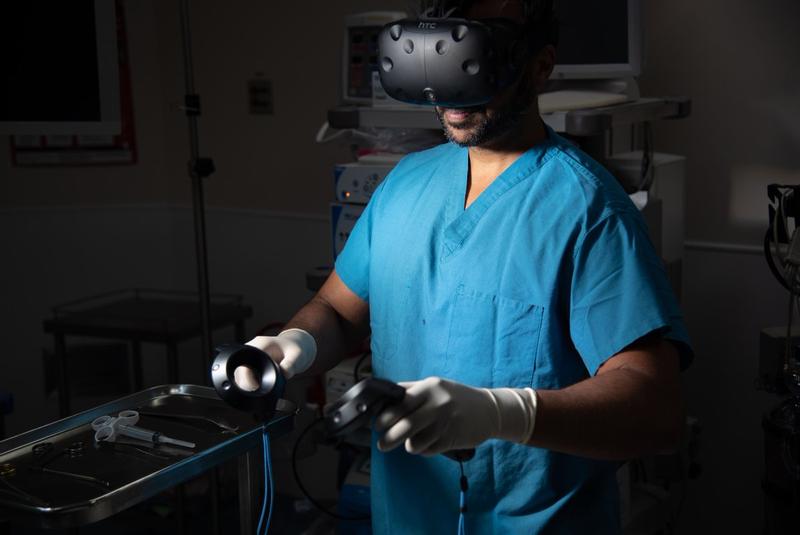
Vancouver-based Precision OS Virtual Reality Surgical Training Adopted by  10 Medical Institutions Across North America | T-Net News

Arguably the most meaningful use–VR is an invaluable tool for training surgeons. Mock surgeries can be created and implemented, but, also, resident or new surgeons can have a professional guide them in virtual reality during a real surgery. Some surgeries can even be performed by a robot being controlled by a surgeon using VR. 

Other Medical Uses

There are many ways VR is being utilized in therapy, whether it be conquering phobias or treating PTSD. There is also the possibility of better virtual checkups (you know in case we all have to stay home for an extended period of time for some reason). Studies have shown that VR helps paraplegics learn to walk again because according to the Duke researchers that executed the study, “If you are confined to a bed or a wheelchair for a long time, your brain starts forgetting what it’s like to have legs and how to control them.” VR helps these patients remember. 

Product Design

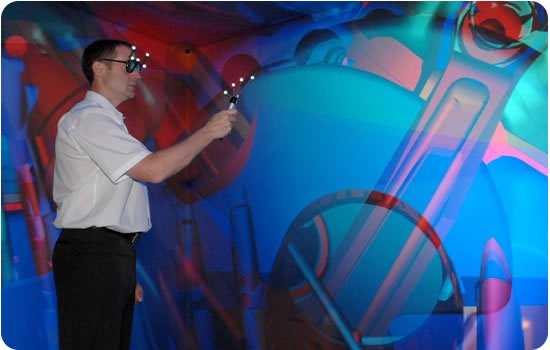
Developing prototypes can be extremely expensive, especially for small businesses and automotive manufacturers. VR is being used to design digital prototypes and save money in the process by not creating as many physical prototypes. Here is a link to Jaguar Land Rover’s Virtual Cave where they design new cars in VR. It is from 10 years ago but is still a good example of using virtual reality to enhance production. 

Military and Handling Dangerous Materials

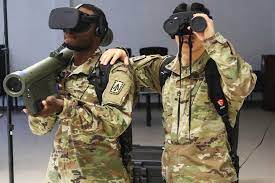
Soldiers to Get Advanced Virtual Training Tools Next Year, Army Says |  Military.com

Of course we already use drones in the military, but VR has good applications for training teams in all branches. The military invests very heavily into developing VR technology. VR is also useful for handling dangerous objects like radioactive materials from a distance, through robots of course. 

Shopping

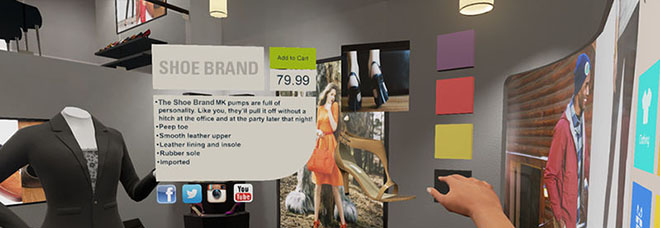
One of the things I hate about shopping online, especially for musical instruments, is not being able to try something before I buy it. Virtual reality can help customers get a sense for what they want before they buy it. This is especially helpful for online clothes shopping. VR can assist in seeing how clothes will fit and look before you buy them, so that you don’t have to spend days waiting just to get clothes that don’t fit. Also, the automotive industry is beginning to use VR to show customers how a car will feel if they want to buy it online. 

vRetail are using VR to enhance the shopping experience

Events and Concerts

Especially during Quarantine, concerts in VR began to get some traction. Unfortunately, the phenomenon didn’t go too mainstream due to a relatively small number of people having a VR headset, but it is still a cool innovation. This is especially cool for audio because believe it or not, audio for VR is also very complicated. This is because if you are in a virtual room, software has to model what the audio will sound like in the exact spot you are standing based on the acoustics of the virtual room and where the audio source is coming from. But an added plus is that you can choose to watch the concert in solo mode and see your favorite artist up close. 

I find this very interesting since I plan to major in audio engineering, and many cool VR products for audio have come out of the university I plan to go to (the University of Miami)–one of which was a VR program that spots the acoustic imperfections in your home studio. 

The amount of technology an everyday citizen has at their fingertips today would amaze someone 30 years ago. That being said, I’m sure 10 years from now we will all be utilizing technology hundreds of times more powerful. To me, it seems like VR is a technology we will all be using in the future, and man that is exciting. 

Alternate Realities Editor: Hannah Hall

Sources: 

Virtual Reality in Healthcare

https://www.vrs.org.uk/virtual-reality-applications/fashion.html

https://www.neuro.duke.edu/research/research-news/how-vr-helping-paraplegics-walk-again#:~:text=The%20Duke%20researchers%20figured%20out,the%20experience%20of%20moving%20again.

https://www.forbes.com/sites/forbestechcouncil/2020/02/12/15-effective-uses-of-virtual-reality-for-businesses-and-consumers/?sh=5ba74dbdf2b2

https://amylameyer.medium.com/an-update-on-concerts-in-vr-progress-but-not-perfection-e3fc6772a7a7#:~:text=A%20concert%20in%20VR%20refers,computer%20generated%20or%20360%20video).

https://virtualspeech.com/blog/vr-applications

The Franklin Institute, https://www.fi.edu/virtual-reality/history-of-virtual-reality

Filed Under: Alternate Realities Tagged With: How We Can Use Virtual Reality Today, Jake Sonderman

A “reality” that may be closer than you think

April 12, 2021 by szachik@pvs.org Leave a Comment

Blogger Roman takes inspiration from futuristic flicks as he peers into alternate realities. This future is full of safer and more advanced modes of transportation. Interested? Take a read, and find out more. –Alternate Realities Editor Hannah Hall

By Roman Rickwood

When you think of alternate realities, a common thought that comes to mind is virtual reality or sci-fi movies where life as we know it is unrecognizable. However, if we took certain aspects of life and advanced them even 50 years, much of how we live would change. For example, in most “alternate reality” movies, transportation is often the most advanced feature in the made-up world. However, what if we took the portrayal of transportation in these movies and implemented them into real life? 

The Future of Transportation businessinsider.com

Think of our society today; the large majority of our society owns or has easy access to a car, motorcycle, or some form of transportation. However, when we watch these sci-fi and alternate-reality movies, we see very efficient methods of transportation such as air tubes, aerial mass transport vehicles, as well as connecting walking tunnels. All of these things have the same goal–mass transportation in the quickest and most efficient way possible. Living in Southern California, we all know and understand the horror of traffic and congested roads. Seriously, how many times have you been late or even missed something because of the traffic or congested roads??! Now, we do have mass transport systems in place in our world today such as subways, buses, trains, and planes. Most people, specifically people in California, do not rely on these systems of transportation because they are all too often late and inefficient. The culture in most parts of the United States is that each household has access to a form of transportation. With all that being said, try and even imagine our society and how we transport ourselves with even half of the technology shown in movies. Imagine a world where traffic did not exist and where you could rely on mass transportation to be both quick, effective, and most importantly reliable. A few major societal changes that could occur would be decrease in emissions and gasses, decrease of people on the roads, which would inevitably lead to a decrease in traffic-related accidents. 

When you break down all these factors and see how many issues and accidents are caused by “outdated” modes of transportation, we see just how much an alternate reality of transportation would improve and help our world. We need a change, and we need it now.

Alternate Realities Editor: Hannah Hall

Filed Under: Alternate Realities Tagged With: A “reality” that may be closer than you think, Roman Rickwood

  • « Previous Page
  • 1
  • 2
  • 3
  • 4
  • 5
  • Next Page »

About

We are the Palm Valley Firebirds of Rancho Mirage, California. Join us in our endeavors. Venture through the school year with us, perusing the artwork of our students, community, and staff. Our goal is to share the poems, stories, drawings and photographs, essays and parodies that come out of our school. Welcome aboard!