the bird on fire

The Palm Valley School Student Blog

Subscribe to Blog via Email

Enter your email address to subscribe to this blog and receive notifications of new posts by email.

Powered by Genesis

What’s the Level of Coffee Addiction at PVS?

January 26, 2023 by szachik@pvs.org 2 Comments

By PVS student-blogger Louisa Richardson

The Blog Staff continues to plumb the depths of PVS’s relationship to coffee. Is it as simple as love-hate? Louisa sheds some light on our coffee-drinking habits, tastes, and associations.

Coffee is not something I have ever been allowed to have; however, apparently it is quite the controversial subject here at Palm Valley. Some people think that it is a great source of energy. Whereas others (Pip Watson) think of it as a “legalized drug.” Since I don’t drink coffee, I don’t have much opinion about it. The students and teachers at PVS do. Here’s what they had to say about America’s favorite morning drink.

Teacher Mr. Satterfield’s opinions on coffee: 

I think coffee, like most things, is healthy in moderation. There are people who have done great amounts of research on the subject who argue that coffee provides significant health benefits. There is also, I believe, a body of research (and common sense) that suggests too much coffee is unhealthy. Personally, I rarely drink coffee because I want the caffeine to work when I need it to, which is usually on a long drive. But most people I know well do drink it often, and only a few of them have what I would call a coffee problem.

Student Pip Watson’s one of two opinions on coffee:

While I cannot comment on the nutritional value of coffee, I do know it contains copious amounts of caffeine. Caffeine is an addictive, mind-altering drug which most people shrug off as something that provides energy.

Teacher Mr. Parsons comments on coffee:

Coffee is at the heart of many cultures, particularly in Europe, Africa, and the Americas, and it has been for centuries. Noteworthy individuals wrote poems and songs dedicated to the taste and effects of that little roasted bean. All around the world, coffee shops have sold this stimulating beverage to artists and their fans. These centers for creativity blossomed organically out of the thriving bean trade with South American and African nations. Famously Beethoven brewed his morning cup of Joe from exactly 60 beans, no more and no less. Many blame coffee for his often erratic and grumpy behavior. The downsides of coffee are not to be ignored. Drinking too much caffeine (the potent chemical that gives coffee its boost of energy) can make people irritable and can prevent a good night’s sleep. Folks can even become hooked on coffee; their entire mood depends on their next espresso. Let’s just hope it doesn’t arrive too latte (Dad joke intentional)!

Teacher Mr. Killeen’s thoughts:

On a scientific level, coffee has both benefits and issues when it comes to personal health. According to the Mayo Clinic, coffee may offer protection from Parkinson’s, type 2 diabetes, liver disease, liver cancer, heart attack and stroke.  However it can also lead to an increase in blood pressure which can also be problematic for people. Just like anything you consume, moderation and listening to the signs your body is sending you is important to maintaining good health.

Staff member Ms. Greer talks about coffee:

I think coffee, actually caffeine in general, is addictive but it is something I really enjoy. I love a cup of hot coffee in the morning or an iced coffee on a summer afternoon.

Student Olivia Puetz (or Olie) says:

I like coffee, but not black coffee because it tastes too bitter. I like sweet coffee like frappuccinos and lattes.

Student Brooklyn Hatrack believes:

I’ll be for real – coffee is disgusting. It’s so bitter and the taste never gets out of your mouth. It also doesn’t even energize you. Also, the breath of a coffee drinker is VERY distinct. It’s icky.

So, as you can see when asking the question “What are your opinions on coffee?” I found that a surprisingly large number of people do not think coffee is a good thing. This can only be proving my mother right.  Despite Starbucks’ success, I am definitely starting to think that coffee may not be so great after all.  

Filed Under: Culture, Daily Life, Food, Uncategorized Tagged With: Louisa Richardson, What's the Level of Coffee Addiction at PVS?

My Return to Broadway…

January 12, 2023 by szachik@pvs.org Leave a Comment

By Junior Indy Behr

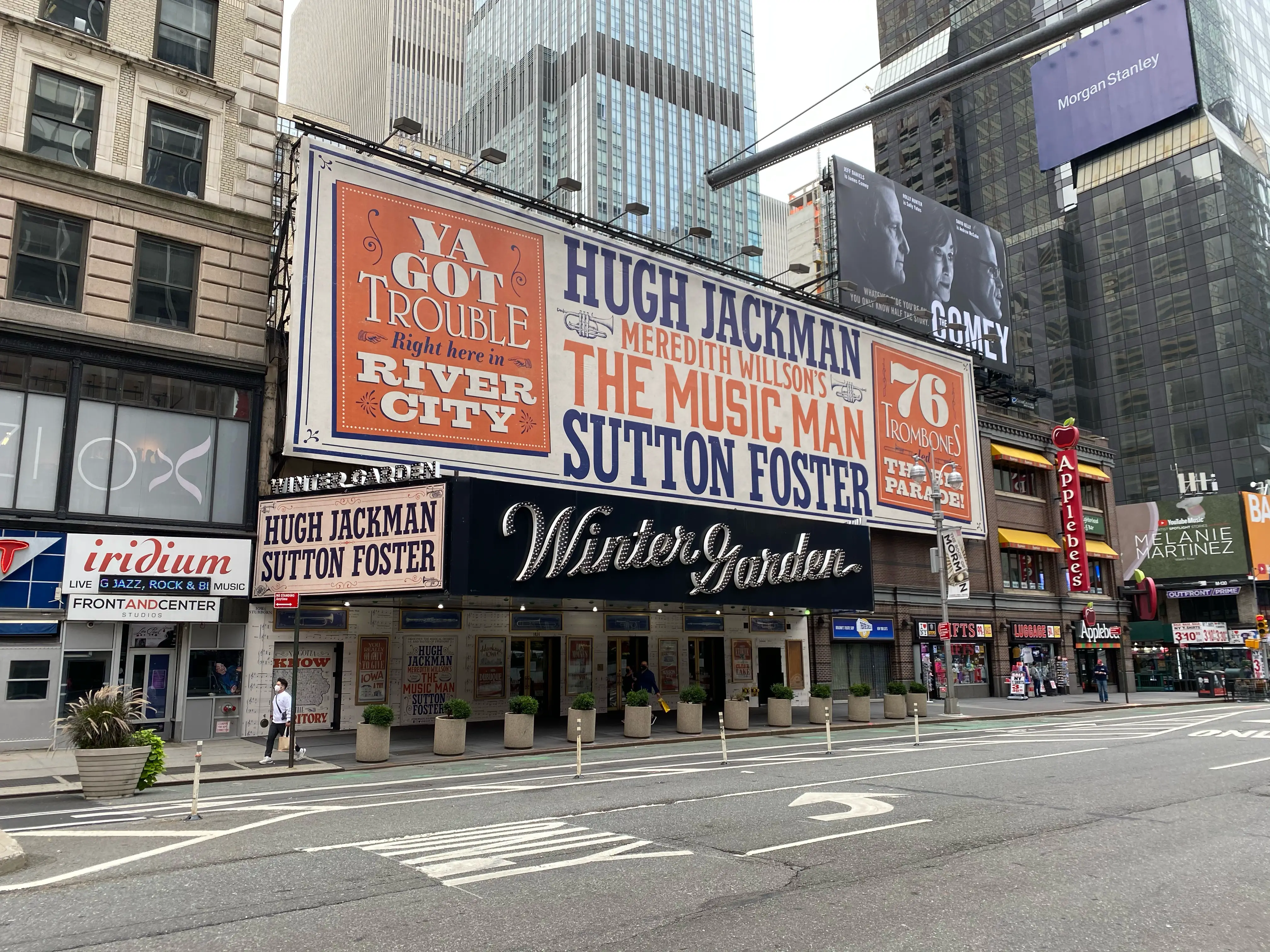
I have always enjoyed seeing shows on Broadway. I saw my first performance of The Lion King when I was seven years old. Since then, I have returned about eight times to see several shows. Because of COVID, I have not been able to go back since November 2019 when I saw Beetlejuice at the Winter Garden Theatre. My first show since COVID shut down Broadway was also Beetlejuice, yet it was very different from my first visit.

The Original Production of Beetlejuice

Photo Source: broadwaydirect.com

Beetlejuice is a musical based on the Tim Burton-directed film of the same name. Though the basic plot is relatively similar, there are some major differences. It’s also, of course, a musical, making it very different from the initial work. It initially opened for tryouts in Washington, D.C., in October 2018, where it developed itself over time before moving to the Winter Garden Theatre on Broadway in April 2019. Initially opening to somewhat mediocre reception and lackluster sales, its reviews and finances drastically improved within a few months, partially thanks to popularity on TikTok. On the site, hundreds of people danced to Beetlejuice’s “Girl Scout” song.

I initially saw Beetlejuice in December 2019, just a few weeks after the Winter Garden Theatre announced it would be ending the show, or as Beetlejuice’s promotional material framed it, evicting the show. The show’s run was scheduled to end abruptly in June 2020 (like all Broadway shows, it ultimately closed in March 2020). It was closed to make way for an adaptation of The Music Man starring Hugh Jackman. This move was very controversial, and instantly the Beetlejuice the musical publicly shared their attempts to move it to a new Broadway theater. Ultimately, the musical announced after two years of searching for a new home that it would be re-opening with a near-identical cast at the Marquis Theatre on April 8, 2022. 

Photo Source: broadwayworld.com

The Return of Beetlejuice

Photo Source: broadwayworld.com

Beetlejuice resumed performances on April 8, 2022. This was always intended to be a limited run, and it closed on January 8 after eight months of shows. That being said, it will be going on tour and will be hitting Los Angeles in July and San Diego. I should probably note this musical is recommended for those thirteen and above. 

Filed Under: Culture, Entertainment, Performances, Travel Tagged With: Indy Behr, My Return to Broadway . . .

How to Make Tamales

December 29, 2022 by szachik@pvs.org 1 Comment

We wanted to squeeze in one more Levi post before the year ends and December–Tamale-making season–passes. Happy New Year!

By Junior Levi Kassinove

My family’s annual tamale-making party, where we are making pork tamales.

If you haven’t had a tamale before, I’m sorry. They are more than delicious; they are divine. It is a one of a kind texture, with a flavorful inside. They can be dinner and dessert. The ingredients that go into tamales are no less than the elements of life itself, such as meat, vegetables, and cheese. If you want to try a tamale, wait until December to ask your Mexican friend if you can tag along with them to their family’s annual tamale-making party. I guarantee you they will happily accept. Or, wait until next year’s Tamale Festival in November, which is also where fellow blogger and food-lover Luke Sonderman saved a turtle. Full disclosure, tamales and turtles are COMPLETELY unrelated.

What is it and how are they made?

Tamales are basically pockets of masa–that can be filled with absolutely anything–wrapped in a corn husk. But, before we can get into the different types of tamales and how they are made, we need to understand what masa actually is. Masa is corn that has gone through a process called nixtamalization, which is a chemical process that involves soaking and cooking corn in an alkaline solution. In 1000 BCE, when we didn’t know what chemistry was, it is estimated that people in Mesoamerica put chunks of limestone in boiling water to make the alkaline solution. It is not known what originally drove people to put limestone in water to boil corn, but it works…Okay, I’ll say what we are all thinking. It was divine intervention. 

Masa being spread across a corn husk (muydelish.com)

After the masa is made, it is spread on a corn husk as seen in the picture. From there, one can put anything they want on the masa. If it’s a savory tamale, the most common things to put on it are shredded pork with a red chile sauce (my personal favorite), chicken, or cheese and peppers. If it’s sweet, some common tamales I’ve seen are mango, strawberry, and blueberry. I have never seen a chocolate tamale before. Usually, a dessert tamale is just a tamale with fruit. 

Strawberry tamale (dorastable.com) 

After the toppings are put on, the corn husk is wrapped to create a sort of rectangular burrito. It is then steamed until the masa is solid yet soft so that it holds shape, as seen with the strawberry tamale. The texture of masa is hard to describe; you’ll have to experience it for yourself. It is light and airy, but with much more flavor than a typical tortilla. Also, masa can be added to a sort of hot chocolate along with brown sugar to make champurrado, a drink fit for the winter. In conclusion, you gotta try it. 

Filed Under: Culture, Food, Seasonal Holidays Tagged With: How to Make Tamales, Levi Kassinove

Why Ethiopian Coffee Culture is So Fascinating

October 5, 2022 by szachik@pvs.org Leave a Comment

We know Indy digs coffee. He has his own Coffee Room, for goodness sake. So, when I asked the Blog group to explore the theme of CULTURE, Indy combined his love for coffee with his unquenchable curiosity and dove into the culture of Ethiopian Coffee.

Blog Advisor Zachik

By Junior Indy Behr

culturallyours.com

The idea of roasting and brewing the seeds of coffee plants was likely first thought of in the East African nation of Ethiopia. As a result, a fascinating coffee culture has developed over many centuries that is still present in Ethiopia today. Over 400 million pounds of coffee beans are harvested in Ethiopia annually, and the beverage created is enjoyed across the world.

The History of Ethiopian Coffee

Legend states that in 700 BCE, a man in Ethiopia one day approached his goats and found them to be doing something best described as dancing. He determined that this was a result of them consuming red fruits of the coffee arabica plants that are native to Africa. There is a divergence of opinion of what comes next in this legend, but most versions agree the man excitedly told a monk he had found a plant that would keep people awake. 

One version states the monk was thrilled and that he ate the beans to pray longer and sleep less. The other story is that the monk dismissed the goatherder’s findings and threw the beans into a fire, accidentally creating the first instance of roasted coffee beans, which the man then ground and then boiled, creating the first ever cup of coffee. Coffee then made its way around the world, first with travelers going to Yemen through the Red Sea with coffee on board (coffee also grew well in Yemen), and it spread throughout the Middle East. It then made its way into Europe and Asia and eventually traveled throughout the entire world.

The Growing of Ethiopian Coffee

natgeofe.com

Coffee in Ethiopia is relatively easy to grow as it is native to Ethiopia. It is actually the fifth largest coffee-producing country in the world, and there are over 15 million farmers who spend all of winter plucking the fruits from trees by hand. With over 390 million pounds of coffee being exported from this country annually, this nation has had a massive impact on the coffee industry. Coffee is a significant supporter of Ethiopia’s economy as a result of this. Coffee production in Ethiopia has been severely damaged by climate change and government crises in recent years. However, many coffee companies from around the world have established cooperatives to help fund small coffee farms in Ethiopia.

Yirgacheffe is a subregion in Sidamo, Ethiopia. The region grows a large amount of the coffee made in Ethiopia, and many people call its product one of the world’s best varieties of coffee. Its flavor is chocolatey with notes of fruit. Harrar is another large coffee-producing region. Its product is unique in that the coffee is dry processed as opposed to wet, and its flavor is earthy. This region also grows peaberry coffee, which is a rare species where each cherry of coffee has one bean instead of two. Though I have only had the opportunity to taste this variety once, I enjoyed it a lot. It was very light and almost tasted like tea.

Ethiopian Coffee Ceremonies

Ethiopia’s culture is still very much influenced by coffee in the present day. The Ethiopian coffee ceremonies have been seen throughout the world as a way of bringing people together to have conversations over a cup of delicious coffee. The beans are roasted on an iron pan, and people often inhale and appreciate the smells that coffee gives off while it roasts. The coffee is then ground in a mortar before being put into a clay pot with very hot water to brew. 

Ethiopian coffee is served with things like sugar or salt, and frankincense is lit to create smoke that some believe rids the room of bad spirits. People are expected to drink at least three cups of coffee, as they believe one’s spirit transforms after three cups are enjoyed. However, there is no limit to how much coffee one can have until all of it has been consumed. 

Filed Under: Culture, Food, History Tagged With: Indy Behr, Why Ethiopian Coffee Culture is So Fascinating

Cancel Cancel Culture

September 29, 2022 by szachik@pvs.org 2 Comments

thebirdonfire.org bloggers spent the week examining cultures and countries. Luke looks critically at the phenomenon of a social culture.

By Junior Luke Sonderman

What is cancel culture?

In recent years, you may have heard people talk about politicians, actors, social media influencers, and even everyday people in society being “canceled” for something they say, promote, or do. This is the foundation of cancel culture. To be canceled is basically to be cast out of society or from any social group. This may mean being banned from social media, losing employment, or being labeled as someone not fit to function in society. 

Why is cancel culture so prominent today?

Personally, I believe that cancel culture is so prominent because it is the easiest and fastest way to hold someone accountable for their actions while not giving the accused a chance to make their case. In 2019, the 27-year-old Former Editor-in-chief of Teen Vogue Magazine, Alexi McCammond, “parted ways” with her job after an “anti-asian and homophobic” tweet from when she was 17 resurfaced (heritage.org). The platforms advertising was pulled and Vogue had to let go MCammond (heritage.org). One out-of-context tweet from ten years ago can be grounds to fire an employee and cancel someone from society. It is the easiest way for people to ruin someone’s social reputation without giving them a sliver of a chance to salvage it. 

Where does freedom of speech play a role in cancel culture?

Well, it is partially true that in the United States, citizens are free to speak their mind without having interference from the government. But, private organizations like Twitter and Instagram are free to sensor anything they like on their personal platforms. Recently a social media sensation Andrew Tate was permanently banned from Twitter, Instagram, Facebook, and TikTok for being a “dangerous individual or organization” (variety.com). Andrew Tate’s rise to fame came from his controversial views on gender stereotypes, gender equality, and how he thinks men should treat women. His confident and insouciant demeanor as well as his supercars and money has made him a large appeal to teenage boys who want to live like him. Spreading misogyny and sexist ideas to the next generation is a very dangerous plague, but is it the job of companies like Twitter and Instagram to censor what is on their platform?

“Censorship is telling a man he can’t have a steak just because a baby can’t chew it.”

Mark Twain

It is the job of social media users to make opinions and decide for themselves what is right or wrong, not the job of the platform. Just because there are young teens on social media, companies should not censor and tailor their platform for what they should and shouldn’t be exposed to. 

Why cancel culture is so dangerous?

Although cancel culture does silence some people with dangerous and controversial beliefs, cancel culture can also ruin the lives of people who have made mistakes. We are sending a message to the world that it is not okay to make mistakes and forgiveness is no longer something that is acceptable in society. We are also accepting blatant censorship as an American norm that is right now confined to private companies but is spreading quickly to our education systems and leading us away from a free, democratic nation. 

Filed Under: Culture, Op-Ed Tagged With: Cancel Cancel Culture, Luke Sonderman

Take a trip to the Philippines!

September 28, 2022 by szachik@pvs.org Leave a Comment

By Junior Alyna Rei

My family is from the Philippines. I have family members back in the Philippines and some in the States. There’s no specific place in the Philippines that my entire family is from as some of them are from different parts, but in this cultural article, I will be talking about my grandma from my mom’s side. She is from Apalit, Pampanga. I decided to interview her about her experience of living there. The following is our text interview.

Left to right: My dad, me, my mom, Josiah, and Lola–my grandma

Alyna- “What is the atmosphere like there in Pampanga?”

Lola- “The atmosphere in Pampanga 

… is nice, quiet, peaceful and relaxing. 

Living there in general….

Is easy and comfortable with housemaids to give a helping hand. 

Cost of living is affordable.”

Alyna- “What places are a must to visit when you go?”

Lola- “Places to visit in the Philippines: 

Baguio 

… the summer capital of the Philippines.

… the weather is cool all year round. 

Manila 

… the oldest city in the Philippines. 

Boracay

… white sand beaches 

Cebu

… where the founder of the Philippines, Ferdinand Magellan, first step his feet”

Alyna- “What foods are recommended to eat there?”

Lola- “Food: 

Roasted pig

Chicken adobo

Noodles (pansit)

Egg rolls”

Alyna- “How is Pampanga different than the rest of the Philippines?”

Lola- “Pampanga is the center of the most part of the Philippines and it’s known for its good food.”

Alyna- “When you came to the states, how was living in the US different from Pampanga?”

Lola- “… the weather there are only two seasons in the Philippines–the rainy season and the dry season 

… the living comfort – the United States is highly industrialized country while the Philippines is not.”

Alyna- “What is your most favorite part about Pampanga?”

Lola- “… the authentic foods 

… the big shopping malls.”

Alyna- “What is your least favorite part about Pampanga?”

Lola- “… too much rain 

… hot weather”

Alyna- “Are there any other places you recommend in the Philippines as a whole?”

Lola- “… Clark and Subic (former US and Naval bases)

… Baguio, a place for fresh flowers and vegetables, 

Mountainous views like rice terraces.”

Salamat lola!

(Thank you Grandma!)

My grandmother, Lola Francis, in her backyard in the Philippines

Filed Under: Culture Tagged With: Alyna Rei, Take a trip to the Philippines!

My Favorite Foods Around the World, Ranked

September 28, 2022 by szachik@pvs.org Leave a Comment

By Junior Levi Kassinove

What is culture without food? Personally, when I visit a different country, I am only focused on the food. I couldn’t care less about the landmarks and tourist attractions. Sometimes the differing behavior is interesting though, like how in India people eat with their hands (theculturetrip.com). Other than slightly different mannerisms, the food is the only part of the culture that is worth experiencing in my opinion. It’s the only thing that differs so drastically from place to place, even within countries. I should mention that these rankings aren’t necessarily the best tasting foods I’ve ever had, but the ones that are most interesting from least to greatest. Without further ado, here are my most interesting foods from around the world. 

Red Snapper Nigiri at Musashi, Palm Desert

m.yelp.com

Since we are going around the world (not including places I haven’t been to, such as Africa and Asia), I think it is appropriate to start locally. This dish is obviously Japanese, and Musashi is not located in Japan, but I want to start this list by highlighting the variety of cultures in the United States. Because of the mixed nature of the U.S., it is possible to get pretty much any type of food. Perhaps in most cases the foreign dishes will not be the same quality as served in their homeland, but I believe Musashi serves fantastic sushi. The red snapper nigiri, in particular, is blowtorched and finished with a yuzu-based garnish. Its instant burst of citrus is accented by the complex flavor of the torched red snapper, leaving a pleasant and exquisite aftertaste. While the food at Musashi is excellent, for the vast majority of sushi restaurants in the United States, I order without wasabi because it is extremely unlikely that they will serve actual ground wasabi root. Rather, most restaurants will serve a horseradish based substitute due to the difficulty of growing wasabi (businessinsider.com). That is an example of the quality difference between the U.S. and other countries. 

My Experience at Pujol and Quintonil, Mexico City

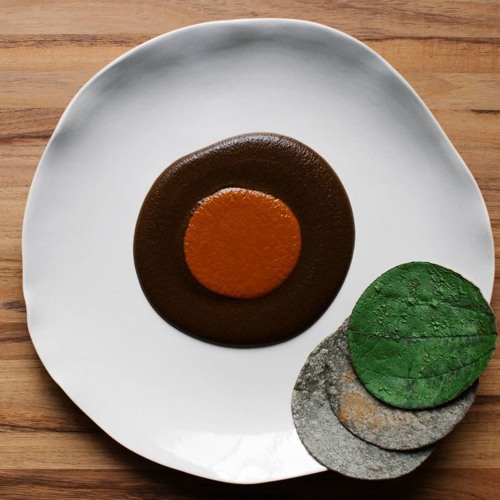
This is mole: Pujol, mole madre, mole nuevo. The dark ring on the outside is aged mole. The inner red is fresh mole (i1.sndcdn.com).
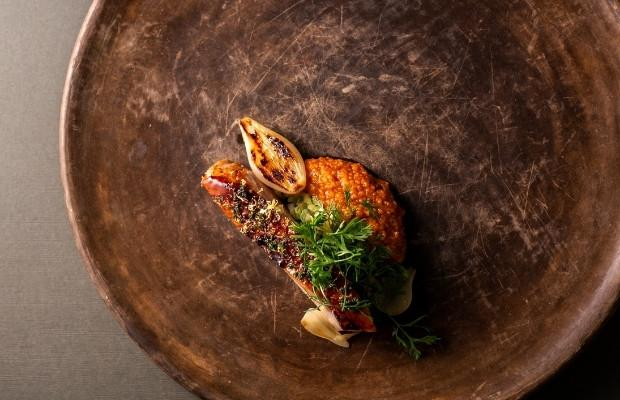
Pictured: Quintonil, charcoal roasted chicken (theworlds50best.com)

One of the things that I did not expect to try in Mexico City was ant larvae. At both of these restaurants I was served some variation of it; Quintonil served it mixed with avocado, and Pujol served it on a puffed tortilla. Pujol is hands down the best restaurant I’ve ever been to, and currently it’s rated as the 5th best restaurant in the world (worlds50best.com). When I went there, I believe it was ranked 12th. Quintonil is currently 9th, and when I went there it was ranked around 20th. So, if you can get into these places, I highly recommend them. I remember at Quintonil I had for dessert a cake made of huitlacoche, which is a fungus that grows on corn (en.wikipedia.org). It is considered a delicacy in Mexico, and it was definitely interesting to eat, so it goes on my list. At Pujol I distinctly remember their dish, mole madre, mole nuevo, which is mole aged for 1000 days paired with freshly made mole. Mole is a dish traditionally made with peppers and chocolate; the exact ingredients of which vary between Mexican grandmas (en.wikipedia.org). 

France and Spain

(cdn.vox)
(approachguides.com)

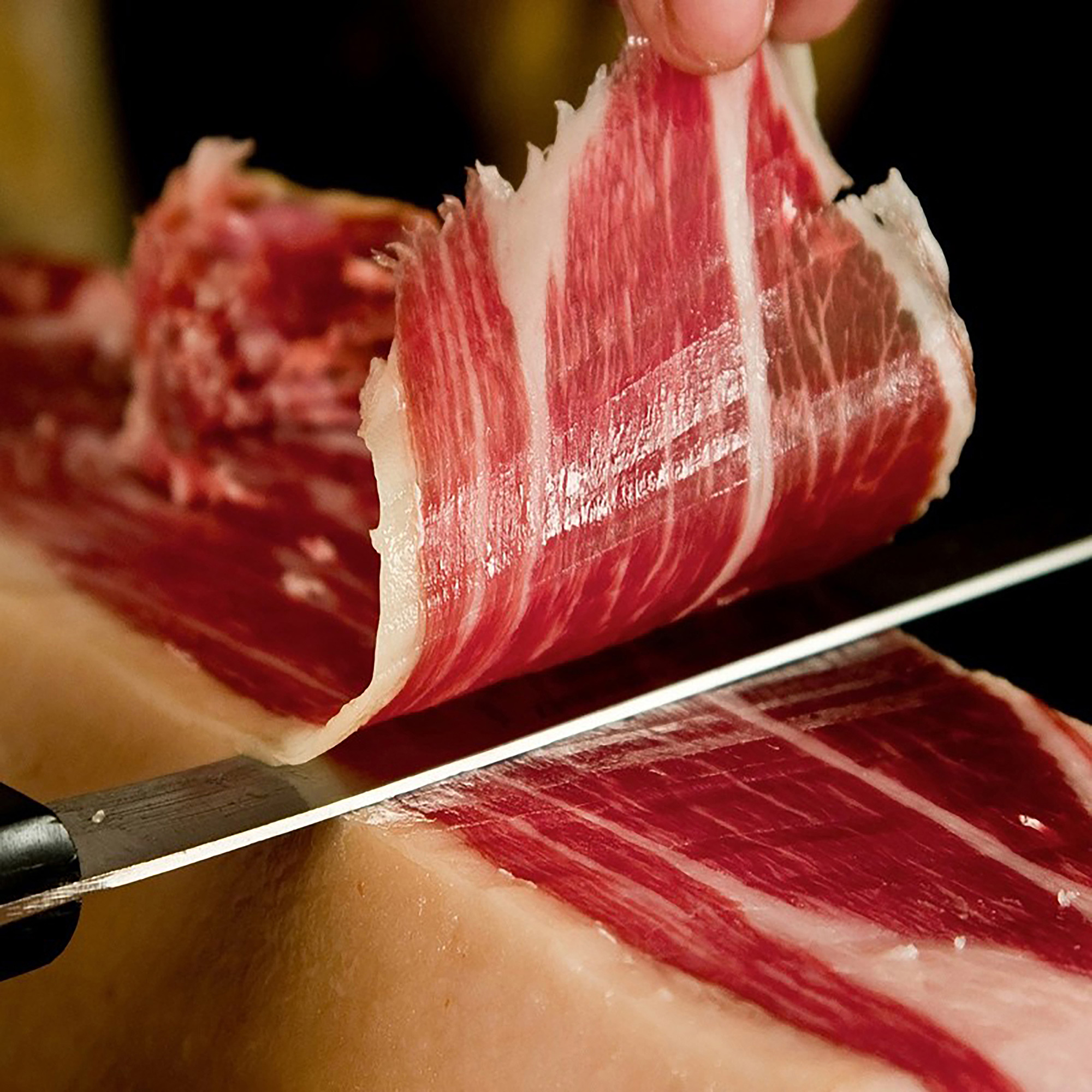
There isn’t much to be said about these countries that hasn’t already been said. The bread in France being good is an understatement. A croissant from any cafe in France makes a croissant from a local coffee shop in the U.S. taste like Wonder Bread. Seafood from Spain is absolutely delicious, especially Spanish octopus. My favorite food in Spain, however, is undoubtedly Jamón ibérico de Bellota. It is widely regarded as the best ham in the world, as the pigs are pampered and run wild in oak forests, eating mostly acorns, chestnuts, and grass (Jamon iberico-Wikipedia). The highest grade of Jamón ibérico de Bellota is pata negra, which is reserved for only the pure-bred Iberian pigs. Pata negra literally translates to black foot, a trait only pure breds have, so a good way to tell if a leg of jamón is genuinely pata negra is to look at the foot. The term is even used as slang to mean “the best” in Spain. It is absolutely delicious and widely available in Spain, like truffles in Italy. On the topic of meat, steak is excellent in France if you accept the way they prepare it. The French cook their steaks the only real way, which is bloody rare. I ordered a medium rare steak once in France, and they served me one of the rarest steaks I’ve ever eaten besides tartar. It was incredible. Unbelievably tender. I highly recommend it for the students going on the upcoming trip to France. 

Conclusion

Food is one of the defining features of each culture. Recently, I’ve been interested in exotic fruits. Many of the fruits that I have learned about this year have never been heard of by my peers. Have you ever heard of a mangosteen? The LA Times called it “arguably the world’s most delicious tropical fruit” (latimes.com). Perhaps I’ll rank the world’s greatest fruits next. Mangosteen would be pata negra. If you have a food that you think deserves to be on this list, please tell me in the comments below. 

Filed Under: Aesthetic, Culture, Food Tagged With: Levi Kassinove, My Favorite Foods Around the World, Ranked

History Of The Cahuilla

September 27, 2022 by szachik@pvs.org Leave a Comment

I asked the Blog Staff to look into a country or culture of interest, to take us there, let us experience something of daily life that might not be our own. Penny takes us home. And, home for Penny and her ancestors is the Coachella Valley. If you’ve been hiking in the canyons to the south of Palm Springs, you may have visited Penny’s own “Andreas” Canyon.

Blog Advisor Zachik

By 7th-Grader Penny Andreas

The Coachella Valley has been around for quite awhile, along with its native tribes and cultures. One tribe specifically, the band of the Cahuilla Indians, has called the desert home for generations. I am native, and it’s important to keep our stories alive, along with our traditions. The Cahuilla natives have been around for thousands of years, but there are many different versions of how they ended up in the Andreas Canyon. One of them is told by Alejo Patencio, a tribal spiritual leader. It begins with two brothers Mukat and Temayawut, who were born by a swirling mass of color when the world started. At their birth, Mukat and Temayawut created all of the oceans, mountains, and the sky. 

Then, the two brothers made the first people. Mukat chose to create humans by carving black mud and carefully sculpting. Temayawut decided to use white mud, and hastily carve them. When they were both done, compared to Mukat’s, Temayawut’s looked  unrefined and rushed. After arguing about whose people were better, Temayawut decided to leave Mukat. So overall, Mukat is said to be the creator of the Cahuilla. This lesson and overall beginning shows that it is better to take time and not rush things. 

Bird Singing And Dancing

One thing that is extremely important in this tribe is its ceremonial Bird singing. Bird singing often tells the story of lessons that were learned about life, such as the origin and migration. Bird singers, when performing, will always have an instrument called a rattle. The Cahuilla bird singers have been using rattles for thousands of years, even before the Europeans came. Just as your fingerprint is yours individually, that’s what a rattle is like. Each one is completely different from the others. However, every rattle is made the same. The holder must pick out a squash or gourd from a vine, and then boil it in water for 20 minutes, and it is often filled with pebbles to keep the gourd or squash from floating above the water. After it has become hard and completely dried out, they fill it with seeds of spirit. The seeds come from places you love and value. For instance, my favorite place is Andreas canyon. (If I was a bird singer, I might put palm-tree seeds in my rattle.) From the seeds is where you get the steady beat of the rattle. When men tend to always sing, the women dance. Every bird dancer has their own bird dancing dress. They choose patterns and colors they think reflect themselves.

These are a few examples of bird dresses (takookmedia.com).

The Cahuilla Social System

I’ve grown up with Cahuilla teachings. To understand clearly the structure of the Cahuilla social system, I suggest you visit the Agua Calienta Band of Cahuilla Indians website. I’ve borrowed the following information from aguacaliente.org.

Moieties

The Cahuilla are divided into two groups known as Wildcat (tukat) and Coyote (Isil). These Moieties, based on native blood percentage, are believed to originate from when the Cahuilla first started, which guided marriage rules among people. Only one group can marry another member from their group.

Clans

Within each Moiety, the Cahuilla were set into clans, and it wasn’t until the 19th century when they started to work together. The present-day Agua Caliente is now made up of the three clans: Kauisik, Panik, and Wanakik. 

Lineages

Lineages are made up of extended families inside a clan, with a man leading each household. Every lineage had its own food gathering areas and village. 

Every culture in the world is important, and every culture has its own story. Every story even has its own lesson. I think it’s very important to share these stories and spread culture. I encourage you to spread your stories with the world! 

Filed Under: Culture, History Tagged With: History of the Cahuilla, Penny Andreas

Politeness is a Waste of Time

September 6, 2022 by szachik@pvs.org Leave a Comment

The Bird on Fire staff bloggers are tasked with writing about a cause. Here, Levi opts to go after the glue that holds together our society–politeness and small talk. It nearly goes without saying, the opinions of Levi do not necessarily represent the views of The Bird on Fire.

Blog Advisor Zachik

By Levi Kassinove, Junior

Dear Readers, given the comprehensive, semi-scientific post of last week, I feel you deserve a break. It’s time for a lighthearted post about why polite people are living a lie.

— Levi

Recently, on vacation, my friends and I were walking outside at night in the desert. Without giving too many details so as to not embarrass anyone, there were scorpions roaming around, and we needed a UV light to see them. We did not have a UV light. We walked around nonchalantly, accepting our situation, until a lady walked up to us and offered to let us borrow her UV flashlight. One of my friends fought absolute TOOTH AND NAIL for her to not give it to us. My friend repeatedly told her, “Oh you don’t have to, you really don’t have to,” to which the lady responded, “I insist. You guys are children and you should have fun.” This exchange kept going until I interrupted and said that I would like to use the light to see the scorpions. My friend grimaced and told me that I didn’t know how to handle social interaction. We had a great time looking at the formerly invisible scorpions in the night. We took pictures and gazed in awe at their beauty. Personally, I, along with some other people with us, had never seen scorpions in the wild before. It was a cool opportunity. Anyway, the point is that this would have never happened if my people-pleaser friend had successfully shooed the light-lending lady away. The lady had offered us a UV light that she already owned. She insisted that we try it out. So why fight out of politeness? It harms both parties in this case, since the lady seemed to genuinely want us to have fun. This exchange is an example of one of the many reasons why it is a bad habit to be unnecessarily polite, which is that it can prevent people from taking advantage of opportunities. 

Small talk, on the other hand, is something that we’ve all had to endure throughout our lives. Some live for it. I’d say that they aren’t really living. You can forget having a real human connection with the person if you insist on rhetorically asking how the other person is doing. If one person simply gives the other a real answer, the conversation will switch and both parties will let their guard down. So, I say just skip the small talk. Everyone would find it refreshing, unless they don’t have anything to talk about beyond the weather. The people that prefer to stay engaged in small talk are not interesting, and not worth getting to know any further. That is, if there is anything further to know. 

Perhaps small talk ties into politeness, if enough people feel that it is common courtesy. Ultimately, however, it is an unnecessary and exhausting exchange between people. And, it won’t provide any information of substance to the other person. To be blunt is to be genuine. I would go insane if people were to only engage in small talk. 

Consider this guy Bill who’s asking about the weather, when they are both literally standing outside. Bill has no idea how to respond, as this is a nonsensical question. Be more like Bill. 

englishclassviaskype.com

Filed Under: Advice, Culture, Daily Life, Introspection, Op-Ed, Unpopular Beliefs Tagged With: Levi Kassinove, Politeness is a Waste of Time

The Art of Collecting Vinyl

August 24, 2022 by szachik@pvs.org 2 Comments

By Luke Sonderman

Why Vinyl Records Are Still Relevant

Vinyl records were released to consumers almost 90 years ago, giving everyday people the ability to listen to the exact music they want without having to turn on a radio (thevinylrevivers.com). This revolutionary invention changed the way people could enjoy music forever! 

To this day, vinyl records have been one of the most prominent ways to listen to music amongst the pickiest listeners. Now, you may think that vinyl is dead because of streaming and downloading music, but YOU ARE MOST UTTERLY WRONG! Mark Michalek of Fluance, a home theater company, said, “[A] proper vinyl pressing will reproduce an uncompressed signal with no additional artificial sound processing such as dynamic compression resulting in a greater effective dynamic range for a more life-like sound” (techradar.com). Through the uncompressed vinyl sound we can allow our ears to hear all of the frequencies of the music as if it was being performed in front of us. With streaming and downloading, we do not get the same live effect. 

Collecting Vinyl

Listening to the sound on vinyl records isn’t the only part of the massive appeal. Vinyl records have become collectables, and some even sell upwards of two million dollars! (hmv.com) Many vinyl stores sell their records pre-owned which creates a large vinyl scavenging frenzy. When a collector walks into a vinyl store, they have no idea what treasure they may walk out with. You may buy a first edition Led Zeppelin print worth thousands, or you may find an old worthless Zappa album that isn’t worth skat. 

Personally, I don’t search for valuable gems. I just look for pre-owned cheap records from groups I like because the new prints are wicked expensive.

What To Look For When Buying Pre-Owned Vinyl

  1. Inspect the vinyl record’s cover. If the cover is in good condition, it is a good sign that the record will also probably be in good condition. If the cover is in bad condition, the record will most definitely be in bad condition. When you find a record in perfect condition with a very beat-up cover, there is a large chance that the cover is not original to the record and the same can be said vice versa. 
  2. Check if the record has a sleeve inside the cover. Never buy a record without a sleeve. The vinyl cover will scratch the record if there is no sleeve protecting it. Of course, if a sleeve is very torn and worn, the record was probably taken in and out of the cover many times. Usually, record stores will replace the sleeve if it is torn, which is good because when you buy a record you want to be able to maintain its condition. 
  3. Of course, you need to check the condition of the record itself. Often, used records in record stores have accumulated lots of dust and grime which you will want to brush off before purchasing the record. After dusting off the record, look for any scratches on the record. As a general rule of thumb, if you can feel a scratch with your finger, then the stylus (needle) will be able to feel it too. Also check to make sure that the record isn’t warped and is completely flat. 

If all of that checks out,  then you should be good to buy the record. When spending large amounts of money on vintage records, I would recommend you ask the store owner if you can play the record before purchasing it, but I buy my records for less than 10 dollars, so it’s not a big deal to me. 

Here is a list of recommendations for used vinyl albums you should buy:

  • Houses of the Holy – Led Zeppelin
  • Appetite for Destruction – Guns and Roses
  • Wasting Light – Foo Fighters
  • Shout At The Devil – Motley Crue
  • Physical Graffiti – Led Zeppelin
  • 2112 – Rush
  • Too Fast For Love – Motley Crue

Filed Under: Advice, Culture, Entertainment, Music Tagged With: Luke Sonderman, The Art of Collecting Vinyl

  • « Previous Page
  • 1
  • …
  • 3
  • 4
  • 5
  • 6
  • 7
  • …
  • 21
  • Next Page »

About

We are the Palm Valley Firebirds of Rancho Mirage, California. Join us in our endeavors. Venture through the school year with us, perusing the artwork of our students, community, and staff. Our goal is to share the poems, stories, drawings and photographs, essays and parodies that come out of our school. Welcome aboard!