the bird on fire

The Palm Valley School Student Blog

Subscribe to Blog via Email

Enter your email address to subscribe to this blog and receive notifications of new posts by email.

Powered by Genesis

Haiku on the Grass

March 7, 2023 by szachik@pvs.org Leave a Comment

Pull up a lawn chair. We’re talking about grass. Penny opens our theme with meditative haiku on that which grows beneath our feet.

By Seventh-Grader Penny Andreas

The grass stands up tall

Upon the hill with the sun

Its blades reaching high

The pine tree sits strong

Shorter among the birches

Green and yellow leaves

The bluebird flies high

Up in the sky with the clouds

It flies with the wind

The snail moves slowly

Sliding on the blade of grass

Its shell balancing

I walk in the field

Alone in a labyrinth

Of long and tall grass

Filed Under: Plants & Opinions, Poetry, The Outdoors Tagged With: Haiku on the Grass, Penny Andreas

Geocaching–Modern-Day Treasure Hunting

May 10, 2022 by szachik@pvs.org Leave a Comment

By Lilah Nick

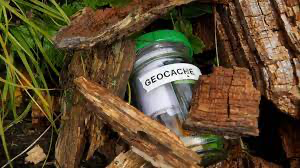
What is geocaching? Geocaching is sort of a “global treasure hunt” where people look for hidden “treasure” or stashes. Geocaching can also be considered as a series of hide and seek games. People online will provide clues to where their cache is for other seekers to find. The seekers use a GPS to find the hidden cache. 

There are three main rules in geocaching:

  • Take something from the cache.
  • Leave something in the cache.
  • And write about it in the logbook, which is inside the box.

The caches are usually in some sort of box, but they are usually small, waterproof, and made of something like plastic, metal, or wood. You might find things like a camouflage Altoids container, an old can of nuts, or an emptied ammo box. Caches are usually hidden, but cannot be buried or intrusive. 

          Photo credit: NPR

When Geocaching launched in 2000, there were only 75 caches, and now there are over three million around the world. There are also millions of players finding caches. Some people play to see how many caches they can find or to see how many new places they can visit. Geocaching is a great way to get outside and find some hidden places you wouldn’t have seen otherwise. A common way to search for caches is to go on to the official geocaching website geocaching.com. Once you make an account, you’ll get access to a map that has the locations of all the caches around you.

My family and I mostly went letterboxing (the older version of geocaching), which is the same thing just using a series of clues instead of a GPS. I mostly went geocaching and letterboxing in Northern California. When I would go, we would sign the logbook with individualized stamps. I had an owl stamp, and my brother had a palm tree. We also made our own stamps.

Overall, geocaching is a really fun hobby to try out this summer.

“I’ve been geocaching! And it was a blast!”

Luke Sonderman, sophomore

“Geocaching is a really fun to explore your communities, and I often find really cool areas in nature that I didn’t know existed.”

Indy Behr, sophomore

I say, try it, it’s a great way to get out of the house.

Filed Under: Entertainment, The Outdoors Tagged With: Geocaching--Modern-Day Treasure Hunting, Lilah Nick

Meet the 2022 Varsity Golf Team

March 31, 2022 by szachik@pvs.org Leave a Comment

By Luke Sonderman, Golfer Blogger

This year Palm Valley attempts to defend its championship status that they have held for the past three years!

Golf Season to Date:

The Palm Valley Golf Team won their first triple match against Desert Chapel and Mesa Grande. We also won our second match against Joshua Springs. In our third match, we won again against Desert Chapel, but lost to Redlands. At yesterday’s match, we were down a player because Sophie is traveling back to her home in China, but we still won against Joshua Springs once again. 

The Palm Valley Varsity Golf Team, led by Coach Harvey, has six golfers: Jesse Denyer (co-captain), Sophie Zhong (co-captain), Jerry Wang, Jane White, Hambik Mandanyan, and myself (Luke Sonderman). 

Co-Captain Jesse Denyer is a strong leader for the team. Aside from her shared love for Mission Hills’ boujee water with Jane White, Jesse always hits bombs with her irons during practice and sets an amazing example for the rest of the team. 

Sophie Zhong is also one of the 2022 co-captains of the Palm Valley Golf Team for a good reason. Sophie never fails to hit the target when it comes to her shots. Sophie puts the ball where she wants it and leaves everything she has on the course.

Jerry Wang is one of the stars on the Palm Valley team as he pulls power behind his driver. Jerry never golfs without style as he is always wearing flashy Ray-Bans or designer sunglasses. If you ever go out to one of Palm Valley’s golf games and see a Robert Downey Jr. look alike, don’t be alarmed. It is just Jerry. 

Jane may be a pro fencer, but she is also one of the key members of the Palm Valley Golf Team. Although she sometimes forgets she is playing golf and ends up fencing Hambik with golf clubs, Jane always comes in clutch and hits the ball right where she needs to. 

Hambik Mandanyan is a Palm Valley Golf veteran and moral booster on the team. Hambik never fails to make everyone on the golf team have a good laugh on and off the course. Sometimes if you’re lucky, you may see Hambik doing a cartwheel after making par!

Although I may not look or play like a golfer, at all, I would consider myself a fair golfer. At Palm Valley golf practices, you may find me hitting rockets and duds with my clubs, or sitting on the driving range grass eating Panda Express with Co-Captain Jesse Denyer. 

Although many of last year’s team members graduated, Palm Valley’s Varsity Golf Team is still in it to win it and defend their championship for the fourth year in a row!

Filed Under: Sections, Sports, The Outdoors Tagged With: Luke Sonderman, Meet the 2022 Varsity Golf Team

Coachella Valley Music and Arts Festival, the Desert’s Killer

February 23, 2022 by szachik@pvs.org Leave a Comment

The Coachella Music and Arts Festival is one of the most popular events in the United States. What people don’t know is that the festival has its faults. Environmentalist Sienna Price shows us the dangers of Coachella. – Editor Alyna Rei

Upon request that The Bird On Fire blog move closer to home for the next few weeks, instead of going to any exotic country, I have decided to show you the negative side to Coachella–which is one of the most visited music festivals in America. 

Coachella attracts around 100,000 attendees every day! (washingtonpost.com)  Can you imagine the waste it produces?! On average, there aree 107 tons of waste produced in a 15-day festival, and only 20% of it gets recycled (washingtonpost.com). 

As you all know, music festivals are loud. They can reach up to 110 decibels, which is equal to a jet plane taking off (washingtonpost.com).Noise pollution from the festival can massively alter animal behaviors and disrupt ecosystems. Some situations in the Coachella Valley could be birds having to call longer or plant growth being disturbed (curesblog.lmu.edu). 

It’s not just what happens in the Coachella festival. If 100,000 people attend each day, most of the people would drive there. That’s polluting even more. Granted–some people drive electric cars and not every single person will drive an individual car to the festival. This is something to think about.

Photo credit: spectrumnews1.com

I’m not trying to tell you not to go to Coachella. I do know that it is a great music festival. I am simply just trying to make you aware of the effects and environmental impacts. Say, you have just booked your tickets, what can you do to help?:

  • Reuse. Do not throw away a plastic bottle. Refill it, or simply bring a reusable water bottle.
  • Rideshare. If you know someone who is going,  ask to share the car instead of taking two.
  • Wear biodegradable glitter. You don’t think about what a little bit of non-biodegradable glitter does to the environment, and a little bit might not do that much. But, if 100,000 people wear glitter, think of that environmental impact. 
  • Clean up. Clean up around your campsite if you are camping. If  you see a piece of trash, pick it up. This is not even restricted to Coachella. Pick up around your community.

If you are considering going to Coachella, or if you already booked your ticket, I hope that you keep in mind the things that you could do to help the environment: pick up your trash; share your rides; take public transports! There are many ways you can help the environment.

Thanks for reading!

Filed Under: Culture, Entertainment, Festivities, Green, The Outdoors Tagged With: Coachella Valley Music and Arts Festival, Sienna Price, the Desert’s Killer

Pick up your trash!

February 15, 2022 by szachik@pvs.org Leave a Comment

Environmentalist Alyna Rei brings to our attention the harsh truth about littering. In this informative blog Alyna gives us insight into the big world of trash and how it affects the environment around us.  –  Editor Sienna Price

By Alyna Rei, Environmentalist

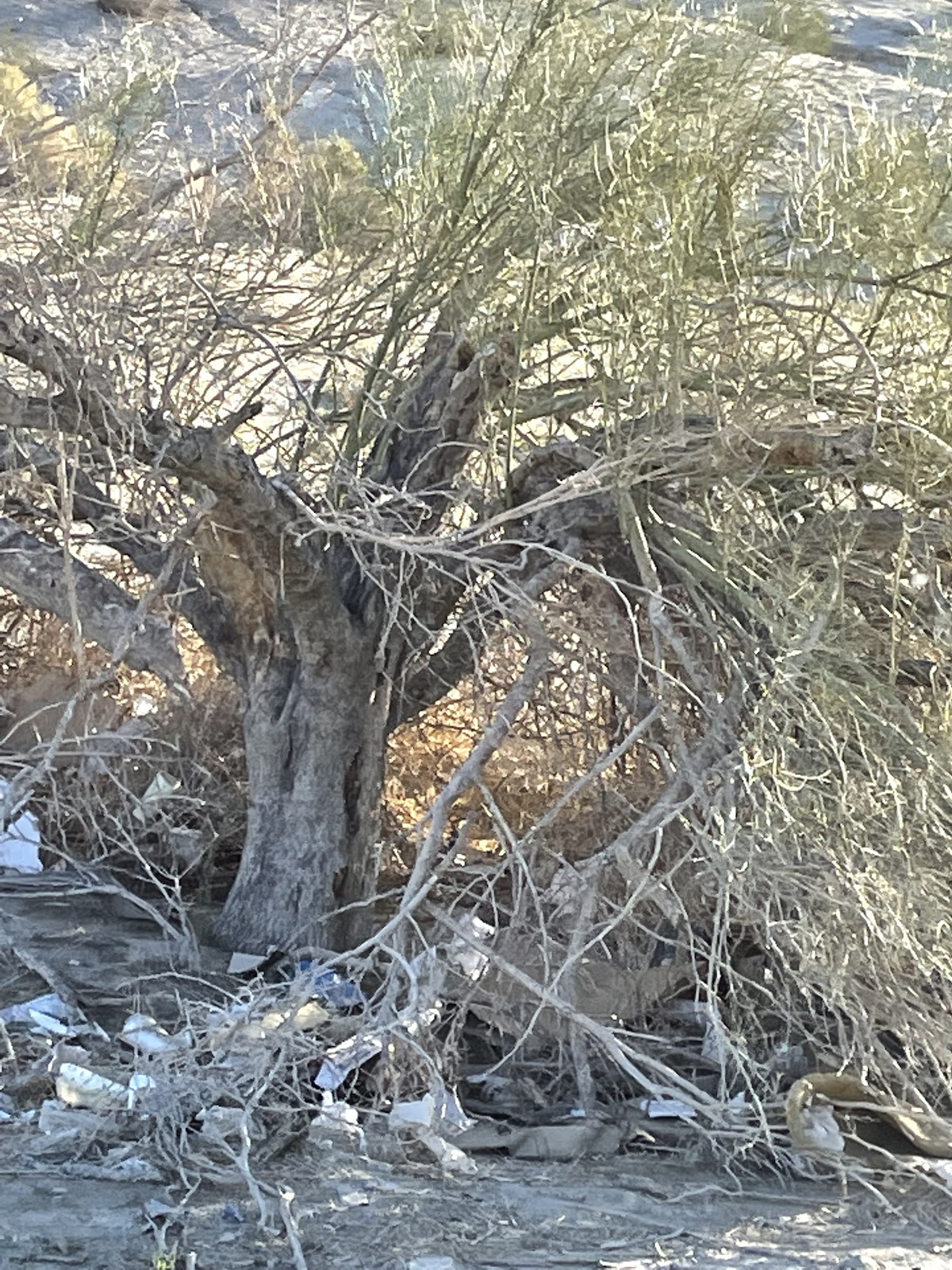
Littering is one of the many issues we have in the world that can easily be solved. The Coachella Valley is just one of the many cities in the world that is affected by littering. You don’t realize how much of an effect you have on the environment when you throw a cup out of the window, or if you drop food packaging on the ground. To decrease littering, we should educate the community as to how pervasive littering is and how it affects the planet. Here’s what I see when I drive to school in the morning.


What is littering? Why is it bad?

Littering is the improper disposing of products. Littering can happen intentionally or unintentionally, but both have environmental consequences (texasdisposal.com). 

The consequences can damage an animal’s life in their ecosystem. This can damage an animal’s ecosystems; when their shelter is full of trash it makes it harder for animals to settle in. On a more serious note, animals would mistake trash as food and digest the toxic material ending up killing some animals.  Littering can also cause water, soil, and air pollution. 

Often, litter is burned in open air and releases toxic gasses and matter into the atmosphere. Trash would usually be burned in a barrel. Some cities burn their trash since it’s the easiest way to get rid of trash. These toxins can enter people’s bodies and affect their health (health.ny.gov).

As littering increases, chemicals and other particles increase in the air. These chemicals aren’t healthy for the environment and can cause lots of problems. For example, one of the many particles of trash released into the ground would be cigarettes. Cigarettes have arsenic and formaldehyde that can make their way into the water and into soil. This would impact both humans and animals negatively (texasdisposal.com).

Why you should pick up your trash

The truth is, picking up trash is not everyone’s favorite thing to do. It’s not usually a favorite pastime for people. People are disgusted about picking up other people’s trash and have the thought that since it’s not their trash, it’s not their problem. That in itself is the problem; people believe that someone else will pick it up. Sure, you didn’t drop the litter, but it’s still your environment, shouldn’t you take care of it?

Here are some reasons why you should pick up your trash if you still need convincing:

  • It will protect wildlife. Most animals can mistake trash as food or as shelter materials. In fact, most animals are victims of littering everyday. Usually, trash can get into waterways and into the ocean. Animals can die from consuming trash that ends up in their ecosystem (https://www.rspca.org.uk/adviceandwelfare/litter).
  • It reduces the cost of cleanup. The United States spends a lot of money on just litter cleanup. We can reduce the costs by just picking up pieces of trash every day. Walk across the courtyard, and pick up trash.
  • Less spread of germs. Litter can contain many germs by just being on the street. With this, kids can pick these pieces up and then put their hands in their mouths. This would be a huge safety hazard for everyone. 
  • By picking up litter, you are showing pride in your community. You’re showing that you care about your environment and the Earth. 

Our school campus has been known to have pieces of trash lying around, and I always see teachers and staff picking up after students. This wouldn’t be a problem if students took the initiative to throw away their trash. Picking up litter can show that you care about the environment and the community. So, pick up your trash!!

Filed Under: Green, Health and Disease, The Outdoors Tagged With: Alyna Rei, Pick up your trash!

Our Neighbors the Coyotes

February 10, 2022 by szachik@pvs.org 3 Comments

Have you ever taken a second out of your life to think about coyotes? Well, Oliver Martinez certainly has. This week, Oliver explains the history of coyotes, along with riveting tales of local encounters with them. – Levi Kassinove, Editor

By Oliver Martinez, Middle-School Correspondent

In my three years of being in this school, I’ve heard many stories of students and even teachers seeing coyotes on campus. This made me wonder how coyotes even got to campus, or even how they got to the desert. 


Photo Source desertridgelifestyle.com

Where do coyotes originate?

The coyotes have been native to North America for 1 million years. Currently they are still found in North America, from Southern Panama, to Northern Mexico, through the United States and Canada. (nationalgeographic.com)

How coyotes got to the desert

Coyotes are native to the desert. They might migrate to the east, but they originate from western America. According to the National Park Service, Coyotes attempted migration from the west of the United States to other places, but they are still native to the west.  Coyotes can live just about anywhere, but they prefer open areas. This is why coyotes are found frequently in the deserts of California. (urbancoyoteresearch.com)

Coyote at The Living Desert

Experiences with Coyotes

I went and asked people about their experiences with coyotes. Tal, an eighth grader, told me his story. He woke up in the middle of the night to a coyote howling outside; he heard it making noises as if it were struggling. Creeped out, Tal went to sleep.

Another story comes from Ms. Zachik. Ms. Zachik was walking with her dog in a wash on a path, when she found herself having a staredown with a coyote. She quickly grabbed her dog and walked off and around the path to avoid the coyote.  

If you happen to see a coyote, Dr. James Danoff-Burg, Conservation Director at the Living Desert, says, “Most of the time when you see a coyote out in the wild if you make yourself big by waving or yelling they’ll run away. If they don’t run away you are probably near the den.” The most likely time you’ll see coyotes will be at dawn or dusk. (kesq.com)

Coyotes are interesting creatures. A reason to like coyotes is because they maintain a balance in the ecosystem by being the top carnivores. Says Dr. Danoff-Burg, “Coyotes . . . help control the rodent population and even eat insects, including cockroaches.” Coyotes help maintain healthy ecosystems. 

Filed Under: Animals, The Outdoors Tagged With: Oliver Martinez, Our Neighbors the Coyotes

Indonesia: The Largest Archipelago in the World

January 18, 2022 by szachik@pvs.org 1 Comment

By Sienna Price, World Traveler

In the United States, we are very familiar with household pets like cats, dogs, and even hamsters. Writer Sienna Price introduces us to some amazing and exotic animals from the islands of Indonesia.  – Luke Sonderman

For those who do not know, an archipelago is simply a group of islands. Indonesia has the largest archipelago in the world which brings a variety of wildlife. This week we travel, via thebirdonfire.org, to the animals and ecosystems of Indonesia.

The Komodo Dragon 

The komodo dragon is the largest lizard in the world measuring at three meters long! You can call them a lizard; however, many people refer to them as one of the dinosaur’s relatives. The komodo dragon’s conservation status is vulnerable which means they are endangered. Though the komodo dragon is the most dominant predator in its natural environment, their numbers are decreasing. The komodo dragon is threatened by the impact of climate change. It’s estimated that in the next 45 years the rising sea levels will reduce more than 30% of their habitat (theconversation.com). The komodo dragon has thrived in this harsh climate of Indonesia’s Lesser Sunda Islands for millions of years (Al’s Pets & Supplies). One skill that has helped is the komodo dragon can swim! Yes, the komodo dragons love to swim, and they have been spotted swimming off the shores of their five islands on which they reside. 

Sumatran Orangutan 

The sumatran orangutan is only found on the Indonesian island of Sumatra. With just over 13,000 sumatran orangutans left in the wild, they are in critical danger of extinction (sumatranorangutan.org).  

worldwildlife.org

They are extremely endangered because of the deforestation and poaching trade happening on the island. Derived from the Malay words of “Person of the forest,” the sumatran orangutan barely comes down to the floor of the rainforest. The sumatran orangutan lifespan is 30 to 40 years, and their weight is 66 to 198 pounds. Fruit makes up 60% of the sumatran orangutan’s diet. Their diet also includes lychees, mangosteens, mangos, figs, young leaves and shoots, insects, soil, tree bark, occasionally eggs, and small vertebrates (worldwildlife.org).

Pygmy Tarsier

The pygmy tarsier is a nocturnal primate found in central Sulawesi, Indonesia (wikipedia.org). Its head and body length measures just four inches long, and it weighs less than 58 grams (basically 14 times the weight of a piece of paper*). The pygmy tarsier was believed to have become extinct in the early 20th century. Then, in the year 2000, Indonesian scientists accidentally killed one while trapping rats! (wikipedia.org) They live in the montane cloud forests in the central Sulawesi Mountains at altitudes from 1800 to 2200 meters. They often inhabit the lower canopy among trunks and the forest floor (animalia.bio). The pygmy tarsiers are insectivorous and eat primarily arthropods (animaldiversity.org). The pygmy tarsier’s population is decreasing quickly due to deforestation.

As you can see, Indonesia is packed full of interesting and unique animals, some of which are very rare and endangered. It is important to be aware of the issues that are affecting their natural habitat and how they live. If one of the animals I talked about today goes extinct, it could cause a major chain reaction on how other animal species live and could impact their, and thus our, ecosystems greatly.    

*themeasureofthings.com

Filed Under: Animals, The Outdoors, The World, Travel Tagged With: Indonesia: The Largest Archipelago in the World, Sienna Price

Mermaids in the Ocean??!!

June 2, 2021 by szachik@pvs.org 1 Comment

In this blog Hannah describes many different types of sea life. Good luck exploring! — Editor Roman Rickwood

By Hannah Hall, Nature Correspondent

It’s summer. Quarantine restrictions are loosening. The time is coming when you will see, splashed across social media, people on their tropical vacations. Although I am not one of those people, congratulations to you if you are. Still, that doesn’t mean I can’t create a makeshift island experience. I found one way to do that is pretend snorkeling. All you have to do is look up snorkeling pictures underwater.

Unfortunately, you will not find mermaids, but here I have done a little bit of research regarding some species you can find under the sea. 

Green Sea Turtle

The green sea turtle has a smooth dark brown or olive-colored shell and green-tinged flesh which comes from their diet. They are herbivores and eat reef, sea grass, and algae. Hatchlings, however, do eat jellyfish and invertebrates. When fully grown, on average, they are 3-4 ft long and 350 pounds but can get up to 5ft and 700 pounds! The turtles migrate throughout the entire ocean during their lifetime, but only females come to shore to lay eggs. Female turtles always go back to the same beach on which they were born no matter the distance. They lay about 100-200 eggs, and they hatch in over two months. Oftentimes predators such as birds and crabs will go after these eggs and hatchlings, which makes the yield pretty low, estimating that only 1 in 1000 or even 1 in 10,000 survive till adulthood. Green Sea Turtles are an endangered species, but, unfortunately due to hunting, man-made accidents, climate change, and habitat loss, the numbers are still waning. In fact, the National Wildlife Federation predicts that “90 percent [of the sea turtle] population decrease[d] over the past half century.” Still, their lifespan is pretty long, ranging from 80-100 years. 

Clownfish

Clownfish, also known as false clownfish or clown anemonefish, are known by their iconic bright orange color with white and black stripes, but they can also come in colors such as “pink, red, yellow, black, brown and multi-colored stripes” (livescience.com). Clownfish live in the south-east corner of the world in shallow waters. They create a symbiotic relationship with anemones as they use them for protection, and the clownfish eats the parasite within the anemone. All clownfish are born male but are hermaphrodites. They have the ability to change their sex to female, usually for mating, but once they change, it is not possible to change back. Their social circle is led by one dominant female, which is the largest fish. The second in charge is the largest male fish. If the female dies, then the dominant male will transition to being female, then the new largest male will become second dominant as a replacement. According to the National Aquarium, clownfish eat algae, zooplankton, worms, and small crustaceans.

Anemone

Anemone, as we learned before, are a big part of the clownfish lifestyle. Anemones do, however, have a life of their own. One other includes green algae. NatGeo says “in exchange for providing the algae safe harbor and exposure to sunlight, the anemone receives oxygen and sugar, the bi-products of the algae’s photosynthesis.” If jellyfish was a kind of coral, that’s what an anemone looks like—they are all actually related. Anemones come in the colors of the rainbow and have tentacle appendages and a base-like structure. They use their tentacles to sting and contract fish into their body cavity. They have one hole which leads to their gut, but that also means they have one way out if you know what I mean. They remarkably can weigh up to 440 pounds, and their mouths can open up to 2ft wide! 

There are many other species that you will come across if you actually get to go snorkeling. Let me know what kinds of tropical creatures you wish I covered. 

Editor-in-Chief: Roman Rickwood

Sources:

https://www.nationalgeographic.com/animals/reptiles/facts/green-sea-turtle

https://www.nwf.org/Educational-Resources/Wildlife-Guide/Reptiles/Sea-Turtles/Green-Sea-Turtle

https://www.nationalgeographic.com/animals/fish/facts/clownfish

https://www.livescience.com/55399-clownfish.html

https://www.nationalgeographic.com/animals/invertebrates/facts/sea-anemones

https://sciencing.com/physical-characteristics-sea-anemone-8680735.html

Filed Under: The Outdoors Tagged With: Hannah Hall, Mermaids in the Ocean??!!

Gosh, my calves hurt

June 2, 2021 by szachik@pvs.org Leave a Comment

Looking for places to hike in the valley? Keep reading Nature Editor Hannah Hall’s list of favorite trails–from the most beautiful to the quickest! –Editor Sara Habibipour

By Hannah Hall, Nature Correspondent

In the desert, we are lucky to be surrounded by mountains. Not only do they make for great scenery, but climbing them makes for an excellent workout. There are so many trailheads in the desert, and they all have their unique qualities. Here are some versatile hikes I recommend.

Best Sunrise/Sunset

The Cross Trail in Palm desert is 2.3 miles long. This trail is well known, but you never know whether or not there will be many people on the trail. This is an out-and-back style trail, but right when you start the trail (go to the right, not up the street) there is a nice table with a lookout directly angled to watch the sunrise. Once you keep hiking this trail, if you keep going you will see a pad of cement with yin yang on it. It is always being graffitied with different colors, so it’s super cool to check out. There is a great spot to checkout the sunset. Although the view isn’t direct, it is flat and you can see all of the twinkling city lights. 

Sunset View: Palm Desert Cross Trail
  Yin Yang just below pinnacle of Palm Desert’s Cross Trail

Most Beautiful 

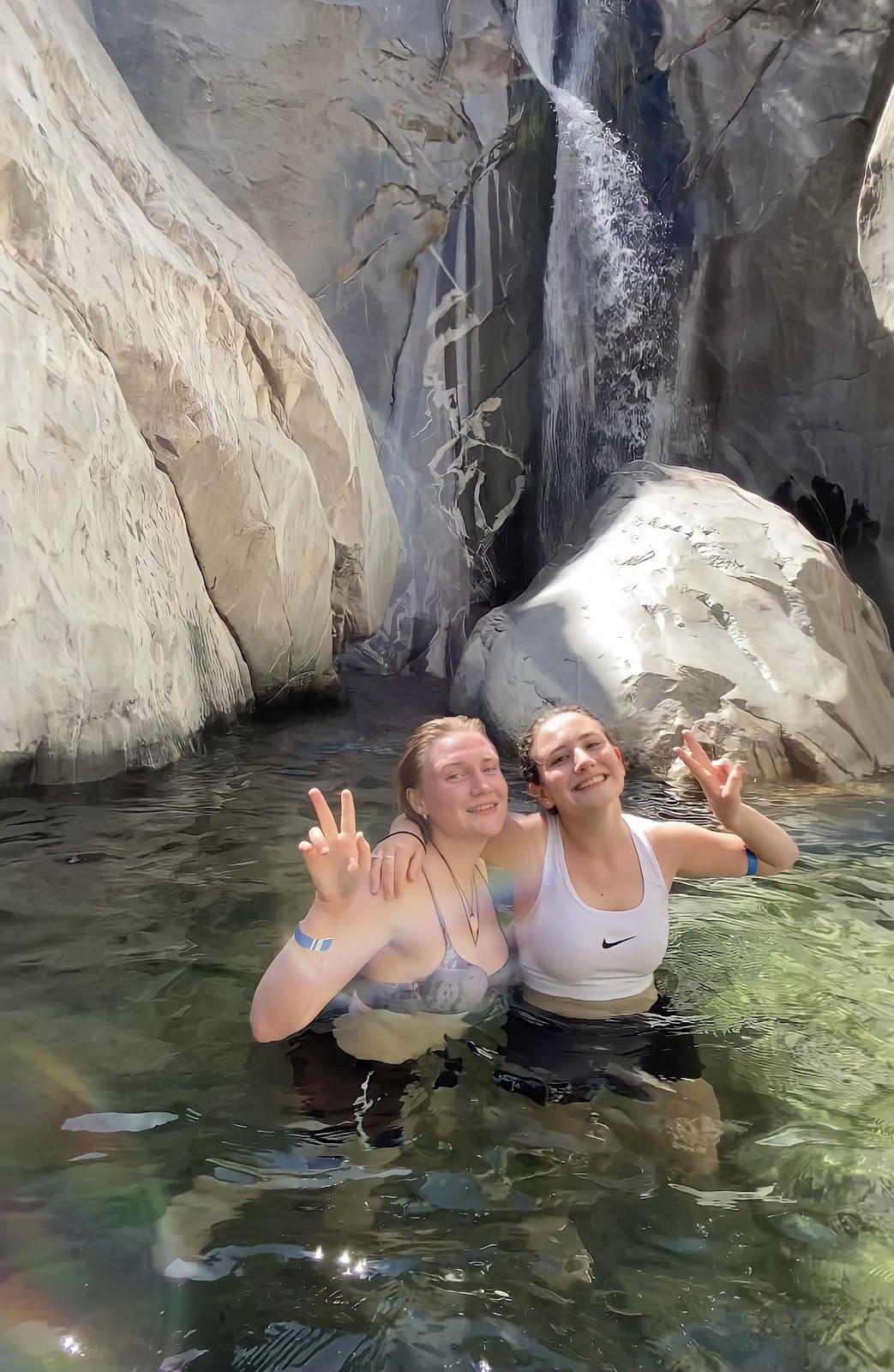
Tahquitz Canyon is a part of the Agua Caliente Band of Cahuilla Indians Reservation located in Palm Springs. The loop is 1.9 miles and is heavily trafficked. What makes this hike so unique is that there is a 60-foot waterfall within the trail! The water is really high and refreshing during the springtime. The Outdoor Club went on this hike when it was super-duper hot, and once we dipped in the water (we actually galloped in) we screamed and splashed with relief and joy. We were so cooled that the hike back was a breeze. I really recommend this hike for the beauty and the waterfall experience. 

Outdoor Club @ Tahquitz

Quickest Trail

This trail is a 2.7 mile loop. It may seem long by the length of miles, but it only takes me an hour every time I do it. It is the Roadrunner and Chuckwalla trail. This trail is situated right behind Rancho Mirage City Hall. I like this trail because it sort of has a built-in warm-up incline, which I think is what makes this trail seem so easy. All I can say is the trail is super easy to follow, and you can even cut it short by walking back down the street instead of the other mountain. This hike also has a nice sitting area for a sunrise. What makes for a delightful surprise, during the winter time it has a Christmas tree set up, and you also get sick views of the snow-capped mountains from afar. 

Climb above Rancho Mirage City Hall, and this will be holiday-time view.
Winter Views off the Roadrunner Trail

 Do you have any hike recommendations? Let me know!

Editor-in-Chief: Sara Habibipour

Sources:

https://www.alltrails.com/trail/us/california/the-cross-trail

https://www.alltrails.com/trail/us/california/tahquitz-canyon-loop-trail

https://www.alltrails.com/trail/us/california/roadrunner-and-chuckwalla-trail

Filed Under: The Outdoors Tagged With: Gosh, Hannah Hall, my calves hurt

A Review of Braiding Sweetgrass

November 17, 2020 by szachik@pvs.org 3 Comments

For this week’s theme of “Wilderness,” Sara shares a favorite read that encompasses the beauty of nature, the learning of science, and the wisdom of indigenous people.

By Sara Habibipour

Braiding Sweetgrass: Indigenous Wisdom, Scientific Knowledge, and the Teachings of Plants is one of my new favorite books. It is written by Robin Wall Kimmerer, a Native American woman and biologist. As a botanist, the author has been trained to view the world and its inhabitants through a scientific lens. But, as a member of the Potawatomi nation, she teaches her students that there’s more to plants than just bodies; they have spirits. 

Plants have been on this earth longer than we have, so we must listen to them, especially if we want to save our earth from the destruction we humans have inflicted through our selfish activities. It’s not too late yet to reverse the damage we’ve done to nature. But, if we want to make positive progress, we must learn from those who don’t take nature for granted: the Natives. 

In the book, Kimmerer draws on her experiences as an indigenous woman and scientist to show how other living creatures all share their gifts with us. In order to gain a wider scientific and ecological understanding of what must be done to save our earth, we must learn to appreciate each being’s gifts. Not only that, but we must show appreciation for these gifts by giving back and establishing a reciprocal relationship with the earth. It is only then that we can restore our lost relationship with nature. 

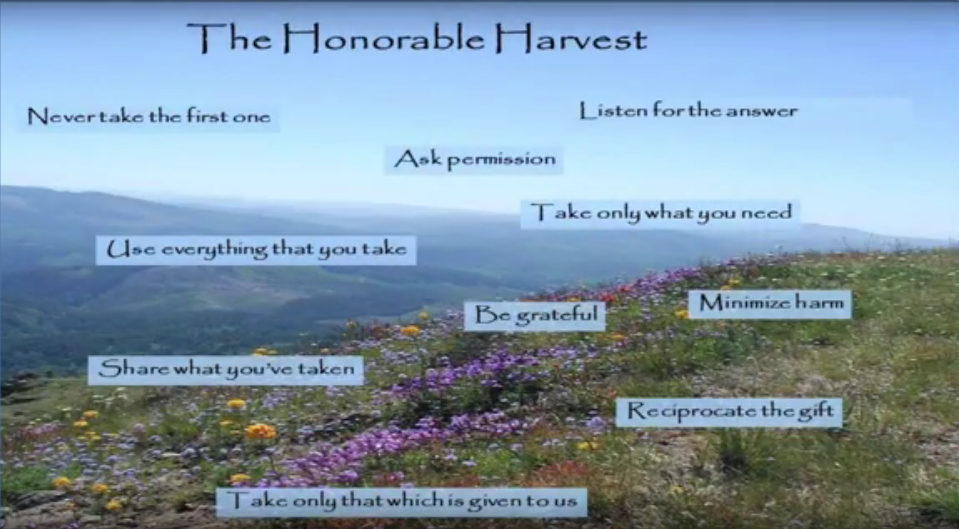
In Potawatomi culture, there is a practice called The Honorable Harvest. It is a set of unwritten rules that guide how much to take from the earth so as to not deplenish all of its resources for future generations. 

In the culture, before taking anything from nature (a plant, a deer, etc.), one must not take the first creature they see; this ensures that an endangered species is not being killed. One must also ask the being if it’s okay to take its life. If there’s no sign or gut feeling that it should not be taken, then it’s okay to use. Finally, you must use all of what you take and share it with others so as to not waste any part of it. 

In a capitalist society, we are raised to believe that taking from the earth is normal. But, this book is trying to tell us that if we can just recognize the destructiveness of our greedy nature, then we can all “become indigenous” and save our earth. We can all give back.

If you love nature, and if you appreciate science, I highly recommend that you read this book. I’d love to discuss it with you!

Wilderness Editor: Hannah Hall

Image Source: 

The Honorable Harvest: thinking more mindfully about what it means to be a consumer, forager, hunter, human

Filed Under: The Outdoors Tagged With: A Review of Braiding Sweetgrass, Sara Habibipour

  • « Previous Page
  • 1
  • 2
  • 3
  • 4
  • Next Page »

About

We are the Palm Valley Firebirds of Rancho Mirage, California. Join us in our endeavors. Venture through the school year with us, perusing the artwork of our students, community, and staff. Our goal is to share the poems, stories, drawings and photographs, essays and parodies that come out of our school. Welcome aboard!