the bird on fire

The Palm Valley School Student Blog

Subscribe to Blog via Email

Enter your email address to subscribe to this blog and receive notifications of new posts by email.

Powered by Genesis

Gratitude for a Good Book

December 16, 2020 by szachik@pvs.org 1 Comment

After a week of writing about the Apocalypse for Editor Erik, Editor Evan lightens the tone with the subject of “Gratitude.” Both themes, ironically, are appropriate as 2020 folds into 2021, as we deal with our present challenges and work toward a healthier future. Elizabeth reflects back on her months of quarantine and expresses gratitude for her longtime friends: books.

By Elizabeth Shay

This past year, I’ve had more time on my hands and spent more time at home, which definitely got old fast. Scrolling through social media and browsing the internet quickly became boring and unproductive. But what else is there to do when you can’t go out? Well, there is a marvelous invention that allows you to meet people and visit different places without ever stepping foot outside of your house. What is this amazing product? It’s a book. 

As a young kid, I spent hours reading. As I grew older, I simply didn’t have the time anymore and slowly began to read less. This year has reminded me how much I enjoy reading. I’ve grown grateful for everything that I have learned and experienced through the power of words. Here are just some of my favorite books (in no particular order):

  • The Tipping Point: How Little Things Can Make a Big Difference by Malcolm Gladwell

I read this book as a summer homework assignment for AP Lang in 11th grade. I found it to be fascinating. This remains one of my favorite non-fiction books. I will be checking out more of Gladwell’s works in the future.

  • Murder on the Orient Express by Agatha Christie

My love for mystery and detective novels started in elementary school with the Nancy Drew and Hardy Boys series. This is the only work by Agatha Christie that I have read so far, but I am hooked. 

  • The Maze Runner by James Dashner

Middle-school Elizabeth was obsessed with this series (yes, I had merch). YA dystopian novels characterized my reading list throughout those early teenage years (yikes). Still, I hold a soft spot in my heart for this genre…especially The Maze Runner series.

  • Men Without Women by Haruki Murakami

This is another book that I read over the summer for AP Lang. This book is actually a collection of short stories, translated from Japanese, about male characters who lack women in their lives for various reasons. Murakami offers extremely profound and moving insights in these stories, my favorite of which is “An Independent Organ.” I highly encourage both men and women to check this collection out.

  • Legend by Marie Lu

Marie Lu was inspired by Les Miserables and wanted to create a teenage version of the conflict between Valjean and Javert. This series is another YA dystopian guilty pleasure of mine. I am still awaiting a film adaptation, but the book will always be better.

  • The Picture of Dorian Gray by Oscar Wilde

Here’s another assigned summer read! I found this novel to be extremely enjoyable and thought provoking. I love the concept and find Oscar Wilde to be an extremely intriguing person. Discussions in AP Lit revealed complexities to this book that I never would have considered and made me appreciate the writing even more.

Over the holiday would be a perfect time for more reading, except for all those college applications requiring my attention. But, for the rest of you, pick up a good book, pull a chair close to the fire, grab your favorite cat and a hot drink.

What are you grateful for? Editor: Evan Spry

Filed Under: Gratitude

Sara’s Top 3 Things She’s Grateful For

December 16, 2020 by szachik@pvs.org 1 Comment

While things are looking bleak, it’s healthy to remind ourselves about and be grateful for the things we do have. Blog writer Sara shares  her top three gratitudes.

By Sara Habibipour

Gratitude #1: The Unknown

Imagine a world where you already knew everything. It might sound nice to know all of the answers to the universe’s biggest questions, but where would the fun be? As much as I hate being unaware of what’s going to happen, I can’t imagine a world without burning questions. Having no questions would mean no staring at the ceiling for hours–wondering why time flows in one direction, wondering how to cure cancer, wondering if there’s life on other planets. 

If we knew everything, there would be no debate; there would be no need for opinion. That sounds absolutely BORING to me. I’m grateful for the unknown because it encourages us to use our human ability to ask questions, and it fosters our curiosity. It allows us to find what we’re passionate about and spend our life seeking answers. The unknown allows us to live the questions rather than already know them. 

Gratitude #2: When you laugh so hard you start crying 

This is perhaps my favorite feeling in the world. And, oftentimes, it’s a result of me laughing at myself! To me, it’s just refreshing to laugh until I start crying, especially with others. Laughter truly is the best medicine.

Gratitude #3: Dancing

As someone who’s been training in dance for thirteen years, my list of things I’m grateful for wouldn’t be complete without “Dance.” To me, dance provides an escape from the stresses of school and allows me to express an artistic side of myself that I don’t often express during the school day. And, as someone who tends to obsess over details, dance and ballet allow me to focus those tendencies on something I enjoy. 

I urge you all to dance more. For some reason society seems to find dancing (especially dancing in public) embarrassing. Forget that: turn on your favorite music and allow your body to move. Allow yourself to be free. Freedom is a very handsome thing to wear. Dance can allow you to have an outlet of expression (even if you say you’re not good at it). Dance, and be grateful for dance. 

What are you grateful for? Editor: Evan Spry

Filed Under: Gratitude Tagged With: Sara Habibipour, Sara’s Top 3 Things She’s Grateful For

The Social-Media Apocalypse

December 15, 2020 by szachik@pvs.org Leave a Comment

Jake is here to warn us:

No need to look to large governments and nuclear power plants for apocalyptic mishaps. The Apocalypse could come via your smartphone.

By Jake Sonderman

 “Those who can make you believe absurdities, can make you commit atrocities.”–Voltaire

At first, saying social media will cause the apocalypse makes me sound like a  middle-aged technophobe, but let me walk you through how social media amplifies hate and falsehood and how that can lead to real world violence and chaos. Let’s consider how propaganda has always been a vital part of dictators’ politics.

The year is 1919 and Hitler has just become the 55th member of the German Workers’ Party. In two years, Hitler would take over the party, now called the Nazi Party. In two more years, he attempts to overthrow the government of Bavaria and is thrown in prison. From prison, he writes Mein Kampf, a half biography, half manifesto, that foretold of his intentions of genocide. In 1932, Hitler lost the presidential election but was named Chancellor (similar to a congressional majority leader) in 1933 by President Hindenberg of Germany. From here, Hitler gained the overwhelming support of the German public and took control of the government. But how did this failed middle-class artist gain so much popularity and power? 

Sometimes, I think we forget, since we all despise Hitler, that he was loved by the public when he took power and continued to garner support from the public well into the war. Many historians agree that it was Hitler’s speaking skills that propelled him to power. His ideas were far from original, and he had no status or family of status. In the 1920s and 30s though, radio became common in many households. This multiplied the effect of Hitler’s speeches and message, and certainly expedited, if not enabled, Hitler to gain public support (lifescience.com). 

Obviously, we could not have stopped the radio from being created and used by Hitler, but today we have something much bigger than radio: we have social media. Social media amplifies content that is likely to get more views and attention. According to a recent MIT study about tweets, fake news and falsehoods spread significantly faster and to more people than accurate information. This is largely because of the “novelty and the emotional reactions” that go along with conspiracy theories and false information (sciencemag.org). Often times, hate speech and hate groups are tied with conspiracy theories. 

One type of hate that has gained steam in the past decade is Islamophobia. Sacha Baron Cohen (Borat, Ali G) recently gave a speech at the Anti-Defamation League summit. In his speech he recounts a story from one of his shows. Sacha Baron Cohen’s thing is to play a ridiculous character who talks to real people and tries to get them to show who they really are. In his show Who Is America, he went into an Arizona town posing as a woke developer. He proposed to a town hall that they let someone build a big Mosque. He declared that it would bring millions of dollars of revenue to the city. This outraged the citizens and led a man to proudly proclaim: “I am racist, against Muslims” (adl.com).

There have been multiple instances of Islamophobia on Facebook. The most famous, atrocious incident was in Myanmar. Facebook has 18 million members in Myanmar. It has become “synonymous with the internet” for many citizens. The Myanmar military took advantage of this and started multiple propaganda accounts under the guise of celebrities  and news sources. These gained millions of views and followers. The false accounts frequently posted complete fabrications about the minority Rohingya-Muslim population of the country. Tensions boiled when the military messaged (through Facebook) many known buddhists and anti-muslims and said that an attack was imminent from the Rohingya group. This led to what the UN called a “cultural genocide” of the Rohingya-Muslims, leaving 10,000 dead and 700,000 dislocated and disenfranchised (The New York Times). If Facebook had an effective monitoring system and had deleted those accounts, the whole genocide would have likely been avoided or been less extreme. 

A settlement for Rohingya arrivals in Thang Khali, Bangladesh. More than 700,000 Rohingya have fled Myanmar in what United Nations officials have called “a textbook example of ethnic cleansing.”
Displaced Rohingya Peoples

Facebook monitoring, though, has changed over time. An in-depth New Yorker article tackled Facebook’s questionable moderating system. At first, Facebook employed a small monitoring group that was left to its own judgement to say what was acceptable and what was not. The group was driven by the sentiment, “If something makes you feel bad in your gut, take it down” (The New Yorker). As Facebook grew and calls for monitoring increased, Facebook moved international monitoring to a large Dublin facility. Not many have come forward about what really goes on behind the scenes in Dublin, but those who have tell a dark story. In training, moderators are told that if they are unsure as to whether a post violates Facebook’s community guidelines, they should let a post stay up. The supervisors give some examples. A couple examples include a meme of a white mother holding her little girl underwater with the caption, “When your daughter’s first crush is a little Negro boy.” According to the supervisor, that image “implies a lot, but does not actually attack the . . . boy” or his ethnicity (The New Yorker). So, the post stands. Another example the supervisors show is a username “Killall [slur for LGBTQ+ peoples].” According to the supervisor, “L.G.B.T. is an idea” unless used with pronouns. This story of Facebook ends with many of the moderators leaving the company and suing Facebook for 52 million dollars for emotional damage (The New Yorker). The New Yorker article implies Facebook no longer worries about morals, only about negative PR.

Hate is what starts genocides and major conflicts. Social media is amplifying hate and conspiracy. None of us expect these companies to be perfect, but we have a chance now to stop future conflicts, wars, and genocides. Sure, World War II was not the Apocalypse. But if we had another World War, would it end in the Apocalypse? 

Apocalypse Editor: Erik Bearman

Sources:

https://www.livescience.com/54441-how-hitler-rose-to-power.html

https://www.bbc.com/news/technology-44883743

https://www.adl.org/news/article/sacha-baron-cohens-keynote-address-at-adls-2019-never-is-now-summit-on-anti-semitism

https://science.sciencemag.org/content/359/6380/1146

https://www.newyorker.com/magazine/2020/10/19/why-facebook-cant-fix-itself

Filed Under: Apocalypse Tagged With: Jake Sonderman, The Social-Media Apocalypse

Secret Kiwi Salvation

December 9, 2020 by szachik@pvs.org Leave a Comment

Worried about finding a proper bunker to wait out the end of the world? Let us help you with your bunker shopping. Blogger Evan explores the phenomenon of companies filling the market with apocalypse-proof bunkers. 

By Evan Spry

Eleven feet under the ground, somewhere in New Zealand, there’s a secret multi-million dollar survival shelter that Gary Lynch, general manager of Rising S Company, will tell us is owned by someone he’s not allowed to reveal. Rising S Co, like many other survival-shelter manufacturers, are getting clients in New Zealand. Because of this, New Zealand is seeing a rise in bunker manufacturing. Bloomberg.com reports, “The underground global shelter network Vivos already has installed a 300-person bunker in the South Island, north of Christchurch, said Robert Vicino, the founder of the California-based company.” The tech elites and billionaires of our world are literally fleeing to New Zealand to live in real life Hobbit Holes. What does this say about the current state of the world? In the past few years, Rising S Co has “…planted about 10 private bunkers in New Zealand…” (Bloomberg.com). They also said that “The average cost is $3 million for a shelter weighing about 150 tons, but it can easily go as high as $8 million with additional features like luxury bathrooms, game rooms, shooting ranges, gyms, theaters and surgical beds” (Bloomberg.com). 

With our world’s current social and economic inequalities only increasing, we are seeing more examples of inequities such as these crazy kiwi survival bunkers. Fortunately, mass bunker-buying is not a new thing.  Latimes.com reports, “tens of thousands of Americans built private fallout shelters as Cold War tensions rose in the early 1960s.” This doesn’t mean that an increase in bunker buying is a good sign. Evidently, we are currently going through tough times, and it does not make sense to use the money that you have left to buy a high-tech and safe place for you and your family. This is nice for your family, but it is a little pessimistic and selfish to spend millions on a fallout bunker. I know it’s a lot to ask, but instead of spending money on bunkers, people could invest in bettering the world. People could do so much with those millions of dollars, and, let’s be real, we won’t need to live in bunkers for at least another half-decade.

I couldn’t find anything about the economic effect of these bunker-buying sprees, but I’m sure it didn’t hurt the Kiwi economy. However, it’s kinda weird having an American move to the neighborhood, only they’re at a secluded bunker at the top of the hill.

Anyways, I guess if you want to waste your money on a high-tech bunker, you should look 2,500 miles southeast of Australia in the land of hobbits, wizards, and dwarves. 

Apocalypse Editor: Erik Bearman

https://www.bloomberg.com/news/articles/2020-04-19/-we-needed-to-go-rich-americans-activate-pandemic-escape-plans

https://www.latimes.com/business/real-estate/story/2020-03-23/rich-are-running-from-coronavirus

Filed Under: Apocalypse Tagged With: Evan Spry, Secret Kiwi Salvation

Why Do We Obsess over the Apocalypse?

December 9, 2020 by szachik@pvs.org Leave a Comment

Our fears may actually be a survival technique. When Editor Erik instructed the Blog Staff to explore the Apocalypse as a theme, Sara looked into the psychology of why we invent apocalyptic scenarios.

By Sara Habibipour

Believe it or not, “Apocalypse Anxiety” is a real condition, and it has presented itself lately with fears of the Apocalypse higher than ever. But, why are we attracted to ideas of our doom? From viruses, to zombies, to environmental destruction, these ideas all stem from our psychology.

While there are many factors that influence a person’s fears and ideas of the Apocalypse, it all starts from the fact that our brains are “pattern-seeking belief engines” (New Scientist). There is actually a really interesting evolutionary thought experiment that ties into this idea. 

Imagine this:

You hear a rustle in the grass, but you’re unsure if it’s just the wind or something that could possibly hurt you, for example a venomous snake. If you first assume that it is the snake but it turns out that it is just the wind, you have made what is called a Type I error in cognition. This is when you believe something is real when it is not. You connected A, the rustle in the grass, to B, a snake, but found out eventually that you were safe. On the other hand, if you assume that the rustle in the grass is just the wind but it turns out to be a dangerous snake, you have made a Type II error in cognition, which is where you believe something is not real when it is. In this case, you failed to connect A to B, leading you to your death (New Scientist). 

Because of evolution and natural selection, the default position is to “…assume that all patterns are real; in other words, assume that all rustles in the grass are predators” (New Scientist). Thus, our brains favor the cognitive process of assuming that all patterns and the worst possible outcomes are real as a survival mechanism. Apocalypse thinking is just one of these pattern-seeking tendencies; these thoughts just naturally fill our mind due to evolutionary habits that started years and years ago. 

Apocalyptic visions also help us make sense of our crazy world. We want to feel that no matter how chaotic the world is, there will be a new beginning after the Apocalypse of this world, which is something that many religions embrace. The idea of a zombie apocalypse, specifically, is also appealing to us because it combines this evolutionary trait with horror, something that gives us a thrill we crave (Psychology Today). 

So, next time you find yourself ready to go hide in an underground bunker in preparation for the Apocalypse, you’ll know where your thoughts are coming from. 

Apocalypse Editor: Erik Bearman

Sources:

https://www.newscientist.com/article/mg21028156-300-the-end-is-always-nigh-in-the-human-mind/#:~:text=What%20is%20the%20underlying%20psychology,a%20better%20life%20to%20come

https://www.psychologytoday.com/us/blog/out-the-ooze/201810/why-we-fear-the-zombie-apocalypse

Image Source: 

https://images.app.goo.gl/JFRmN5M4MwLeZLKGA

Filed Under: Apocalypse Tagged With: Sara Habibipour, Why Do We Obsess over the Apocalypse?

Doomsday Tunes

December 9, 2020 by szachik@pvs.org Leave a Comment

I chose the theme “Apocalypse” because the word has been tossed around a lot this year. After hearing that word so much, I became interested in what the apocalypse actually meant. So I asked the Palm Valley Blog Staff to write about the apocalypse and its association. Elizabeth Shay responded with a playlist to accompany any grand exit.–Apocalypse Editor, Erik Bearman
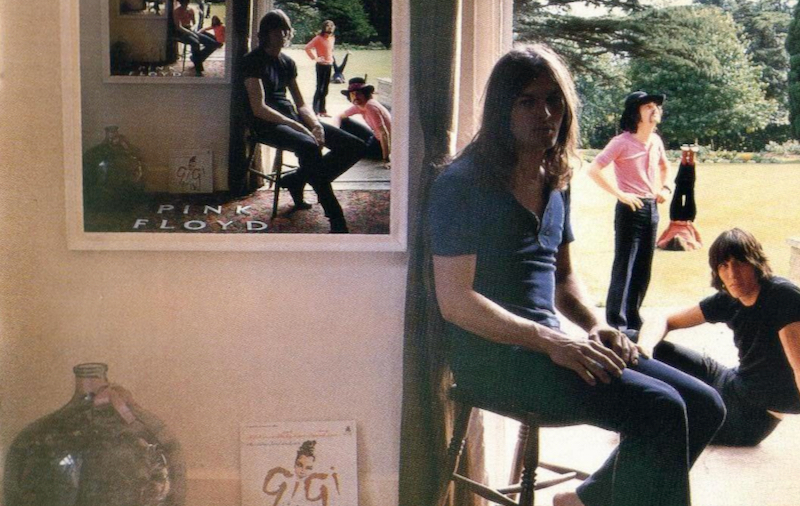
By Elizabeth Shay
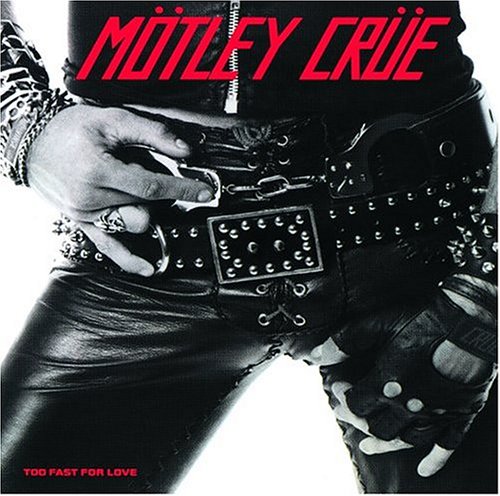
Here are some songs that remind me of the apocalypse and the end of the world because of their dark lyrics, bleak imagery, and intense sound. These are not to cheer you up; they’re meant to match the moment. Check them out on Spotify. Maybe make your own apocalypse playlist. You never know when you’ll need it.

Apocalypse Please by Muse– “And this is the end, the end/This is the end /Of the world”

Panic Room by Au/Ra– “My phone has no signal/It’s making my skin crawl/The silence is so loud”

Our Destiny by Black Veil Brides– “Fire spreads like kerosene/We’re going down/We’re going down in tragedy”

Carry On by Falling in Reverse– “All we are is cosmic dust that scatters free/With no sense of direction we’re just wandering”

At the End of the Earth by The Dear Hunter–  “At the end of the earth/Till we meet again at the end of the earth”

Losing My Mind by Missio– “I’m losing, I’m losing, I’m losing my mind/I’m fighting, I’m fighting, I’m fighting for more time”

(The) Yawning Grave by Lord Huron– “(You can run but you can’t escape)/Darkness brings evil things, oh, the reckoning begins”

Paralyzed by In Flames– “Paralyzed, rewind, there’s no time/And the wasteland, it’s an indication”

Save Me by Avenged Sevenfold– “(Save me)/I’m trapped in a vile world”

Endgame by Rise Against– “The city lines are down, the kerosene’s run out/The fracturing of all we relied upon”

Sources:

https://genius.com/

Apocalypse Editor: Erik Bearman

Filed Under: Doomsday Tagged With: Doomsday Tunes, Elizabeth Shay
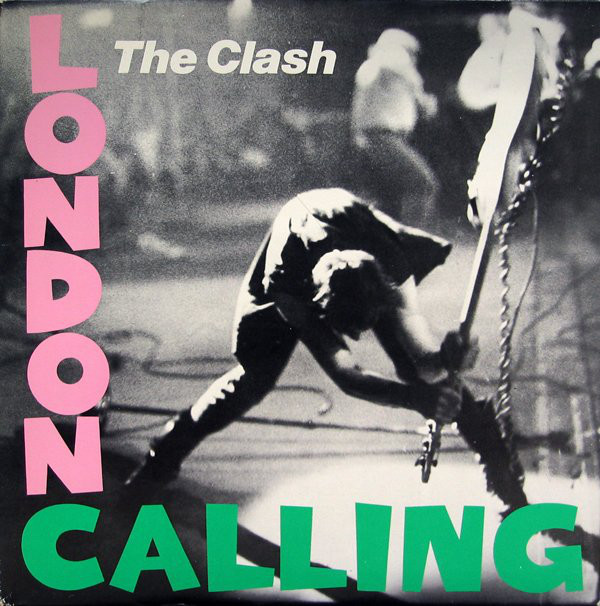
the world is dying…part 2

December 8, 2020 by szachik@pvs.org Leave a Comment

by Hannah Hall

As Erik prompted the Blog Staff to write the theme “Apocalypse,” Hannah inferred that ours is soon to come. Read on as Hannah continues her climate change saga and discusses the devastating effects of climate change. 

As mentioned in my previous post the world is dying, climate change is something that should be taken seriously and dealt with accordingly. Our world can only handle so much more. 

To help publicize and emphasize the issue, an organization called “Climate Clock” has set up clocks in three cities around the world. The clocks tick away, indicating the end of our carbon budget. That means it projects the amount of years we have left until we peak the CO2 threshold our atmosphere can take before our temperature raises roughly 35F above pre-industrial levels. This is our “deadline.” The website climateclock.world also shows our “lifeline.” This lifeline is the percent of the world’s energy that is sourced renewably; we need this lifeline to reach 100% before the other line hits 0. As of this moment, our deadline is just under eight years, and our lifeline is almost reaching 28%. This organization uses science to back their clock, which is sourced directly from multiple organizations: The Intergovernmental Panel on Climate Change Special Report on Global Warming, Mercator Research Institute on Global Commons and Climate Change, and “Tipping elements in the Earth’s climate system” from the national Academy of Sciences (climateclock.world). 

The Climate Clock located in Berlin, Germany

But, in the case we meet our carbon threshold, and global warming is irreversible, this is what will happen to our world:

  1. More irregular weather patterns will be prevalent. The evaporation of water caused by global warming increases rainfall. Excess rain in the polar and subpolar regions, and other unlikely regions, can wipe out organisms that can’t adapt to those conditions or migrate out of them. On the contrary, global warming also causes droughts, which can lead to major water crises and heat waves. This is especially damaging to plants and will cause a shortage of food. This shortage could lead to anything from war to starvation to inflation.
  1. There will be differences in the lengths of seasons. The change in seasons could be anything from seasons starting later or lasting longer. Nevertheless, this change could disrupt the natural food chain because of certain animals migrating either too soon or too late. This could lead to extinction of certain species.
  1. Ice caps will melt. When they melt, sea levels will rise. If sea levels rise to just 1.8 ft higher, that will impact 1 billion people, including Americans in our eastern coastal cities—and by 2100, the levels are predicted to rise roughly 10 ft higher! 
  1. Ocean water and air temperatures will rise. This will lead to more frequent and stronger hurricanes. Along with hurricanes, rising water temperature will lead to coral bleaching. When reefs become affected, ecosystems once flourishing will be diminished. 
  1. Natural disasters will become more regular. Rising global temperatures, caused by rising greenhouse gas levels, will have dire consequences. The added carbon dioxide in the air will lead to stronger and longer wildfires that risk the lives of humans and wildlife. The death toll from natural disasters is predicted to wipe out 75% of our population. Not to mention the people who survive will have to endure the spread of water-borne illnesses and the destruction of our world-wide electrical infrastructure.***

***all info sourced from conserve-energy-future.com and natgeo.com***

As I close out my climate change special, I want to remind everybody once again: The fight isn’t anywhere near being over. But, hopefully this article shocks you, and makes you understand that climate change is real and nearly irreversible. And, with that, I will end with a quote from the Dalai Lama, “It is our collective and individual responsibility to preserve and tend to the environment in which we all live.”

Apocalypse Editor: Erik Bearman

Sources:

https://climateclock.world/

https://climateclock.world/science

https://www.worldwildlife.org/stories/our-planet-is-warming-here-s-what-s-at-stake-if-we-don-t-act-now

https://www.conserve-energy-future.com/globalwarmingeffects.php

https://www.nationalgeographic.com/environment/global-warming/global-warming-effects/

https://www.goodreads.com/quotes/132851-it-is-our-collective-and-individual-responsibility-to-preserve-and

Filed Under: Apocalypse Tagged With: Hannah Hall, the world is dying…part 2

the world is dying…

December 4, 2020 by szachik@pvs.org 2 Comments

by Hannah Hall

As the new administration begins its transition, we see a new era in climate-change policy. Hannah lays it out for us.

We are headed towards an environmental meltdown. And I’m not even talking about the pandemic going on. I may be exaggerating, but our world is dying, and I know you know why….climate change. Our world can only handle so much more. 
Unluckily for America, during President Trump’s four years in charge, he has majorly reversed our progress towards climate-change solutions. Just to name a few setbacks, he has pulled out of the Paris Climate Agreement, ditched the requirements of The Clean Power Plan that would have cut our national carbon emissions by 32% by 2030, and removed climate change as a national security threat (nationalgeographic.com).

But, luckily for America, our President-Elect Joe Biden has plans for climate change. He publicly announced that “the number one issue facing humanity” is climate change, and if left “unchecked, it is going to actually bake this planet…[and] we have a moral obligation [to solve it]” (cnbc.com). Biden has three plans: the Tackle Climate Emergency plan, the Clean Energy Future plan, and the Secure Environmental Justice plan. So, to get the gist of these plans across, I have created a bullet list full of quick facts.

Joe Biden will…

  • work to turn the solutions for climate into opportunities for economic growth, thus creating jobs for middle-class Americans.
  • ensure America has a 100% clean economy with zero emissions by 2050. 
  • attempt to ensure that our future is protected from the harmful effects of climate change.
  • re-enter the Paris Climate Agreement.
  • fund carbon capture, use, and storage (CCUS) technology.
  • partner with family farmers, ranchers, and landowners to provide more water and encourage the practice of better, decarbonized agriculture.
  • put climate change back on the list of national security priorities.
  • increase demand for and integration of more American non-carbon emitting vehicles.
  • cut energy bills and energy pollution by establishing the Energy Efficiency and Clean Electricity Standard (EECES).
  • create the Environmental and Climate Justice Division within the US Department of Justice, establish an Office of Climate Change and Health Equity within the US Department of Health and Human Services, and create the position of Climate Czar in the Cabinet.
  • improve public health in disadvantaged communities by prioritizing, identifying, and systemizing climate strategies to improve their air pollution. ***

***all bullets are sourced from joebiden.com***

So, as you can tell, when Joe Biden becomes our leader, our country has a lot of climate change advances to look forward to. Personally, I am looking forward to the days of our country being protected when these policies are enacted. I hope that now, you are too. But just because Joe Biden’s policies are quite progressive regarding climate change, it doesn’t mean the fight is over.

Future of Politics Editor: Jake Sonderman

Sources:

https://www.nationalgeographic.com/environment/2019/02/15-ways-trump-administration-impacted-environment/

https://www.cnbc.com/2020/10/24/joe-biden-climate-change-is-number-one-issue-facing-humanity.html

https://joebiden.com/climate-plan/

https://joebiden.com/clean-energy/

https://joebiden.com/environmental-justice-plan/

Filed Under: Politics Tagged With: Hannah Hall, the world is dying...

The Times They Are A-Changin’

December 2, 2020 by szachik@pvs.org 2 Comments

When asked about the future of American Politics, blogger Evan Spry chose to spill his personal thoughts on the matter.

By Evan Spry

The world as we know it is in a constant state of change. From population to climate and geography, we humans are hardwired to adapt to this ever-changing environment. Politics, too, adapt over time. How have humans changed and what does that mean for their politics? 

In America, as we all know, our political spectrum is dominated by two parties: the Republicans and the Democrats. There are more registered Democrats than Republicans (pewresearch.org). American politics differ from most other countries because of our electoral college system. This system  gives more representation to the smaller states, which there are more of. So, our politics don’t always represent the majority of our views. It is pretty much impossible to get rid of the electoral college system because, like every other country with it, it’s written in our constitution. 

In the past half decade, we have seen a surge in popularity for and from the left. With young liberals in and out of office making headlines across the nation. However, this movement did not start because of Trump; he just proved their point that we need change. Now that Trump’s rule is over, both parties have a lot of work cut out for them. The Republicans need to maintain relevance without their party head in the White House, and the Democrats need to prove that they are the peoples’ voice by producing policy and legislation that the American people want to see. 

Many Republicans are contemplating how they’re going to move forward, with multiple Republicans jumping the Trump ship in acceptance  of the Biden administration. However, these Republicans like John Kasich and Mitt Romney are still the same Republicans they always have been. Just because they are reasonable enough to side with the democratic process, in terms of the election, it doesn’t mean that they are Biden-lovers. Don’t let Kasich and Romney,  protectors of the status quo, trick you. The same anti-Trump Republicans confirmed Amy Coney Barret as a Supreme Court Justice during an election year, which they were against in the past, heavily reinforcing a conservative dominance in the Supreme Court. 

Now, I don’t think the Republicans are doing anything wrong policywise because they are supporting exactly what they “should” be as Republicans. They are acting as standard conservatives. In my opinion, the Republicans’ greatest flaw is their lack of new and original ideas and policies. Some new policy ideas would be nice! Recently, all that seems to be coming out of the conservative think tanks is the notion that the Democrats are overrun with socialists, we should decrease spending on public funding, and that abortion is bad–none of which are new ideas. 

Maybe Republicans should compromise on Coronavirus relief. Forbes states, “According to a recent poll from OnePoll, 82% of Americans believe that a one-time stimulus check of $1,200 from the CARES Act is not enough to pay for living expenses in the wake of the COVID-19 pandemic.” 82 percent! This is way past partisan lines. If you don’t listen to 82 percent of the population, then who are you listening to?! Now, obviously, this poll isn’t 100 percent accurate because OnePoll didn’t poll every single American. This poll is of a small group of people compared to our total population, so you can’t get a perfect analysis of what every American wants. However, it is a good gauge. The least that Republicans could do would be to support a new COVID stimulus plan to keep the population more satisfied and stable. 

Now for the Democrats (cracking of knuckles). There may actually be more to unpack here than there was for the Republicans. Unlike the Republicans, the Democrats are much more divided within their own party. With the new, young, and progressive left clashing with the older, more neoliberal establishment, the Democrats really need to support each other more if they want to have a blue government. Similar to the Republicans, I believe that the Democrats also need to cater more to the younger generations that will eventually be leading the country. The thing about the Democrats is they already have the majority of young votes, but they still have many young people that are angry with them. Why is this? Well, I think that young liberals are upset with the Democratic party because they don’t see them taking any risks to promote progress: Where’s medicare for all, a sustainable lifestyle, and gun control?

Also, when establishment Democrats side with Republicans over liberals, you’re sure to see some disappointment from the left. According to The New York Times, “Young Voters Know What They Want. But They Don’t See Anyone Offering It.” If these politicians truly believe in democracy and the democratic process, then they should at least attempt to put policy or legislation in play that the majority of Americans want. There is no attempt from the Democratic establishment to create a public option for medicare, and there’s not enough action about climate change. According to pewresearch.org, “About two-thirds (65%) of Americans say the federal government is doing too little to reduce the effects of climate change….” Both parties agree that this is something that needs to be addressed. But, this would cost money, and legislators question the cost, even if it means saving our lives and securing our future. 

We see establishment Democrats and their allied organizations covering up and silencing progressive candidates or policy. For example, Hillary Clinton, with the help of MSNBC, accused young House Representative Tulsi Gabbard of being a “Russian asset” during the 2016 presidential race because she is starkly against our endless wars and wants our troops to come home. Clinton dismissed the fact that Gabbard served twelve months as a combat medic in an infantry battalion in Iraq. Gabbard was not the only victim of the Democratic establishment. Andrew Yang suffered constant rejection, disclusion, and neglect from the media station MSNBC. The Daily Beast reported, “Andrew Yang doubled down on his criticism of MSNBC on Saturday, appearing on CNN to accuse the network of “suppressing” him and “ignoring” his campaign.” With the majority of the Democrat and Republican establishment not addressing the issues of the majority, it’s hard to be excited about anything. But, we do have something…Time. 

More and more people that we thought of as young a little while ago will soon be old enough to be in charge of the rest of us. We need to listen to our people and make progress. It’s not a bad thing to have the government spend more money for some time to ensure our future generations some stability. And, as a final note, I want to personally apologize for ranting in your ear for this long. Hopefully Jake will have cut down this article a little; these topics have just been bombarding my thoughts, and I needed to let them out in some way. So, If you actually made it this far, I really appreciate your devotion. One Love.  

https://www.pewresearch.org/fact-tank/2020/10/26/what-the-2020-electorate-looks-like-by-party-race-and-ethnicity-age-education-and-religion/ 

https://www.pewresearch.org/science/2020/06/23/two-thirds-of-americans-think-government-should-do-more-on-climate/

https://www.cntraveler.com/gallery/the-10-happiest-countries-in-the-world

https://worldpopulationreview.com/country-rankings/developed-countries

https://www.forbes.com/sites/zackfriedman/2020/05/19/stimulus-check-monthly-poll/?sh=7c793d0a6308

https://www.politico.com/news/2020/01/22/tulsi-gabbard-sues-hillary-clinton-over-russian-asset-smear-102074

https://www.ncbi.nlm.nih.gov/pmc/articles/PMC7054854/#:~:text=This%20observational%20study%2C%20which%20analyzed,%24414%20million%20on%20contributions%20to

Future of Politics Editor: Jake Sonderman

Filed Under: Politics Tagged With: The Times They Are A-Changin’

Who is Sarah McBride?

November 20, 2020 by szachik@pvs.org 2 Comments

When asked to write about the future of American politics, Blogger Erik decided to write about Delaware state Senator-elect Sarah McBride. With so many other historical events defining 2020, Senator-elect McBride adds one more–making history as the first transgender senator. And, what better day to publish than today, Transgender Day of Remembrance 2020.

By Erik Bearman

On November 3rd, 2020, Sarah McBride, a renowned advocate for the LGBTQ+ community, defeated Steve Washington and is now set to become the U.S.A.’s first openly transgender senator. 

McBride’s victory is a defining moment in our country’s political history, especially for the LGBTQ+ community. McBride is only a few months away from becoming the nation’s highest ranking, openly transgender politician. As a senator, she will focus on legislation regarding trans-rights. This gives hope to the trans community because McBride will be looking out for their interests in the Senate and help pass LGBTQ+ protection bills. She will also try to block bills that may harm trans people or anyone else of the LGBTQ+ community.

But McBride is not only advocating for trans rights. The many things she is advocating for include accessible health care, criminal justice reform, renewable energy, and gun safety laws.

Andrew Cray, Sarah McBride’s late husband, tragically lost his life to cancer in 2014. This ordeal made expanding health care accessibility a priority for McBride. McBride has also stated that she wants “[to lower] insurance and prescription costs, and [fight] for comprehensive coverage for all of us” (sarahmcbride.com). 

McBride believes that correcting our criminal justice system will be beneficial for our communities. And, although much progress has been made in recent years, she does not want to stop just yet. McBride claims she’s “committed to . . . investing in training and employment for ex-offenders, and breaking down the school-to-prison pipeline” (sarahmcbride.com).

One of the biggest issues facing the country is the threat posed by climate change. Moving forward, McBride wants to create green jobs in green industries in order to boost the U.S. economy and communities as well as investing in renewable energy for the future.

McBride, like many of her voters, is a supporter of common sense gun safety laws. These types of laws will ban the sales of assault weapons and also require those wishing to purchase a gun to have a license before doing so. 

Overall, McBride’s election is a victory for the Democratic party moving forward and provides hope for members of the LGBTQ+ community everywhere.

Sources:

https://sarahmcbride.com/sarahs-values/

https://www.nbcnews.com/feature/nbc-out/sarah-mcbride-become-first-transgender-state-senator-u-s-history-n1246211

Future of Politics Editor: Jake Sonderman

Filed Under: Politics Tagged With: Erik Bearman, Who is Sarah McBride?

  • « Previous Page
  • 1
  • …
  • 56
  • 57
  • 58
  • 59
  • 60
  • …
  • 130
  • Next Page »

About

We are the Palm Valley Firebirds of Rancho Mirage, California. Join us in our endeavors. Venture through the school year with us, perusing the artwork of our students, community, and staff. Our goal is to share the poems, stories, drawings and photographs, essays and parodies that come out of our school. Welcome aboard!