the bird on fire

The Palm Valley School Student Blog

Subscribe to Blog via Email

Enter your email address to subscribe to this blog and receive notifications of new posts by email.

Powered by Genesis

Morality, the Individual, & the Masses

March 20, 2020 by szachik@pvs.org Leave a Comment

 By James Zheng

Morality is just a fiction used by the herd of inferior human beings to hold back the few superior men.

— Friedrich Nietzsche 

There is inspiration that can be evoked from a single sentence. Nietzsche says that morality is a worthless concept. I think what he said is right and can’t be refuted. 

Nietzsche’s definition of morality in the quote is not referring to the “common” understanding of morality. That morality is not the Christian doctrine.

Before we continue into Nietzsche’s perplexing mind, briefly think about your definition of morality. Our accordant definition of it might just be the principles concerning right and wrong, or good and bad behavior, but Nietsche does not care about right or wrong. Does he even know what is right or wrong? [Quote Nietzsche?]

Although in Nietzsche’s time most of the objects and thoughts of his word were focused on Christianity, its scope was far beyond that. I think Nietzsche would say that even if he lived in the present.

Nietzsche’s philosophy is what is recognized as the thoughts derived by the “strong man” (how Nietzsche characterizes himself). Ordinary people always want to put the wisemen at the same level as them.

In case you don’t understand what I just said–the mentioned morality is an unspoken rule established by the majority in the society, such as what is allowed or when and how to do something. This is their system of consensus.

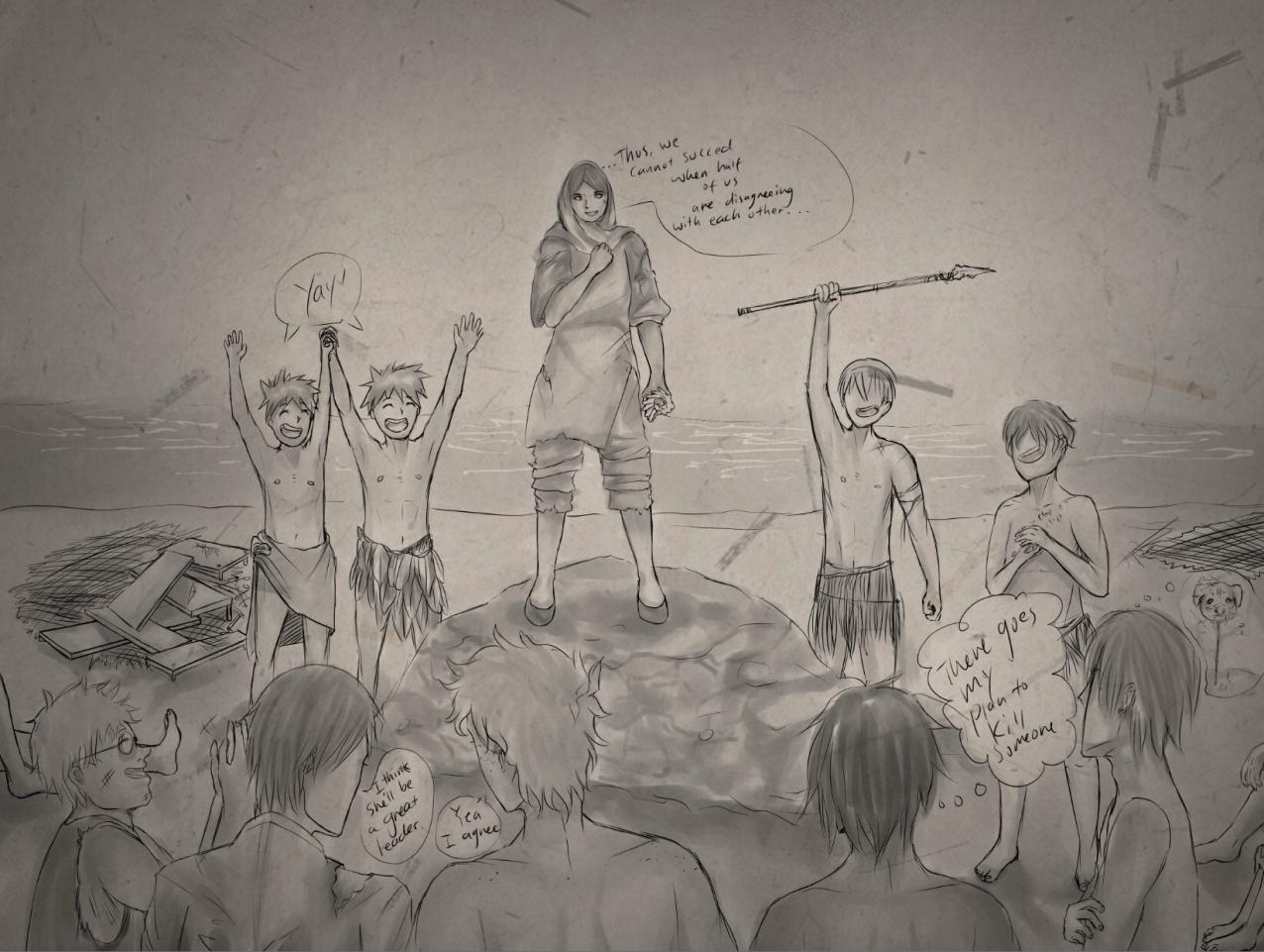
Something that seems to be off the topic but worth mentioning is that from Nietzsche’s vision, the strong are the individuals who pursue self-transcendence, so that they themselves become the standard of conduct of everything, breaking all the agreed norms of the secular world, and putting their own norms in the highest position in the world. Nietzsche sees conventional “Morality” as an excuse for the weak to “despise” the strong. The weak say, “Hum, those so-called strong people are just immoral people.” They want to popularize the vulgar norms of their own connection, so as to make the strong yield to them. Nietzsche characterizes himself as the strong and those who obey the social norms as weak.

For example, I used to see this type of phenomenon in middle school. A student is studying during the break while a group of other students would be messing around near that student. One of them couldn’t endure watching the studying student, so he said, “Why do you keep learning when you’re already really outstanding? You’ve got a stable situation, you can definitely get to Tsinghua or Peking (the two top universities in China)! You are making us so nervous!” Well, that’s the way they stop that classmate from continuing his study. His latent meaning is “Now we should be all enjoying our life for doing whatever we want. Why do you waste time on studying? Do you not know how to follow the public will?” Conformity becomes a type of morality.

I think that’s what Nietsche meant by “morality is of the weak.”

But here, the other students can be called “the weak,” but the student who studies can not be called “the strong.” The former is called “the weak” because they impose their own kind of “morality” on others and destroy their transcendence. If the student gives in, he can only wait to be the next “weak.” If he carefully considers the meaning behind other students’ words and decides whether “conformity” is his own “morality,” then he is a strong one. The logic is quite simple. 

As for why Nietzsche said morality was a “fiction,” Nietzsche believed that this kind of social conforming “morality” is false. The real morality of a man can only come from himself rather than from others.

Consider one of Immanuel Kant’s books named Groundwork of the Metaphysic of Morals. He denies the moral command of God but affirms the moral absolute command in the human heart. Why? Because the former is from the outside world, the latter is from his own. Kant found no reason for others to force you to do anything. Nietzsche agrees with this point. 

Your self-discipline can’t come from the outside world. Morality from the outside world needs you as the judge. If you think it’s rotten, then it’s rotten. The strong is the one who constructs his own moral values. Those values will inevitably conflict with the moral values produced by the weak. In the perception of the strong, this kind of “morality” is fiction.

Nietzsche’s ideas are subjective and can be considered as “offensive” to our normally conventional thought. But his primary advocacy concentrates on the crucial word “innovation” rather than “convention.” Coming back to morality, at last, we do have an agreement on what morality is and know the prohibition of certain behaviors, but by hearing the intriguing thoughts from Nietzsche, I hope you learned something new from it.

I asked PVS junior Nathan Bosworth what he thought about Nietzsche’s points. He replied, “I believe with all my being that this quote from my boy [Nietzsche] is the meaning of capitalism, because social norms need to be suppressed to get what you want. In other words, to acquire what you want, you have to do something unethical.” I actually had a long talk with Nathan about what morality really is. We finally came to a vague conclusion that true morality might not even exist. After that, I came to our notable scholar Mr. Griffin who had something deeper to say: “I think [Nietzsche’s] quote is really narcissistic, and it reminds me of the character Raskolnikov in Crime and Punishment.” Mr. Griffin went on to point out that Raskolnikov commits misdeeds to prove himself a superior person. He continues, “If you think about it more, it applies to The Picture of Dorian Gray as well.” To me, this became even more edifying as I recalled the contents of the book. 

Nietzsche’s definition of morality revolves around unreasonable social norms. What is your definition of morality? If you simply look up the word in Google’s dictionary, it just shows you “the distinction between right or wrong, good or bad.” But that raises a bigger question: how do you distinguish between right and wrong or good and bad? Do you follow the law of nature? Do you follow your own heart? Or do you follow the herd. . .   

Minor ideas of this post regarding the conventions of morality were originally proposed by Blogger Sizhe Chen

https://www.zhihu.com/question/330764652/answer/747464096

Morality Editor: Luke Langlois 

Filed Under: Morality Tagged With: and the Masses, James Zheng, Morality, the Individual

These Quotes May Inspire You To “Seize the Moment”

March 18, 2020 by szachik@pvs.org 2 Comments

By Student of Philosophy James Zheng

The philosophers we have known are often classified as pessimists due to their cynical criticism. But, I’ve found, when things appear in life that give them a positive mood, they intend to write something contrary to their usual negative and realistic statement. So, for “Carpe Diem” theme week, I picked some typically pessimistic philosophers who proffered some intriguing quotes. And, I thought to share them with you in these challenging times.

Whoever has much to proclaim one day, Must long remain silent unto himself: Whoever intends to ignite lightning one day, Must long — be a cloud. – Friedrich Nietsche 

And we should consider every day lost on which we have not danced at least once.

And we should call every truth false which was not accompanied by at least one laugh. – Friedrich Nietsche

Ordinary people merely think how they shall “spend” their time; a man of talent tries to “use’”it.- Arthur Schopenhauer.

Schopenhauer

A man is never happy, but spends his whole life in striving after something that he thinks will make him so; he seldom attains his goal, and when he does, it is only to be disappointed; he is mostly shipwrecked in the end, and comes into harbour with mast and rigging gone. And then, it is all one whether he is happy or miserable; for his life was never anything more than a present moment always vanishing; and now it is over.- Arthur Schopenhauer

Isn’t life meant to change something short into something permanent? To do this, we need to know how to cherish the short and permanent- Johann von Goethe

von Goethe

*Nothing is more worth than this day, You cannot relive yesterday. Tomorrow is still beyond your reach.- Johann von Goethe

Depending on how you understand these quotes, you will harvest different meanings. But, I hope you enjoy reading these refreshing contents as well as helping you to perceive more deeply about “Seizing the Moment.”

*Indicates this quote has been paraphrased.

The quotes are from http://www.ruiwen.com/mingyan/1415384.html

https://www.zybang.com/question/8877bb836d82b1dd1f00a10c55f11f10.html
https://www.zhihu.com/question/21615908/answer/424800878

Carpe Diem Editor: Quintus Ni

Filed Under: Carpe Diem Tagged With: James Zheng, schopenhauer, These Quotes May Inspire You to "Seize the Moment"

How to live in the moment

March 16, 2020 by szachik@pvs.org Leave a Comment

In these trying times, Chelsea reminds us to Seize the Day and grab on to what is positive.

By Chelsea

Hello everyone!! Are you having an amazing day? If so, then you are living in the moment! You are experiencing probably some of your happiest and most memorable memories that you’ll forever remember in your brain.

Here are some tips on how to live in the moment:

  • Try to relax and enjoy nature’s scenery without the distractions of technology.
  • Go on fun field trips with your family and friends. Then you’ll leave your stress behind and enjoy the moments filled with happiness and joy.
  • Do something you enjoy doing, like singing, drawing, playing sports, playing instruments –all to relax your mind and live in the moment.
  • Talk to people. Some conversations will lead to the best moments of your life, and you’ll never know–unless you engage.
  • Accomplish something that you are proud of.  That will fill your heart with confidence and pride.

These are some simple steps for you to live some of the best times of your life! Look for the happiness and the gratitude even when times are challenging around you.

Carpe Diem Editor: Quintus Ni

Filed Under: Carpe Diem Tagged With: Chelsea, How to live in the moment

Best o’ the Blog

March 16, 2020 by szachik@pvs.org Leave a Comment

See what’s happening recently at thebirdonfire.org.

Views: 24,564
Followers: 161 Subscribed
Published 634 posts
Comments: 950

A small green rectangle to divide sections of the document

FIREBIRD Letter to Palm Valley Community by Charles Schnell

Dear Palm Valley Community, 

If someone asked you, “Who are you,” how would you respond? “I’m a. . .” Student? Parent? Teacher? Social worker? Musician? Politician? Doctor? Athlete? Farmer? Architect? Clown? . . . .

A small green rectangle to divide sections of the document

Ghost Hunting?!

By Luke Langlois Have you ever been trying to fall asleep at night when, suddenly, you hear a chilling whoooosh or an eerie creaking? Being the mature and fearless person you are, perhaps you brush these noises off as your cat doing cat things or the refrigerator… refrigerating. . . .

A small green rectangle to divide sections of the document

The Enchantment of Snowboarding

By James Zheng SYMPTOMS OF SNOWBOARDITIS

  • Being excessively elated over words associated with snow.
  • Desperately waiting for winter, not caring about the other 3 seasons.
  • Spending all time watching videos and reading articles about Snowboarding. (Symptoms worsen during winter.) . . . .

Filed Under: Best o' the Blog, Uncategorized Tagged With: Charles Schnell, FIREBIRD Letter to Palm Valley Community by Charles Schnell, Ghost Hunting?!, James Zheng, Luke Langlois, The Enchantment of Snowboarding

On the Imperfection of Humanity

March 12, 2020 by szachik@pvs.org Leave a Comment

By James Zheng

As a madman philosopher who brings shiver to Western philosophy and innovates the philosophical cognition of the world, and as a sheer critic of traditional philosophical theory, he is a celebrity in the history of philosophy who made the dreadful claim that “God is dead”: this is Friedrich Nietzsche.

In one of his works, Human, all too Human, he explores human nature from two aspects of potential and fatal defects. Despite his criticism of humankind as being “merciless,” the author finally expresses the hope that human nature can break free of social norms and become a person of free thought. His ultimate goal is summarized as what he calls the Free Spirit.

The writing structure of Human, all too Human is a collection of essays. I choose some quotations that I appreciate and think are worth analyzing.

“Shared joys make a friend, not shared sufferings.” (It is pleasure, not adversity, that makes friends.) Nietzsche put forward that what makes people have a common cognition is not the same suffering but the sharing of interests. Even though it was generally believed that “adversity for individuals forges love,” Nietzsche didn’t take it.

“Not everyone likes to hear the truth being told in a pleasant way. I hope that at least no one will think that by speaking falsehood in an unpleasant way, falsehood will become truth.” The beginnings of these two sentences doesn’t match their endings, and it feels that the former part should change its meaning with the latter part, so the correct statement should be that the truth is said in an unpleasant way and the fallacy is said in the opposite. He reverses and satirizes this thought intentionally. People reject truth because truth is told in an unpleasant way since truth exposes things people wish to hide and are unwilling to admit, and falsehood is readily accepted by people since it is told in a pleasant way and is often what people wish to hear. Nietzsche expresses that people might confound the nature and substance of falsehood and truth. He pointed out that in society, truths are denied because truth itself is very difficult to say in a pleasant way; if it is said in a pleasant way, it will lose its uniqueness and make some people unhappy. On the basis of this, Nietzsche stated that he is afraid that those fallacies that would make people unhappy would be turned into truth.

“For an outright knower, knowledge is irrelevant.” There are two possibilities for Nietzsche to express his meaning: 1. For a person who can see through or fully grasp a certain ability, he no longer approves of the importance of this ability. 2. For a person who sees through everything, knowledge (in this case, knowledge presented by the outside world) is of no importance. There is transparently a contradiction, though the sentence still flows well. 

From the three quotes, Nietzsche criticizes the major imperfections as the property of being egoistic, ignorant, and misguided. I like his destructive honesty. And though I cannot fully interpret his quotes in a most satisfying way, we can all be open-minded about what he originally meant by these quotes. At last, I hope these quotes could be edifying to you.

Humanity Editor: Doreen Yuan

Filed Under: Humanity Tagged With: James Zheng, On the Imperfection of Humanity

Ghost Hunting?!

March 6, 2020 by szachik@pvs.org 1 Comment

Editor Katelin assigned the Blog Staff to explore “Spirits.” Luke, with plans to go to college, has a Plan B–Ghost Hunting.–S.Z.

By Luke Langlois

Have you ever been trying to fall asleep at night when, suddenly, you hear a chilling whoooosh or an eerie creaking? Being the mature and fearless person you are, perhaps you brush these noises off as your cat doing cat things or the refrigerator… refrigerating. But, let’s be real. The thought has passed through your mind that these mysterious noises originate from a much more sinister source: spirits and ghosts. Although we may not know the intentions of these lost souls, do we want to be taking any risks that could land us on a one-way train to a similar state of being? Don’t just sit around and wait for the ghosts to get you; get up and go ghost hunting! In honor of the “spirit” theme, here are some basic tips for hunting the specters and phantoms creepily whirling around our mortal plane of existence.

  1. Always Bring a Friend: Before you do anything, you must find a buddy to assist you in this ghost hunting endeavor. Working alone may sound appealing because, after all, it is what Batman does, but you are not Batman. If you’ve ever seen a horror movie, you would know that if you hunt alone, you may end up becoming the hunted. . .  So, whether it’s your puppy, your goldfish, your ant colony, or your best friend Joe, you can find your strength in numbers, as long as you all are brave. 
  2. Do Your Research: When dealing with spirits, the element of surprise is on their side. You have no idea what the spirits may manifest themselves as! If you go hunting without knowing what threats the spirits pose, you may find yourself in a lethal situation. Ghosts were once living creatures themselves, and, like living creatures, each ghost is unique. Depending on your location, the type of ghost you encounter may be different. If your house was built on the site of a Mafia shootout, for example, you must be prepared for an aggressive and vengeful spirit. 
  3. Bring the Proper Equipment: Fending off the paranormal is not something you can do with just your hands and mental fortitude. Just like with any other activity, you will have more success hunting ghosts if you have the proper equipment, especially if that equipment is of a high-tier quality. For a ghost hunt, you will need a pen, paper, camera, flashlight, and a mobile phone. You will want concrete evidence when you find your ghost, and if you are unable to ward the ghost off the first time, you will have more information for your next attack. If you’re dealing with a more advanced ghost, you will want to look into digital laser thermometers to detect their spectral energy. Spooky! 
  4. Movies Are Not Reality: Just like with anything else, movies are not reality. Don’t believe that one viewing of Ghostbusters makes you an experienced ghost hunter. All of the ghosts in that movie are heavily exaggerated. The ghosts won’t typically be giant ectoplasmic monsters. Real ghost hunting can be boring, and sometimes you won’t find anything. Look, practicing your ghost hunting isn’t an exciting process ALL the time, but it is just so rewarding when it does pay off. Patience is key when hunting ghosts.  

If you are afraid of ghosts, today is the best day to begin conquering your fear. If you learn to conquer the unseen, is there anything that could stop you? I think not! Begin your ghost hunting journey today…  

*Luke does not condone hunting ghosts, nor does he hunt ghosts himself. 

Image result for haunted mansion

Spirit Editor: Katelin

Filed Under: Spirits Tagged With: Ghost Hunting?!, Luke Langlois

The Enchantment of Snowboarding

March 5, 2020 by szachik@pvs.org 1 Comment

By James Zheng

Reporter: Hello sir, can you briefly introduce your situation and why you came to us?

Guest: Well let’s just say my girlfriend is addicted to something.

Reporter: Drugs? Smoking? Drinking?

Guest: Worse than that, she cannot stop being obsessed with Snowboarding.

Reporter: … Excuse me? 

Guest: Let me finish before you say anything more. Here are what her symptoms are:

  • Being excessively elated when seeing and hearing any words associated with snow.
  • Desperate waiting for winter, don’t even care about the other three seasons.
  • Spending all time watching videos and reading articles about Snowboarding. This is worse during the winter.
  • She is always an unorganized person, which totally changes during winter.
  • Being nearly depressed and starting to complain A LOT when winter is over.

Reporter: Now I am having sympathy for you more than anyone else…

Likely a few tries snowboarding will make you obsessed with snowboarding–although this might not apply to everyone. 

Snowboarding is not as fun as popular sports like basketball, football, and soccer. Plus the limitation is that if you live in a city with a warm climate, just like my city Kunming, I never get a chance to see the snowy slopes. Snowboarding also requires equipment. Equipment is usually quite expensive. I rented the equipment for the first time, and the price was around $200, but I was not happy with the price. Snowboarding also takes time to learn. I would say if you haven’t got the talent, this process is going to be painful. I mean painful both physically and mentally. For my first time, even if I was tutored about the basics, I was only allowed to try the low-slope area, which becomes tedious after five times. So, I went on the hill with my friends, and God knows how many times I fell… But some people master it quicker than others as they know how to balance the body and focus on the power exerted by the waist. 

However, I still want to admit that I was addicted to these “failures.” I had indeed fallen on the snow countless times, but I was closer to the bottom. I became more and more energetic towards my goal. I had this feeling that I had just learned a skill. I was becoming better and better, so no matter how the process tortured me, it was all worth it. Actually this could apply to any sport, but snowboarding never gets you bored. You still have a long way to go even after mastering control of your board.

Why are people so enthusiastic and delighted about snowboarding? Snowboarding is somehow considered to be the same level of excitement as skydiving, surfing, and paragliding etc. When we are involved in these types of sports, we increase our rate of blood circulation, and experience a feeling of flying and rushing. People do love perceiving this feeling. It truly feels free when you are dashing on the snow mountain. It makes you forget everything that is trivial or annoys you in real life. At this moment, you only care about entertaining yourself and integrating into a part of nature. Not to exaggerate, when you are travelling arbitrarily on the mountain, you have escaped the mist in the city, troublesome traffic, the scolds from your boss (teacher if you are a student), just everything that you are concerned with has nothing to do with you. All you need to do is just enter another dimension to have an enjoyable trip. Hearing the sounds of your snowboard pressing on the snow, feeling the wind flowing by, you find nothing is more pleasant than this. 

I have only captured a fraction of the charisma of snowboarding. It is definitely better if you experience it yourself.

Some have claimed that snowboarding is regarded as a dangerous sport, and I have the wounds to prove it. Make sure you have outfitted perfectly. Sometimes you need a helmet if you slide from a hill, but remember there are no sports that make you completely secure. The injuries you had are the precious proof of your efforts; just having scratches or falling on the ground may hurt, but they do not change the fact that they are a part of your progress (well unless you are that fragile). Therefore, make yourself brave, and do it! You will like it. 

Winter Sports Editor: Chelsea

Filed Under: Winter Sports Tagged With: James Zheng, The Enchantment of Snowboarding

Figure Skating vs. Hockey

March 3, 2020 by szachik@pvs.org 1 Comment

By Katelin Slosky

When I was younger, I used to take ice skating lessons. One of my best friends (she lives in Canada and has two older brothers) was taking hockey lessons at the time. While she was taking hockey lessons, and I was taking figure skating lessons, she visited me. We were on the ice rink, and she was trying figure skates for the first time. I started thinking about the differences between the two types of skating. Even though they involve skating on ice, they are almost nothing alike.

Here are some differences between hockey and figure skating.

  1. The skates are different. The figure-skating skate has a little toe pick that is used for jumping and footwork. Hockey blades are shorter and are built for speeding, while figure-skating blades are made for control over turning. I think they are equally easy to manage if you are starting to ice skate. If you’re used to a certain type of skate, then it might not go as smoothly. I remember having to wear hockey skates and not having a toe pick. It was a disaster. I was slipping all the time and didn’t feel like I had control. It depends on what you want to do. Do you want to go fast, or do you want control over your turns?
  2. And, there is obviously the stuff you do when you are on the ice. If you’ve ever gone to an ice rink before, you have probably seen this: the figure skaters practice jumps, turns, footwork, and everything else pretty near the center of the rink. The hockey skaters, on the other hand, rush around the rink, at impossibly fast speeds, and the beginners are going around the edge, holding on to the wall. The main difference is that hockey focuses on how to score goals, and couldn’t care less on how to do a waltz jump. In figure skating, speed isn’t everything, and you do have to know how to do much more than a waltz jump.
  3. Hockey skating can teach you how to work on a team, while figure skating can teach you… how to work on your own? For the most part, if you are a figure skater, chances are that you are working on your own. I’ve always thought figure skating was so pretty, even if you worked by yourself.

It really all just depends on what you like. With hockey, the skates are faster, you participate in more of a conventional sport, where there are goals, and points based off of what players score. Figure skating is more similar to dance, where it is more like an art.

Winter Sports Editor: Chelsea

Filed Under: Winter Sports Tagged With: Figure skating vs. Hockey, Katelin Slosky

Carpe Diem. . . and Other Latin Phrases to Say

March 3, 2020 by szachik@pvs.org 1 Comment

“Carpe Diem” Editor Quintus Ni says, “Don’t worry what will happen tomorrow; enjoy now; enjoy the moment.“

Luke says, “Thanks, Quintus. Good advice.” Now, follow it in Latin.

By Luke Langlois

Do you know why characters in movies and TV shows are so much more hip and cool than people are in actual day-to-day life? It’s one-liners. Unfortunately, saying one-liners in real life will probably not spark the reaction that they do in movies. Instead, people may look at you and ask why you are speaking exclusively in witty, planned responses. But, what if you decide to start saying Latin one-liners? Would you be able to Latin-one-line your way into a promotion? Is there anything better than the dying language of what used to be one of the largest empire the world has ever seen? Enough with the rhetorical questions; here are some Latin one-liners that may help you be the mightiest around. Please note that a pronunciation guide isn’t included, just sound it out, or something. 

  1. Lupus non timet canem latrantem: A wolf is not afraid of a barking dog. If you’re ever being relentlessly insulted by someone, this should be your go-to catchphrase. Depending on your tone, you may be asking for a fight. 
  2. Ad meliora: Toward better things. Did you just drop your $1,000 iPhone on the asphalt and have it promptly shatter? Ad meliora, for when your day isn’t going well, but you know that better things await. 
  3. Faber est suae quisque fortunae: Every person is the artisan of their own fortune. If you ever feel like life is just not going your way and that things could be better, remember this phrase. Craft your future!
  4. Audentes fortuna iuvat: Fortune favors the bold. Obviously, you’ve heard this one before, but have you ever seen it in Latin? As cliche as it is, life won’t just happen to you; YOU happen to life. Be bold. 
  5. Carpe diem: Seize the day. Yeah, yeah, we all know this one, but it’s Quintus’s theme, so I had to include it. It’s not half bad advice, you know. 
  6. Carpe vinum: Seize the wine. For you over 21-ers, this is a fun alternative to carpe diem when you really don’t feel like seizing the day. 
  7. Acta deos numquam mortalia fallunt: Mortal actions never deceive the gods. Honestly, parents should use this line more. If they know their kid is stealing candy from the candy jar, they should use this phrase and strike fear into their child’s heart forever.
  8. Ad astra per aspera: Through adversity to the stars. This is one of the more common phrases on the list, but that does not detract from its coolness factor. When you can’t see the light at the end of the tunnel, whether it be an essay or a drive home that seems extra long, remember that you are well on your way to the stars. If you’re an astronaut, feel free to take this literally! 
  9. Dulce periculum: Danger is sweet. Feeling edgy today? Dulce periculum! 
  10.  Aquila non capit muscas: The eagle does not catch flies. Basically, this phrase is used when you are feeling too mighty to be dealing with petty matters. Perhaps you are the CEO of a multibillion-dollar company and someone asks you to make some copies for them. The eagle does not catch flies! Be wary, though. If you use this phrase too much, people will just dislike you. 
  11. Flectere si nequeo superos, Acheronta movebo: If I cannot move Heaven, I will raise Hell. If you’re looking for a good hook for your triumphant supervillain monologue, this might be it.
  12. Fere libenter homines id quod volunt credunt: Men generally believe what they want to believe. Do you want to cleanly win and end an argument at the same time? Use this phrase. Your opponent (likely) won’t understand you, but you’ll know that you have left them with a zinger.
  13. Ars longa, vita brevis: Art is long, life is short. If you’re working on the next great American novel, but people aren’t supporting you in your endeavor and think it’s a waste of time, hit them with ars longa, vita brevis. 
  14. Aut viam inveniam aut faciam: I will either find a way or make one. While this can be used for some self-motivation, it can also be used for vague threats. Try it out! 
  15. Factum fieri infectum non potest: It is impossible for a deed to be undone. Think before you act, now in Latin. 
Image result for latin

Carpe Diem Editor Quintus Ni

Filed Under: Carpe Diem Tagged With: Carpe Diem. . . and Other Latin Phrases to Say, Luke Langlois

FIREBIRD Letter to Palm Valley Community by Charles Schnell

February 28, 2020 by szachik@pvs.org 3 Comments

“Naked and alone we came into exile. In her dark womb we did not know our mother’s face; from the prison of her flesh have we come into the unspeakable and incommunicable prison of this earth. . . . O waste of lost, in the hot mazes, lost, among bright stars on this weary, unbright cinder, lost! Remembering speechlessly we seek the great forgotten language, the lost lane-end into heaven, a stone, a leaf, an unfound door. Where? When?

O lost, and by the wind grieved, ghost, come back again.” 

— Thomas Wolfe, Look Homeward, Angel

Dear Palm Valley Community, 

If someone asked you, “Who are you,” how would you respond? “I’m a. . .” Student? Parent? Teacher? Social worker? Musician? Politician? Doctor? Athlete? Farmer? Architect? Clown?

Then, if someone asked you, “What are you?” how would your response change? Would it change at all? What’s the difference between “who” and “what” you are? Which one makes you happy? Which limits you? Which obstructs you from being the happiest you can possibly be? 

These questions are all asked and answered in Firebird, the new musical dramedy premiering at Palm Valley School this March. This play marks the return of the highly-regarded playwriting team of Mr. Chris Griffin and Mr. Ken Sarkis at Palm Valley School. (If you are a fan of shows such as Home Sweet Homer and Shakespeare at Starlucks, this newest musical of theirs is right up your alley!)

The play takes place over the span of the life of one person, named Arruda, as he travels throughout the world, bound to the task of defining “who” he is. There are no antagonists, other than life itself and that obnoxious, deceiving question, “Who are you?” During his voyage, Arruda encounters and learns from a wide array of odd folk who have already defined “who” they are and are quite comfortable with their answers, including a family who sweeps, the U.S. Common Core education system, successful businessmen whose specific company’s name we had to take out of the script (for copyright reasons), Buddhists and yogos, spirits of the Amazon river, and—everyone’s favorite type of people—self-absorbed actors.  

This person’s journey to self-discovery will be accompanied by only the greatest composers of the 19th and 20th century, such as Maurice Ravel and Igor Stravinsky, with modern, original lyrics to tell our story. 

Almost all of the 23 drama students in the Upper School Theatre Department will be playing multiple roles, and you better believe every single one will be acting, singing, and dancing their way through this existential, musical romp of self-discovery. And, to top it all off, you certainly don’t want to miss the show that will be Mr. Sarkis’s “Last Hurrah!” as a theatre director and teacher. You can expect that he is giving it his all! (As usual.) 

If you would like to join us on this young person’s journey, Firebird will be running for six shows in the MPR: March 20, 21, 27, 28, 29 at 7:30 p.m. and on March 22 at 2:30 p.m. Tickets will start at $15 for general admission and will cost $20 for premium seats. (To purchase tickets, you can do so at the link below* or at the door.) The department is hard at work rehearsing and producing Firebird, and we hope to see you there as what you truly are. 

On behalf of the cast and crew of Firebird, 

Charles Schnell

Editor: Luke Langlois

*To buy tickets for Firebird, click here: https://www.eventbrite.com/o/the-palm-valley-school-9832789066

Filed Under: Entertainment, Letters, Performances, School Events Tagged With: Charles Schnell, FIREBIRD Letter to Palm Valley Community by Charles Schnell

  • « Previous Page
  • 1
  • …
  • 65
  • 66
  • 67
  • 68
  • 69
  • …
  • 130
  • Next Page »

About

We are the Palm Valley Firebirds of Rancho Mirage, California. Join us in our endeavors. Venture through the school year with us, perusing the artwork of our students, community, and staff. Our goal is to share the poems, stories, drawings and photographs, essays and parodies that come out of our school. Welcome aboard!