the bird on fire

The Palm Valley School Student Blog

Subscribe to Blog via Email

Enter your email address to subscribe to this blog and receive notifications of new posts by email.

Powered by Genesis

Loki The Green

November 7, 2019 by szachik@pvs.org 2 Comments

By Chelsea Xu

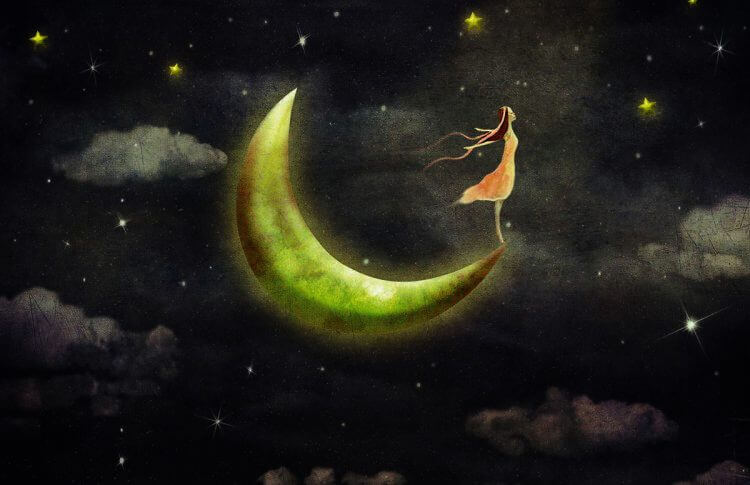
Hello everyone!! This week is all about green!! That’s right, the color green! I ́ve decided to draw Loki to match the theme. But, this is not a typical art post of mine. Instead of a drawing tutorial, this is going to be an appreciation post for Loki. Because. . . MY BOI DIDN’T DESERVE TO DIE! BRING. HIM. BACK. MARVEL!!!!!!!!!!!!!

So please, enjoy the fanart and have a good day.

Green Editor: Luke Langlois

Filed Under: Green Tagged With: Chelsea Xu, Loki The Green

Why Can’t you Play Hockey with Pigs?

November 7, 2019 by szachik@pvs.org Leave a Comment

By Luke Langlois


Pigs hog the puck. There are only three certainties on thebirdonfire.org: death, taxes, and Luke pestering the audience with hockey posts. When I think of holiday seasons, the one I anticipate the most is the National Hockey League season. Who decided that the NHL’s opening day could be a holiday? I did. “Holiday” is relative, people! We all know what’s going on in the other major sports leagues. The NFL is everywhere; the disappointment of Dodgers fans is loudly heard around the world, and the NBA is always filled with some sort of interpersonal drama. Where’s the buzz for the NHL?! Who should you cheer for? What’s the best bandwagon to hop on? I’ve got it covered. 

The Atlantic Division

  • Boston Bruins – This bumblebee-colored team is often the favorite of those who are looking to get into the sport of hockey because of their consistency. The Bruins find themselves near the top of the food chain every season with no signs of stopping. 
  • Montreal Canadiens – A favorite among the seven million French speakers in Canada, the culturally-rich Canadiens are hands down the most successful franchise in NHL history with twenty-four Stanley Cup championships. 
  • Tampa Bay Lightning – Can you play hockey in Florida? Yes! The Lightning have an all-around depth unrivaled by many in the NHL, and they are looking forward to replicating the overwhelming success of the 2018-2019 regular season in which they went 62-16-4. Don’t ask them about the playoffs (they got swept). 
  • Toronto Maple Leafs – Comparable to the NBA’s Lakers, the Leafs are an uber-popular team even beyond the city of Toronto. Although they haven’t won the Stanley Cup in over fifty years, the passionate “bleed-blue” fanbase makes this franchise one of the few worth more than a billion dollars. 
  • Florida Panthers – The Florida Panthers claim the entire state of Florida, but they are seen as Tampa Bay’s little brother. Their fanbase is small, but they have an exciting core of players, especially with the addition of Russian goalie Sergei Andreyevich Bobrovsky. Become a Panther fan if you want to push against the hockey norm. 
  • Detroit Red Wings – The Red Wings have enough hockey history to last someone a lifetime. The team is in a textbook “rebuild,” so the product on the ice isn’t always pretty. But, with the brand new deliciously named Little Caesar’s Arena, why wouldn’t you want to watch the Red Wings? 
  • Buffalo Sabres – A team known for its long-suffering fanbase, the Buffalo Sabres seem to finally be coming around to greatness. It will be no surprise if the Sabres end up amongst the top of the Atlantic Division, and perhaps even the Eastern Conference.
  • Ottawa Senators – Ottawa is a franchise plagued with controversy and ownership issues. Unless you are an Ottawa faithful, I would not recommend following this team as they cozy up to the bottom of the league.

The Metropolitan Division

  • Columbus Blue Jackets – The Blue Jackets got put into a rough situation following the 2018-2019 season. They had some of the league’s best skaters, but they refused to sign new contracts with Columbus and dispersed around the league. Columbus is a decent team, but they’re missing the star power they need. 
  • Washington Capitals – Another team that seems to be constantly successful, the Capitals are making sure the citizens of the District of Columbia get used to having successful teams. If you’re looking for a whole city of teams to cheer for, D.C isn’t an awful place to start with the Capitals, Nationals, Wizards, Redskins, and Mystics.
  • New Jersey Devils – Somehow, they fit an entire hockey team in the tiny state that is New Jersey. The Devils have some of the most recognizable players in hockey with P.K. Subban, Taylor Hall, and the 2019 first overall draft pick Jack Hughes. Also, they have a slick color palette. 
  •  Philadelphia Flyers – The thing about Philadelphia sports fans is that their love for sports teams comes hand in hand with their love for the city and its people. Flyers fans are LOUD and passionate. They also have a bit of a reputation for throwing objects onto the ice when referees make questionable calls. If that’s your thing, cheer for the Flyers!
  • Carolina Hurricane – Carolina created a buzz last season when they created a unique style to celebrate their wins on home ice. Once, they dunked a basketball on ice. The Hurricane have been under the radar, but they are a great team that embraces the fun side of the sport for their fans. 
  • New York Islanders – Can’t afford tickets in Madison Square Garden? Cheer for the Islanders. It may sound silly, but this hockey team has mastered being a team. On paper, their roster is not that extravagant, yet this team plays like they’ve been playing hockey together for thirty years. 
  • Pittsburgh Penguins – The Flyers are great and all, but the state of Pennsylvania has largely rallied around the recent success of the Penguins. With three Stanley Cups in the past decade (2009, 2016, 2017), the Penguins have certainly made good use of one of the best players in the league, Sidney Crosby. 
  • New York Rangers – The most valuable franchise in the NHL is unsurprisingly located in the heart of New York City. Rangers fans never fail to fill Madison Square Garden, even in the face of a team that has seen better days. It’s New York. 

The Central Division

  • Colorado Avalanche – What do you do after putting up one of the worst seasons in NHL history? Why, you become one of the best teams in the league a couple of years later, of course! The Avalanche have a high-flying offense which invades the nightmares of every goalie. Maybe it’s the altitude. 
  • Chicago Blackhawks – If you surveyed NHL players about which arena they least like to play in, it would be the home of the Blackhawks. Winning three Stanley Cups in six years has given the Blackhawks organization out of this world attendance numbers with crowds well over twenty-thousand at every home game. 
  • St. Louis Blues – The Blues have not been singing the blues recently, given that they just ended their fifty-year drought and are the defending Stanley Cup champions. You can root for Missouri without any misery! 
  • Winnipeg Jets – This Manitoban team prides itself as being the “true north” of the NHL. In the grand hockey scheme, they are a relatively new team and are still looking for life via a Stanley Cup championship, but I reckon that they are on the right track. They have fallen just short of greatness in the past few years.
  • Nashville Predators – A team known for their mix of yeehaw and hockey, the Nashville Predators are uniquely southern with the country tinge they add to home games. They are consistently a strong team, and they have fans that throw dead catfish on the ice. What more could you want? 
  • Dallas Stars – Cowboys, who? Located in the heart of the Lone Star State, the Dallas Stars prance around the league with that Texas swagger with their eye-popping green jerseys. There is nothing quite like hearing the Stars’ hard-rock goal that has the entire state chanting for the “DALLAS STARS” with a guitar riff behind them.
  • Minnesota Wild – Ah, Minnesota, the stereotypical hockey state.  Tucked up in the cold of St. Paul, Wild fans are hopelessly in love with their somewhat mediocre home team. Let me know if you can figure out what their primary logo is supposed to be.

The Pacific Division

  • Vancouver Canucks – Vancouver tends to be one of the most attractive free-agent destinations for a reason. For one, beautiful British Columbia is a great place to be if you’re a young and rich athlete. It’s also important to note that Canucks fans literally tried burning down their city after losing the Stanley Cup in 2011, resulting in about 5.57 million dollars in damages.  
  • Arizona Coyotes – People often question the validity of hockey in the barren desert, but that hasn’t stopped this tenacious group from making Arizona an icebox. If you’ve ever felt the need to howl after your team scores, cheer for the Coyotes. They do that. 
  • Anaheim Ducks – Have you ever heard of The Mighty Ducks? That’s right, the Anaheim Ducks are the only team to have stemmed from a Disney movie. While teams like the Clippers, Angels, and Chargers struggle to find their place in the shadow of a more popular Los Angeles team, the Ducks have found their identity as Orange County’s pride and joy.
  • Calgary Flames – When this team is able to gather its heat, they are good. The Flames haven’t been so red hot lately, but the “C” of red has never been stronger. During Calgary playoff games, Flames’ fans suffocate the seats of the Scotiabank Saddledome with RED. 
  • Vegas Golden Knights – Even though the Knights just came into existence in the 2017-2018 season, they have already dotted the league with the golden glitz and glamor of Las Vegas. In fact, they have never missed the playoffs in their two-year history, and they made the Stanley Cup Finals in their inaugural season. Viva, Las Vegas! 
  • Los Angeles Kings – In 2012 and 2014, the Kings won the Stanley Cup in dominant fashion and showed the city that they meant business. Since 2014, though, the Kings have been unable to find that champion spark and are currently in the process of rebuilding their roster to match the NHL’s new style of play focused on youth and speed. If it were up to me, you’d ALL be Kings’ fans. 
  • Edmonton Oilers – The Oilers have been notoriously mediocre for the last decade, but that doesn’t change Edmonton’s status as the team of “The Great One,” Wayne Gretzky. This season, it seems that the Oilers have finally found their footing as a 21st Century Stanley Cup contender, but only time will tell.
  • San Jose Sharks – The Sharks have been competitive for a very long time. They’ve made deep playoff runs galore, but they haven’t been able to seal the deal. Unfortunately, their core players are old, and it looks like their window of contention has closed. But, that won’t stop the sea of teal that covers the Bay Area. 

If you have made it to the bottom of this post, I APPLAUD you. Seriously. Our desert NEEDS hockey fans. For the unaware, the NHL will be adding an expansion team to Seattle, Washington. Each NHL team has an AHL (American Hockey League) affiliate, where players on the cusp of the NHL go to develop. We are getting that AHL team RIGHT HERE in the desert, and I highly recommend that you learn the sport so that you can take advantage of what is likely to be the greatest entertainment hub in our valley. Plus, we don’t want them to leave us if it’s not working out financially. That is all!

Seasons Editor: Katelin Mei

Filed Under: Seasonal Holidays Tagged With: Luke Langlois, Why Can’t you Play Hockey with Pigs?

The AP Lang Experience in Verse

November 6, 2019 by szachik@pvs.org 2 Comments

A Poem by Andrew Hall (who turns his AP Lang angst into poetry)

Audience Favorite at CSF’s Spooky Open Mic on the Green

The literary genius himself.


Four students, all alike in dignity

In Ms. Zachik’s class where we lay our scene

4 friends, all with grammar ability

Where daily points have all remained unclean

From forth Andrew, Kyle, Evan get 4s all the time

A pair of star-crossed graders get their 5s

Ms. Zachik and Jake, they see eye to eye

And Adventures of Jake, seem like archives

The fearful grade book, where these points are marked

And the continuance of answers rage

Andrew, Kyle, and Evan sit in the dark

As Ms. Zachik slowly writes on the page

What she may write, patience is what survives

Look on Mybackpack, ’twas a 4 of 5

Editor: Luke Langlois

Filed Under: Poetry Tagged With: Andrew Hall, The AP Lang Experience in Verse

1960s: The Internet is Born

November 6, 2019 by szachik@pvs.org 1 Comment

By James Zheng

The birth of the ARPANET is attributed to the start of the Cold War. The original purpose of ARPANET (the Advanced Research Projects Agency Network) was military. Computers were the intended intermediary for military communication. 

One of the most important figures in computer science, J.C.R. Licklider, formulated the earliest ideas of a global computer network in August 1962 in a series of memos discussing the “Intergalactic Computer Network” concept. These ideas contained almost everything that the Internet is today, including cloud computing.

When J.C.R. Licklider left office, he handed over the baton to Bob Taylor. Taylor graduated from the University of Texas, majoring in experimental psychology, and his adoration of Licklider reached a point of no return. 

One day in 1966, when Taylor walked into the Charles Herzfeld’s office, who was the Head of the ARPA, he proposed his idea of the Internet to Herzfeld. The blueprint of ARPANET was formally established.

Here came another guy who was a genius from MIT, Larry Roberts. Taylor put his whole expectation on Roberts, and Roberts rapidly constructed the fundamental structure for the ARPANET. In not even a year, Roberts put the goal forward: a multi-computer network with communication between computers.

But, the first two things Roberts and Taylor planned were 1) arrange at least sixteen work groups participating in this research and use at least thirty-five computers, and, 2) make these computers deliver messages to each other every day, and the amount of messages has to be at least five hundred thousand. 

With the objective out there, Roberts submitted another report called “the network which could share the information.” The report mainly advocated utilizing the four trending computer prototypes to set up the experimental nodes. These prototypes were Sigma-7, IBM360, PDP-10 and XDS-940, but the question came again: how do you enable these computers to communicate with each other?

At this moment, another savior arrived named Wesley Clark. Clark told Taylor and Roberts that they didn’t need to connect all the computers to the network. They just needed to install an intermediary computer between the host providing the resources and the network. The task of this intermediary computer only involved three things: to receive the remote information, to convert it to the format that could be used by the local computer, and to make sure computers are always connected. Do you feel you know this intermediary computer? You should; it was the predecessor of the router!

When the four computer prototypes finished setting up, the first ARPANET link was established between the University of California at Los Angeles (UCLA) and the Stanford Research Institute at 22:30 on October 29, 1969.

“We set up a telephone connection between us and the guys at SRI,” researcher Kleinrock said in an interview: “We typed the L and we asked on the phone, ‘Do you see the L?’

’Yes, we see the L,’ came the response.

We typed the O, and we asked, ‘Do you see the O.’

‘Yes, we see the O.’

Then we typed the G, and the system crashed …

Yet a revolution had begun.”

By December 5, 1969, a 4-node network was connected by adding the University of Utah and the University of California at Santa Barbara. ARPANET grew rapidly. By 1981, the number of hosts had grown to 213, with a new host being added approximately every twenty days.

ARPANET became the technical core of what would become the Internet, and a primary tool in developing the technologies used today.

Source:

https://en.wikipedia.org/wiki/History_of_the_Internet
http://www.5yemao.com/archives/714.html

1960s Editor: Quintus Ni

Filed Under: Uncategorized

Fashion in the 1960s

November 1, 2019 by szachik@pvs.org Leave a Comment

By Katelin Mei

The fashion in the 1960s changed drastically throughout the decade. In the early 60s, the fashion looked more like the fashion from the 50s, which was very conservative. Before 1964, the fashion styles were a continuation of the 1950s fashion, but with the Beatles came a new fashion influence from London.

In the 1950s, fashion was very conservative and tried to make young people look more mature. In the 1960s, the fashion changed from trying to make people look like “young adults” to revisiting the bright colors and child-like styles of their youth. The whole idea of revisiting youth drove most of the 1960s fashion.

In the early 60s, the skirts and dresses were just updated versions of the 50s’ ankle-length skirts and dresses. As the decade progressed, new fashions emerged. The full-skirt look didn’t leave in the 1960s but instead survived to the 1970s in a simpler form.

By 1966, dresses were significantly shorter and more snug. 

Many women preferred skirts over dresses because they could mix and match their outfits a lot easier.

There were many different styles of fashion going around during the 60s. You would be able to see a woman wearing an ankle-length skirt, and another woman next to her, wearing a mini skirt. From the mid to late 60s, skirts could be easily bought at any length. 1960s dresses kept going shorter and shorter throughout the decade.

Many young women liked the mini skirt, which dominated the fashion world in 1967. The shorter the skirt’s length was, the more confidence the woman wearing the skirt had.

The 1960s were not as revolutionary for men’s fashion as it was for women’s. However, it did change a lot. Men got more options for business and casual attire

Some fashion trends of the 1960s

  • Shift dresses – The full skirt and tight bodice from the 50s carried over to the early 60s. It didn’t take much longer for the pencil skirt to loosen up to create the shift dress. Shift dresses were for a casual outfit to wear at home or the beach; they were too short for office-wear.
  • The jumper dress – This was a Mary Quant invention that fully captured the youthful and playful side of 1960s fashion. The style immediately made adults look like children again, which was a welcome change away from the mature fashion of the 1950s. Bright colours, polka-dots, and big bows and buttons were dress details that added on to the youthful look.
  • Colors – The colors of the late 60s were first inspired by pop art and modern art movements. Checkerboard, polka-dots, and stripes were all commonly used as patterns. Swirls and prints introduced an edge to clothing that was picked up by the hippies around 1967. Eventually the pop colours settled down into pastel colours which led to a more “girly” appeal. As the decade moved towards the hippie movement, there was a trend of earth-tone colours.

Source:

1960s Fashion: What Did Women Wear?

Far-Out 1960s Editor: Quintus Ni

Filed Under: 1960s Tagged With: Fashion in the 1960s, Katelin Mei

Songs for the Spooky Season

October 31, 2019 by szachik@pvs.org Leave a Comment


By Renee

What is there to say about Halloween….. A time of panicked last minute costumes, consuming copious amounts of sweets, and decorating homes with cheesy props. I love Halloween. I love dressing up and beaming with pride over how good my costume came out. I love tricking myself into believing that treats are not bad because they’re small. I love feeling giddy, waiting in suspense as I watch horror movies. I love Halloween. But, while I’m working on my costume, baking something spooky, or carving pumpkins, I have to listen to some music to get myself into the Halloween spirit! So I thought that y’all might enjoy a good ol’ Halloween playlist for tonight.

1. “31 Days of Halloween” by Nancy Nightmare and the Wizard. 

2. “I Put A Spell On You” by Nina Simone

3. “Land of the Dead” by Voltaire

4. “Somebody’s Watching Me” by Rockwell

5. “Burn the Witch” by Queens of the Stonewell

6. “Thriller” by Michel Jackson

7. “Season of the Witch” cover by Lana Del Rey

8. “She Put a Hex on You” by Them

9. “The Maddest Story Ever Told” by Fantomas

10. “The Night” by Voltaire

Seasonal Holiday Editor: Katelin Slosky

Filed Under: Seasonal Holidays Tagged With: Renée, Songs for the Spooky Season

Come to the Pride Parade

October 31, 2019 by szachik@pvs.org Leave a Comment

Filed Under: PSA Tagged With: GSA

So Far Away

October 31, 2019 by szachik@pvs.org Leave a Comment

By Katelin Mei

The night sky has always fascinated me. I have always wondered what is out there. The possibilities are endless. However, it will take a long time to explore outer space because even if we were traveling at the speed of light, it would take many years to travel to the stars closest to us. We do know about these stars because we are able to see and track them. Here are the brightest stars we can see in our night sky.

Sirius, the Dog Star
  • Sirius – Also known as the “Dog Star,” this is one of the brightest stars in the night sky. It is visible from late August until mid-to-late March and lies 8.6 light years away from us.
  • Canopus – This was either named for an ancient city in Northern Egypt, or the helmsman for Menelaous, a mythical king of Sparta. It is visible from the Southern Hemisphere but is visible to southern regions of the Northern Hemisphere at certain times of the year. It lies 74 light years away from us.
  • Rigil Kentaurus – Its name literally means “foot of the centaur,” and it is one of the most famous stars in our sky. It is part of the constellation Centaurus and is classified as the same type of star as our sun. It is actually part of a 3-star system, with each star looping around the others in dance. Rigil Kentaurus is 4.3 light-years away from us.
  • Arcturus – This is the brightest star in the constellation Boötes. Its name means “Guardian of the Bear.” Stargazers learn of it as they star-hop from the Big Dipper. One easy way to remember it is to use the curve of the Big Dipper to “arc to Arcturus.” It lies around 34 light years away from us.
  • Vega – Its name means “swooping eagle,” and it is the 5th brightest star in our sky. It is part of the constellation Lyra. It is also part of a star pattern known as the summer triangle and can be seen in the Northern Hemisphere from early summer to late autumn. There is a disk of material around it, which could possibly hold planets. Scientists classify this star to be a Type A star, meaning it is younger and hotter than our sun. It is 25 light years away from us.
Vega, the 5th brightest star in our sky
  • Capella – This name means “little she-goat” in Latin and is the brightest star in the constellation Auriga, and is one of the 5 stars in a star pattern known as “Winter Hexagon. Capella is a yellow giant, like our own Sun, but much larger. It lies around 41 light years away from the sun.
  • Rigel – Its name comes from the Arabic word for “foot,” and is literally one of the feet of the constellation Orion. Rigel is also part of the “Winter Hexagon” and can be seen from October through March.  It has a slightly dimmer companion that can easily be seen with a telescope. Astronomers have discovered that it is part of a 4-star system. It lies around 860 light years away from us but is so bright that it is the 7th brightest star in our sky.
  • Procyon – The name “Procyon” is based on the Greek work “prokyon” meaning “before the dog.” And indeed, this star rises before Sirius. It is part of the Canis Major Constellation, and is also part of the Winter Hexagon. It is visible from the Northern Hemisphere and lies 11.4 light years away from us.
  • Achernar – Its name meaning, “End of River,” this star is part of the constellation Eridanus, the river. It is part of the Southern Hemisphere but can be seen from certain parts of the Northern Hemisphere, such as South Asia, or the Southern parts of the United States. It lies 139 light years away from us.
  • Betelgeuse – The name means “arm of the mighty one.” It is a red supergiant and makes up the upper-left shoulder of Orion. It is much bigger and brighter than our sun. If Betelgeuse were placed at the center of our solar system, its atmosphere would expand past the orbit of Jupiter. It has grown as it has aged. Eventually it will explode into a supernova; when that happens it will temporarily be the brightest object in our night sky. It lies 1,500 light years away from us, but because it is 13,000 times brighter than our sun, it is the 10th brightest star in the night sky.
Betelgeuse, 1,500 light years away

Oh, and here is the source:

https://www.thoughtco.com/bright-stars-in-our-night-sky-3073632

Far away editor: Doreen Yuan

Filed Under: Far Away Tagged With: Katelin Mei

James Takes on Architecture

October 28, 2019 by szachik@pvs.org Leave a Comment

By James Zheng

Back to our topic of ART, James asks, . . .

“What is art? I think that everything could be considered art as long as someone gives a reason and demonstrates how it is a type of art. Sometimes my classmates ask me, “You call this art?” while I’m gazing at various architectural styles. Well, I say, if you admire or enjoy seeing something, I would say that you could totally consider it Art.

Here is a list of architectural ART:

  • Farnsworth House.

The house depicted below was designed by Ludwig Mies Van der Rohe. The original is located in Plano, Illinois, USA. Farnsworth’s house is similar to overhead transparent glasses in a box shape with four sides. The model of the building is simple, clear, but it gives viewers an elegant view. Steel structures exposed to the outside are painted white and blend with the surrounding trees and lawns. Due to the full transparency of the glass wall, the view from the internal space is wide.

  • The Fallingwater Villa

The house designed by Frank Lloyd Wright, initially was located in Mill Run, Pennsylvania. Fallingwater Villa has achieved one of the most extraordinary successes in the historical development of architecture. On the aspect of space composition between the internal structure and external environment, I consider this as the most “natural” design I have reviewed due to its cohesive integrity with nature.

  • Guggenheim Museum

It is one of the most famous personal art museums designed by Solomon R. Guggenheim located in New York City. Unlike any other buildings, it can be described as a tea cup or a huge white spring, probably because of the spiral structure that makes some people say it looks like a conch as well. Solomon R. Guggenheim has a collection of modern art, many of which are hung by metal poles and appear to float in the air. Traditionally, museums display works of art on walls along the hall. But Guggenheim broke the tradition.

  • The Smith House

The Smith House is designed by Richard Meier and sits in Connecticut. The conceptual ideas for this house are similar to the Farnsworth House, on the way of exposing the internal space to outside. The frame that is displayed in rectangular shape creates a discordant sense, and its purpose may lead people to have the illusion of internal and external inseparability. But, when you actually see the building, it is easy to distinguish the outside and inside. You also would observe a difference between the protruding part and the surface of the building and realize the variability of space.

The magical presence of structural architecture may only seem physical–that it does not compare with the “art” of drawings and poems. But, despite architecture being recognized as a substantial practical existence, what architecture authentically expresses is the progress of the eras and the culmination of human aesthetics.

Art Editor: Chelsea

Filed Under: Art Tagged With: James Zheng, Jimmy Takes on Architecture

Ten Surprising Facts about the Cold War

October 25, 2019 by szachik@pvs.org Leave a Comment

Hello guys!! I am going to do something different this week! Editor Quintus assigned Blog Staffers to write on the 1960s. So, instead of doing my usual art tutorials, I will do a post about another interest of mine: History. The history of the 1960s that most interests me is the Cold War. Without further adieu, let the journey begin.–Chelsea Xu

  • Russian officials thought the building in the center of the Pentagon was a secret meeting room. In reality, it was a hot dog stand!
  • At one point, the US considered dropping over-sized condoms on the USSR that were labeled “medium.” The apparent intention was to demoralize the enemy. (Ohhhhhh.)
  •  The CIA developed a complex code involving different ways for their spies and informants to send messages based on how their shoes were tied.
  • In keeping with their positioning as the antidote to atheist communism, the US dropped tens of thousands of Bibles into Romania in the 1970s. It was later alleged in Congress that the Bibles had been collected and repurposed into toilet paper.
  • Deer in the Czech Republic refuse to cross the imaginary line where an electric fence had once separated the Soviet Union from the rest of Europe. The fence was taken down in 1991, long before any current deers were born, but they remain cautious of the border. 
  •  The security regarding nuclear weapons sounds positively lax. The launch code for US nuclear weapons was 00000000.
  • The Soviet Union finally collapsed in 1991, as a coup chased Soviet chairman Mikhail Gorbachev from office, and the former Soviet republics broke off to form independent nations. The Soviet flag was lowered from the Kremlin, and the Russian tricolor rose in its place on December 25, 1991. The Cold War was officially over.
  • During the Cold War, the CIA was very interested in LSD as both a social disruptor and a potential truth serum. As part of some largely clandestine and non-consensual experiments, the CIA drugged a bakery in a small French village. As a result, many people had to be institutionalized after having vivid hallucinations.
  • The US and Russia met to discuss the threat of alien invasion. They eventually agreed that, should aliens invade Earth, they would cease hostilities and cooperate for the good of mankind. It makes you wonder what they knew…
  •  During 1963, at the height of the Cold War, the US military launched a ring of 480 million needles into orbit around the earth. It was hoped they would more reliably bounce radio signals back to earth in case the Soviets cut through undersea cables. Multiple clumps of these needles are still up there.

Source Link: https://list25.com/25-facts-about-the-cold-war-you-probably-didnt-know/

1960s Editor: Quintus Ni

Filed Under: 1960s Tagged With: Chelsea Xu, Ten Surprising Facts about the Cold War

  • « Previous Page
  • 1
  • …
  • 72
  • 73
  • 74
  • 75
  • 76
  • …
  • 130
  • Next Page »

About

We are the Palm Valley Firebirds of Rancho Mirage, California. Join us in our endeavors. Venture through the school year with us, perusing the artwork of our students, community, and staff. Our goal is to share the poems, stories, drawings and photographs, essays and parodies that come out of our school. Welcome aboard!