the bird on fire

The Palm Valley School Student Blog

Subscribe to Blog via Email

Enter your email address to subscribe to this blog and receive notifications of new posts by email.

Powered by Genesis

Treats From The Philippines

March 28, 2023 by ehesson@pvs.org Leave a Comment

By Upper-School Blogger Alyna Rei

I have never been to the Philippines before let alone out of the United States. But traveling there has always been on my bucket list. Along with traveling comes food and bakery goods. Note: I eat Filipino food on a daily basis. And, sometimes, it is cooked by my grandma–who is from the Philippines. But, Filipino baked goods overall are totally different from the day-to-day food served here in the U.S. I am writing this with an American perspective.

Puto

Before you yell at me for saying a bad word, Puto is a treat. It tastes like plain pancakes. Puto is basically a steamed rice cake. For me, I have always eaten Puto shaped in a muffin form, which is the most common shape for Puto.

The Puto I eat are more airy, but you often see this type of Puto in a store. Photo source: foxyfolksy.com

Kutsinta (koo-chin-ta)

When I go to any Filipino store, I always search for their Kutsinta. Kutsinta is another steamed rice cake, but it’s a lot sweeter and gummier than Puto. Kutsinta tastes like brown sugar with a tapioca consistency.

Along with Puto, Kutsinta has the familiar “muffin” shape. Photo source: pinoycookingrecipes.com

Pandesal (pan-de-sal)

Pandesal is another one of my favorite Filipino treats. To other people, Pandesal looks just like regular bread rolls. But, I prefer Pandesal over any type of bread. Pandesal is more doughy and floury than other types of bread. If I do have Pandesal, then I typically have it with breakfast before school. You can even have Pandesal with other things: such as butter, peanut butter (I like the crunchy peanut butter with Pandesal), beef, and even on the side with your meal. There are also a lot of flavors to get. My favorite is the pandan. Pandan tastes like coconut with a hint of vanilla, which confuses me since the color is green.

The outside of Pandesal is crispy while the inside is soft and fluffy. Photo source: seriouseats.com
This is pandan-flavored Pandesal. I pair this up with butter to get a sweet and salty taste. Photo source: sugarampsprinkle.com

Mamon (ma-moan)

Mamon is Filipino sponge cake. Like Pandesal, there are many flavors: such as butter, ube, mocha, cheese, etc. My favorite is butter mamon since it’s common and easier to get. When I’m in a rush for school, I usually take mamon with me since it’s easy to eat. Mamon tastes sweet but airy. 

Red Ribbon is my favorite brand of mamon. Photo source: TripAdvisor in Las Vegas

If you do wish to try these bakery goods, I would recommend actually going to a Filipino store as that is the closest you can get to the taste from the Philippines. The only stores I am familiar with are “Seafood City” and “ Island Pacific Market.” Mind you these stores are not in the Coachella Valley. The nearest Seafood City would be in Rancho Cucamonga, and the nearest Island Pacific Market is San Diego, Orange County, and Los Angeles. Out of all of these sweet treat options, I would recommend you try Pandesal. It may appear just like bread, but it tastes so much different.


Filed Under: Advice, Aesthetic, Daily Life, Food, The World Tagged With: Alyna Rei, Treats From The Philippines

The Best Coffee I’ve Ever Had

January 26, 2023 by ehesson@pvs.org 1 Comment

A Sonnet Ode by poet Levi Kassinove

Ere the morning fog vanished,

By the hand of the golden sun,

Which rises betwixt London clouds,

Amber divinity, I was fated to meet.

Awoken by wanderlust, at 10 a.m.,

I trekked through blighted streets,

Gazing with ardent curiosity,

At the aquaponic garden surrounded by glass. 

When my shackled palette, 

Consanguineous with fog,

Entered its welkin doors ensconced in light,

Mine eyes fell upon machinery old and new. 

T’was a Japanese iced o’ th’ Panama geisha stripe,

The amber sun unshackl’d my tongue. 

Photo Source: handground.com

For context: When I was in London, I had a Japanese-style iced coffee, made with Panama Geisha beans. Japanese-style iced coffee is when the barista pours the coffee directly over the ice as part of its mass, as opposed to the ice being added afterwards with no regard for the proportion between water and coffee. Geisha is a highly prized strain of coffee bean, and this particular variety was grown in Panama.

Filed Under: Food, Poetry, The World Tagged With: Levi Kassinove, The Best Coffee I've Ever Had

An Ode to Levi’s Hoodie

November 29, 2022 by ehesson@pvs.org Leave a Comment

I asked PVS bloggers to find a captivating photo. Indy was captivated by Levi’s new hoodie. In these 60-degree days, an alpaca hoodie is surprisingly appealing.

By Junior Indy Behr

Levi stays cozy in his alpaca fiber-based hoodie in blog class, risking a potential dress-code violation. Note: No alpacas were harmed in the making of Levi’s sweater hoodie.

When I was assigned to write about a photograph I considered long and hard what sort of a piece I should author inspired by this prompt. It did not take me long to find what I wanted to discuss. Recently, a hoodie has come into my classmate Levi’s possession. To put it nicely, it is all he has talked about over the last few days. It is certainly not inexpensive, so I wanted to see why he said it was so worth it, and why he thinks it’s so special. Inspired by Pablo Neruda, I am creating my very own An Ode to Levi’s Hoodie.

An interesting story that inspired me to write this article is an incident wherein Ms. Zachik inquired to Levi whether his hoodie was made of cashmere. Levi was borderline offended at even the insinuation that his hoodie was made with cashmere, and he quickly interjected that it in fact was made of alpaca fiber. Several of us in blog class described Levi as pretentious, and his recent article regarding beef that costs $200 dollars per pound did not help him defend himself against these accusations. Levi’s blog colleague Luke went so far as to give him the nickname, “Princess Levi.”

The hoodie is Paka Apparel’s appropriately named The Hoodie. It is made up primarily of royal alpaca fiber, recycled nylon, and pima cotton. It is handwoven in the southeastern Peruvian city of Cusco. Paka Apparel describes The Hoodie as casual but also functional. It is very lightweight, coming in at less than 10 oz. It is said to be appropriate for climates both cold and warm. Though it is not cashmere–which is obtained from goats rather than alpacas, Paka claims it is just as soft. I have felt this hoodie, and I can confirm it is amazingly soft.

I was shocked to see how positive the reviews for this hoodie were. Reviewer Julia B. said, “It’s comfier and cozier than I ever could have thought.” Levi echoed this sentiment. Though some reviewers expressed their disappointment regarding the fact that The Hoodie does not have a pocket, Levi told me that the quality more than makes up for the lack of such a pocket. 

This hoodie may be $139, but Levi does not even question its worth, and he wouldn’t let us question it either. When asked what his favorite part of The Hoodie is, Levi told me he appreciates that he can wake up everyday to dress himself in the fur of a Peruvian alpaca. He has said that his self-confidence is boosted when he sees “pitiful” students wandering donning “makeshift polyester hoodies with their logos and capitalistic designs.” In a sophisticated manner, Levi explained he values the cusqueña alpacas who do not provide their fur for profit, and he is of the belief that the alpacas “are honored” to provide their fur for such a noble cause as his hoodie.  

All in all, I can very much understand why Levi treasures this hoodie so very much. Evidently, its price point is understandable once one factors in the quality ingredients that it is composed of, as well as the fact that it is handcrafted by experts in the Urubamba Valley who oversee the stunning views of the surrounding Andes mountain range (just look at Paka’s website, really). I think it is safe to say that Levi has successfully made me want to purchase The Hoodie.

You can find The Hoodie at pakaapparel.com.

Note: This hoodie is not considered dress code. Levi has been dress-coded and will only wear his alpaca during free-dress days.

Filed Under: Aesthetic, Happiness, The World Tagged With: An Ode to Levi's Hoodie, Indy Behr

Удалять*

September 1, 2022 by ehesson@pvs.org Leave a Comment

Junior Remy Haring continues with his second installment of his serial fiction inspired by The New Order–a mod for Hearts of Iron IV. If you recall, Remy visits an alternate dark history here, where, in WWII,  the Axis powers have won.

Zeya, Amur, the Russian Far East, January 23, 1962

Rodzaevsky was sitting at his mahogany desk in his office. Behind him two flags flanked him — horizontal, yellow, black and white tricolor with a double-eagle grasping a bundle of sticks on each. To his left was an ashtray; to his right was a pile of photos of dissidents. Some had a red X drawn over their faces; others didn’t. Their occupations ranged drastically from those of lowly citizens to bureaucrats to the most trusted officials of his own cabinet. One photo in particular stood out to him.

It was an old black and white group photo from the beginning days of the Russian Fascist Party (RFP). Rodzaevsky was in the center with Grigory Semyonov on his left and Mikhail Matkovsky on his right. In each of their hands was a raised shot glass of vodka. None of them had a red cross marked over their faces. The photo was marked, “Harbin, Manchuria, September 13, 1932.” As Rodzaevsky was looking down at this photo, he heard a knock at his door.

“Enter,” Rodzaevsky ordered.

A Blackshirt entered the room. His uniform was pristine, all black snow gear with the only splash of color being his medal of the double-eagle grasping a bundle of sticks.

“The dissident Vlodimir Kozlov has been eliminated,” reported the Blackshirt. “He was hiding out in a forested neighborhood a few kilometers away from Zeya. He was… difficult but has been pacified. Given the remote area and that I was under the cover of night, I doubt anyone saw.”

Without another word, Rodzaevsky dismissed him with a wave of his hand. After the door shut, Rodzaevsky took a red marker from his drawer and crossed out the face of the most recent victim. Kozlov had been a middle–aged woodsman and a father of two. It was his youngest child who had reported him for the crime of freemasonry.

Rodzaevsky leaned back into his chair and turned on the radio:

“This morning, at 4:00 a.m. CET, the Swiss Seismological Service detected a seismic event from southern Burgundy that reached a 4.6 on the Richter scale before suddenly ending with no aftershock. The Swiss government has come to one terrifying conclusion: the SS State of Burgundy has successfully tested its first nuclear device.”

Radio Free Alps

*Purge

Filed Under: 1960s, Alternate Realities, Apocalypse, Fiction, Politics, The World, Video Games Tagged With: Remy Haring

Things to do in the UAE 

May 10, 2022 by ehesson@pvs.org Leave a Comment

By Sienna Price, World Traveller

I have been to the UAE (The United Arab Emirates) two times now, and the first time (when I was ten) I did not love it. We stayed on the Palm Islands which are man made and a rip off with overpriced hotels. If you stay in the Palm, be expected to pay $40 for an average burger and $10 for a can of Coke. We went to the Aquaventure water park which was fun, but it only fills one of your days. The thing about the Palm is that it’s on an island connected by a bridge, so it’s hard to get anywhere off the island.

Over Spring Break, I travelled to the UAE again.This trip was a lot better despite the sixteen-hour flight time from LAX. We stayed in Ajman, which is an emirati around forty minutes drive from Dubai. The only downside to Ajman is that you need to rent a car to get around. You can get taxis, but it would cost a lot to get to the places you want to go. Most of the tourists in the UAE are European. There are a lot of British and Russian people. The common tourist goes places like the Burj Khalifa and the Souks. But this trip we thought of doing something a little different. The first couple days of my trip were full of sleeping and swimming. The jetlag was not fun with a twelve-hour time difference. 

Photo Credit: Sienna Price

On the fourth day of our trip, my dad and I drove up to Ras Al-Khaimah. Ras Al-Khaimah is the emirati next to Ajman but Ras Al-Khaimah is mainly desert driving where you see lots of wild camels and tons of sand. But we drove to Ras Al-Khaimah to do the longest zipline in the world, Jebel Jais Flight. I thought it would be a good idea to do the longest zipline in the world with two hours sleep. Jais Flight is 2.83km long. I went down at 150 kmph for three minutes headfirst lying on my stomach down the side of a mountain 1,680 metres above the ground. First, I get altitude sickness; second, again, I had two hours sleep, so going down the side of that mountain… let’s just say my breakfast did not stay down! The zipline is definitely not for the fainthearted, but I would do it again, just maybe next time with more sleep under my belt.

Photo: Sienna Price on location

We decided to do a Bedouin experience, where you get a taste of Arabian culture. It was fun. We rode camels, and I sand boarded down the dunes. One thing that was a little strange was that they were filming a Bollywood film, so I am now an extra in a Bollywood film that I don’t even know the name of! But it was cool to see the dancers and actors. Apparently the lead was famous, and everyone there wanted his picture. I googled him after and he has been in tons of Bollywood films. 

Finally you can’t go to the UAE and not go to a water park, so we went to Wild Wadi at the Burj Al Arab. It’s not as big as the Aquaventure water park, but I prefer this one because it’s less crowded and you can get on a lot more slides.

Travel well, and do your homework on the plane.

Thank you!

Filed Under: Culture, The World, Travel Tagged With: Sienna Price, Things to do in the UAE

Meet Dora from Ukraine

March 31, 2022 by ehesson@pvs.org Leave a Comment

By Ani Madanyan, Trilinguist

This Dora is neither cartoon nor explorer. She is a Ukrainian high-school student to whom Ani has been teaching English online for six months. Dora remains in Ukraine, despite the war. Let Ani tell you about her connection to one of the hottest places currently on the planet.

 I’ve been teaching Dora through the Engin Program which is a “non-profit organization that pairs Ukrainian students with English-speaking peers for free online conversation practice and cross-cultural connection.” The Ukrainian  students typically are aged 13-22, and the English-speaking volunteers range between 14-25 (enginprogram.org). The Engin Program helps you pick students that you share interests with. For example, Dora and I both dance, both LOVE to read, and we’re almost the same age. The only difference we have is that she loves cats and I like dogs.

Dora lives in Myrhorod, of central Ukraine. She’s 14 years old, and she hasn’t gone to in-person school for three years due to the Coronavirus, now the war. She lives with her mother in an apartment building while her father lives in a small village in Ukraine, and he’s one of the rare people who lives in a house. Dora’s brother lives in America, and he traveled here all by himself when he was 17. Dora misses her brother so much, and she hasn’t seen him since she was a little kid. The main reason she’s learning English is to come to America and reunite with her brother. 

Ani Madanyan online with her Ukrainian student Dora.

As we all know, there’s a war currently going on in the Ukraine. 

How is Dora dealing with this?

Thankfully, Myrhorod is silent. The only alarming thing that happens is Dora hears sirens, which means that something is flying towards their town. But, so far she’s found that after 15 minutes, the sirens stop, and this means that there is no longer danger nearby. Dora has relatives in Kharkiv, and they got fired upon at night. Her relatives have been in bomb shelters ever since. A month into the war, Dora and her mother heard sirens that didn’t stop. They went to the bomb shelter, but then the sirens stopped once again. One night, they went to her father’s house in the tiny village, and they stayed there for a couple nights until Myrhorod was safe again. On March 17, 2022, Dora started distance learning again. Right now, Dora is very safe and her town is silent most of the time, and she finally went out with her friends for the first time. I’ve sent Dora packages of American foods, toys for her cat, etc. But, due to the war, I’m not sure she received them.

I learned about the Engin Program through senior Isabella Goetschel. I’m so grateful that she introduced me to this organization because if it weren’t for her I would have never met Dora. I recommend you volunteer and give Ukrainian children an opportunity to learn English while expanding your own horizons. Too often, we take our language and America’s peace for granted.

Filed Under: Culture, Current News, The World Tagged With: Ya Dora

Campaign for the Use of “Dodgy”

March 9, 2022 by ehesson@pvs.org Leave a Comment

As someone who has lived with a British mother for my entire life, a lot of English phrases are more than familiar to me and I forget they are not commonly used in the States. Personally, I think some of these words from “across the pond” are fun to say, and I hope after reading this some of you integrate them into your daily life. – Jesse Denyer

By Sienna Price

Since I have moved to America, I have noticed I have said many words and phrases people just don’t understand. I have a mix of words and phrases from living in Thailand, England, and New Zealand. At least a couple of times a week, I have to explain what something I said means, and I have found it very annoying. 

One thing that most people use everyday is a hair bobble. Until I moved to America, I just assumed that a hair bobble was called a hair bobble. One of my American friends told me it was a “hair tie.” I have asked at least ten people what they call this (holding up a hair bobble), and they have all responded with “hair tie.” I personally think hair bobble is fun to say, so I continue to say it.

Another word that I love saying (it’s probably my favorite word) is “dodgy.” Every time I say this word, everyone turns around and stares at me. Every time I have to explain what It means. Dodgy is a really popular word in England. All my family members use it, and all my friends in England use it. Dodgy means dishonest or unreliable, potentially dangerous or of low quality. For example, that person looks dodgy. I personally think dodgy should be used more often in America.

When I first moved to New Zealand, I got invited to my friend’s house to swim. The message sent to my Mom was to bring your “togs.” My family had no idea what togs were. Later we found out that it means bathing suit. Another unusual word they use in New Zealand is jandals, which means flip flops. 

Of course there are the commonly known words that get lost in American translation: like we call fries “chips” in England, and what you call chips we call “crisps.” People in America say “cookie,” and in England we say “biscuit.” Americans say check under the “hood”; British say “bonnet.” Americans say the luggage is in the “trunk”; British say “boot.” In England we say “rubbish” or “garbage,” but in America you say “trash.” There are many different words with the same meaning.

My accent is mixed British, American, and Kiwi. Sometimes I say trash; sometimes I say rubbish. It’s hard to pin down my accent. Sometimes I sound very British, and then sometimes . . . I sound American.

Filed Under: Alternate Realities, Culture, Op-Ed, The World Tagged With: English in England v. English in America: or Campaign for the Use of “Dodgy”, Sienna Price

Thailand: The Land of Smiles

February 1, 2022 by ehesson@pvs.org Leave a Comment

In this week’s exciting post, Sienna presents to us Thailand–a place full of smiles and beautiful culture. Sienna speaks from personal experience. She lived in and around Bangkok for eight months. Her favorite part of the experience? The animals!  – Editor: Oliver Martinez

By Sienna Price, World Traveler

Welcome. This week I will be talking about Thailand, the animals living in many of its ecosystems, and my personal experiences with these animals. Also, I will be touching on Thai traditions and festivals. Thailand is known by many people as the land of smiles. This is because in Thailand there are 13 different smiles with 13 different meanings! There’s a very happy smile, a polite smile for someone you don’t know; there’s a stiff smile for when someone tells a really bad joke, a sad smile, and  there’s even a smile when you want to say sorry. 

Thai festivals 

Thailand has many festivals and national holidays. Almost every month, I had a couple days off school due to a national holiday or festival. The Songkran festival is one of the biggest festivals in Thailand and one of my favorites. Songkran – also known as the Water Splashing Festival – is a celebration to mark the start of the Buddhist New Year in April. The Thai people celebrate the day of Songkran with water balloons and water guns. If you don’t want to get wet, don’t leave your house. There is a national water fight all over Thailand! 

Photo Credit: Sienna Price

Loy Krathong is one of the most picturesque festivals in Bangkok. In November, people gather around lakes, rivers, and canals to pay respects to the goddess of water by releasing beautiful lotus-shaped rafts, decorated with candles, incense and flowers into the water (hotels.com).    

Macaques 

When someone says Thailand, I immediately think of monkeys. In Thailand there are thousands of monkeys, especially macaques. You don’t tend to see monkeys in the bustle of Bangkok, but drive one hour outside the city and there are thousands. I lived in Hua Hin, which is about a three and a half hour drive from Bangkok. In Hua Hin, it’s mostly jungle and temples. You see monkeys on both sides of the road, in the foliage, and everywhere. The median lifespan of macaques in the wild is less than 15 years (nc3rs.org.uk). In captivity, macaques can live for over 25 years. Most Thai people see the monkeys as pests because they steal their food and other belongings. Most days, you hear people clanging pots and pans around to scare them off! I got too close once and angered a macaque. It ran right at me. Macaque’s mostly eat fruit (and yes they do love bananas), but they can also eat seeds, leaves, flowers, and tree bark. I have even once seen a macaque riding on the back of a motorcycle! 

Asian Elephants 

If you’re going to Thailand, one of the main things to do is go to an elephant sanctuary. In Thai, elephant is chang. In Chiang Mai in northern Thailand there are loads of them, but you have to be careful that you go to an actual rescue center. There are many that claim to be an elephant sanctuary rescuing elephants from tourist attractions that treat them cruelly, but really they are exploiting them. In Thailand there is an estimated number of 3,000 to 4,000 elephants, and more than half of them are domesticated, the rest wild (elephantnaturepark.org). Asian elephants eat mainly fruits and vegetables but also eat grass. When I went to the elephant sanctuary, the hosts told us “the average elephant eats 300 pounds of food in a day”! The Asian elephants weigh 6,000 to 8,000 lbs.

King Cobra 

The king cobra as some of you might know is one of the most venomous snakes in the world. I was once sitting on my deck in Thailand around the pool, and one slithered up from one of the broken deck panels. I instantly recognized its large face. I jumped up and slowly backed away. Straight away we called the maintenance staff, and, without hesitation, staff members went under the deck with only their cell phone flashlights and a stick! They found nothing but told us to look out. Luckily, we did not get a visit from the snake again. If you get bitten by a king cobra and don’t seek medical attention in an hour you will die of paralysis to the heart and lungs. It is recommended that if you see a snake in or around your property you take a picture of it and look for it on the internet. Most of the time in Thailand it is just the common golden tree snake which is hardly venomous, but it is always good to check. 

Thailand is a great place to visit with loads of sightseeing activities and great food. You do need to be aware of Thai cultures and traditions so as to avoid offending. Most locals will recognize you as a tourist. There are many poisonous bugs and animals that you also need to be aware of. So, if you’re planning a trip to Thailand, do your research. 

Thanks for reading!

Photo Credit: Sienna Price

Filed Under: Culture, Far Away, The World, Travel Tagged With: Sienna Price, Thailand: the Land of Smiles

Indonesia: The Largest Archipelago in the World

January 18, 2022 by ehesson@pvs.org 1 Comment

By Sienna Price, World Traveler

In the United States, we are very familiar with household pets like cats, dogs, and even hamsters. Writer Sienna Price introduces us to some amazing and exotic animals from the islands of Indonesia.  – Luke Sonderman

For those who do not know, an archipelago is simply a group of islands. Indonesia has the largest archipelago in the world which brings a variety of wildlife. This week we travel, via thebirdonfire.org, to the animals and ecosystems of Indonesia.

The Komodo Dragon 

The komodo dragon is the largest lizard in the world measuring at three meters long! You can call them a lizard; however, many people refer to them as one of the dinosaur’s relatives. The komodo dragon’s conservation status is vulnerable which means they are endangered. Though the komodo dragon is the most dominant predator in its natural environment, their numbers are decreasing. The komodo dragon is threatened by the impact of climate change. It’s estimated that in the next 45 years the rising sea levels will reduce more than 30% of their habitat (theconversation.com). The komodo dragon has thrived in this harsh climate of Indonesia’s Lesser Sunda Islands for millions of years (Al’s Pets & Supplies). One skill that has helped is the komodo dragon can swim! Yes, the komodo dragons love to swim, and they have been spotted swimming off the shores of their five islands on which they reside. 

Sumatran Orangutan 

The sumatran orangutan is only found on the Indonesian island of Sumatra. With just over 13,000 sumatran orangutans left in the wild, they are in critical danger of extinction (sumatranorangutan.org).  

worldwildlife.org

They are extremely endangered because of the deforestation and poaching trade happening on the island. Derived from the Malay words of “Person of the forest,” the sumatran orangutan barely comes down to the floor of the rainforest. The sumatran orangutan lifespan is 30 to 40 years, and their weight is 66 to 198 pounds. Fruit makes up 60% of the sumatran orangutan’s diet. Their diet also includes lychees, mangosteens, mangos, figs, young leaves and shoots, insects, soil, tree bark, occasionally eggs, and small vertebrates (worldwildlife.org).

Pygmy Tarsier

The pygmy tarsier is a nocturnal primate found in central Sulawesi, Indonesia (wikipedia.org). Its head and body length measures just four inches long, and it weighs less than 58 grams (basically 14 times the weight of a piece of paper*). The pygmy tarsier was believed to have become extinct in the early 20th century. Then, in the year 2000, Indonesian scientists accidentally killed one while trapping rats! (wikipedia.org) They live in the montane cloud forests in the central Sulawesi Mountains at altitudes from 1800 to 2200 meters. They often inhabit the lower canopy among trunks and the forest floor (animalia.bio). The pygmy tarsiers are insectivorous and eat primarily arthropods (animaldiversity.org). The pygmy tarsier’s population is decreasing quickly due to deforestation.

As you can see, Indonesia is packed full of interesting and unique animals, some of which are very rare and endangered. It is important to be aware of the issues that are affecting their natural habitat and how they live. If one of the animals I talked about today goes extinct, it could cause a major chain reaction on how other animal species live and could impact their, and thus our, ecosystems greatly.    

*themeasureofthings.com

Filed Under: Animals, The Outdoors, The World, Travel Tagged With: Indonesia: The Largest Archipelago in the World, Sienna Price

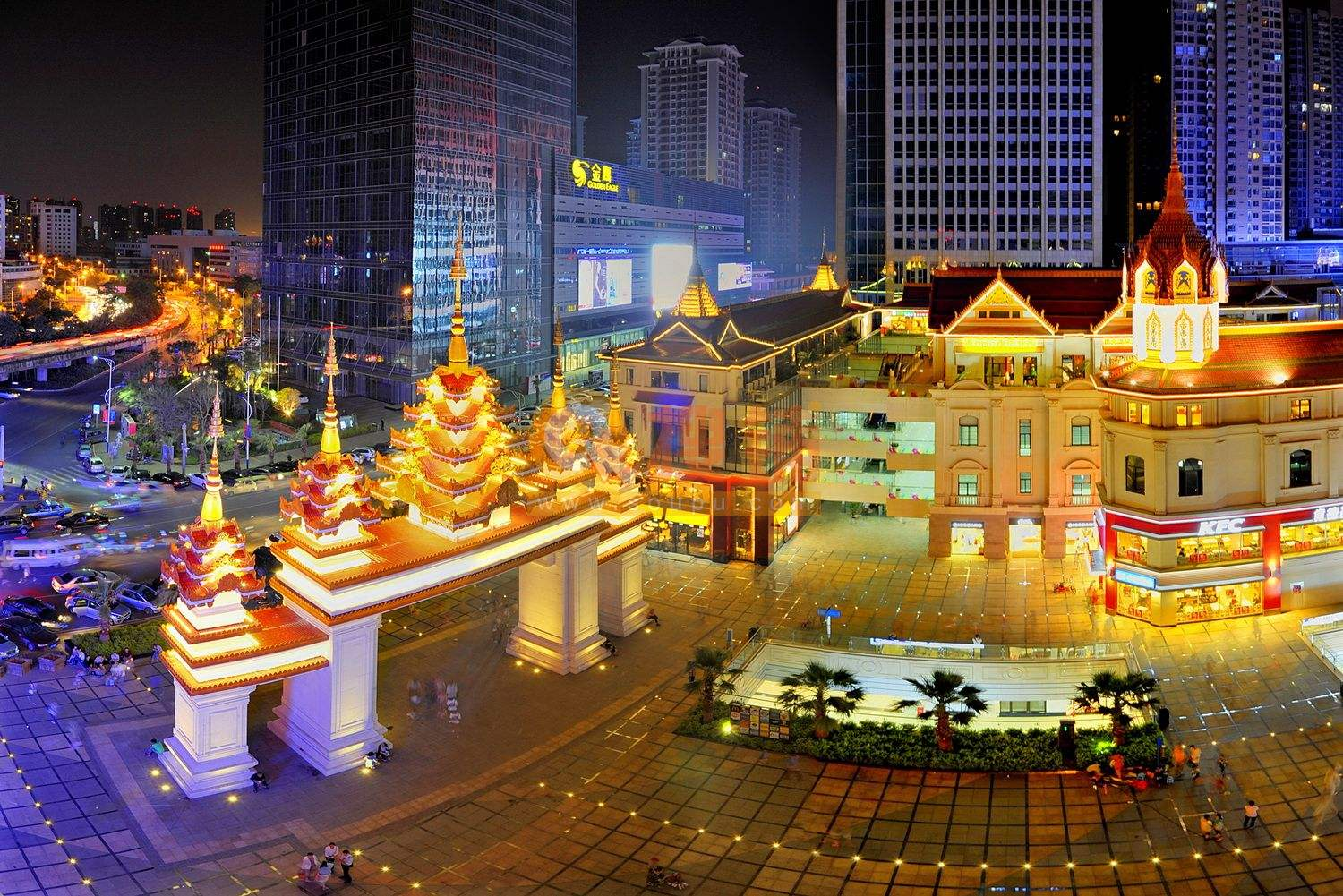
A Local’s Guide For Tourists: Kunming, Yunnan, China

September 20, 2019 by ehesson@pvs.org 1 Comment


By Travel Guide Extraordinaire James Zheng

When we ask where is “Home”? James answers, “Kunming.” He adds, “It’s better than heaven.”

Where am I from? In terms of cities in China, most people have only heard of  Beijing, Shanghai, and Guangzhou as these are popular spots for visitors. However, there are plenty of places worth visiting in the interior provinces, like my city, Kunming.

Kunming is the capital city located in the center of a province called Yunnan. This whole province is full of popular must-see destinations, but most of them are only known by local residents. I’m giving you the insider’s guide.

Here is a brief introduction to Kunming. Kunming has one of the most temperate climates and has the best air quality in China. The weather is not too hot or too cold. The season in Kunming is always spring; therefore, my city is also given the name “Spring City.” This climate has attracted many people who move from other crowded cities when they need a well-deserved vacation. Geographically, Kunming is located near some south-eastern countries, being closer to Burma, Vietnam, and Laos. But it is also close to Thailand, Bangladesh, and Cambodia. This makes it a place of international cultural exchange and a cultural melting pot.

Here are some of my recommendations for local foods and places to visit in Kunming:

Places to see:

  • Golden Temple Park: A palace that was built during the Qing Dynasty (1368―1644), it contains historical meanings everywhere. The main structure is yellow bronze, so it was also categorized as one of the Chinese grand bronze palaces. It is preserved as it originally was. There is also a huge mountain surrounding the palace, and with all the forests, it is tucked into a natural environment. You get to see lots of flowers as well.  
  • The ancient town of Guandu: Guandu used to be an independent region; now it is one of the districts within Kunming. The only thing you might be interested in here is the old-styled building and some exquisite handicraft. The initial construction of Guandu started from the Tang Dynasty (618-907) and mixed with some culture generated from Buddhism. You would see some temples and towers as well. 
  • Southern-east-Styled City: This place does not have the same size as a city, but it is one of the most commercialized and well-developed areas inside Kunming. There is an exhibition called Southern-east Cultural Exhibition, which is held each year. During the exhibition, you get to participate in cultural activities and buy interesting gadgets from Southern-east. Even if it’s not for the purpose of going for the exhibition, you can also hang out there and find fun things to do. 

Food to Try: 

  • “Cross-the-bridge rice noodle”: This is a unique style of rice noodle invented by Kunming locals. You serve this rice noodle with hot soup. Along with separate fresh side dishes, you cook the rice noodles instantly by putting them into the soup. It is popular in Kunming.
  • Varieties of Mushrooms: The Yunnan province is given the respectful name “The Kingdom of Mushrooms,” since we have thousands of types of mushrooms. Most of them contain valuable nutrients. The mushrooms are a main incentive attracting tourists to visit Kunming. 

And that is generally all I would say about Kunming. Depending on the motivations of the travelers, you could discover more about this heavenly city I call “home.” I hope this helps you know more about China!

Editor: Renée Vazquez

Filed Under: Advice, Culture, Food, Home, The World, Travel Tagged With: A Local’s Guide For Tourists: Kunming, China, James Zheng, Yunnan

  • « Previous Page
  • 1
  • 2
  • 3
  • 4
  • …
  • 11
  • Next Page »

About

We are the Palm Valley Firebirds of Rancho Mirage, California. Join us in our endeavors. Venture through the school year with us, perusing the artwork of our students, community, and staff. Our goal is to share the poems, stories, drawings and photographs, essays and parodies that come out of our school. Welcome aboard!